






Mahogany Framed Tapestry
These mahogany framed tapestry pieces bring warmth to a room, combining rich timber frames with textured needlework.
Mahogany Framed Tapestry
When searching for mahogany framed tapestry, collectors encounter a diverse group of items spanning footstools, nursing chairs, fire screens, and wall art. These pieces typically date from the nineteenth century into the early twentieth century, reflecting periods such as the Victorian era, Regency, and Edwardian times.
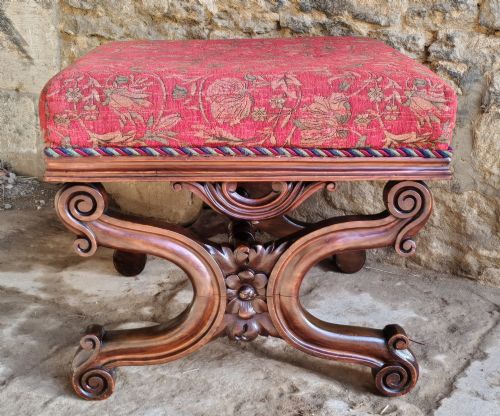
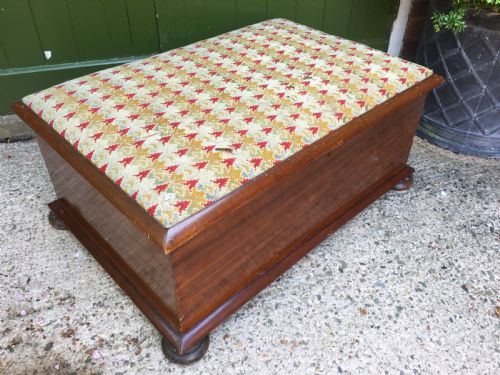
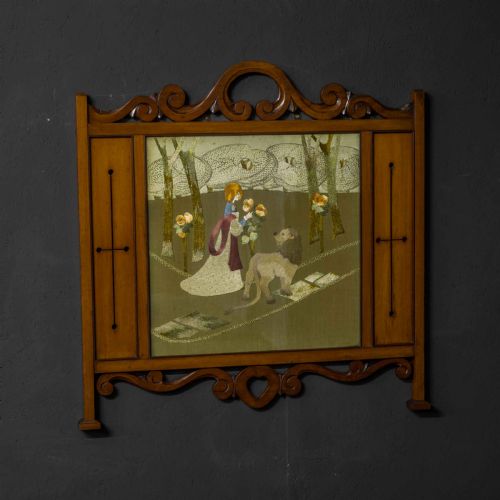
The most common forms found on this page are footstools and nursing chairs, alongside decorative wall hangings and firescreens. Frames range from simple x-frame dressing stools to elaborate Queen Anne style frames and Victorian armchairs.
Makers and workshops during these periods utilised dense tropical hardwoods to house intricate textile works, including gros point needlework and wool embroideries. Each object demonstrates how functional household furniture was enhanced with decorative textile panels.
Materials and construction
Makers constructed the structural supports using solid mahogany, often shaped into curving x-frames, turned legs, or stretcher bases. This dense timber provided the necessary rigidity for items subjected to daily domestic use like footstools and armchairs.
Textile panels within these frames consist of wool, silk, and canvas worked in needlepoint or gros point techniques. Artisans stitched intricate pictorial scenes and floral motifs by hand directly onto stretched canvas grounds before securing them into the wooden surrounds.
Mahogany Framed Tapestry Retail Price Guide 2026
Typical asking prices for mahogany framed tapestry among the pieces listed under this phrase on Sellingantiques today, from the lower quarter to the upper quarter. They describe what is for sale here now, not the wider market.
A nineteenth-century needlework picture preserves the likeness of a very determined horse staring right back at the room.
Assessing quality and execution
The standard of a piece depends heavily on the crispness of the timber carving and the tightness of the mahogany grain. Superior examples show careful joinery in the frames, such as sturdy tenon joints and well-defined turning work.
Needlework quality differentiates the range significantly, particularly the density of the stitch work and the preservation of the original wool or silk threads. Pieces retaining their early gros point or needlepoint without extensive thread loss command greater attention from collectors.
The Mahogany Framed Tapestry Glossary
- Mahogany
- A durable tropical hardwood prized for its reddish-brown colour and fine grain. It served as the primary timber for high-quality furniture frames throughout the nineteenth century.
- Gros point
- A coarse type of needlepoint stitch worked on canvas, commonly used for durable upholstery on footstools and heavy chairs. It creates a thick, textured surface ideal for pictorial designs.
- X-frame
- A furniture base formed by intersecting diagonal wooden members shaped like the letter X. This structural form provides stability and appeared frequently on nineteenth-century dressing stools.
- Firescreen
- A moveable panel designed to shield a person's face from the intense heat of an open fireplace. These screens often featured framed needlework or tapestry mounted on a wooden stand.
- Needlepoint
- Embroidery stitched onto a stiff, open-weave canvas foundation. It allows for detailed pictorial representation, as seen in nineteenth-century wall hangings and framed pictures.
Mahogany Framed Tapestry: Frequently Asked Questions
How do I clean the needlework?
Dust the textile gently with a soft brush to remove surface particles.
Avoid liquid cleaners or water, as moisture can damage old wool and silk threads.
Are the tapestry panels original?
Many items retain their period needlework, though some frames received later reupholstery.
Examine the back of the panel and the wear on the wool to gauge authenticity.
Where were these pieces used?
These items furnished nineteenth-century parlours, drawing rooms, and bedrooms.
Footstools and firescreens offered comfort near the hearth, while wall art decorated reception rooms.
How do I date the timber frames?
Turnery styles, joinery methods, and wood patination help indicate the period of manufacture.
Victorian and Regency frames display distinct moulding profiles and structural hardware respective to their decades.