



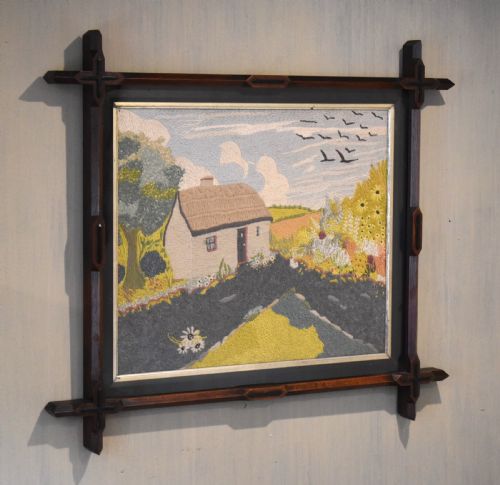

Edwardian Framed Needlepoint
Edwardian framed needlepoint pieces bring domestic textile art into wall art and seating, offering stitched scenes and florals.
Edwardian Framed Needlepoint
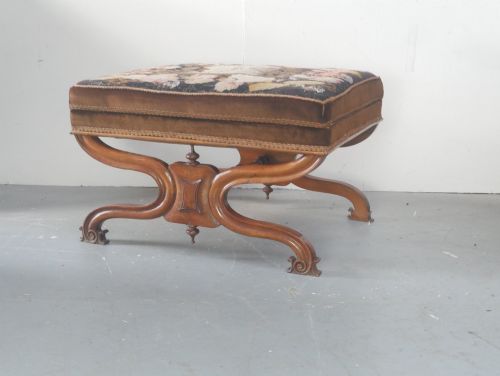
When you search for edwardian framed needlepoint, you encounter stitched textile works set inside wooden frames, ranging from wall pictures to upholstered stools and nursing chairs. The pieces on this page span styles from Victorian Folk Art and Scottish Baronial to Arts and Crafts and Chippendale Revival, alongside forms like evening purses and samplers.
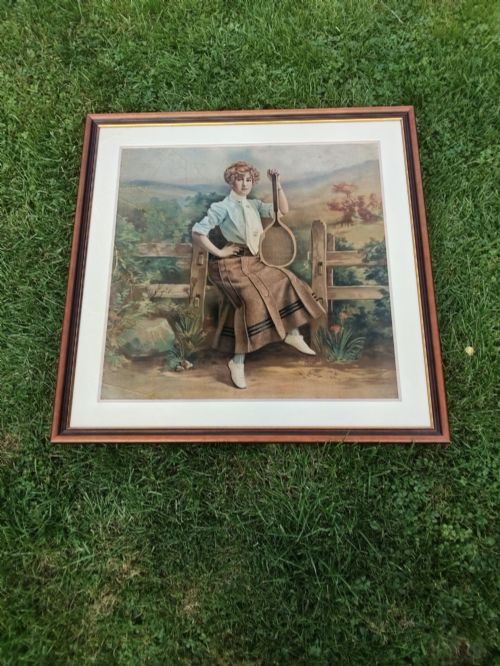
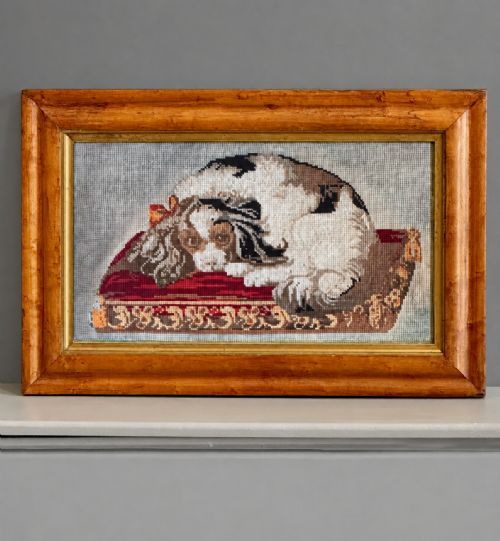
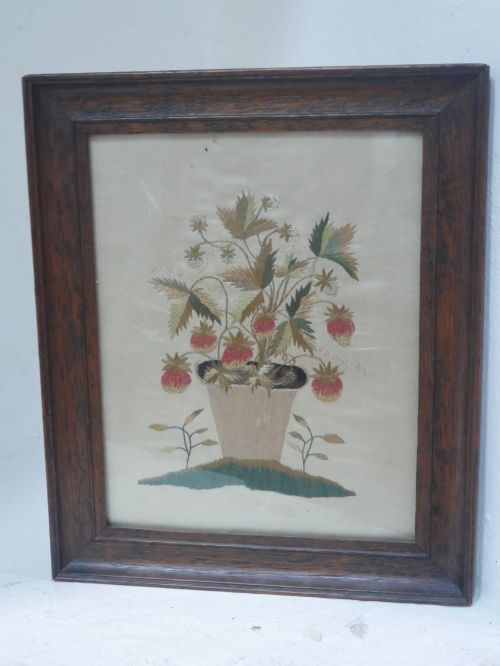
You meet various materials including wool, silk, and canvas set behind glass or mounted in mahogany, rosewood, burr maple, or other wood frames. Subjects range from botanical studies and landscape scenes after Constable to portraits of sailor girls and King Charles spaniels.
While many examples originate from the Victorian and Edwardian periods, the broader selection draws on nineteenth-century and early twentieth-century traditions. These works combine utilitarian textiles with decorative framing, creating functional items like footstools alongside purely visual wall hangings.
How they were made
Makers stitched wool and silk threads onto canvas using techniques such as Berlin work, gros point, and petit point to build up detailed pictorial and floral designs. These textile panels required careful tension to keep the stitches even across the composition.
The finished needlework was then mounted into custom frames made of mahogany, rosewood, or burr maple, sometimes protected behind glass to preserve the delicate fibres of the textile art.
Edwardian Framed Needlepoint Retail Price Guide 2026
Typical asking prices for edwardian framed needlepoint among the pieces listed under this phrase on Sellingantiques today, from the lower quarter to the upper quarter. They describe what is for sale here now, not the wider market.
The selection includes wall art, nursing chairs, footstools, and evening purses spanning several nineteenth and twentieth-century styles.
What varies in quality
Quality rests in the precision of the stitching, where finer petit point work allows for greater facial expression and tonal shading in portraits and landscapes compared to coarser woolwork. The complexity of the composition and the fidelity of the translation from source material, such as Constable paintings, dictate the overall visual impact.
The choice of framing material elevates the piece, with burr maple, rosewood, and figured mahogany housing superior works alongside original glass. Integrated items like nursing chairs and Scottish Baronial stools show quality through the joinery of the wood frame as much as the condition of the upholstery.
The Edwardian Framed Needlepoint Glossary
- Petit point
- A form of needlepoint worked on fine canvas with single tent stitches, allowing for high detail and smooth tonal gradations in pictorial works.
- Berlin work
- A style of charted needlepoint popular in the nineteenth century using brightly coloured wools on canvas, often sold with pre-printed patterns.
- Gros point
- A coarser needlepoint stitch used for larger background areas or sturdy domestic items like footstools and upholstery.
- Sampler
- A piece of needlework produced to demonstrate a maker's proficiency in various stitches, alphabets, or pictorial motifs.
- Woolie
- A type of nineteenth-century sailor's woolwork picture depicting ships or maritime scenes, stitched by hand in coloured wool threads.
Edwardian Framed Needlepoint: Frequently Asked Questions
What is edwardian framed needlepoint?
It encompasses stitched textile panels from the early twentieth century and surrounding periods, displayed inside wooden frames or mounted onto furniture.
These pieces include botanical studies, landscape pictures, and samplers created using wool or silk threads on canvas.
How were these needlework pieces displayed?
Most pictorial works were stretched and placed behind glass within wooden frames made of mahogany, rosewood, or burr maple for wall hanging.
Others were integrated directly into functional household items, serving as upholstery for nursing chairs, footstools, and Scottish Baronial stools.
What materials appear in these pieces?
The primary materials are wool and silk threads worked onto canvas grounds, supplemented by textile wall hangings and evening purses.
The surrounding structures utilise woods such as mahogany, rosewood, and burr maple, alongside glass covers and sterling silver elements.
How do I tell different periods apart?
Dating relies on stylistic clues within the framing and the subject matter, ranging from Victorian samplers and folk art to Arts and Crafts designs.
Materials such as burr maple frames or specific canvas types also help place pieces within the nineteenth and early twentieth centuries.