



Walnut Needlepoint Panel
These walnut needlepoint panel examples combine dark timber frames with worked wool and silk, offering a touch of period texture that collectors prize for interiors.
Walnut Needlepoint Panel
When you search for a walnut needlepoint panel, you encounter items spanning from the seventeenth century through to the Victorian era. The selection ranges from domestic furnishings to framed wall art.
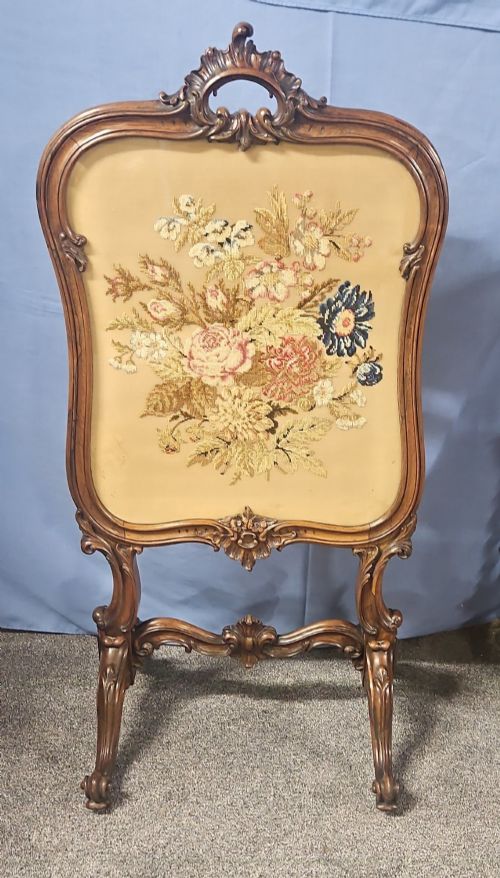
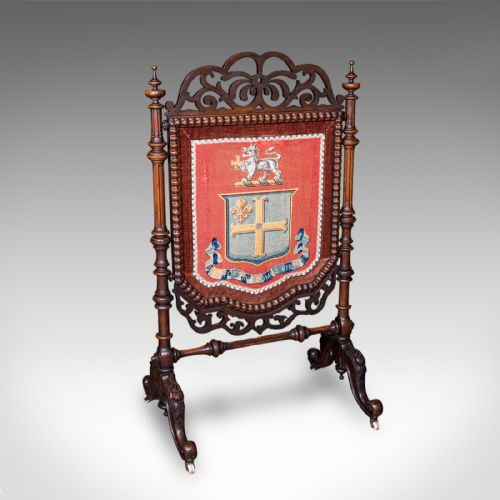
Most pieces on this page take the form of fire screens or armchairs where the textile is set into a wooden frame. Others appear as wall hangings or decorative samplers mounted behind glass.
Origins vary across English, Irish, French, and Italian workshops, reflecting diverse regional tastes in needlework. Styles span from Stuart and Rococo Revival to Louis XVI and Victorian.
How they were made
Needlepoint work utilises wool, silk, and occasionally beads stitched onto canvas or linen grounds. Artisans formed intricate pastoral, armorial, or courtly scenes using counted thread techniques.
Walnut Needlepoint Panel Retail Price Guide 2026
Typical asking prices for walnut needlepoint panel among the pieces listed under this phrase on Sellingantiques today, from the lower quarter to the upper quarter. They describe what is for sale here now, not the wider market.
Listings feature walnut frames paired with wool, silk, glass, canvas, and linen across Victorian, 18th century, and 17th century periods.
What varies in quality
The sophistication of the needlework separates ordinary domestic pieces from finer examples. Superior stitchwork displays careful shading, dense coverage, and complex figurative or heraldic compositions.
Frame construction also dictates overall merit, with robust carved walnut frames holding greater regard than simpler supports. The integration between textile and wooden mount shows the skill of the original workshop.
The Walnut Needlepoint Panel Glossary
- Needlepoint
- A form of counted thread embroidery stitched onto a stiff open-weave canvas ground. It covers the entire foundation fabric to form a dense pattern.
- Burr walnut
- A prized timber harvested from the wart-like growths on walnut trees. It yields complex, swirling grain patterns highly valued in furniture frames.
- Fire screen
- A movable furnishing designed to shield a person's face from the radiant heat of an open hearth. Many incorporate embroidered panels held within upright wooden frames.
- Sampler
- A piece of needlework produced to demonstrate a maker's proficiency with various stitches and alphabets. These often include dates and the maker's age.
- Tapestry
- A form of textile art woven on a loom, though the term often applies loosely to hand-worked needlepoint panels in antique descriptions.
Walnut Needlepoint Panel: Frequently Asked Questions
What is a walnut needlepoint panel?
A walnut needlepoint panel is a piece of historical embroidery, often worked in wool or silk, mounted within a wooden frame made of walnut. These items include fire screens, framed pictures, and upholstery inserts.
They reflect domestic handcraft from periods ranging from the seventeenth century to the Victorian era. The textile usually depicts floral, pastoral, or armorial scenes.
How were fire screens used?
Fire screens served a practical purpose in homes with open hearths by blocking intense radiant heat from warming a person's face. They were placed strategically between seating areas and fireplaces.
Over time, as heating methods changed, these items transitioned into purely decorative furnishings. Their needlework panels preserved intricate textile designs away from direct wear.
How do I date a needlepoint panel?
Dating relies on examining the style of the wooden frame, the materials used in the stitching, and the subject matter of the design. Stuart and seventeenth-century work differs distinctly from Victorian or Rococo Revival pieces.
Some samplers include explicit dates or ages stitched by the maker. Frame construction techniques also provide clues to the decade of manufacture.
Are these panels fragile?
Antiquarian textiles require careful handling because wool and silk fibres weaken with age and exposure to light. Keeping them away from direct sunlight prevents fading in the coloured threads.
Walnut frames need standard wooden furniture care without harsh chemical polishes. Glass-fronted frames offer better protection for exposed needlework against dust and moisture.