

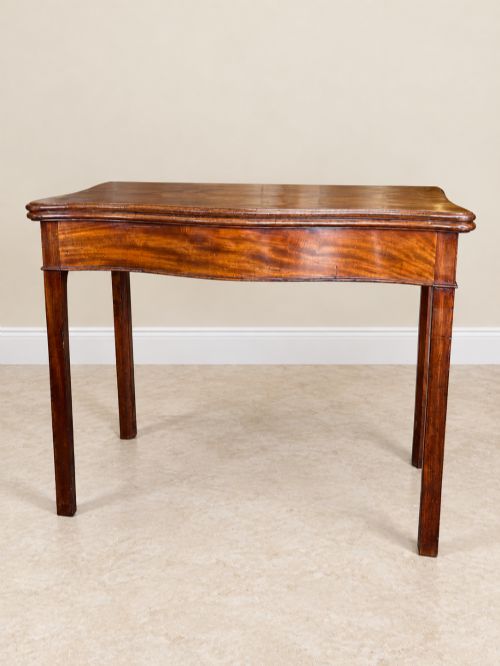
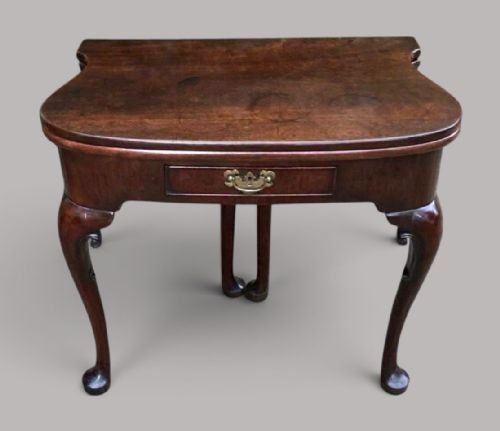
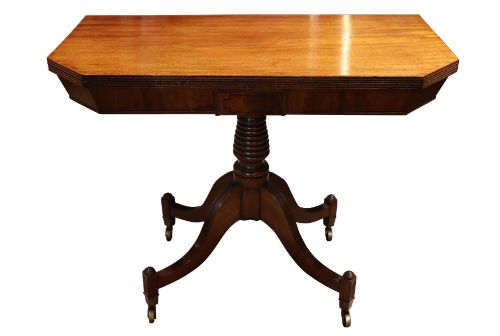
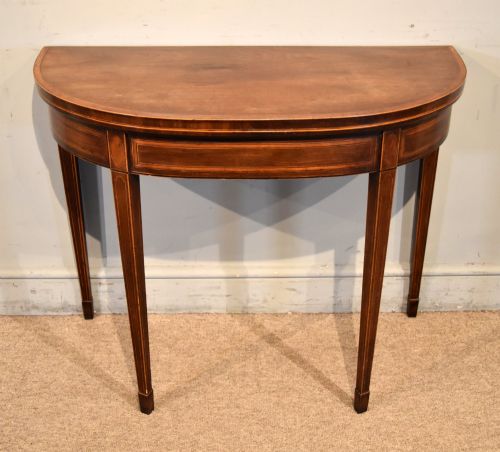
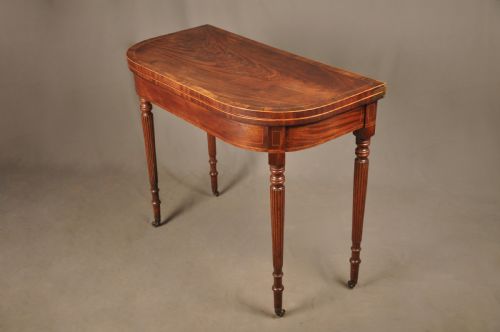
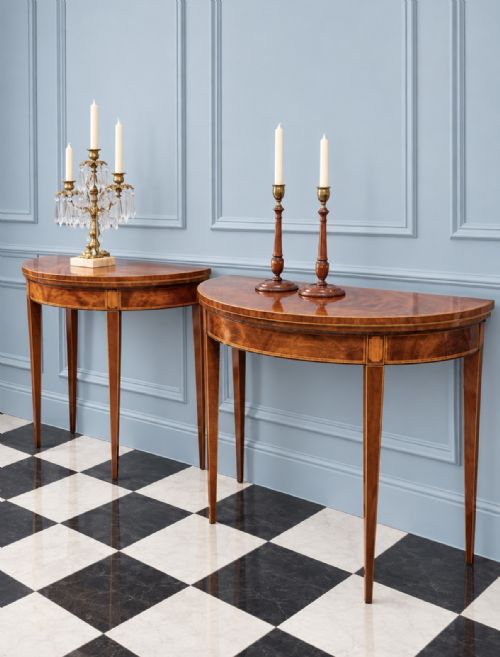
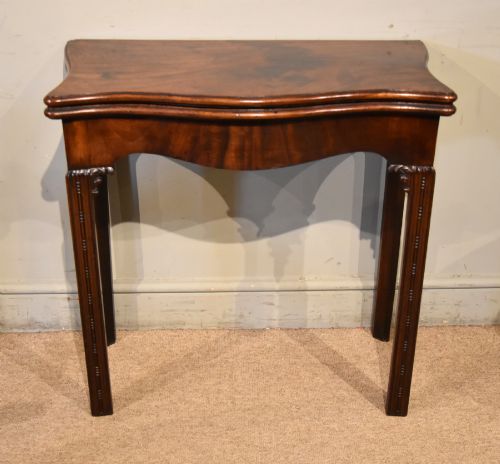
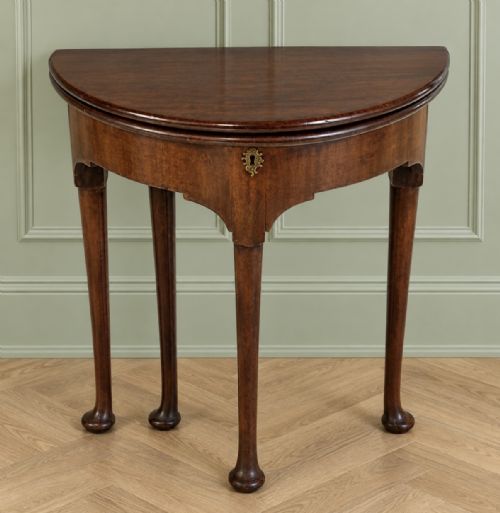
Mahogany Fold Over Tea Table
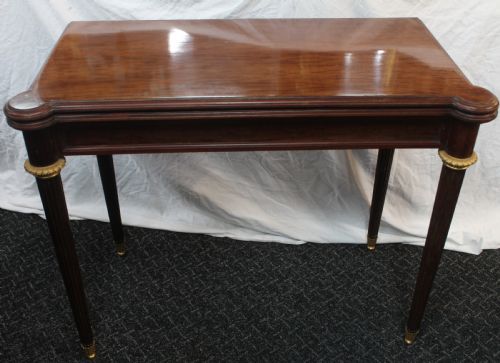
A mahogany fold over tea table doubles its surface when opened, offering an adaptable form designed for social entertaining.
Mahogany Fold Over Tea Table
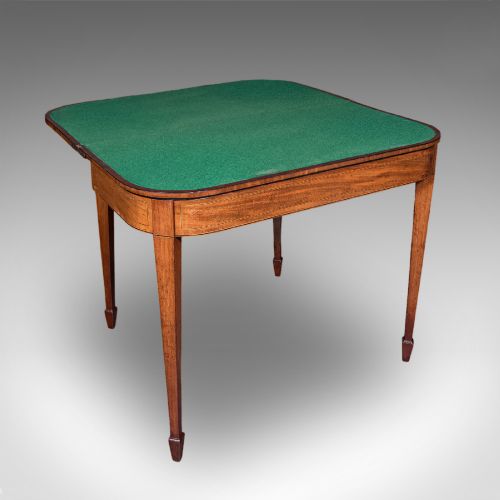
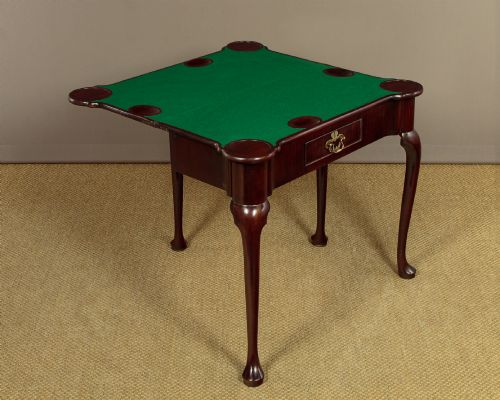
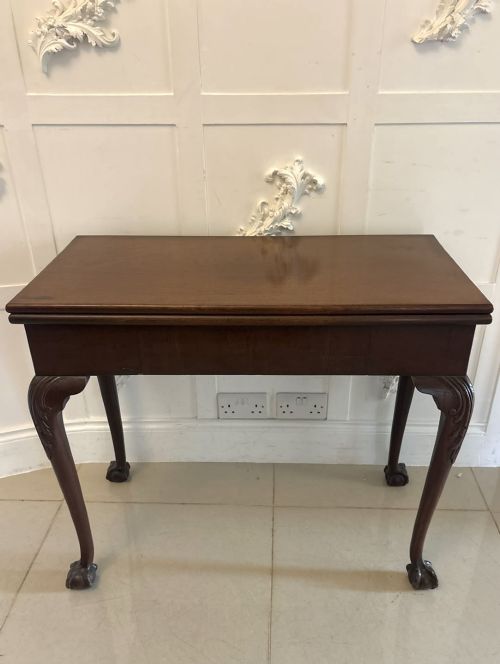
A mahogany fold over tea table is a dual-purpose surface designed to stand against a wall until evening hospitality requires a wider top. When the hinged leaf unfolds, it rests on a pivoting leg or a concertina action frame, revealing a finished timber surface suited for tea service or card playing.
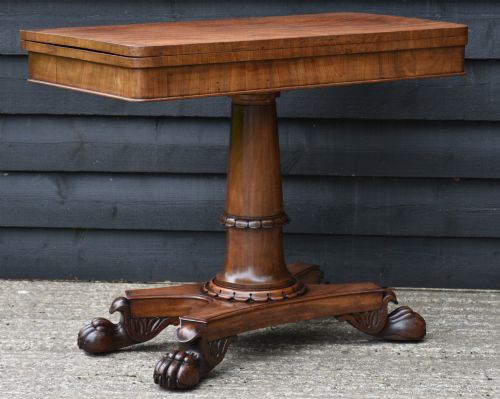
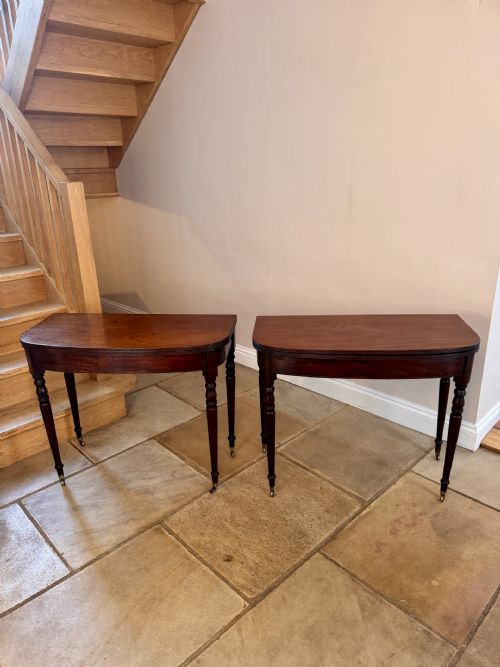
The pieces appearing here span from the eighteenth century through the Victorian period, encompassing George II, George III, Regency, and William IV eras. Form variations include D-shaped, demi-lune, and serpentine profiles, alongside rectangular tops intended for tea, games, or general side use.
Makers and workshops produced these tables in various regional styles, including Irish examples and Sheraton designs. Buyers encounter everything from simple domestic tea tables to elaborate inlaid console and card tables utilising figured timber.
What varies in quality
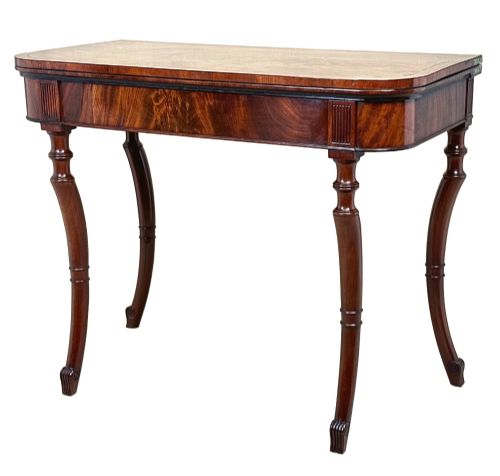
Quality rests in the choice of timber figure, such as highly prized flame mahogany veneer, and the crispness of any inlaid boxwood or satinwood stringing. Heavier figuring and balanced grain matching across the fold indicate superior cabinet making.
The mechanical execution of the folding mechanism, whether a concertina action or a swinging rear leg, dictates structural stability when open. Refined edge moulding, original brass mounts, and undisturbed patination distinguish the finest examples.
Mahogany Fold Over Tea Table Retail Price Guide 2026
Typical asking prices for mahogany fold over tea table among the pieces listed under this phrase on Sellingantiques today, from the lower quarter to the upper quarter. They describe what is for sale here now, not the wider market.
Listings span the eighteenth and nineteenth centuries, featuring Georgian, Regency, and Victorian periods alongside materials like brass, satinwood, and flame mahogany.
The Mahogany Fold Over Tea Table Glossary
- Demi-lune
- A half-moon shape used for table tops and frames. These tables sit flat against a wall when closed.
- Concertina action
- A frame structure that expands symmetrically when the table top unfolds. This mechanism supports the extended leaf evenly.
- Serpentine
- A gently undulating curved edge line. This contour appears on the front aprons and tops of finer tables.
- Flame mahogany
- A distinctive wood grain pattern resembling flickering flames. It is sliced from the point where branches join the main trunk.
- Patination
- The surface sheen and colour acquired by timber through age and use. Original patination is valued by collectors.
Mahogany Fold Over Tea Table: Frequently Asked Questions
How were mahogany fold over tea tables used?
These tables stood against a parlour or drawing room wall holding decorative items when closed. When visitors arrived for tea or evening cards, the hinged leaf swung open to create a functional surface.
After use, the top folded back down to save floor space in domestic interiors. Many versions included concealed storage compartments beneath the top for cards and gaming counters.
How do I identify a Georgian tea table?
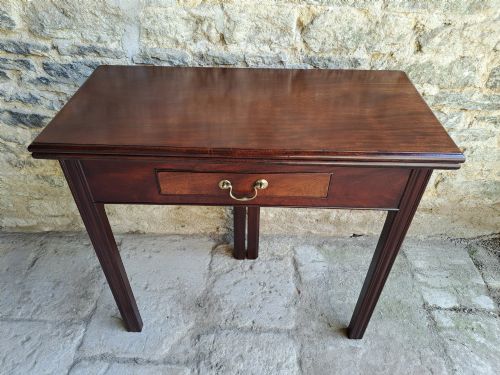
Georgian examples display proportions and timber characteristics specific to the eighteenth century, including dense Honduran mahogany and hand-cut joinery. Look for characteristic details such as square or tapered legs, carved bracket feet, and understated edge mouldings.
Subtle indicators like patination and secondary pine or oak framing help separate eighteenth-century pieces from later nineteenth-century interpretations.
Where should I place a fold over table?
Place the piece against a hallway wall or in a living room where its closed profile occupies minimal depth. It functions effectively as a console or side table for lamps and ornaments during daily routines.
When hosting guests, pull the table away from the wall and unfold the top to provide a temporary serving or games area.
How do I distinguish Regency from Victorian tables?
Regency tables, produced in the early nineteenth century, frequently incorporate brass inlay, sabre legs, and architectural pedestal bases influenced by classical revival styles. Their lines remain relatively crisp and restrained.
Victorian pieces from the mid-nineteenth century tend toward heavier proportions, figured mahogany veneers, and turnover mechanisms designed for combined card and tea usage.