

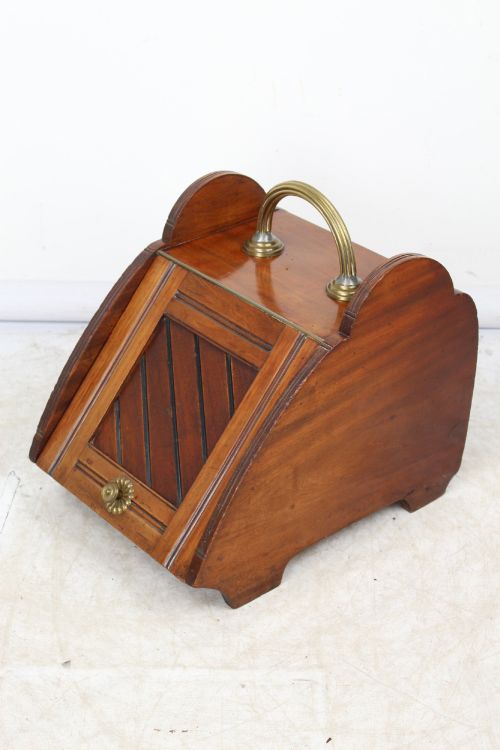
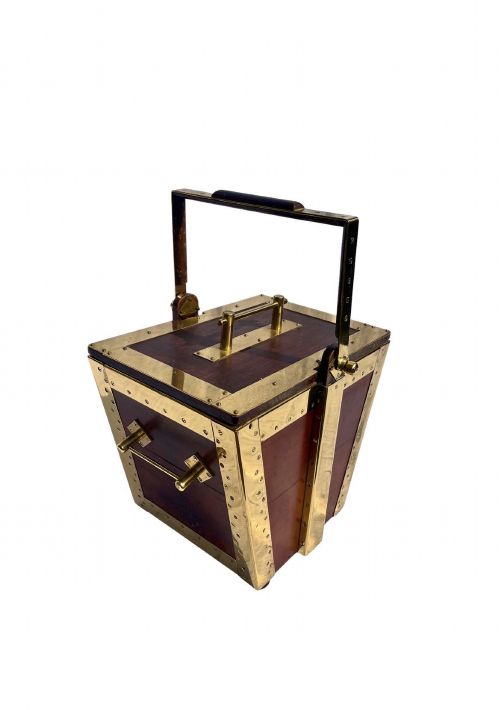


Mahogany Fireplace Bucket
These mahogany fireplace buckets are robust fireside containers designed to hold coal, peat, or logs.
Mahogany Fireplace Bucket
A mahogany fireplace bucket brings functional timber warmth to a hearth setting, originating primarily in the Georgian and Victorian eras. These containers serve to hold solid fuel such as coal, peat, or logs close to the fire.
The versions most commonly met on this page span the eighteenth and nineteenth centuries, taking forms like coopered vessels, ribbed bodies, and plate buckets. Many examples incorporate metal linings to protect the wood from damp fuel.
Makers designed these objects to sit openly beside a fireplace, combining utility with decorative presence through timber grain and metal mountings.
How they were made
Craftsmen built these pieces using solid timbers like mahogany, walnut, and satinwood, frequently employing cooperage techniques with tight stave construction. Brass bands, handles, and swing bails reinforce the wooden bodies against the strains of lifting heavy fuel.
Some examples feature marquetry inlay, spindle work, or figured wood grain to elevate their appearance beyond simple utility. Protective zinc, iron, or metal liners sit inside the timber shells to contain soot and moisture.
Mahogany Fireplace Bucket Retail Price Guide 2026
Typical asking prices for mahogany fireplace bucket among the pieces listed under this phrase on Sellingantiques today, from the lower quarter to the upper quarter. They describe what is for sale here now, not the wider market.
Object types recorded across the inventory include peat buckets, coal scuttles, purdoniums, log bins, and plate buckets.
What varies in quality
The standard of timber selection and the crispness of the cooperage define the upper tier of these pieces. Original brass mountings and untouched surface patination separate fine examples from heavily restored ones.
Structural integrity in the staves and handles dictates daily practicality, while refined details such as fine ribbing or marquetry inlay indicate higher workshop ambition.
The Mahogany Fireplace Bucket Glossary
- Coopered
- Constructed from curved wooden staves bound together with metal hoops, much like a barrel. This technique provides structural strength for holding heavy loads of fuel or water.
- Peat bucket
- A deep cylindrical container historically used to store turf or peat for burning in domestic hearths. These often feature robust brass handles for carrying.
- Purdonium
- A specialised Victorian coal box featuring a sloping front or tipping mechanism to dispense fuel easily. They frequently incorporate built-in compartments for a shovel.
- Plate bucket
- A deep cylindrical vessel originally intended for carrying dining plates, though often adapted or grouped with fireplace accessories. They share the stave and brass-bound construction of fuel buckets.
- Spindle
- A turned wooden rod fitted decoratively around the body or handle area of a container. These elements add architectural detail to the piece.
Mahogany Fireplace Bucket: Frequently Asked Questions
What is a fireplace bucket used for?
These containers were originally built to hold coal, peat, or logs near an open hearth for easy stoking.
Today, they function practically for storing firewood or decoratively as umbrella stands and jardinieres.
How do I tell Georgian from Victorian buckets?
Georgian examples often display cleaner, simpler lines with traditional brass binding and eighteenth-century timber figuring.
Victorian versions frequently introduce more ornate elements such as spindle galleries, purdonium mechanisms, and heavier cast metal liners.
Do these buckets have metal liners?
Many examples retain their original metal, zinc, or iron liners designed to protect the wood from moisture and dirt.
Some pieces lack liners or contain later replacements, which is common given their utilitarian history.
How do I clean mahogany fireplace buckets?
Maintenance requires gentle dusting and occasional application of appropriate furniture wax to nourish the antique timber.
Harsh chemical cleaners and excessive moisture should be kept away from both the wood and any brass mountings.