

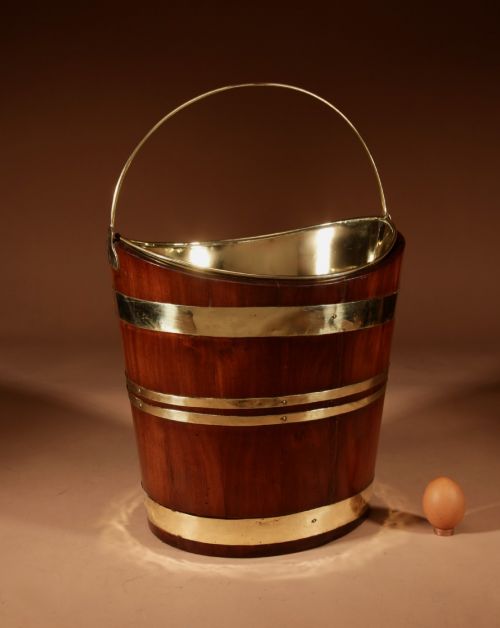


Georgian Mahogany Coal Scuttle
A georgian mahogany coal scuttle or peat bucket brings tactile warmth and rich timber grain directly beside the hearth.
Georgian Mahogany Coal Scuttle
When you search for a georgian mahogany coal scuttle, you are looking at utilitarian fireside containers that transitioned from functional fuel storage into elegant interior accessories. These pieces span the eighteenth and nineteenth centuries, taking the form of traditional buckets, log bins, and boat-shaped peat carriers.
The versions you meet on this page most frequently include nineteenth-century brass-bound iterations alongside earlier eighteenth-century examples. Forms range from elliptical vessels to ribbed bodies and Dutch-influenced tea stoves or peat buckets.
Makers shaped these containers using dense tropical hardwoods, frequently pairing the rich dark timber with bright metal bands and swing handles. They served beside the fireplace to hold peat, coal, or logs before becoming decorative receptacles in their own right.
Construction and materials
Coopers and cabinetmakers built these vessels using tight stave construction similar to barrel-making, binding solid mahogany with thick brass bands and rivets. Iron components also appear in the internal framework or handle attachments, providing structural strength to support heavy loads of fuel.
Turned fruitwood sometimes supplements the primary mahogany timber, particularly in spindle details or decorative accents. The exterior surfaces received careful polishing to highlight the natural grain of the wood against the polished metal hoops.
Georgian Mahogany Coal Scuttle Retail Price Guide 2026
Typical asking prices for georgian mahogany coal scuttle among the pieces listed under this phrase on Sellingantiques today, from the lower quarter to the upper quarter. They describe what is for sale here now, not the wider market.
Listings feature items spanning the eighteenth and nineteenth centuries, constructed primarily from mahogany with brass and iron additions.
Judging quality and character
Quality rests in the crispness of the cooperage, the weight and gauge of the brass binding, and the integrity of the timber. Stronger examples exhibit balanced proportions, tight stave joints, and well-cast handles that balance the vessel when lifted.
Surface preservation distinguishes exceptional pieces, where untouched patination reveals decades of gentle waxing and use. Lesser examples show heavy timber replacement or poorly matched brass hoops that disrupt the visual harmony of the grain.
The Georgian Mahogany Coal Scuttle Glossary
- Peat bucket
- A deep timber vessel traditionally used for holding dried turf or peat blocks beside the hearth. These containers often feature brass carrying handles and stave construction.
- Boat shaped
- Describing a vessel profile that tapers towards pointed ends, resembling the hull of a small boat. This silhouette appears frequently in Dutch-influenced peat buckets and jardinières.
- Stave
- One of the narrow vertical strips of wood fitted together edge-to-edge to make the circular or elliptical body of a bucket. Coopers joined these tightly before securing them with exterior metal bands.
- Jardinière
- An ornamental pot or container designed to hold growing plants or flowers. Many historic fireside buckets later functioned in this capacity within domestic interiors.
Georgian Mahogany Coal Scuttle: Frequently Asked Questions
What were these buckets originally used for?
These vessels were designed to hold fuel such as coal, logs, or peat near the fireplace for easy access during cold weather. Stave construction ensured the containers could hold heavy, abrasive materials safely.
Over time, many of these containers transitioned into decorative interior objects, serving as log bins, umbrella stands, or planters within grand rooms.
How do I distinguish eighteenth-century pieces?
Eighteenth-century examples often display specific timber characteristics, hand-cut brass pins, and particular patination developed through decades of domestic use. The joinery and hand-beveled staves show distinct signs of early workshop practice.
Comparing the profile and the thickness of the brass bands helps separate earlier Georgian forms from nineteenth-century interpretations.
Are these buckets safe to use by an active fire?
While originally built for daily fireside service, historic timber vessels require careful handling to preserve their dry antique wood and brass mounts. Modern owners frequently utilise them for dry storage or display rather than heavy fuel loading.
Direct contact with moisture or intense heat can compromise the historic staves and original surface polish.
Why do some buckets have brass bands?
Brass bands provided essential structural reinforcement to the stave walls, preventing the timber from splitting under the heavy weight of coal or peat. Coopers fitted these hoops tightly around the wooden body.
Beyond structural strength, the polished brass added a bright decorative contrast to the dark mahogany grain.