




Mahogany Dumbwaiter Table
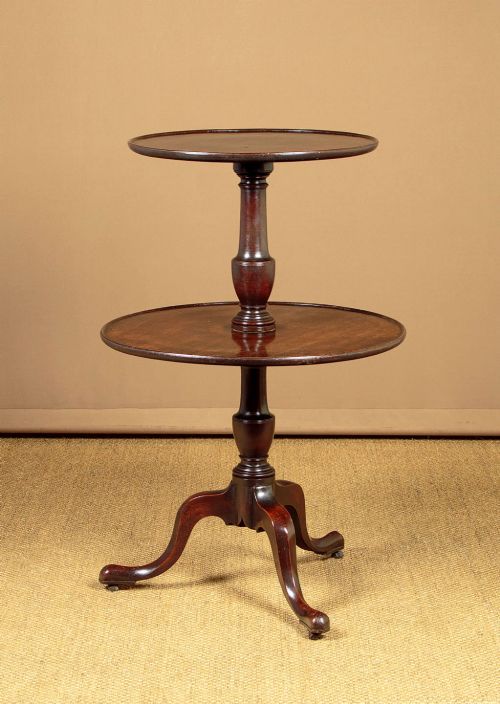
These mahogany dumbwaiter table pieces are tiered serving stands offering multiple shelves for dining rooms, prized for practical display.
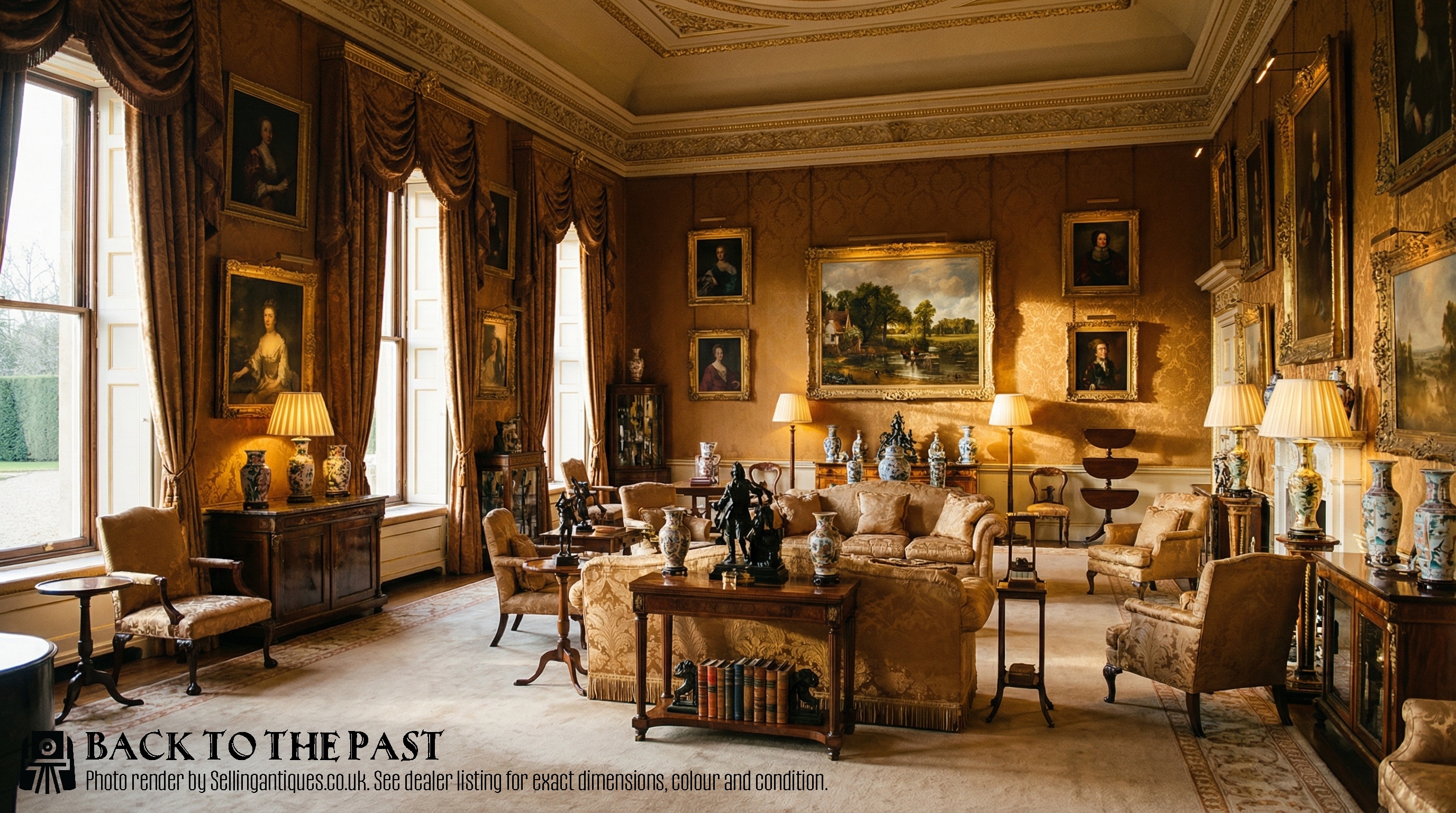
What a mahogany dumbwaiter table is
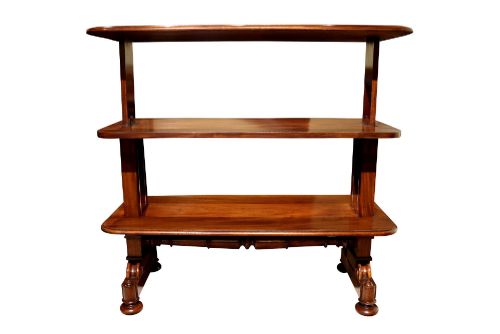
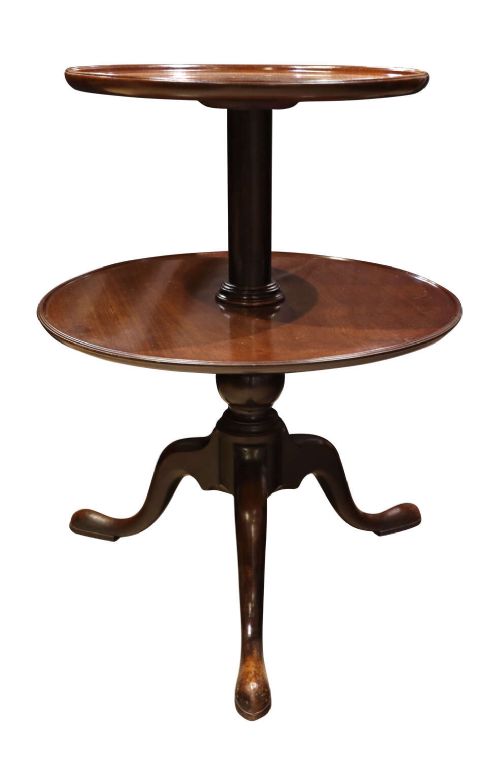
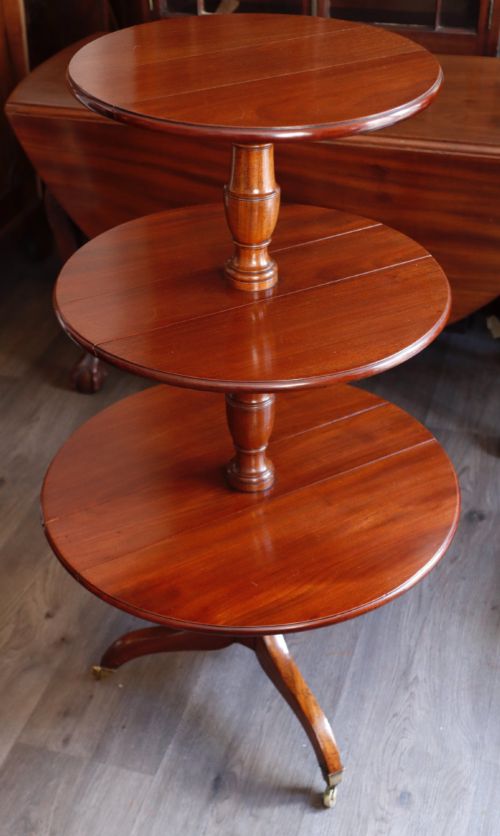
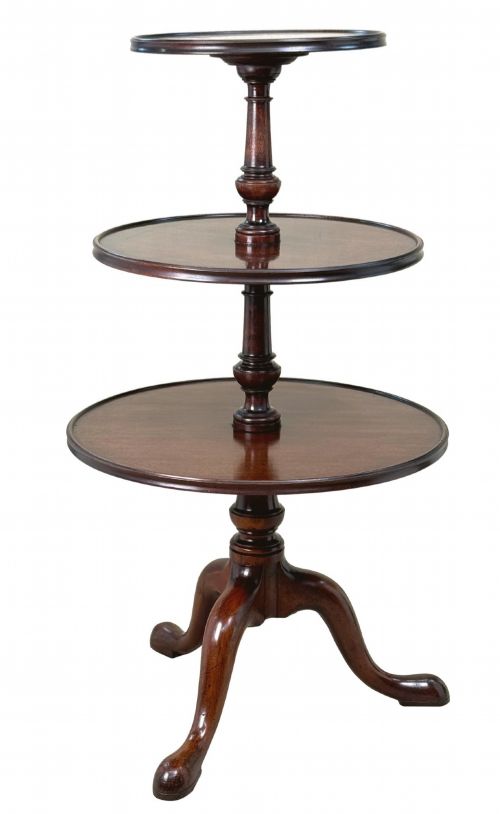
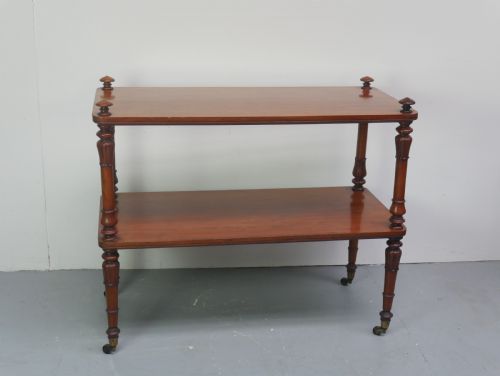
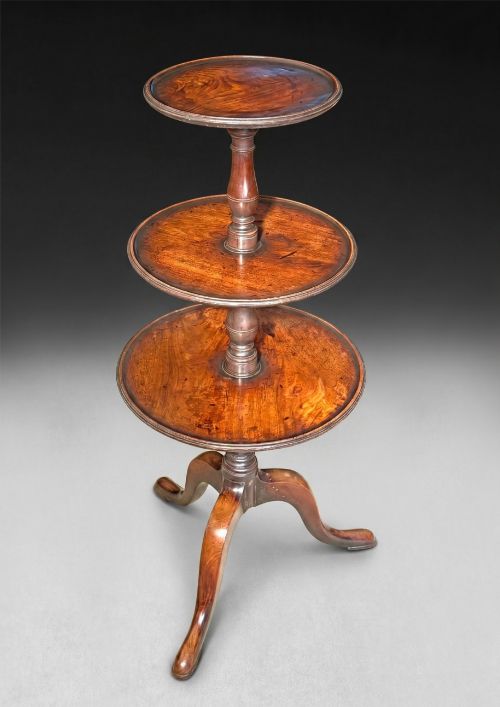
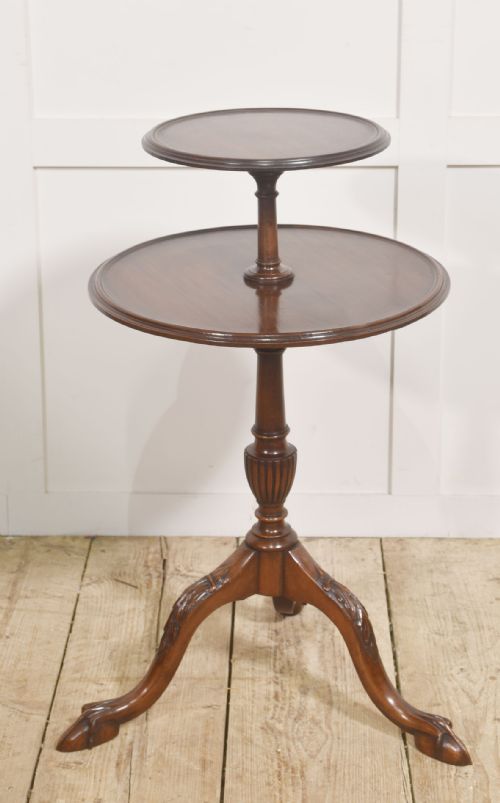
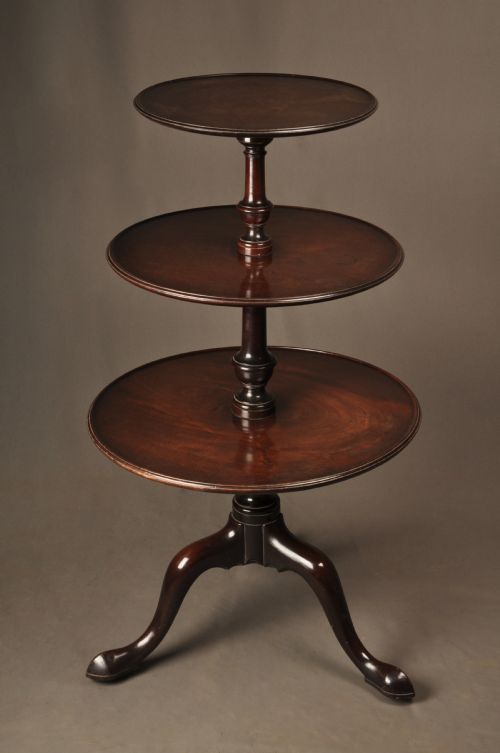
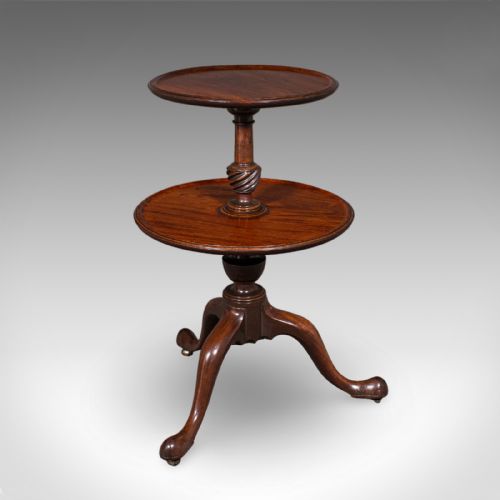
A mahogany dumbwaiter table provides tiered surfaces designed to hold dishes or serving items without needing extra floor space. Buyers searching for a mahogany dumbwaiter table encounter side tables, occasional tables, and tiered buffet servers across this selection.
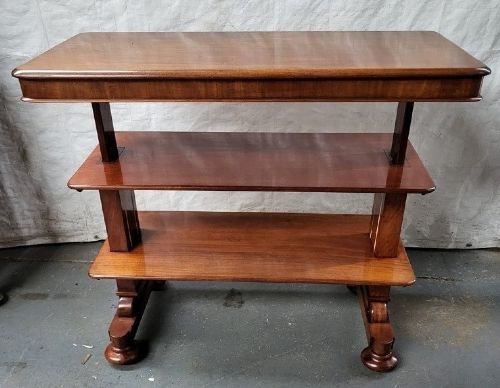
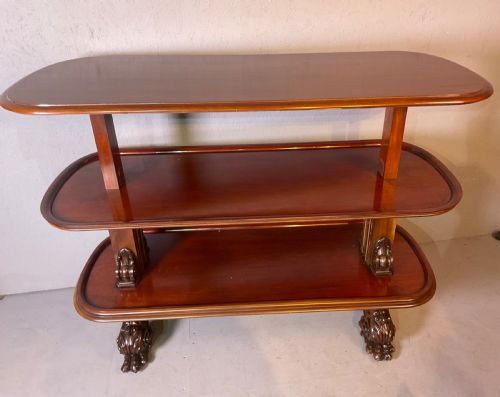
The objects span multiple periods, covering 18th Century, Georgian, Regency, 19th Century, and 1910 pieces. Makers produced various tier configurations, including two-tier designs, three-tier rectangular drop-leaf formats, and round tiered folding shelves.
Grand Regency and George III styles sit alongside George III style reproductions from 1910. Each version fulfils the core function of a tiered serving stand through differing tier counts and shelf mechanisms.
How they were made
Makers utilised solid mahogany and constructed frameworks to support multiple tiers or folding shelves. Timber preparation involved selecting rich brown wood suited to heavy serving use.
Brass fittings appear as structural hardware and accents alongside the primary mahogany material. Joinery methods secured the vertical supports and rotating or folding tier mechanisms.
Retail Price Guide 2026
Typical UK retail prices for mahogany dumbwaiter table, calculated from the Sellingantiques database of over a million retail prices indexed since 2003. This retail price guide relies exclusively on Sellingantiques data; no external sources or auction records are used, so the figures do not describe the wider market.
Folding shelves let a towering server shrink flat, proving dining rooms mastered origami long before paper cranes became fashionable.
What varies in quality
The hierarchy of quality rests on the precision of the tier turning mechanisms and the depth of the mahogany grain. Earlier pieces demonstrate finer cabinet-making than later 1910 interpretations.
Proportion and stability separate standard serving stands from grander examples. The integration of brass elements and drop-leaf action dictates the mechanical sophistication of each tier.
The Mahogany Dumbwaiter Table Glossary
- Dumbwaiter
- A multi-tiered serving table used in dining rooms to hold food or tableware without servants present. These pieces feature stacked circular or rectangular shelves.
- Drop-leaf
- A table design incorporating hinged flaps that lower or raise to adjust the surface area. This mechanism allows tiers to fold away when not in use.
- Regency
- An English design period spanning the early nineteenth century characterised by classical revival influences. Pieces from this era often display bold architectural forms.
- Tier
- An individual shelf or platform positioned above another on a vertical support column. Multiple tiers maximise vertical storage space.
Frequently Asked Questions
What is a dumbwaiter table?
A dumbwaiter table is a tiered serving stand with multiple shelves designed to hold food, drinks, or tableware in a dining room.
These pieces allow diners to reach dishes independently without requiring servant assistance during a meal.
How were dumbwaiter tables used?
They functioned as auxiliary serving stations placed beside dining tables to hold extra plates, glasses, and courses.
The stacked tiers kept tableware accessible while preserving space on the main dining surface.
How do I date a mahogany dumbwaiter?
Dating relies on identifying period styles, construction methods, and timber characteristics ranging from 18th Century originals to 1910 reproductions.
Examining the joinery and brass hardware helps distinguish Georgian and Regency examples from later interpretations.
Where should I place a tiered side table?
These tables fit well in dining rooms, living spaces, or hallways as display surfaces or serving points.
Their vertical tier arrangement makes them practical corners for lamps, books, or decorative objects.