
Mahogany Drop Front Cabinet
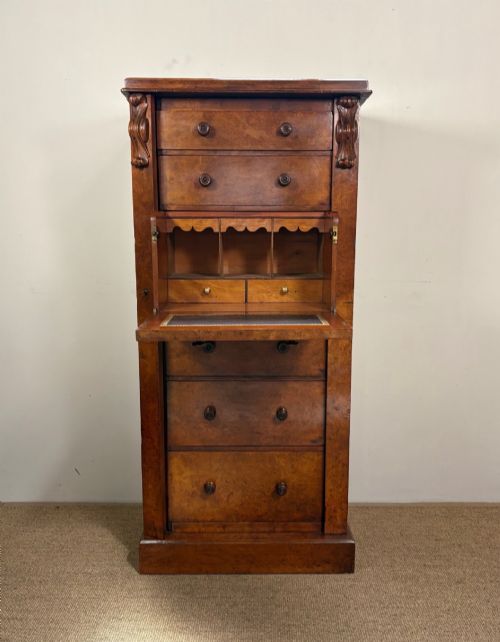
A mahogany drop front cabinet conceals a fitted writing space or specialised storage behind a hinged panel, uniting refined timber grain with practical capability.
Mahogany Drop Front Cabinet
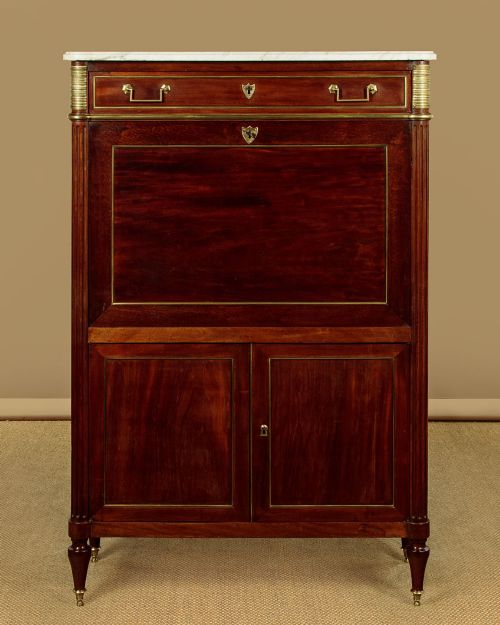
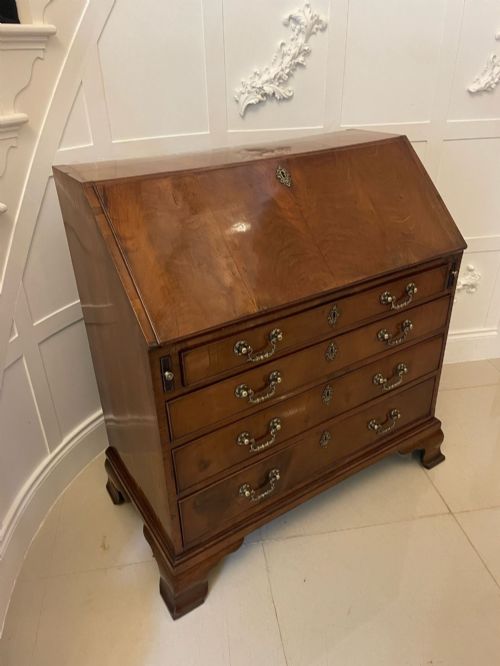
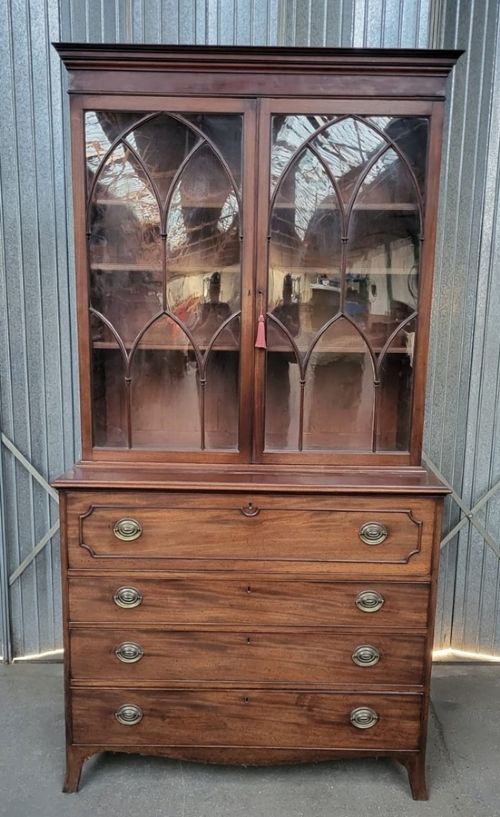
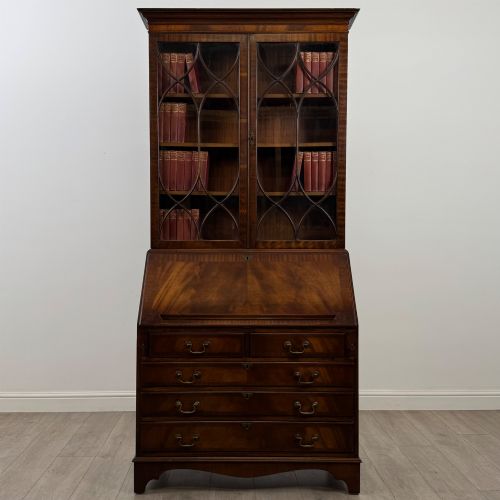
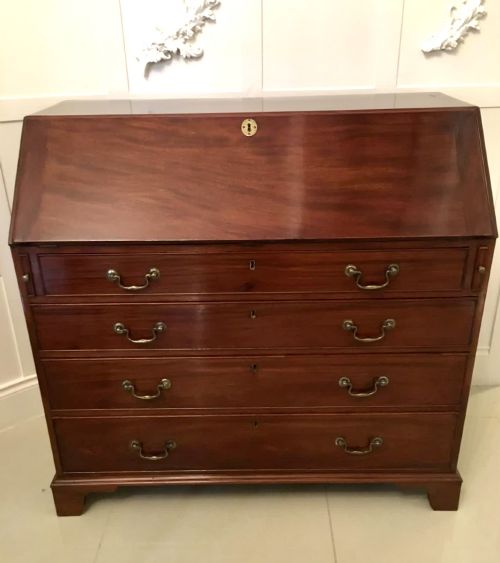
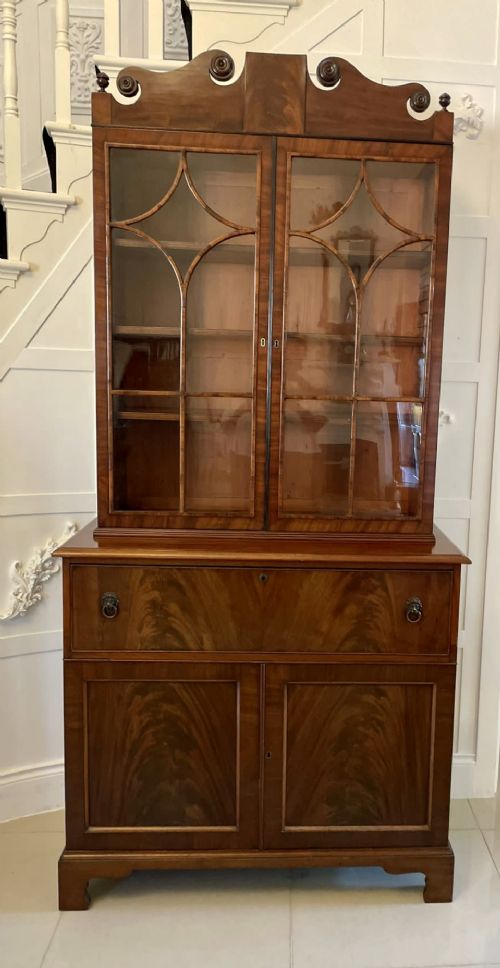
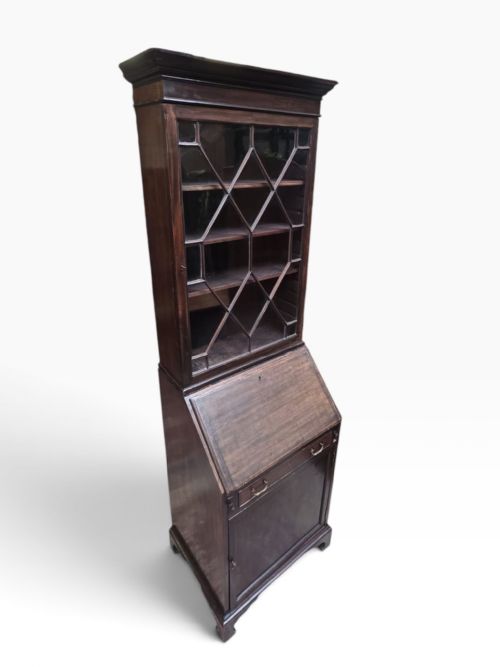
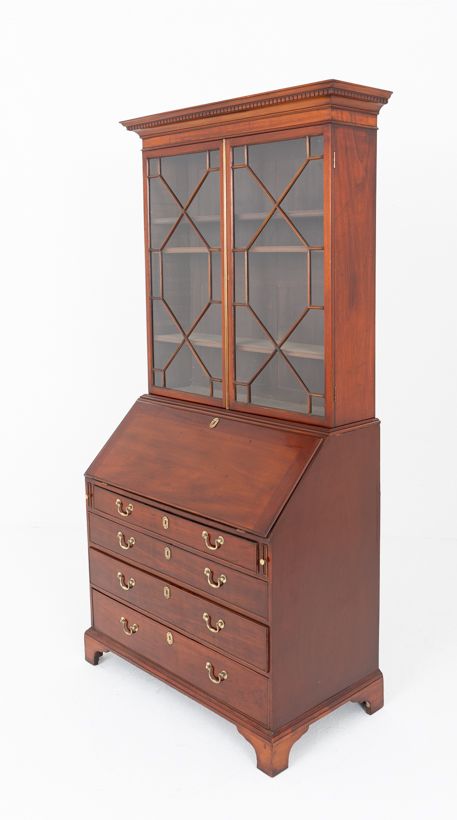
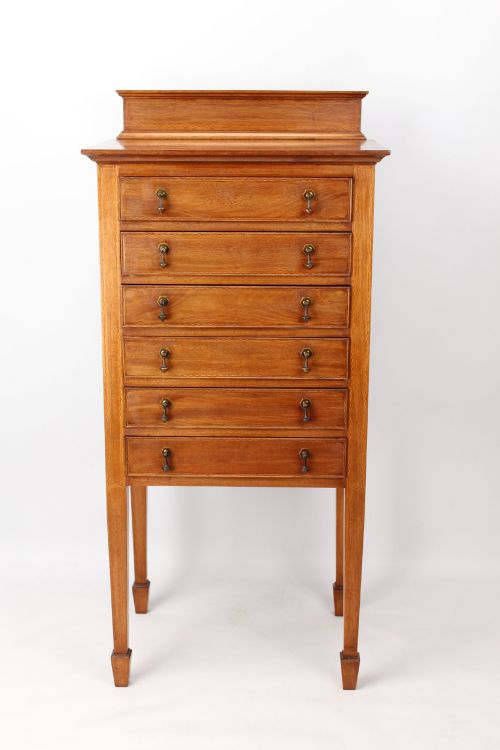
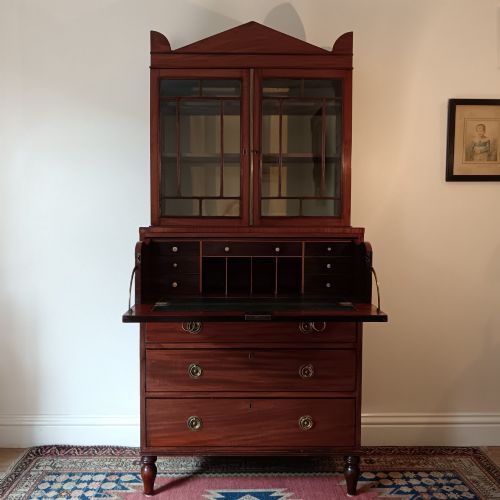
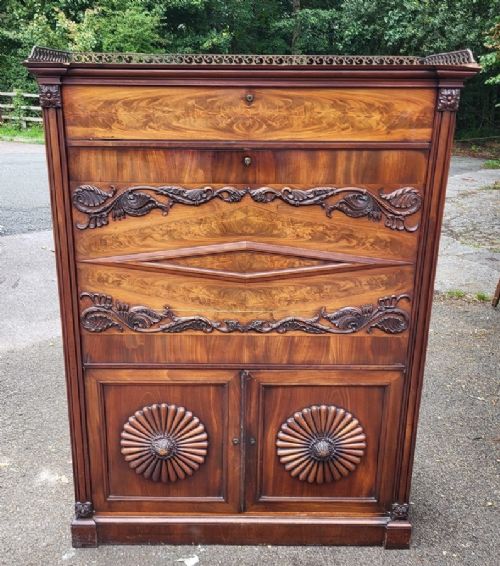
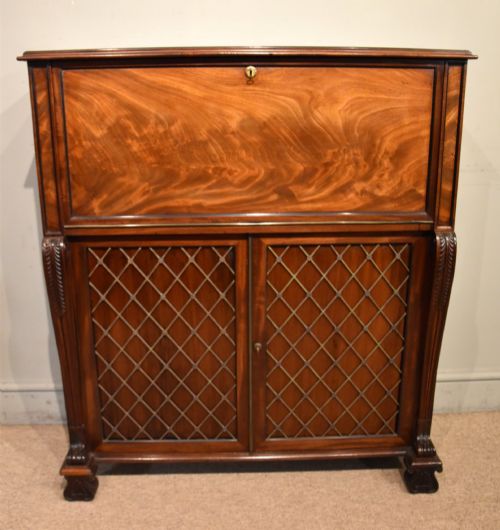
A mahogany drop front cabinet appears across this selection primarily as secretaire bookcases, bureau bookcases, and specialised music cabinets originating from the eighteenth, nineteenth, and early twentieth centuries. These forms combine upright display or storage with a fold-down writing surface or drop-down drawers designed for sheet music.
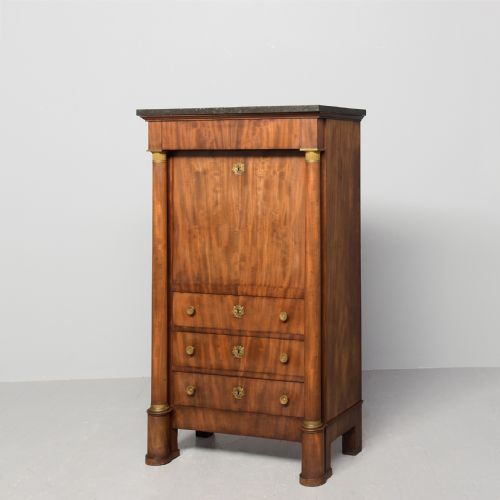
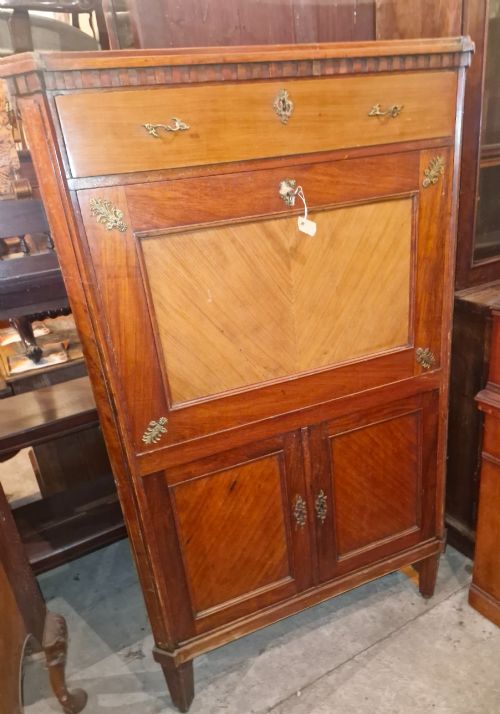
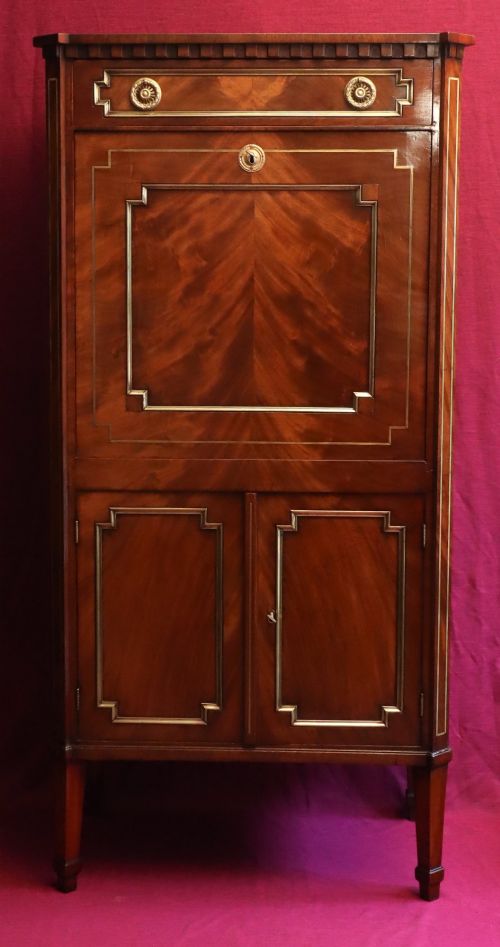
Georgian, Regency, and Edwardian examples dominate the range, spanning distinct stylistic phases from geometric eighteenth-century proportions to lighter inlaid Edwardian designs and French-influenced abattants. Buyers encounter both substantial library bookcases with glazed upper sections and compact freestanding cabinets suited to domestic rooms.
How they were made
Cabinet makers utilised solid mahogany and rich flame mahogany veneers applied over secondary timbers like oak, often incorporating intricate marquetry or line inlay. Structural integrity relies on traditional joinery, dovetail drawer construction, and balanced panel placement to accommodate timber movement.
Internal elements frequently integrate brass hardware, leather writing inserts, glass panel doors, and fitted marble tops on continental pieces. Specialised locking mechanisms and secret drawers reflect the high level of interior engineering expected in functional writing furniture.
Several music cabinets retain internal compartments sized precisely for nineteenth-century piano rolls and folded orchestral sheet music.
What varies in quality
Quality rests upon the selection of timber figures, particularly the depth and symmetry of flame mahogany veneer or the crispness of inlaid details. Superior pieces demonstrate exceptional internal organisation, such as carefully arranged pigeonholes, secret compartments, and secondary drawers.
Proportion and the handling of secondary materials like marble tops, brass mounts, and original glass panes distinguish exceptional workshop output from standard production. The preservation of original surface finishes and operational hinges directly influences the structural integrity of the drop front mechanism.
George Oakley·Gillows of Lancaster
The Mahogany Drop Front Cabinet Glossary
- Secretaire abattant
- A tall vertical cabinet featuring a drop-down front that opens to reveal a fitted desk interior. This continental form often includes a marble top and lower cabinet doors.
- Flame mahogany
- A decorative wood veneer cut from the fork of the mahogany tree, producing a distinctive fire-like ripple pattern. Makers prized this timber for prominent exterior surfaces.
- Bureau bookcase
- A dual-purpose piece combining a lower sloping or drop-front desk with an upper glazed bookcase section. These units served as combined working and storage furniture for libraries and studies.
- Inlay
- The technique of embedding contrasting woods, brass, or shell into the primary timber surface to create geometric or floral patterns. Edwardian and Regency pieces frequently employ this decoration.
- Pigeonhole
- A small, open compartment fitted inside the writing section for sorting letters and papers. These compartments are often concealed behind the main drop front.
Mahogany Drop Front Cabinet: Frequently Asked Questions
What is a drop front cabinet?
A drop front cabinet is a piece of furniture with a hinged panel that folds down horizontally to serve as a writing surface or to grant access to internal compartments. Behind this panel, makers typically arranged small drawers, pigeonholes, and secret spaces.
These cabinets bridge the gap between enclosed storage and functional desks, appearing in various forms from tall bookcase combinations to low music chests.
How do I date a mahogany cabinet?
Dating relies on observing structural characteristics, hardware, timber preparation, and stylistic markers associated with periods like the Georgian era or the Edwardian years. Earlier pieces often feature hand-cut dovetails and solid timber construction, while later examples may incorporate machine-sawn components and specific inlay styles.
Comparing the primary wood grain, secondary timbers, and locking mechanisms against known period examples helps narrow the decade of manufacture.
How were music cabinets used?
Music cabinets were designed with multiple shallow drop-front drawers specifically built to store sheet music flat without bending the paper. Musicians placed these pieces in parlours and drawing rooms to keep scores organised and easily accessible near instruments.
The drop-front mechanism allowed performers to pull out a single tray and browse titles without removing the entire stack from the chest.
Where should I place a secretaire in my home?
A secretaire functions well in studies, living rooms, or bedrooms where its dual nature provides both enclosed display space and a concealed workspace. Because the writing flap folds away when not in use, the piece maintains a tidy profile in smaller rooms.
Keep these cabinets away from direct sunlight and strong heat sources to protect the mahogany veneer and prevent timber shrinkage.