




Mahogany Drinks Box
A mahogany drinks box brings substance to a room, holding bottles with the quiet authority that defined Georgian and Regency entertaining.
Mahogany Drinks Box
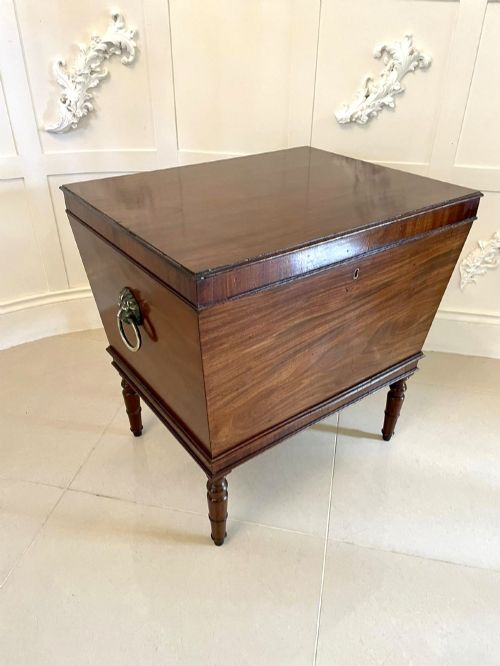
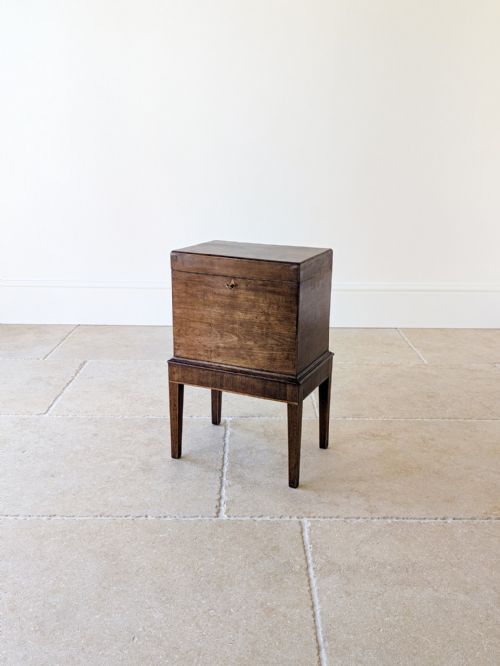
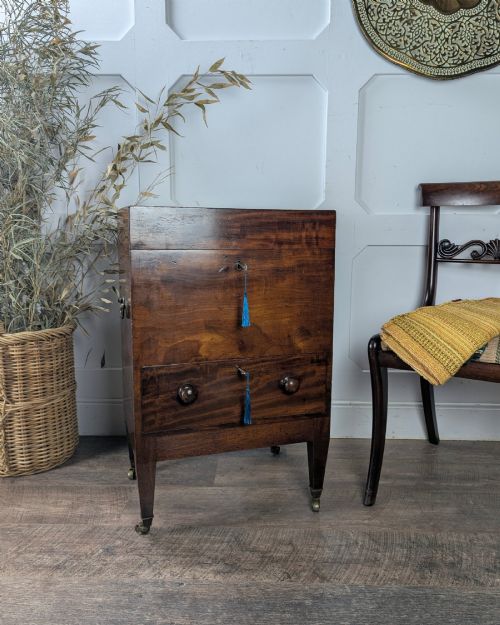
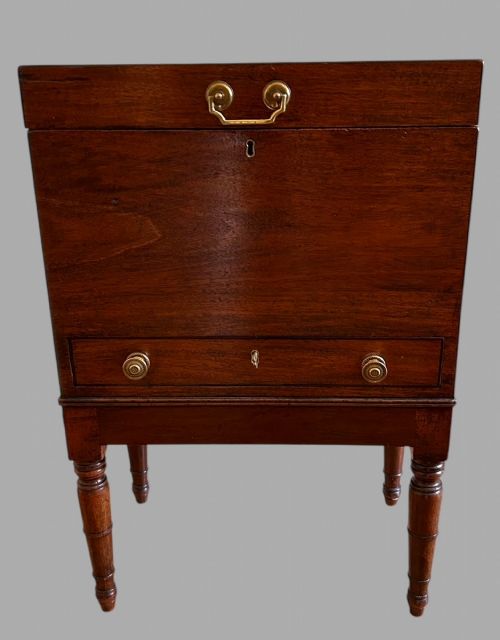
When you search for a mahogany drinks box, you are looking at utilitarian vessels designed to store wine and spirits securely within the home. These pieces appear principally as cellarettes, wine coolers, decanter boxes, and tantalus compendiums spanning the eighteenth, nineteenth, and early twentieth centuries.
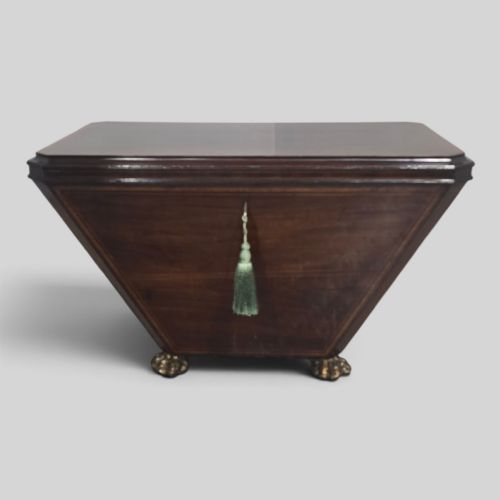
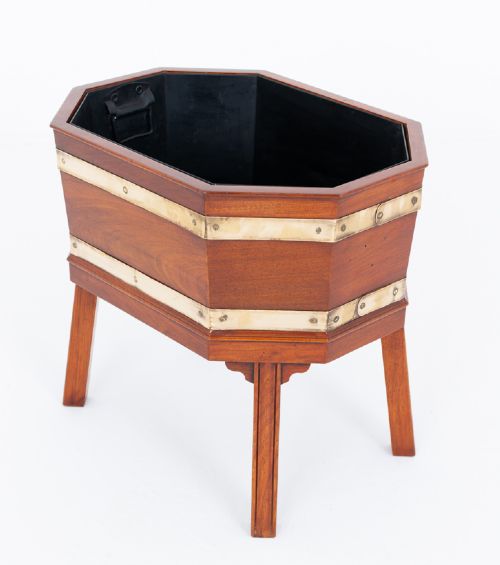
The versions you meet most frequently on this page are Georgian and Regency cellarettes, alongside Edwardian tantalus combinations. They range from octagonal bottle chests and sarcophagus forms to brass-bound oval coolers built to stand beside the dining table.
Originating in domestic dining rooms and country houses, these objects served to keep expensive vintages locked away from domestic staff while presenting them with style. Their survival demonstrates how domestic rituals of hospitality shaped everyday furniture design.
Materials and Construction
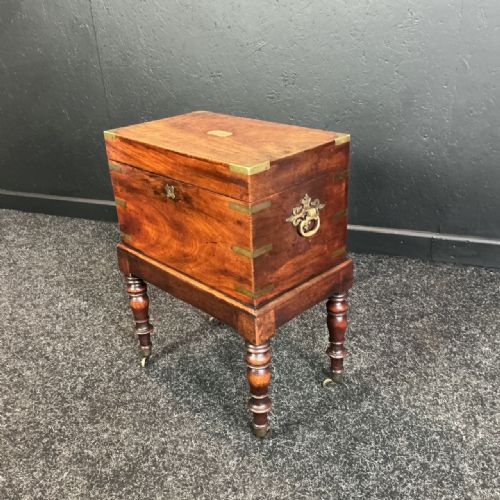
Cabinetmakers built these pieces using solid mahogany and figured veneers, often selecting timber with deep grain patterns. Brass featured heavily for carrying handles, protective corner brackets, and structural banding.
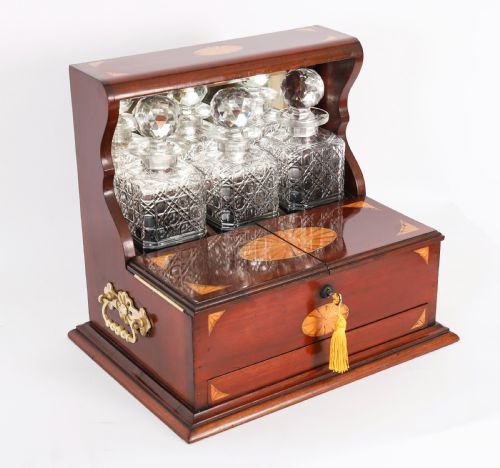
Many examples incorporated satinwood inlay for decorative contrast on the exterior surfaces. Interior fittings frequently included lead crystal decanters and glass bottles, sometimes accompanied by metal or ormolu mounts.
Listings span from the mid-eighteenth century through the Edwardian period, uniting solid mahogany storage chests with intricate satinwood-inlaid tantalus sets.
Judging Quality and Craftsmanship
The distinction between standard containers and exceptional pieces lies in the choice of timber and the precision of the joinery. Finer examples display carefully matched flame mahogany veneers and crisp brass mountings that sit flush with the wood.
Internal arrangement dictates much of the utility and value. Superior boxes retain original lead linings, fitted bottle dividers, and functioning locks with matching keys, while altered or heavily restored interiors lower the standard.
Edwards and Roberts·Gillows of Lancaster and London
The Mahogany Drinks Box Glossary
- Cellarette
- A lockable box or chest designed to hold wine bottles safely near the dining table. They frequently appeared in octagonal or sarcophagus shapes during the Georgian and Regency periods.
- Tantalus
- A locking beverage stand that displays decanters while preventing unauthorized access to the contents. This form became popular during the nineteenth and Edwardian eras.
- Sarcophagus
- A monumental casket-like furniture form with a sloping lid, commonly used for Regency wine coolers. The shape draws inspiration from classical stone tombs.
- Satinwood
- A pale, lustrous timber utilised for contrasting stringing and decorative inlay work. Cabinetmakers prized it for highlights against darker mahogany surfaces.
- Ormolu
- Gilt bronze mounts applied to furniture for decorative enrichment. This technique added metallic contrast to the timber frames.
Mahogany Drinks Box: Frequently Asked Questions
What is a cellarette?
A cellarette is a specialised storage chest built to hold wine bottles securely inside the dining room. These containers kept precious vintages locked away from servants.
Cabinetmakers shaped them as octagons, ovals, or miniature sarcophaguses to sit beneath sideboards or beside dining tables.
How do I date a wine cooler?
Dating relies on observing the timber choice, hardware style, and overall proportions of the piece. Georgian and Regency examples favour heavy brass banding and solid mahogany.
Later Victorian and Edwardian variations often introduce complex locking mechanisms, satinwood inlay, and integrated games compendiums.
What is a tantalus?
A tantalus is a locking wooden frame that secures decanters beneath a metal bar while leaving the contents visible. The name derives from the mythological figure punished by eternal thirst.
Victorian and Edwardian households utilised them in studies and drawing rooms to supervise the distribution of spirits.
Are original interiors common?
Original interiors featuring intact lead linings and fitted wooden dividers remain scarce due to centuries of heavy use. Many pieces underwent interior alterations to accommodate changing bottle sizes.
Finding a box with surviving bottle partitions and matching crystal glassware elevates the historical integrity of the object.