


Mahogany Drink Caddy
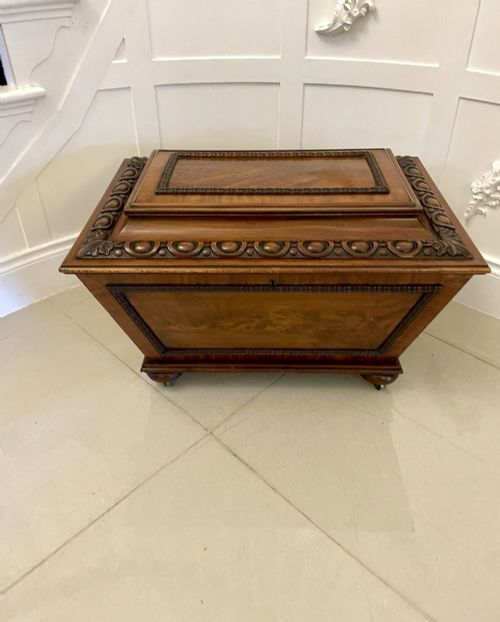
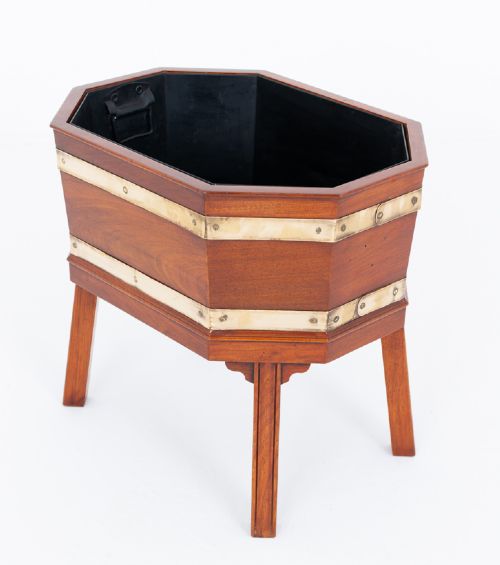
These mahogany drink caddy pieces are timber cellarettes, wine coolers and bottle stands built to hold bottles and decanters securely at the dining table.
Mahogany Drink Caddy
A mahogany drink caddy encompasses the cellarettes, wine coolers, bottle stands and serving trays that kept spirits and wine close to hand during eighteenth and nineteenth-century dining. The pieces recorded here span the eighteenth century, the Georgian era, the Regency period and the later Victorian decades up to the early twentieth century.
Most examples you encounter on this page take the form of cellarettes or wine coolers, frequently rendered in solid or veneered mahogany. Forms range from octagonal boxes and oval brass-bound tubs to freestanding stands and occasional serving trays.
Origins and styles draw heavily on Georgian, George III, William IV and Sheraton Revival designs. These encompass both freestanding dining room furniture and smaller tabletop bottle stands or tantalus frames.
How they were made
Cabinet makers utilised dense mahogany as the primary structural timber, often selecting stock with fine grain and rich natural patina. This timber was frequently enhanced with contrasting wood inlay or satinwood details to create geometric borders and decorative panels.
Metal fittings played a crucial structural and decorative role, with brass bands, mountings and handles securing the heavy timber staves of coolers and cellarettes. Interiors occasionally incorporated lead linings or fitted compartments designed to hold glass bottles safely.
A tantalus keeps guests staring at the whisky while frustratingly barring access to the stopper.
What varies in quality
Quality rests primarily on the selection of timber and the crispness of the cabinet work, from plain functional boxes to elaborately carved or inlaid forms. The handling of secondary woods and the integration of original brass mounts distinguish standard production from exceptional workshops.
Proportion and structural integrity dictate the standing of a piece, particularly in how well the timber has aged and retained its surface character. Finer examples display meticulous attention to interior fittings and stable joinery that has survived centuries of use.
Gillows
The Mahogany Drink Caddy Glossary
- Cellarette
- A lockable container or box designed to hold bottles of wine or spirits beneath the dining table. They frequently featured fitted interiors to separate individual glass vessels.
- Tantalus
- A wooden frame holding decanters that are locked in place to prevent unauthorised access to the contents while still displaying the bottles.
- Satinwood
- A pale, hard timber utilised for contrasting inlay work and decorative veneers on eighteenth and nineteenth-century cabinet furniture.
- Wine cooler
- A large vessel, often brass-bound and lead-lined, built to chill wine bottles in ice water during formal meals.
Mahogany Drink Caddy: Frequently Asked Questions
What is a mahogany drink caddy?
A mahogany drink caddy refers to portable or freestanding containers such as cellarettes, wine coolers and bottle stands designed to store wine and spirits.
These pieces were kept in dining rooms to hold bottles securely before serving.
How were cellarettes used?
Cellarettes were placed beneath the sideboard or beside the dining table to keep wine bottles cool and accessible during long meals.
Many contained lead-lined interiors intended to hold ice and water around the bottles.
How do I identify a Georgian piece?
Georgian pieces typically display characteristic proportions, traditional timber selection such as solid mahogany, and period-specific brass hardware.
Details like hand-cut dovetails and period inlay styles help distinguish these earlier items from later nineteenth-century revivals.
Where should I place one?
These pieces function well in living spaces or dining rooms as freestanding bottle stands, side tables or decorative storage boxes.
Their substantial timber construction allows them to serve practical purposes while retaining historical character.