
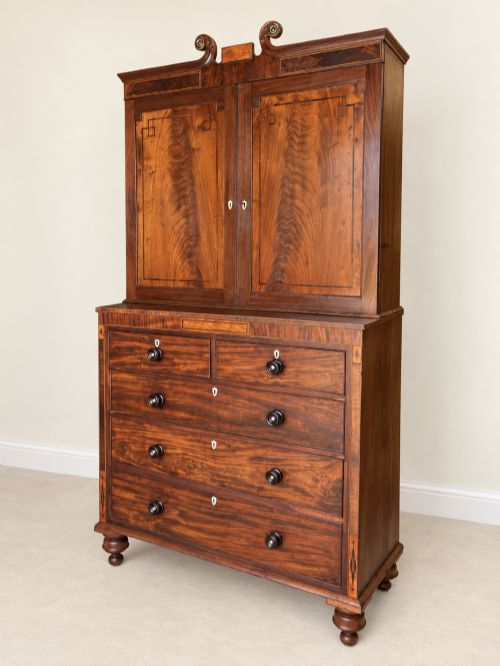
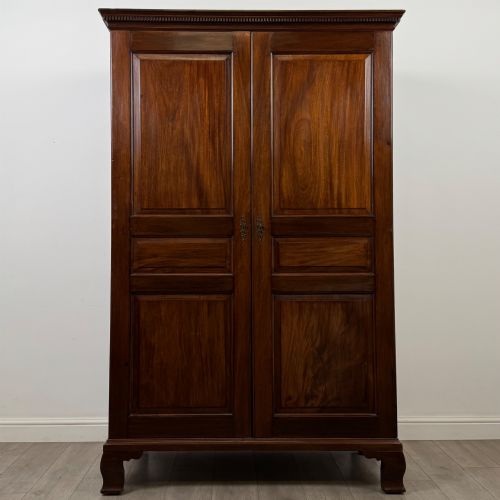
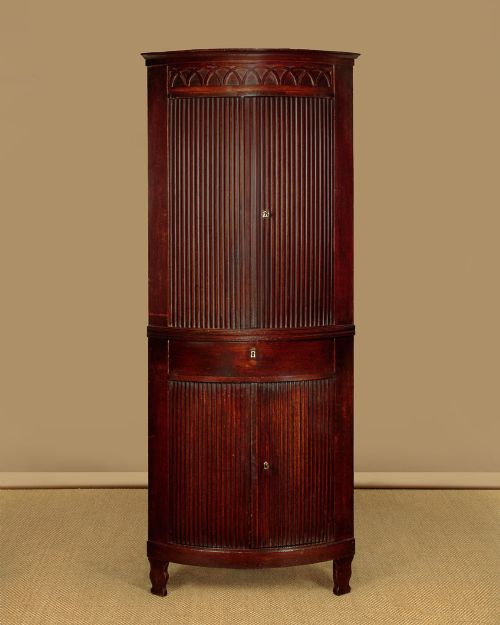
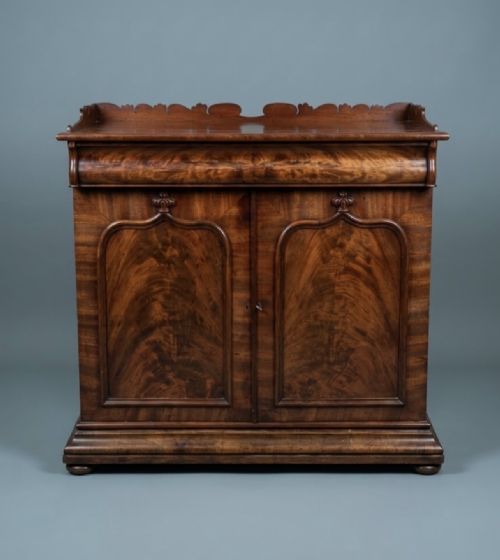
Mahogany Double Cupboard
A mahogany double cupboard provides substantial storage through paired doors while displaying rich timber figures across Georgian, Victorian, and Edwardian forms.
Mahogany Double Cupboard
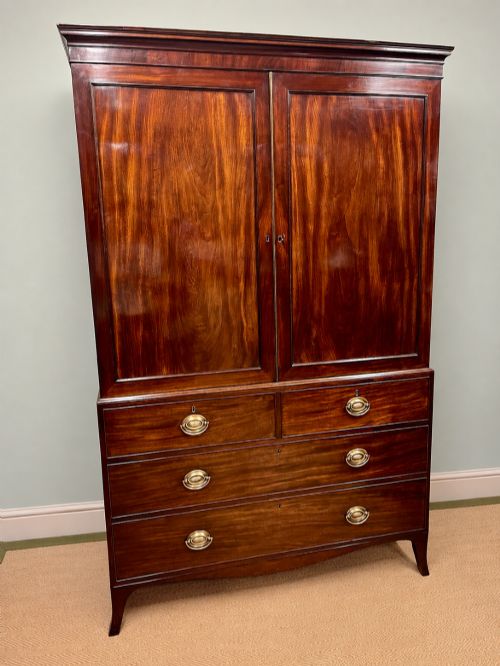
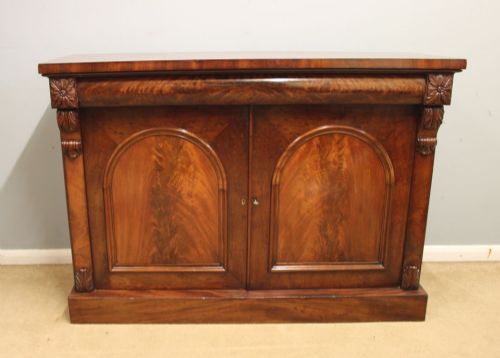
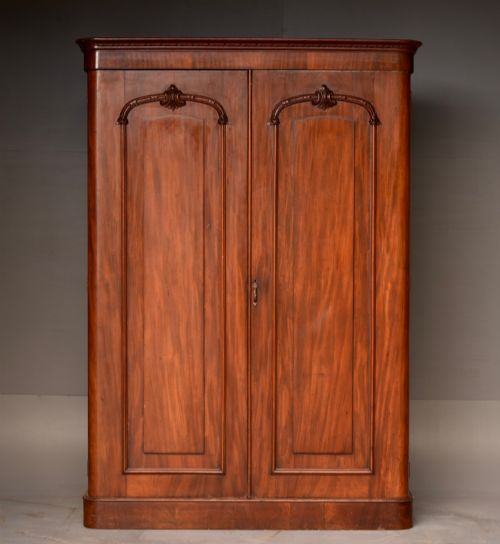
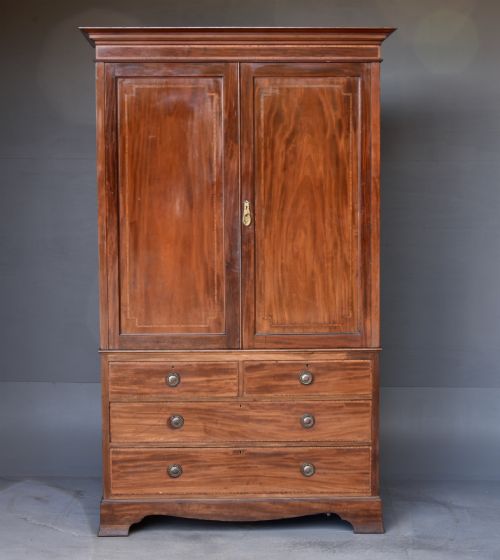
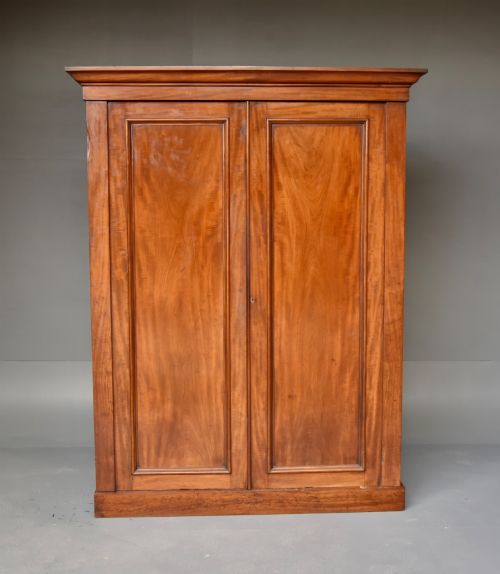
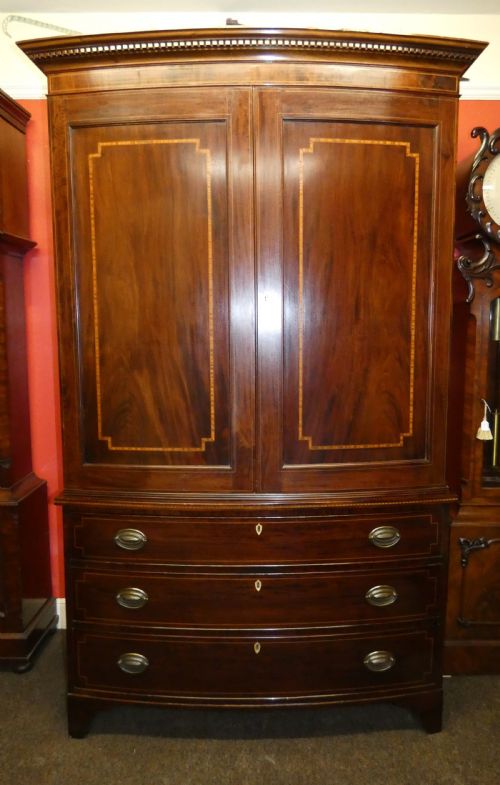
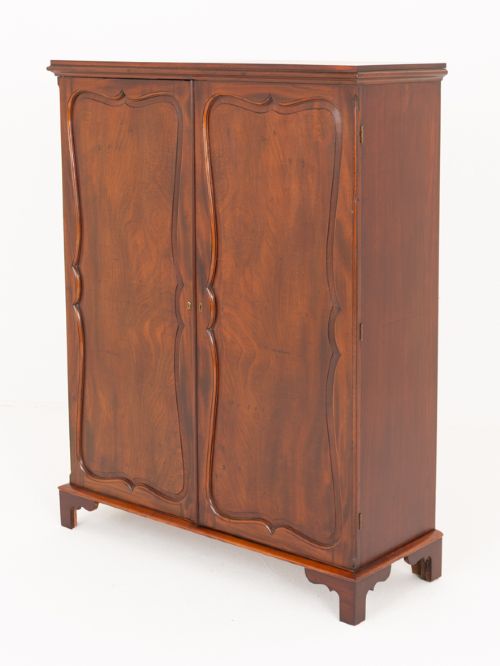
When searching for a mahogany double cupboard, buyers encounter a diverse range of large domestic furniture spanning the eighteenth and nineteenth centuries. These pieces encompass functional storage forms designed for domestic interiors, including wardrobes, linen presses, side cabinets, and corner cupboards.
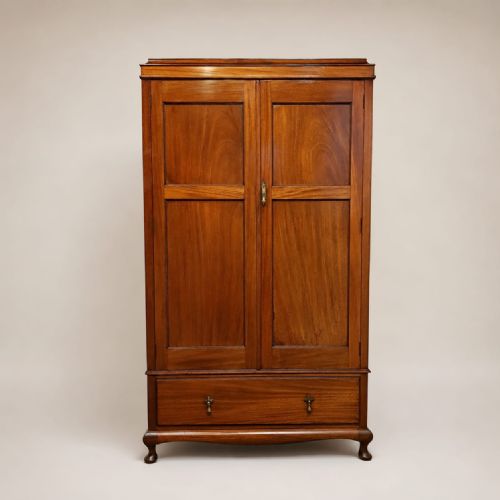
The selections on this page appear most commonly as Georgian and Victorian pieces, alongside Regency, William IV, and Edwardian examples. Wardrobes and linen presses represent the predominant tall storage forms, while corner cupboards and side cabinets provide lower or wall-anchored options.
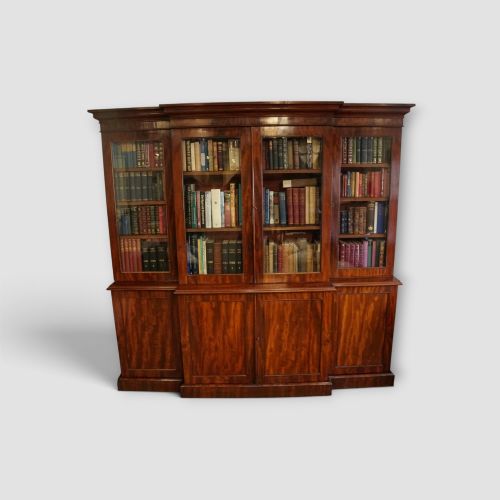
Origins trace back through distinct stylistic revivals such as Chippendale and Sheraton, incorporating solid timbers alongside veneered surfaces. Buyers find pieces ranging from low eighteenth-century linen cupboards to large nineteenth-century breakfront bookcases and double wardrobes.
How they were made
Cabinet makers built these pieces using solid mahogany and flame mahogany veneer applied to secondary woods like oak, often accented with satinwood and brass hardware. Marquetry inlay and glass panels frequently appeared on finer display cabinets and wardrobes from the Georgian period onward.
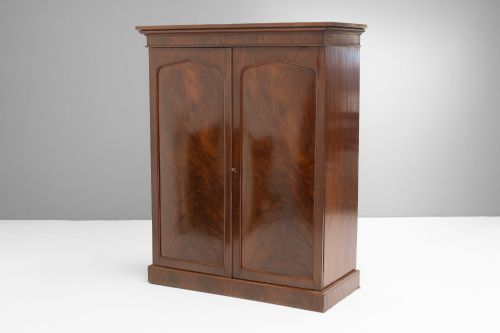
Construction techniques balanced structural integrity with decorative display, utilising large door panels hung on sturdy hinges to enclose hanging space, shelving, or linen slides. Veneering methods allowed craftsmen to arrange rich timber grains symmetrically across the front elevation of each double door.
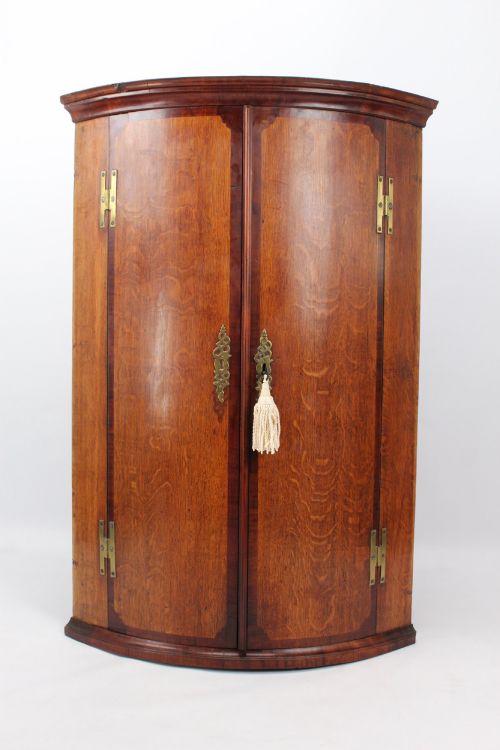
Several large corner cupboards still arrive with their original working keys, ensuring the doors stay firmly shut after centuries of service.
What varies in quality
Quality in these pieces rests upon the selection of timber figures, particularly the use of striking flame mahogany or plum pudding mahogany veneers. Finer examples display meticulous marquetry inlay, balanced proportions, and well-executed stylistic details such as dental cornices or bracket feet.
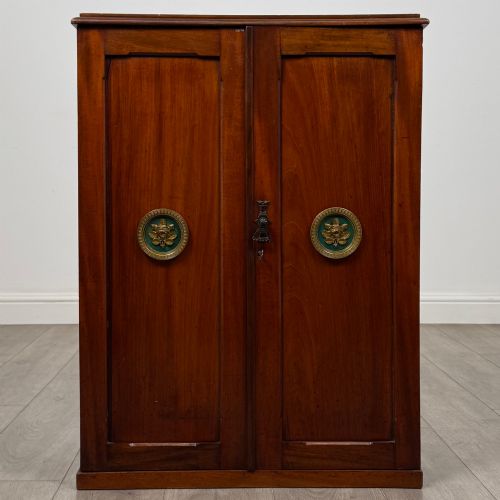
Construction depth and the integrity of internal fittings distinguish standard storage pieces from superior ones. Pieces retaining original brass handles, functional keys, and unblemished internal linen slides or hanging compartments command greater attention from discerning collectors.
maples & co·Edwards and Roberts
The Mahogany Double Cupboard Glossary
- Linen press
- A tall storage piece featuring upper double doors enclosing sliding trays for textiles, positioned above lower drawers. These items served domestic storage needs in Georgian and nineteenth-century homes.
- Corner cupboard
- A cabinet designed to fit neatly into the corner of a room, appearing in single or double height formats. They often feature panelled or glazed doors to display contents.
- Flame mahogany
- A decorative wood veneer showing a distinct, flame-like grain pattern created by cutting across the branch junction of the tree. It was favoured by cabinet makers for prominent door panels.
- Marquetry
- The art of applying small pieces of veneer to a structure to form decorative patterns or pictures. This technique often incorporated lighter woods like satinwood into mahogany surfaces.
- Breakfront
- A cabinet design where the central section projects forward from the flanking outer sections. This architectural arrangement creates depth and visual interest on large bookcases and wardrobes.
Mahogany Double Cupboard: Frequently Asked Questions
What is a linen press?
A linen press is a tall piece of furniture featuring double doors that open to reveal sliding internal trays used historically for storing folded garments and household linens.
Lower sections typically incorporate a chest of drawers to provide additional enclosed storage space within bedrooms or dressing rooms.
How do I date a mahogany cupboard?
Dating relies on examining structural characteristics, timber types, and stylistic indicators such as bracket feet, cornice designs, and brass hardware.
Georgian pieces often display simpler architectural lines, while Victorian and Edwardian examples may incorporate heavier proportions or specific revival decorative motifs.
What is flame mahogany veneer?
Flame mahogany veneer is a thinly sliced timber section taken from the fork of a tree where branches diverge, producing a dramatic rippled figure.
Cabinet makers applied these matched veneers symmetrically across the front doors of high-status cupboards to create striking visual patterns.