
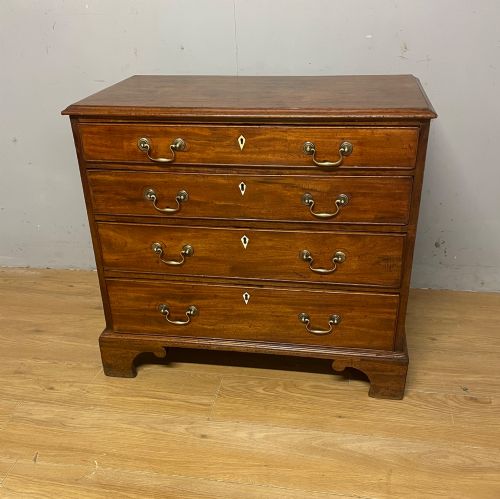
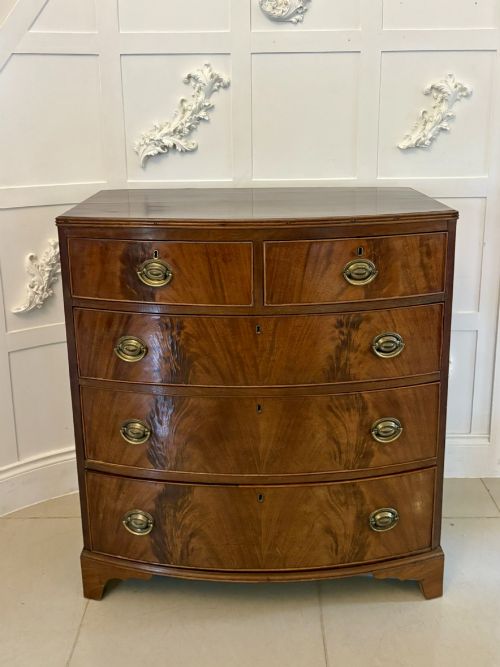
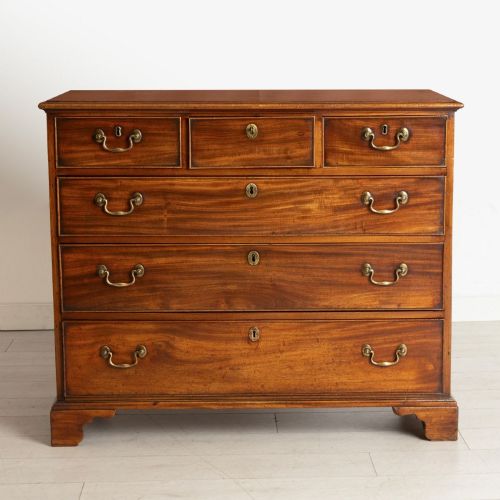
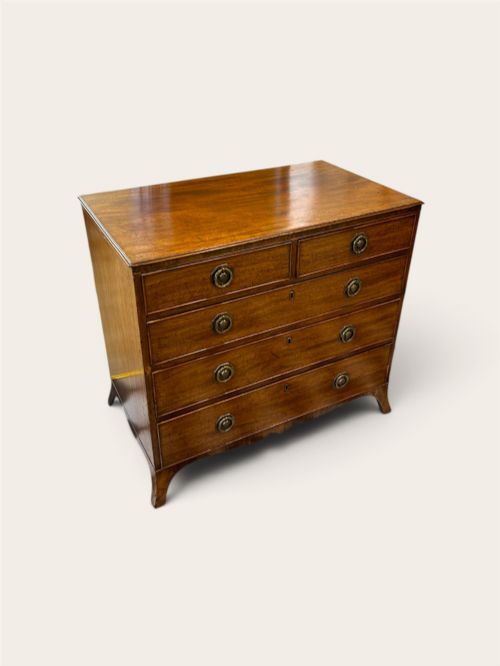
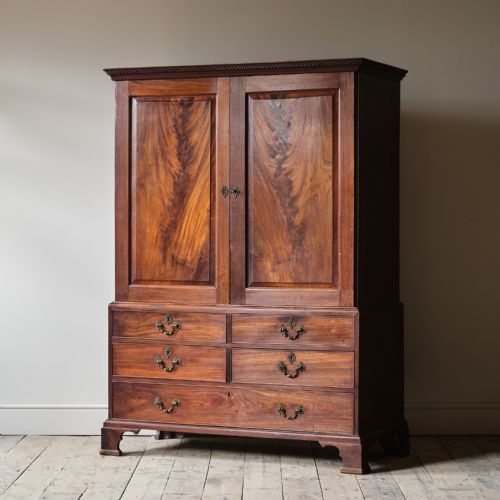
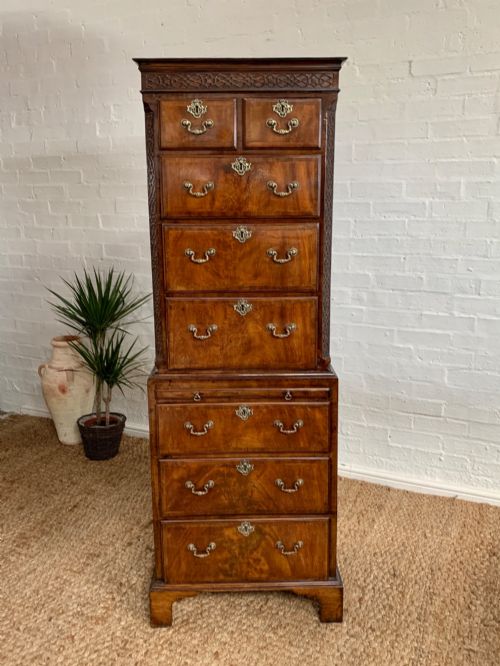
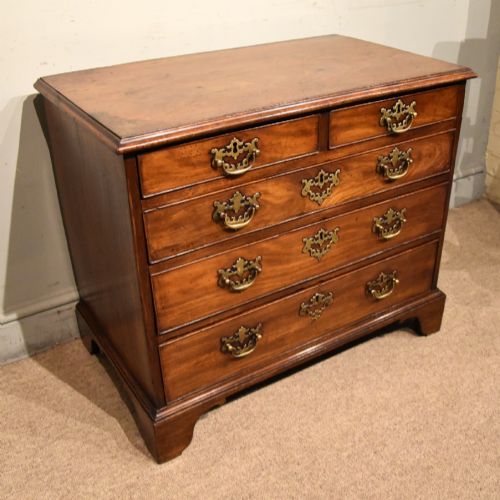
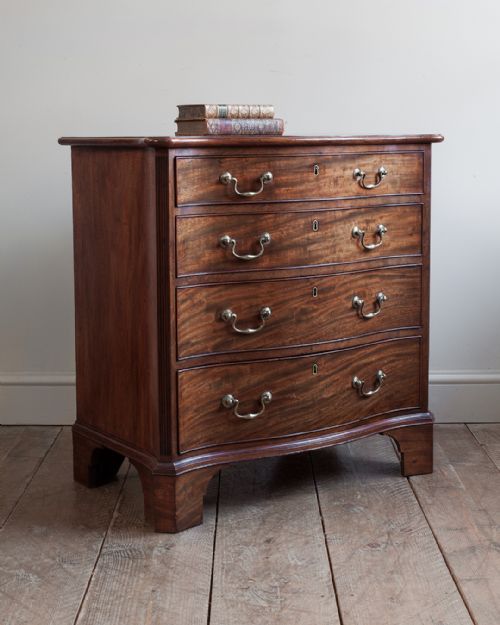
George III Bedroom Furniture
George iii bedroom furniture comprises period chests, tallboys, and presses designed for storage.
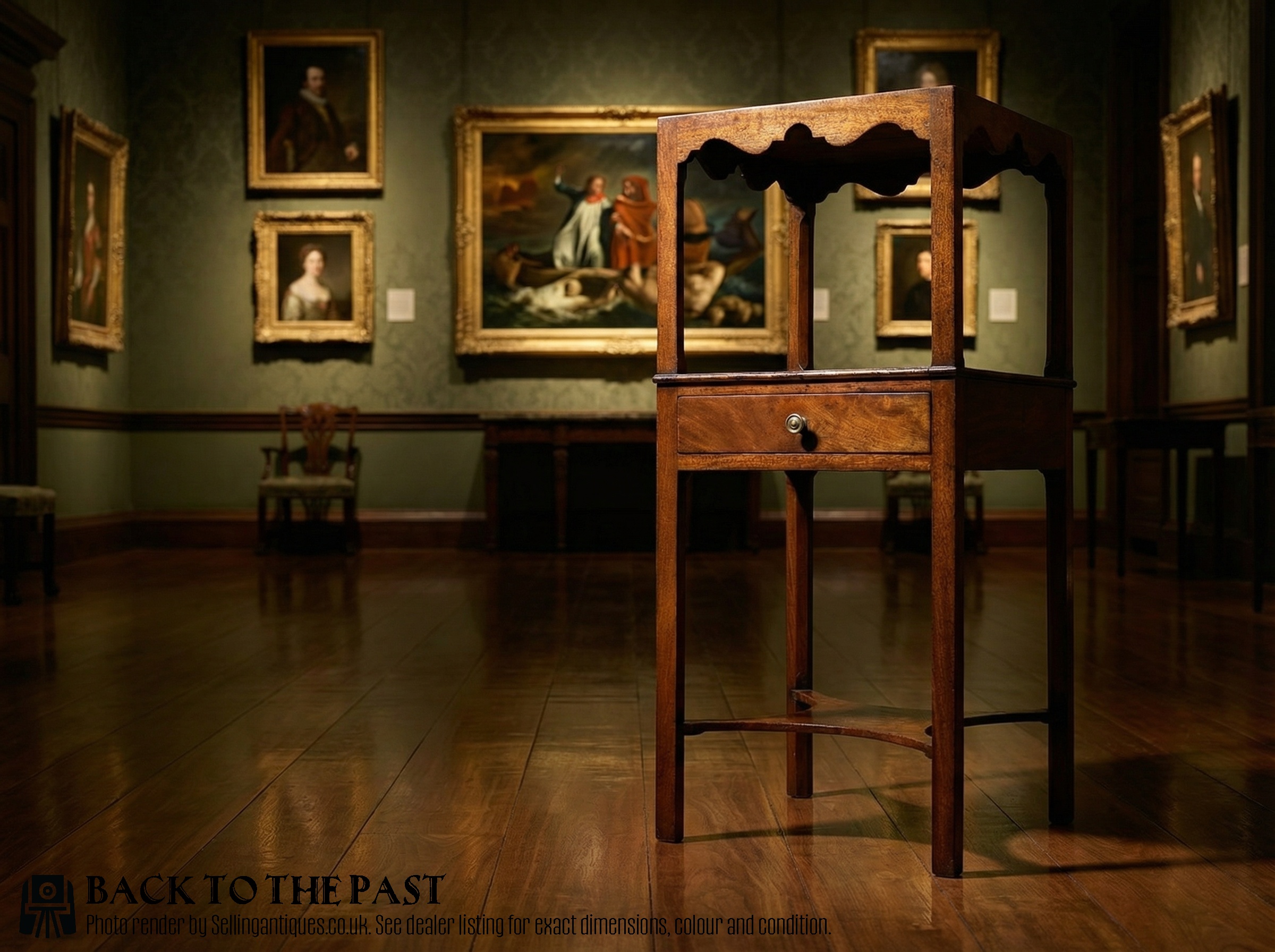
George III Bedroom Furniture
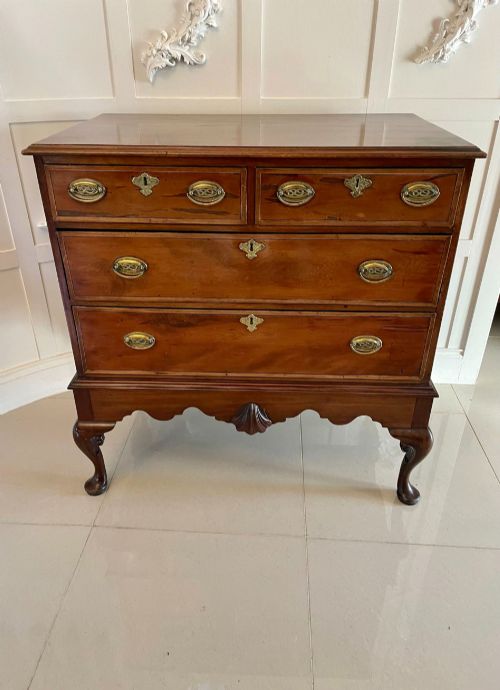
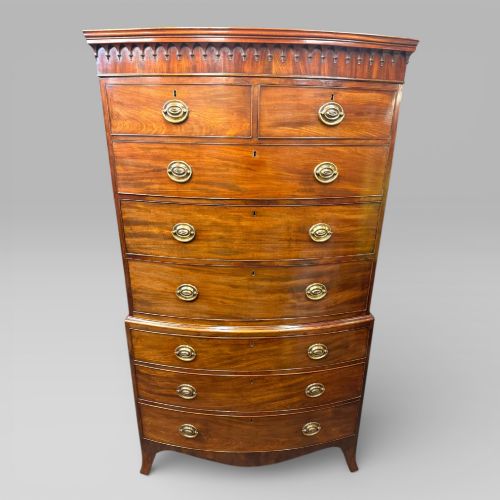
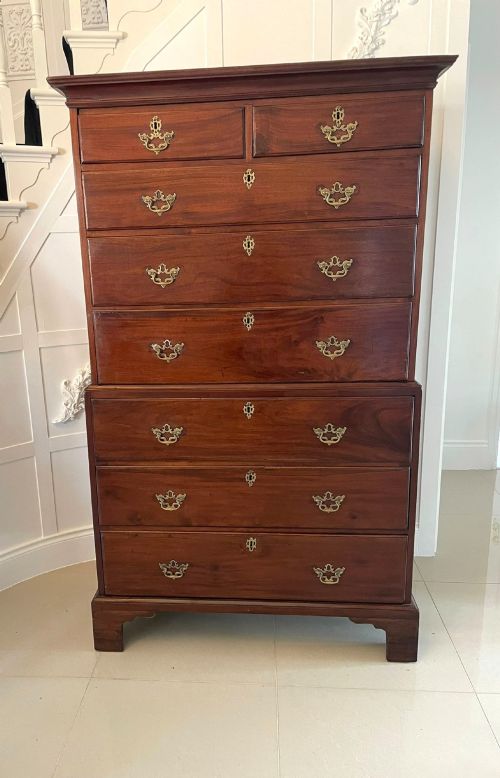
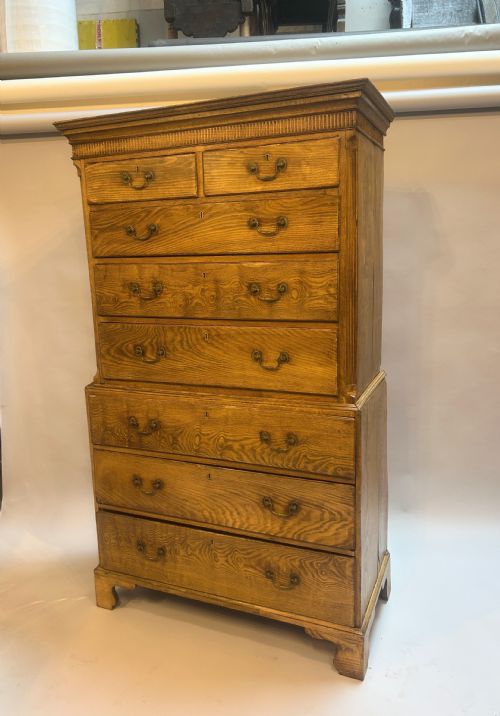
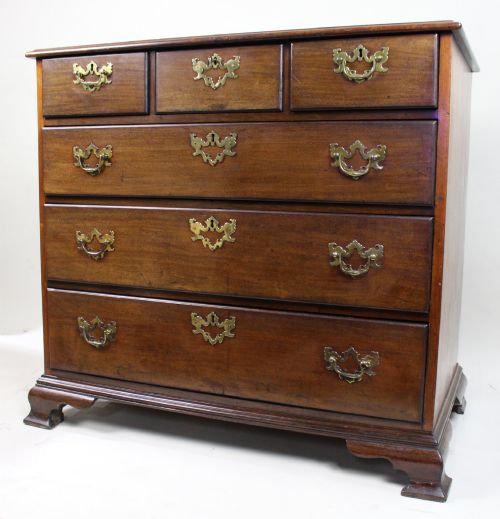
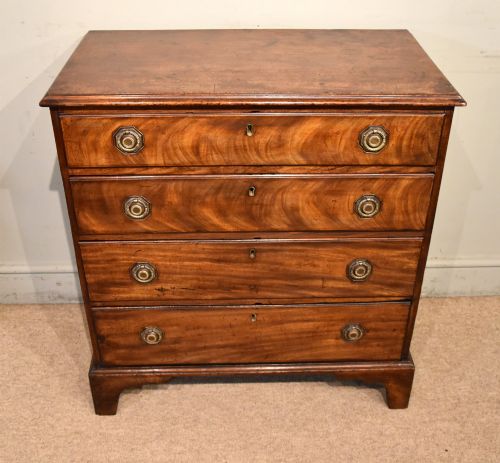
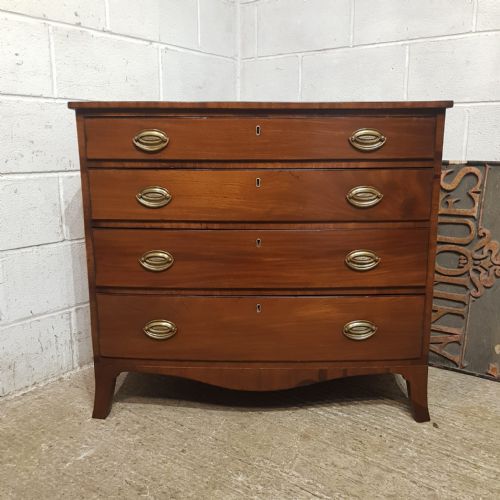
George iii bedroom furniture centres on case pieces built for personal storage during the Georgian era. Chests of drawers dominate the selection, appearing in flat-front, bow-front, and serpentine shapes alongside tallboys and linen presses.
Makers constructed these storage items primarily in mahogany, often augmented by satinwood, burr walnut, oak, and pine. The listings span the eighteenth and nineteenth centuries, reflecting both authentic period production and later revival work.
Materials and construction
Cabinetmakers relied heavily on solid and veneered mahogany, sometimes enriched with boxwood stringing and brass handles or escutcheons. Secondary timbers such as oak and pine commonly form the drawer linings and carcase backs.
Joinery methods involved precise dovetailing on drawer construction and frame assemblies. Surface finishes highlight the natural grain patterns of figured timber, while specialist pieces incorporate sliding brushing trays and integrated locking mechanisms.
Some chests hide sliding brushing trays designed for gentlemanly grooming.
Judging execution
Quality rests on the selection of timber and the crispness of the cabinetwork. Fine examples display carefully matched veneers, tight dovetails, and proportioned mouldings that maintain structural integrity without heavy restoration.
The sophistication of the design sets higher tiers apart, visible in serpentine fronts, crossbanding, and inlaid details. Lesser pieces rely on simpler rectilinear forms with plain timber and minimal decorative ornament.
The George III Bedroom Furniture Glossary
- Bow-front
- A cabinet front that curves outward in a convex arc. This shape gained popularity in the late eighteenth century to soften room angles.
- Tallboy
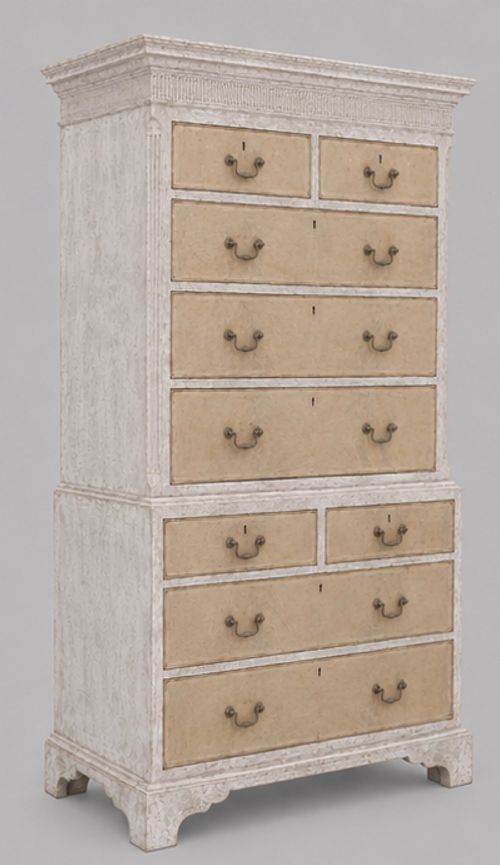
- A stacked chest comprising a lower chest of drawers topped by a smaller upper chest. It maximises vertical storage capacity.
- Linen press
- A tall cupboard featuring sliding trays enclosed by upper doors, placed above a bank of lower drawers. It housed household linens before dedicated wardrobes became standard.
- Brushing slide
- A pull-out shelf integrated into the upper section of a chest. It provided a surface for folding clothes or grooming.
- Serpentine
- A front contour characterised by a convex centre flanked by concave curves. This intricate profile required advanced woodworking skill.
George III Bedroom Furniture: Frequently Asked Questions
What is a bachelor's chest?
A bachelor's chest is a compact drawer unit featuring a pull-out brushing slide. It served as a versatile piece for personal correspondence and daily dressing.
These pieces typically date from the eighteenth century and offer utilitarian function alongside refined cabinetwork.
How do I identify a tallboy?
A tallboy combines two distinct cabinet sections, placing a narrower chest directly upon a wider base chest. This stacked format created substantial vertical capacity for clothing storage.
Craftsmen often used figured mahogany or burr walnut veneers to finish the exterior surfaces.
Where were bedside cabinets used?
Bedside cabinets served as compact storage units placed beside sleeping quarters to hold personal items. They frequently feature small cupboards or enclosed drawers.
Cabinetmakers constructed these smaller items from mahogany and oak to match larger bedroom furnishings.
What defines a linen press?
A linen press consists of a large upper cupboard containing internal sliding trays for textiles, mounted over a chest base. They provided essential storage before modern wardrobes.
Examples from the period utilise panelled doors and strong timber carcases.