


Mahogany Credenza with Shelf
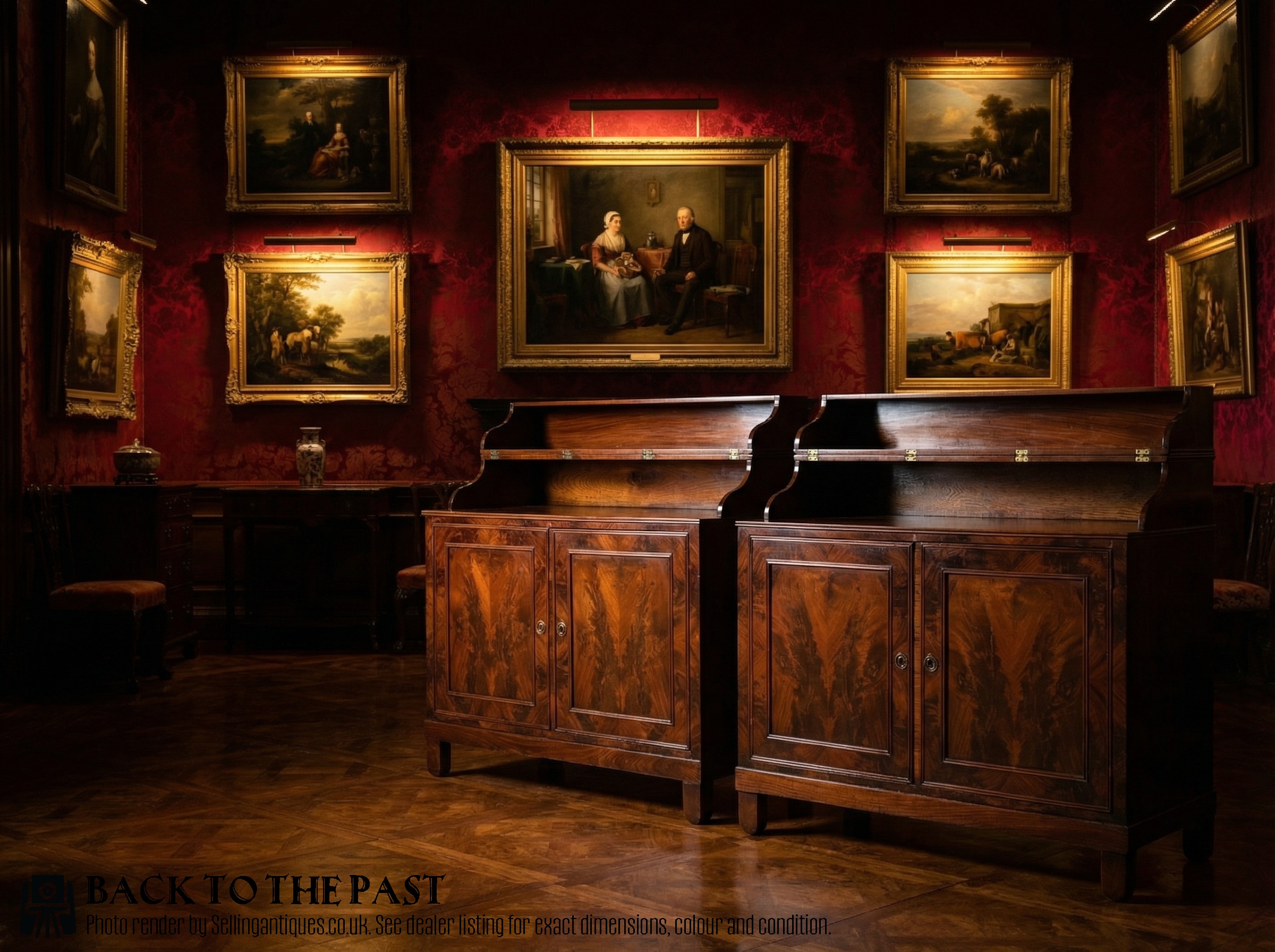
A mahogany credenza with shelf brings rich timber and practical tiers together, offering the perfect surface for display and storage in a traditional room.
Mahogany Credenza with Shelf
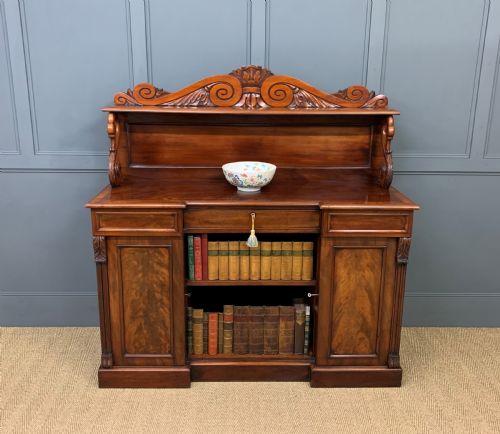
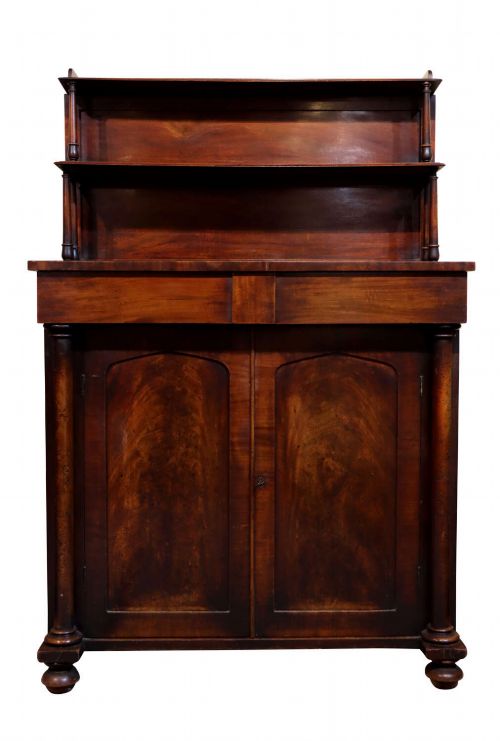
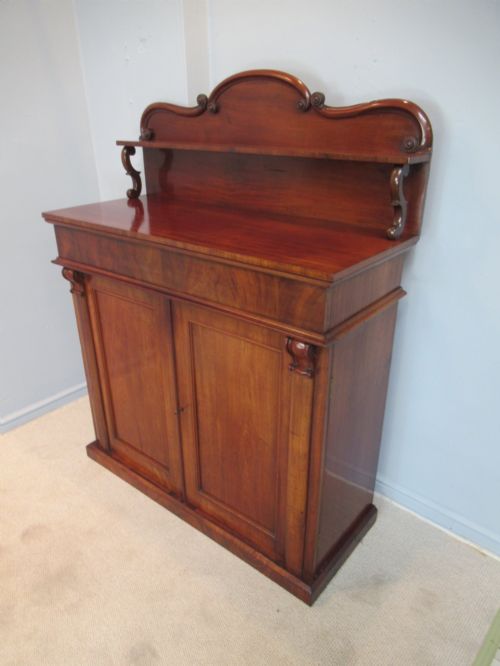
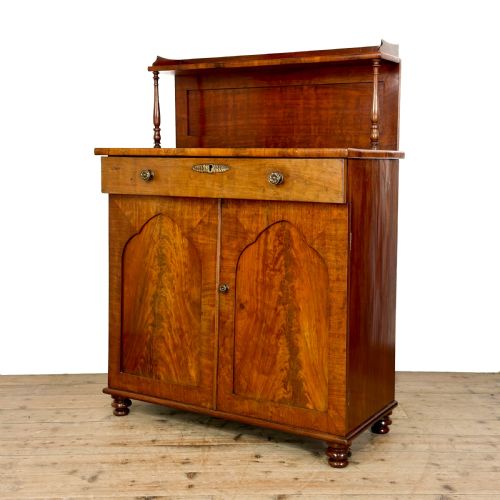
When searching for a mahogany credenza with shelf, buyers encounter a variety of low storage pieces primarily categorised in the trade as chiffoniers, side cabinets, and sideboards. These items frequently appear from the Regency, George IV, William IV, and Victorian eras, spanning the nineteenth century.
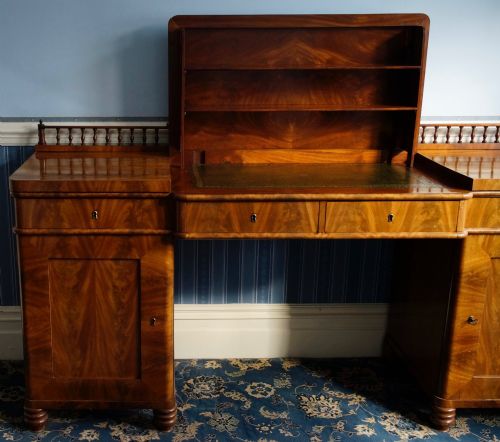
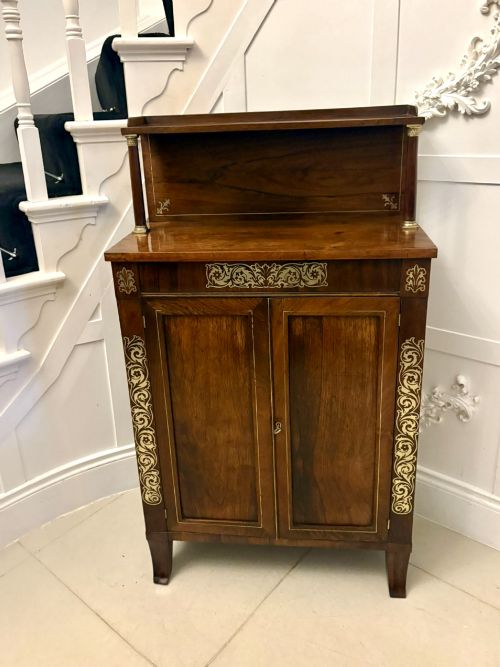
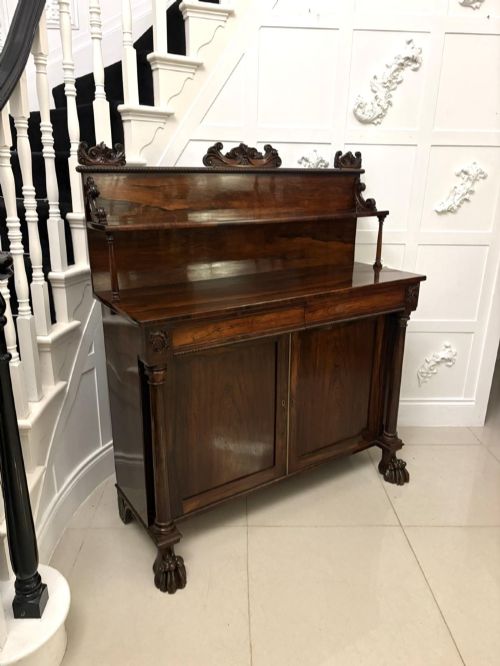
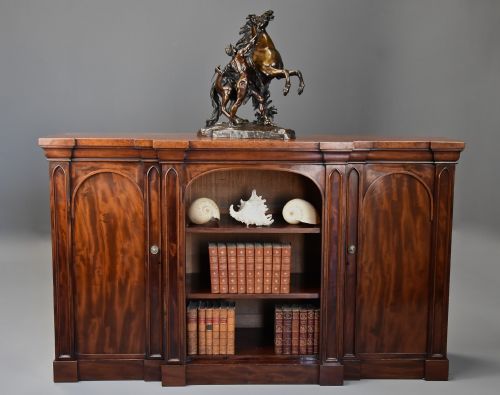
The form typically combines a lower enclosed cupboard with an upper tiered superstructure featuring one or more shelves supported by slender pillars or scrolls. Pieces emerge in both neat, compact proportions and larger formats, sometimes incorporating open book shelves or writing drawers.
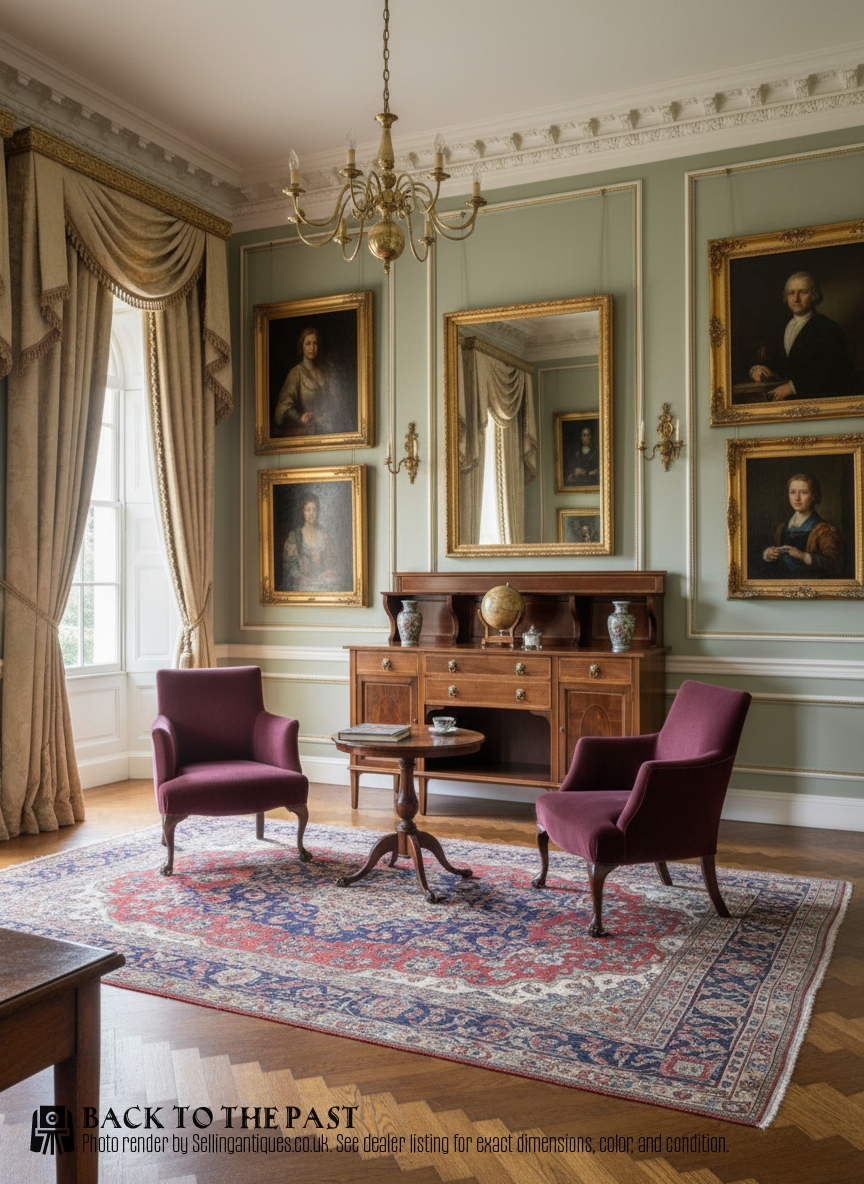
Makers and workshops of the period utilised solid mahogany alongside flame mahogany veneer and satinwood stringing, occasionally mounting marble tops or brass gallery rails. The resulting furniture serves utility and display equally well, fitting comfortably into dining rooms, libraries, and drawing rooms.
Materials and construction methods
Cabinet makers relied heavily on solid mahogany and carefully selected flame mahogany veneer applied to secondary timbers to create rich, figured surfaces. Decorative contrast was frequently achieved through the addition of satinwood inlay, brass mounts, and occasional marble tops.
Structural integrity relied on traditional joinery techniques, securing upright shelves with turned pillars, scrolling wooden supports, or bracketed backs. Drawer linings and interior shelving generally utilised secondary softwoods or dense hardwoods constructed with hand-cut dovetails.
Listings feature 19th Century, Regency, Victorian, and Edwardian periods, constructed primarily in mahogany, flame mahogany veneer, brass, satinwood, and leather.
Distinctions in craftsmanship
Quality rests significantly upon the choice of timber and the matching of flame mahogany veneer across the door panels and frieze drawers. Finer examples display continuous grain patterns and meticulous timber selection rather than plain or heavily patched surfaces.
The refinement of the carving, the turning of the shelf supports, and the crispness of brass detailing separate standard utility pieces from high-status workshop production. Proportions also dictate value, with unusually small scale and well-balanced tiered superstructures commanding particular attention.

Robert Strahan·James Shoolbred And Co
The Mahogany Credenza with Shelf Glossary
- Chiffonier
- A low sideboard or cabinet with a raised shelf back, popular during the Regency and Victorian periods for serving or display.
- Flame mahogany veneer
- Thin slices of timber cut from wood where the branch meets the trunk, producing a distinctive flickering, flame-like grain pattern.
- Breakfront
- A cabinet design where the central section projects forward from the flanking outer sections, adding architectural depth.
- Satinwood
- A pale, hard exotic timber often used for contrasting stringing, banding, and inlay work on dark mahogany furniture.
Mahogany Credenza with Shelf: Frequently Asked Questions
What is a chiffonier?
A chiffonier is a compact sideboard equipped with enclosed lower cupboards and one or more shelves mounted upon the upper back. It evolved during the nineteenth century to provide both storage and display space in smaller reception rooms.
Cabinet makers produced them in Regency, William IV, and Victorian styles, frequently incorporating writing drawers or marble tops into the design.
How do I date these cabinets?
Dating relies upon observing the prevailing stylistic traits, hardware, and timber treatments characteristic of specific nineteenth-century periods. Regency and George IV pieces tend to show cleaner classical lines and brass mounts, while Victorian examples often feature heavier scrolls and Gothic or structural influences.
Secondary woods, construction methods, and veneer thickness also offer reliable clues to whether a piece originates from the early eighteen-hundreds or the later Victorian decades.
Where were these pieces used?
These cabinets served primarily in dining rooms and drawing rooms as sideboards for storing glass, ceramics, and silverware. The upper shelves provided a convenient area for displaying decorative plates, books, or ornamental objects.
Smaller scale versions adapted easily to libraries and parlours where floor space remained at a premium.
How do I care for mahogany?
Maintaining mahogany requires keeping the timber away from direct heat sources and strong sunlight, which can dry out the wood and fade the rich colour. Regular dusting with a soft, dry cloth preserves the finish without building up greasy residue.
Occasional application of traditional beeswax helps nourish the polish and maintain the natural lustre of the veneer.