


Mahogany Corner Seat
A mahogany corner seat is a clever architectural design built to fit snugly into a room angle while offering a sturdy and supportive resting place.
Mahogany Corner Seat
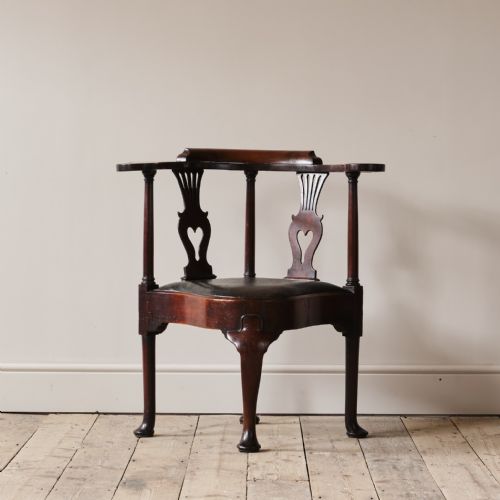
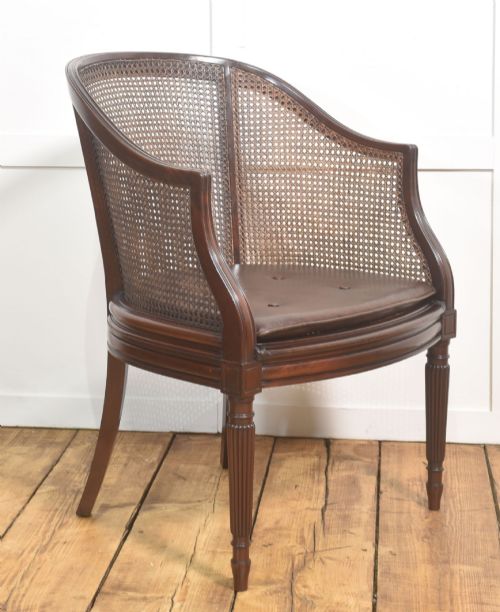
When you search for a mahogany corner seat, you are looking at specialised seating forms engineered specifically for room angles, ranging from early eighteenth-century examples to later revival pieces. The selection includes corner chairs, corner armchairs, tub armchairs, desk chairs, salon low armchairs, and corner sofas designed to maximise interior space.
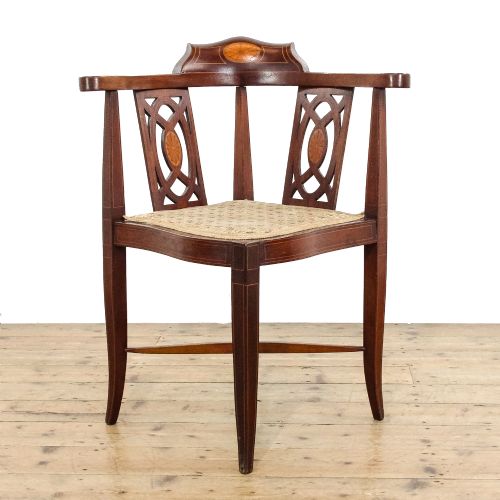
The most common versions met on this page are Edwardian and Georgian examples, often featuring inlaid wood or upholstered pads. These items bridge domestic utility and decorative placement, serving as both functional furniture and striking architectural accents in traditional rooms.
How they were made
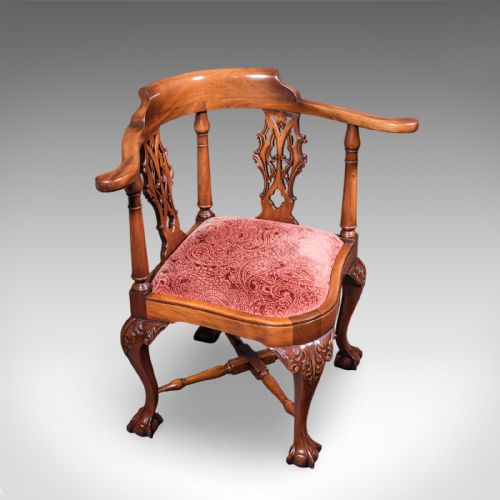
Cabinet makers utilised dense timber, primarily mahogany, shaped into curved frames, cabriole legs, or supportive spindles. Construction often involved sophisticated joinery to support the unusual diagonal stress placed upon a corner frame.
Surface ornamentation relied on contrasting elements like satinwood, boxwood, and wood inlay, alongside brass fittings. Seats were finished with materials such as fabric, leather, or rush, depending on the period and the specific seating form.
The listings on this page span from George II and Georgian periods through Victorian and Edwardian revivals, utilising mahogany alongside leather, rush, and fabric.
What varies in quality
The distinction between standard domestic pieces and finer items rests in the crispness of the carving, the precision of the wood inlay, and the structural integrity of the corner joints. Superior examples display thoughtful proportions and careful selection of timber grain.
Subtleties in stylistic detailing, such as marquetry work or cane panels, separate ordinary workshop production from higher-status commissions intended for prominent rooms.
The Mahogany Corner Seat Glossary
- Mahogany
- A durable, reddish-brown tropical hardwood prized for its stability and rich grain. It became the primary timber for fine British cabinet making from the eighteenth century onwards.
- Marquetry
- Decorative patterns formed by fitting together thin veneers of different coloured woods. This technique added intricate floral or geometric designs to the flat surfaces of chairs.
- Cabriole leg
- A furniture leg that bends outward in a convex curve and tapers inward in a concave curve, ending in a pad or foot. It is frequently seen on eighteenth-century seating.
- Cane
- Woven material made from the peeled bark of rattan palms. It provides a lightweight, flexible panel for chair backs and seats.
Mahogany Corner Seat: Frequently Asked Questions
Where did people place a corner seat?
These seats were designed to fit neatly into the ninety-degree angle of a room, making efficient use of awkward spaces. They often sat in studies, bedrooms, or hallways where standard rectangular chairs would block traffic flow.
In period interiors, placing a chair in the corner helped soften architectural hard lines while providing an unexpected secondary seating option.
How do I tell a Georgian corner chair from an Edwardian one?
Georgian corner chairs, particularly those from the mid-eighteenth century, tend to have heavier proportions, sturdy vase-shaped splats, and robust cabriole or square legs. They focus on structural mass and clean timber work.
Edwardian examples, made around the turn of the twentieth century, are often lighter in feel and frequently feature delicate stringing, marquetry inlay, or satinwood banding typical of revival tastes.
Can I use an antique corner chair at a modern desk?
Many historical corner and desk chairs were built to lower seating heights than modern office furniture. You should check the clearance beneath your desk surface before daily use.
Using one requires a mindful approach to ergonomics, as older seating priorities differed significantly from modern comfort standards.