


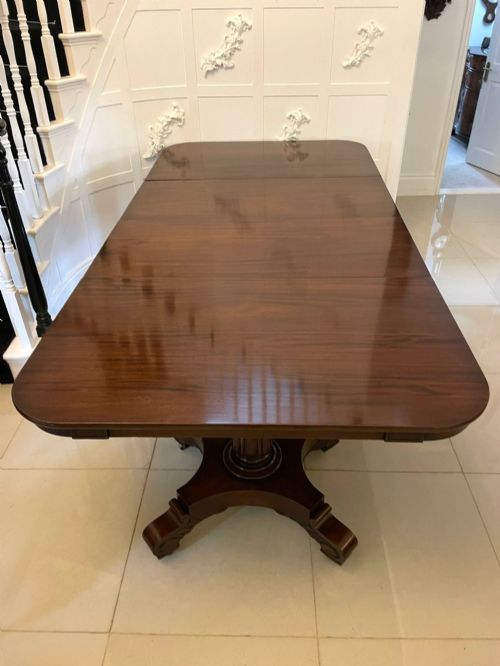
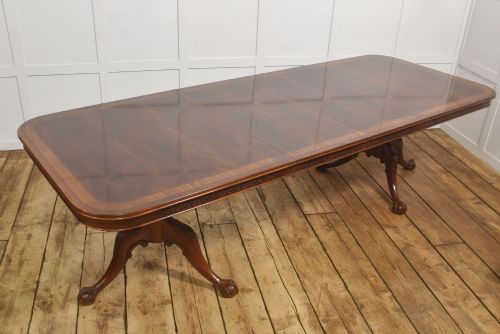
Mahogany Conference Dining Table
A mahogany conference dining table brings together generous proportions and rich timber, offering a commanding centrepiece for boardrooms and large dining rooms alike.
Mahogany Conference Dining Table
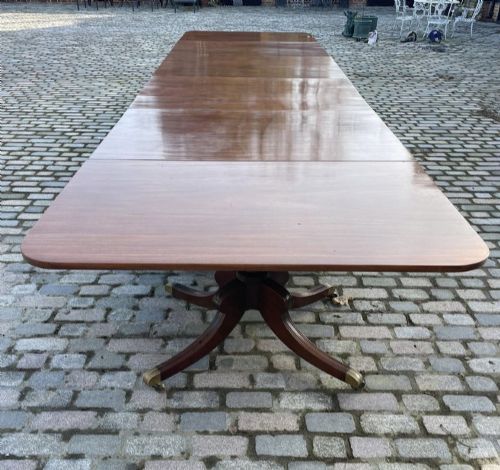
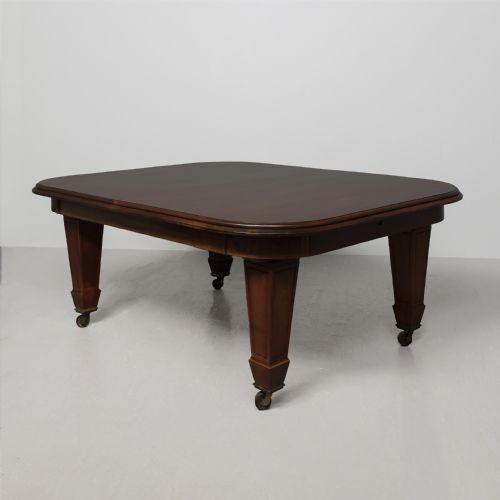
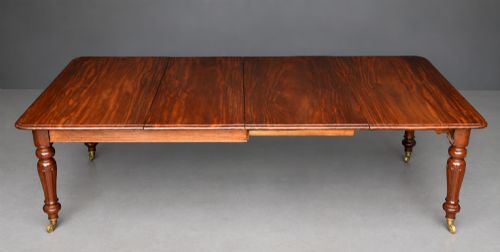
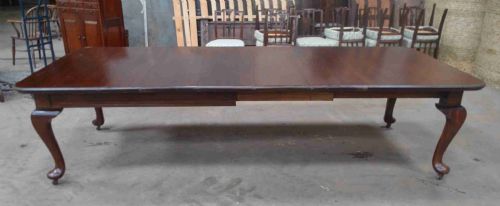
When searching for a mahogany conference dining table, you encounter substantial extending tables designed to seat large numbers of people for meetings or banquets. These pieces span from the Georgian and Regency periods through to the Victorian era and later Edwardian and 1920s revivals.
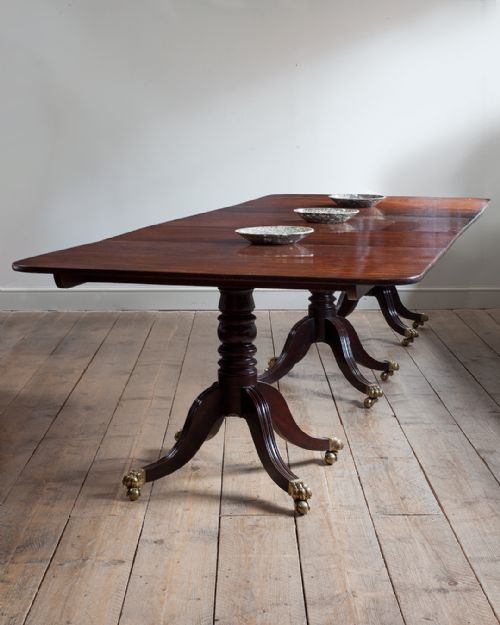
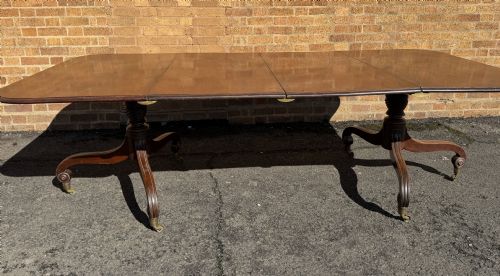
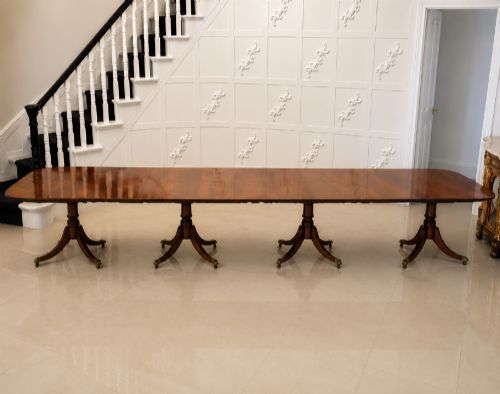
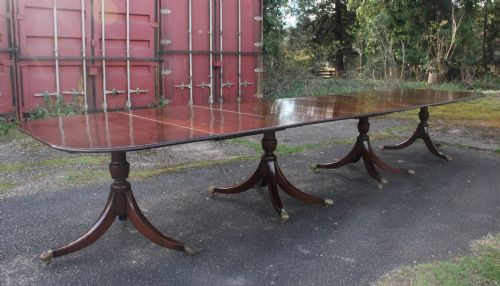
You frequently meet multi-pillar formats, including twin, triple, and four-pedestal configurations equipped with removable leaves to adjust the overall length. The inventory also includes boardroom tables and grand dining sets designed for formal gatherings.
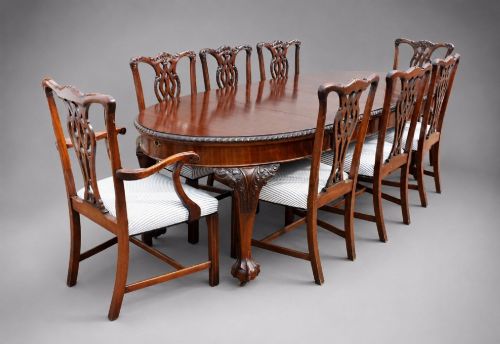
Origins stretch across the 18th, 19th, and early 20th centuries, with styles ranging from strict George III and William IV designs to later Regency and Chippendale revivals.
How they were made
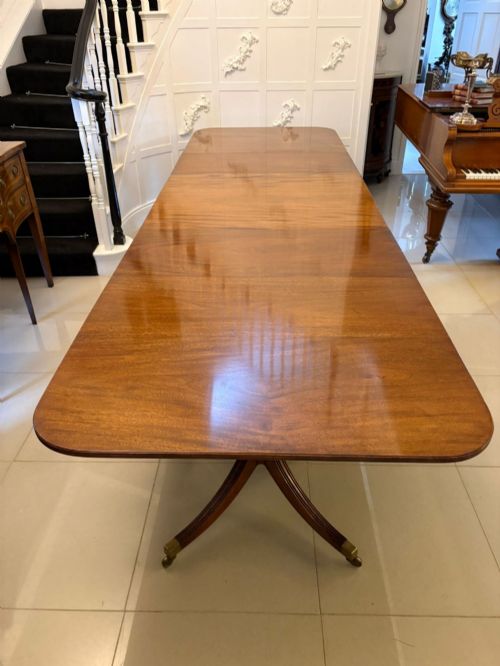
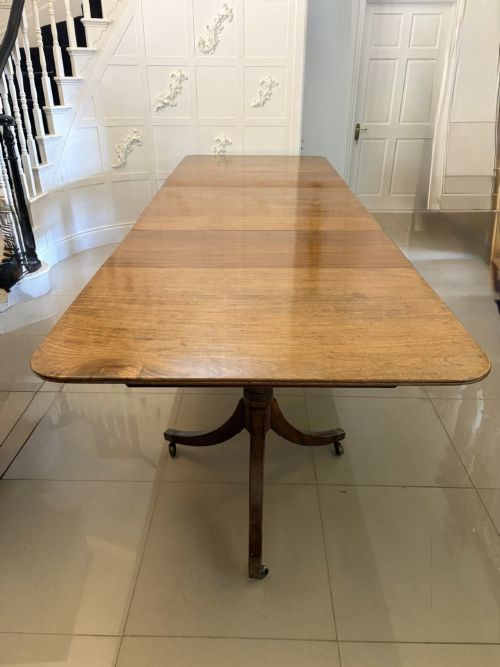
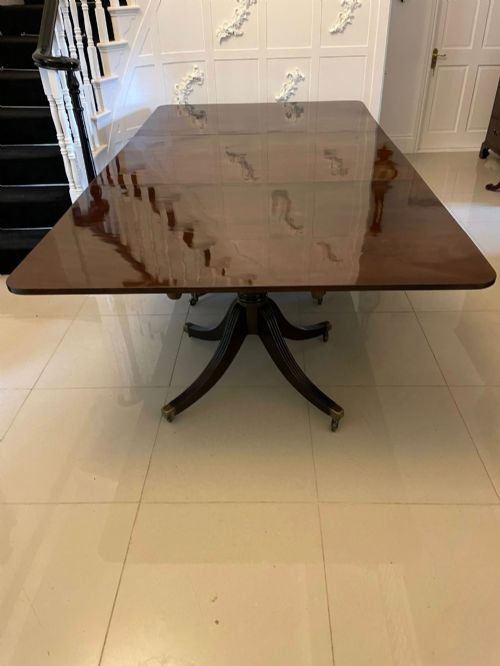
Cabinet makers utilised dense, figured mahogany timber for the expansive top surfaces, often supported by heavy turned wooden pillars fitted with brass castors. These pedestals commonly feature multiple reeded legs branching out to distribute the considerable weight of the table.
Extending mechanisms rely on wooden runner tracks and drop-in leaves that secure together, allowing the framework to expand safely when hosting large parties. Brass clips and metal brackets provide additional stability across the multi-pillar joints.
The listings span the Georgian, Regency, Victorian, and Edwardian periods, utilising solid mahogany, brass, leather, and satinwood.
What varies in quality
The degree of figuring in the mahogany veneer dictates the visual depth of the top, with heavily grained surfaces commanding greater presence. Timber selection across the leaves and main sections shows whether the maker matched the grain patterns carefully during construction.
The weight and casting quality of the brass fittings and castors reveal the tier of production, alongside the precision of the turning on the central pillars and the smoothness of the extending mechanism.
Gillows·Wylie and Lochead·Robert Adam
The Mahogany Conference Dining Table Glossary
- Pedestal
- A central column support resting on branching legs rather than traditional corner posts. This structure allows sitters extra legroom around large tables.
- D-End
- A table end shaped in a semi-circle resembling the letter D. These sections detach or separate to form smaller console tables when the leaves are removed.
- Extending table
- A table designed with a mechanism or removable leaves to increase its overall length. This permits the table to accommodate larger gatherings as needed.
- Reeded
- A decorative moulding consisting of parallel convex rounded beads carved into the wood. It frequently appears along the legs and edges of Regency furniture.
- Figured mahogany
- Timber selected for distinctive, wavy grain patterns that catch the light. Cabinet makers reserved these choice cuts for the most prominent surfaces.
Mahogany Conference Dining Table: Frequently Asked Questions
How do I determine the period of a mahogany conference dining table?
Examine the legs, edge moulding, and construction of the underframe for clues to the date of manufacture. Georgian and Regency examples often feature reeded legs and brass castors, while Victorian versions scale up in sheer mass and leaf capacity.
Look closely at the timber grain and the mechanism tracks underneath. Later Edwardian and 1920s revival pieces frequently imitate these earlier styles using standardised hardware and distinctively modern screw fittings.
How many people can these large tables accommodate?
Seating capacity scales directly with the number of pedestals and inserted leaves. Standard configurations range from ten to twelve seaters on twin pedestals up to expansive twenty-eight seater formats spread across multiple pillars.
Review the listed dimensions and leaf counts to judge the maximum extended length. Tables exceeding five or six metres naturally require four or more pedestals to maintain structural support.
How do I care for a polished mahogany surface daily?
Dust the timber regularly with a soft, dry cloth to prevent grit accumulation on the polished finish. Avoid placing the table near direct heat sources or strong sunlight to prevent the mahogany from drying out or fading unevenly.
Utilise felt pads and protective mats beneath hot dishes and liquids during use. Promptly wipe away any spills to protect the historic polish from water marks.
What is the difference between a dining table and a boardroom table?
Boardroom tables are traditionally built for meetings and corporate discussions, often featuring heavy proportions designed for institutional spaces. Dining tables focus equally on domestic hospitality and flexibility with removable leaves.
Both forms utilise high-grade mahogany and substantial pillar supports across the listings. The distinction usually lies in the intended setting rather than any fundamental difference in core construction.