
Vintage Mahogany Extending Table
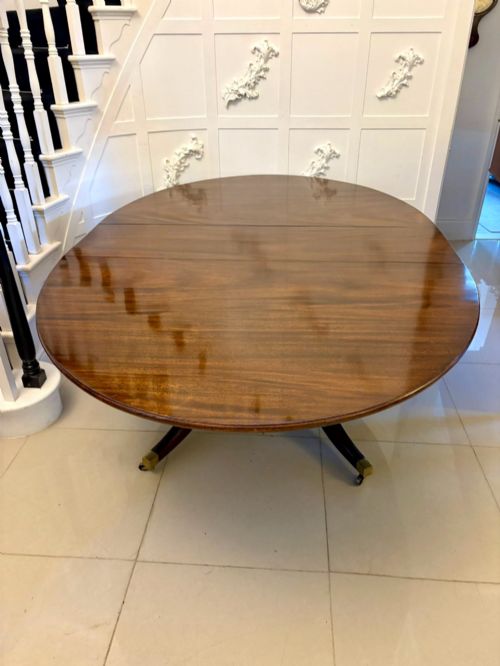
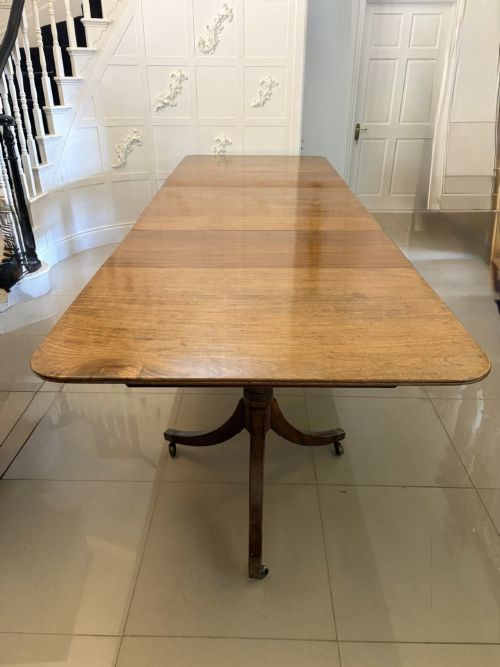
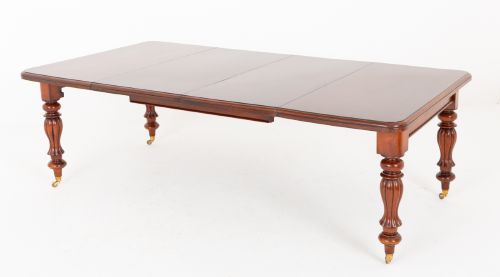
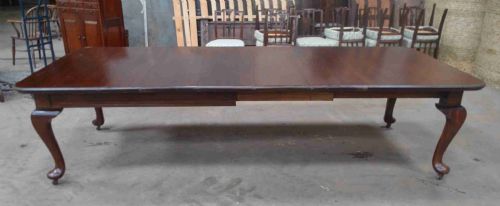
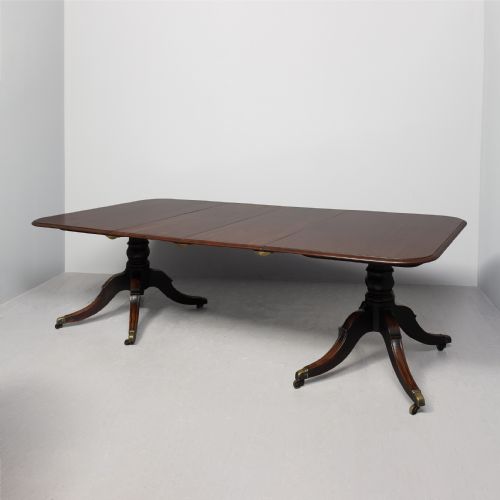
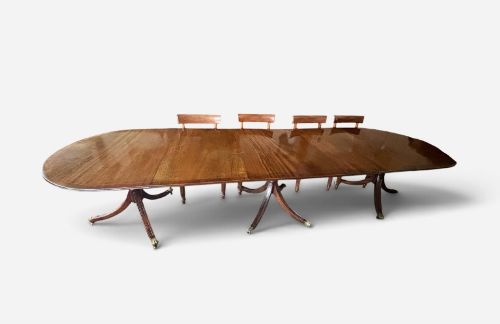
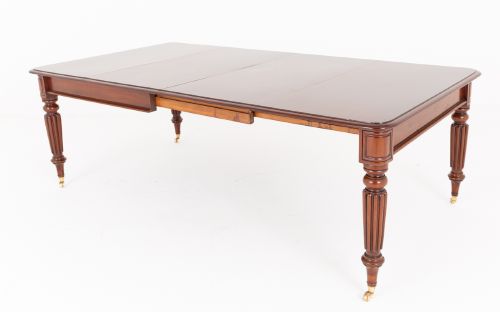
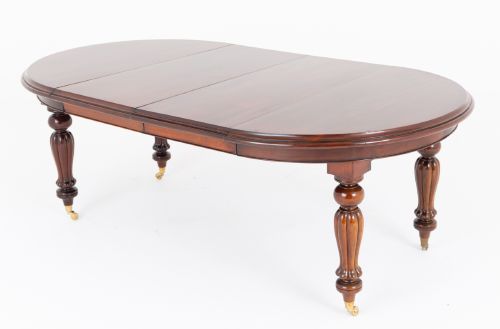
A vintage mahogany extending table offers versatile room for dining while bringing rich timber grain and period presence into the home.
Vintage Mahogany Extending Table
A vintage mahogany extending table brings together centuries of dining furniture design, spanning Georgian, Regency, Victorian, and later revival periods. When looking through these options, a buyer encounters everything from twin and triple pedestal formats to drop-leaf and wind-out mechanisms.
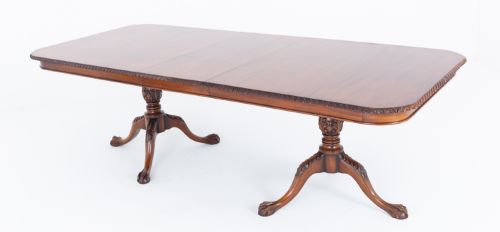
The pieces on this page originate from the nineteenth and early twentieth centuries, capturing the shift from late Georgian craftsmanship through Victorian manufacturing to Edwardian and later revivals. Formats vary from intimate two-leaf configurations to large banquet sizes accommodating ten, twelve, or fourteen diners.
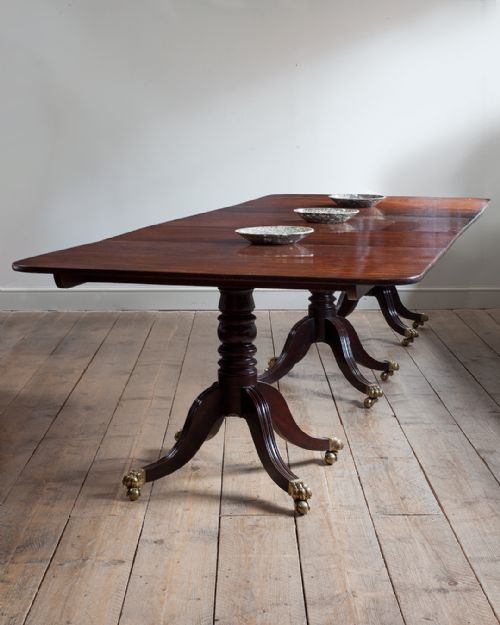
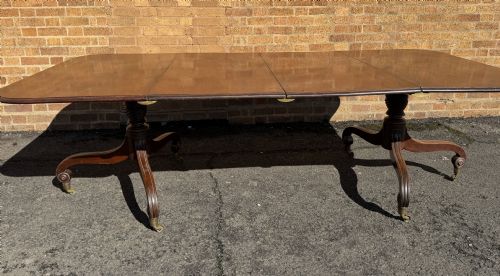
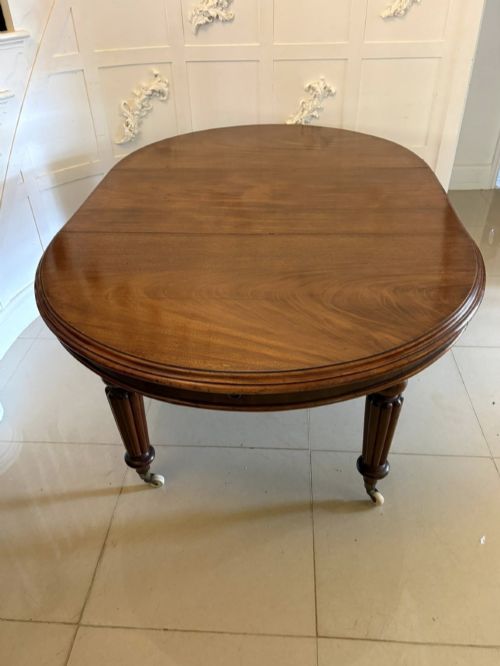
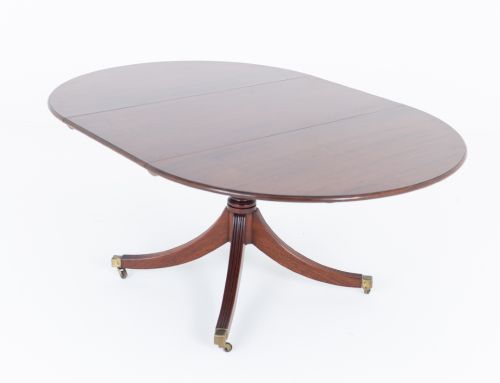
Pedestal tables supported by brass castors appear frequently, alongside drop-leaf and D-end designs that adapt easily to different room proportions. These tables serve daily family meals as readily as formal gatherings.
Materials and construction
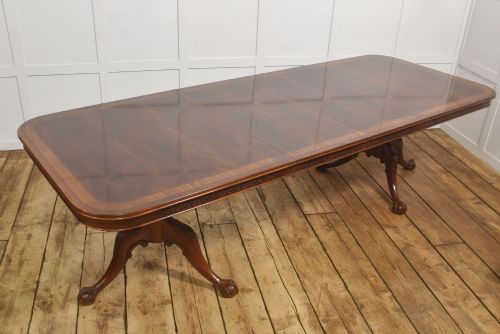
Makers utilised solid mahogany and figured mahogany veneers, often enhanced with satinwood or marquetry inlay to frame the tabletop borders. Brass hardware, including castors, fixing clips, and winding mechanisms, provides structural support and movement.
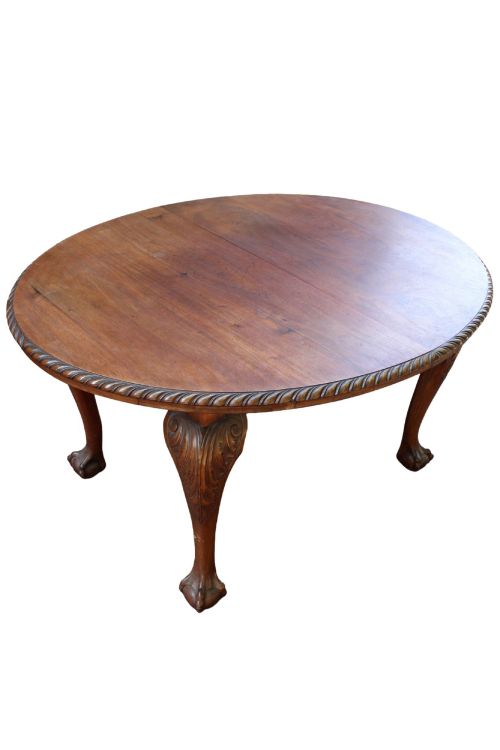
Cabinetmakers employed clever internal tracks, drop leaves, and removable extra leaves to allow tables to expand smoothly. Ormolu mounts and carved claw and ball legs appear on specific revival pieces, adding decorative detail to the timber framework.
Listings span the Georgian, Regency, Victorian, and Edwardian eras, constructed primarily in solid mahogany and figured veneers.
Assessing quality
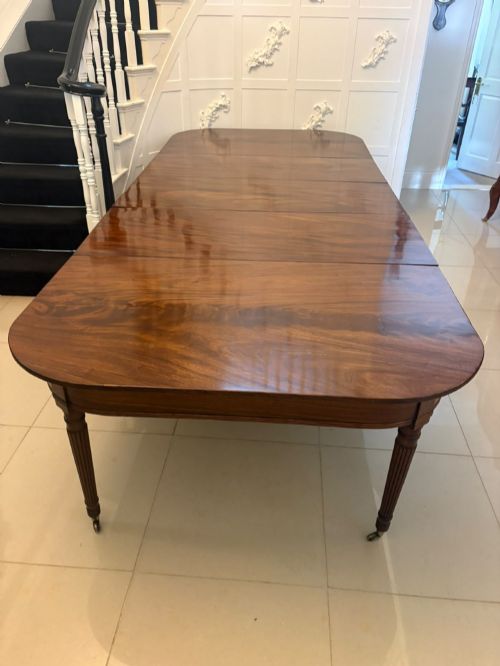
Quality rests upon the selection of timber, particularly the depth of grain in figured or flame mahogany and the precision of any inlay work. Tables built with solid construction and well-fitted extension leaves hold their alignment better during daily use.
The sophistication of the pedestal carvings, the stability of the wind-out or drop-leaf mechanism, and the original quality of the brass castors all separate standard workshop output from exceptional cabinetmaking.
Whytock and Reid·Gillows
The Vintage Mahogany Extending Table Glossary
- Pedestal
- A central column support resting on legs, commonly used to hold up large dining tables without blocking chairs. These columns often feature reeded or carved details.
- Wind out
- A mechanical extension system operated by a handle that turns a screw mechanism to expand the table frame. This allows extra leaves to drop smoothly into the centre.
- D-end
- A table end shaped in the half-circle form of the letter D, often used in modular dining sets. These sections detach or fold when the table is reduced in size.
- Flame mahogany
- A veneer cut from timber where the branch meets the trunk, producing a rippling flame-like pattern. Cabinetmakers prized this figure for prominent tabletop surfaces.
- Reeded
- A decorative moulding pattern consisting of parallel convex rounded lines carved directly into wood. This technique appears frequently on table legs and pillar columns.
Vintage Mahogany Extending Table: Frequently Asked Questions
How do extending tables work?
Most antique versions use either a wind-out mechanism with a handle, drop leaves, or removable central boards inserted into a sliding frame. These systems allow the furniture to grow in length for dinner parties.
Once opened, brass clips or wooden pins secure the leaves in place to keep the surface stable and level.
How many people can sit at these tables?
Capacities range widely depending on the number of extra leaves and the overall length of the timber framework. Smaller formats seat six, while larger multi-pillar banquet tables accommodate ten to fourteen diners.
Checking the length with leaves inserted gives a clear indication of seating comfort.
How do I care for mahogany surfaces?
Mahogany responds well to regular dusting with a soft cloth and occasional applications of traditional beeswax to nourish the grain. Avoiding direct sunlight and excessive heat protects the timber and finish from drying out.
Using mats under hot dishes prevents marking the polished wood.
How do I identify a Regency style table?
Regency and Regency revival pieces often feature pillar supports, reeded legs, and brass paw castors reflecting early nineteenth-century design tastes. The timber selection typically emphasises dark, rich mahogany tones with minimal fuss.
Proportions remain balanced, focusing on clean architectural lines rather than heavy carving.