

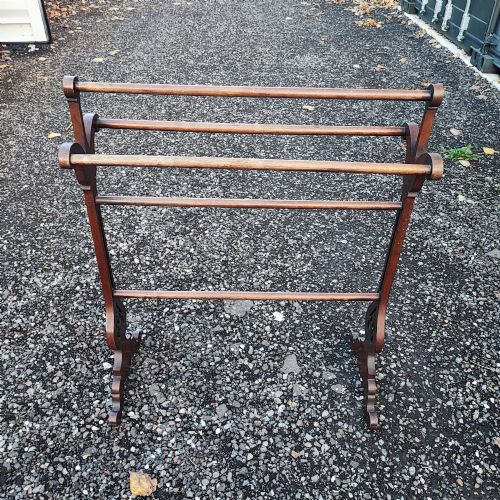
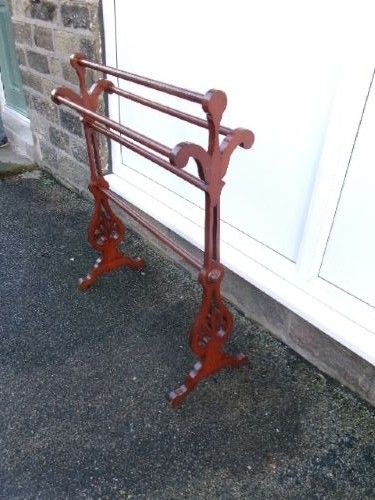
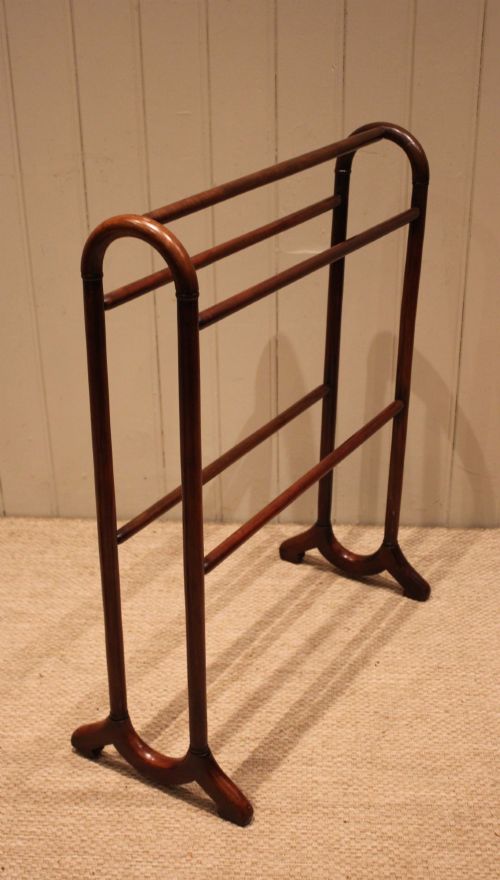
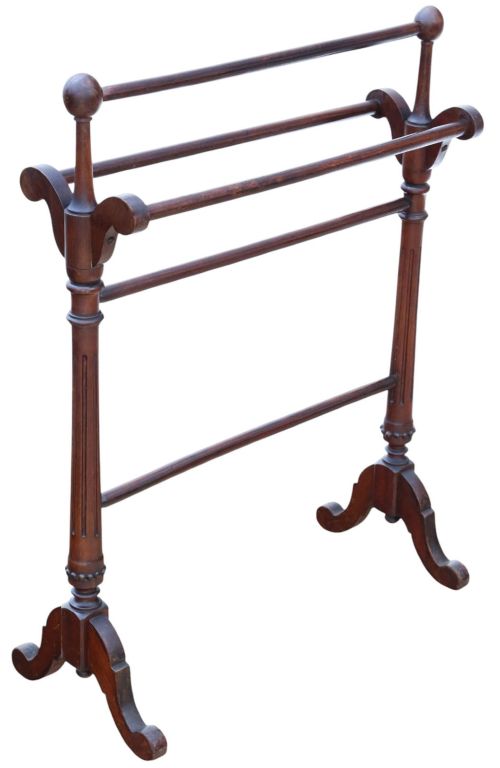



Mahogany Clothes Airer
These mahogany clothes airer pieces are functional laundry stands that bring period warmth and practical utility to a room.
Mahogany Clothes Airer
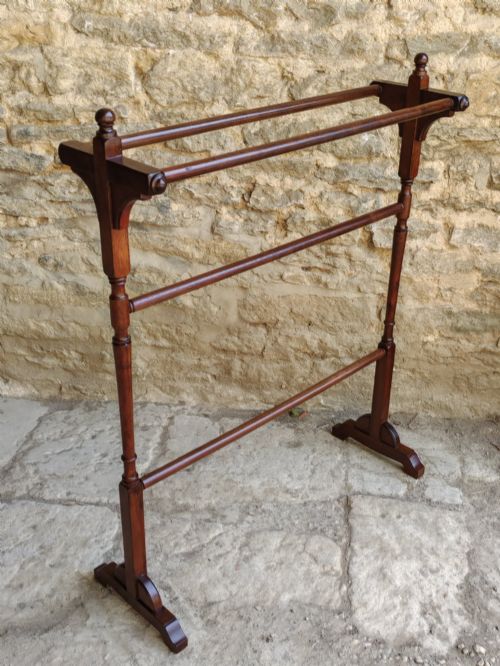
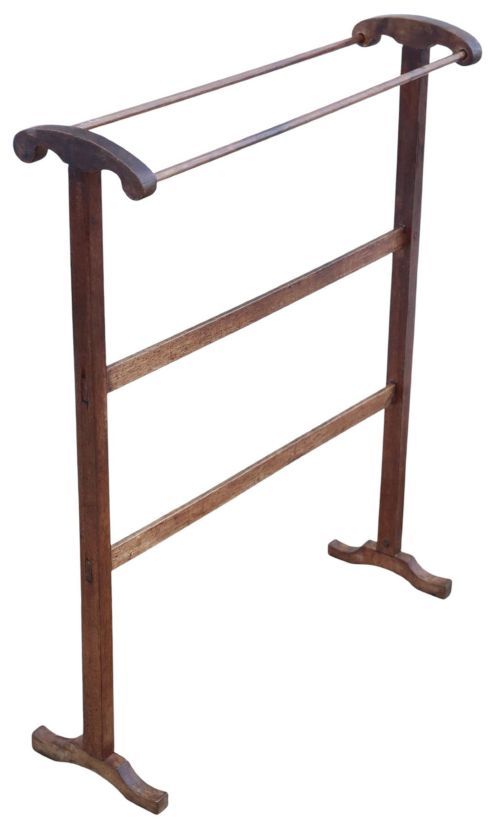
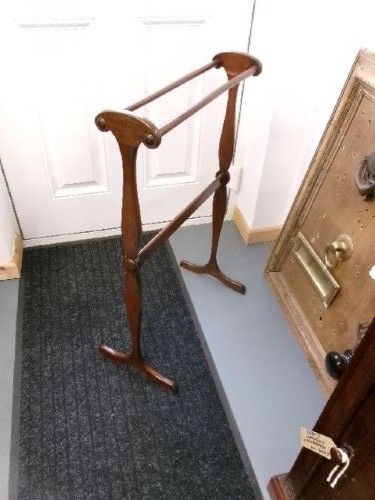
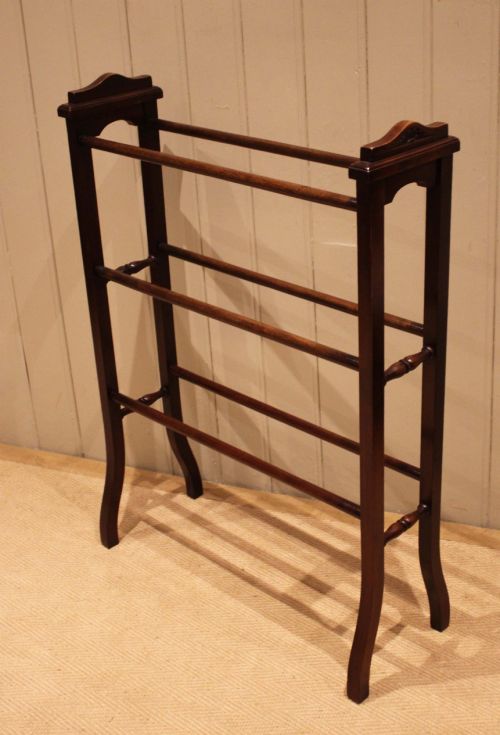
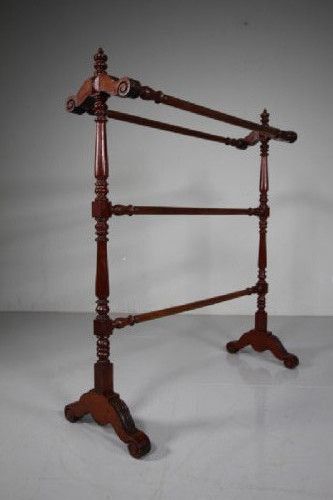
When you search for a mahogany clothes airer, you encounter timber laundry stands and towel rails that date from the Regency period through the Edwardian era. These pieces generally take the form of standing or folding rails with multiple bars designed to dry textiles.
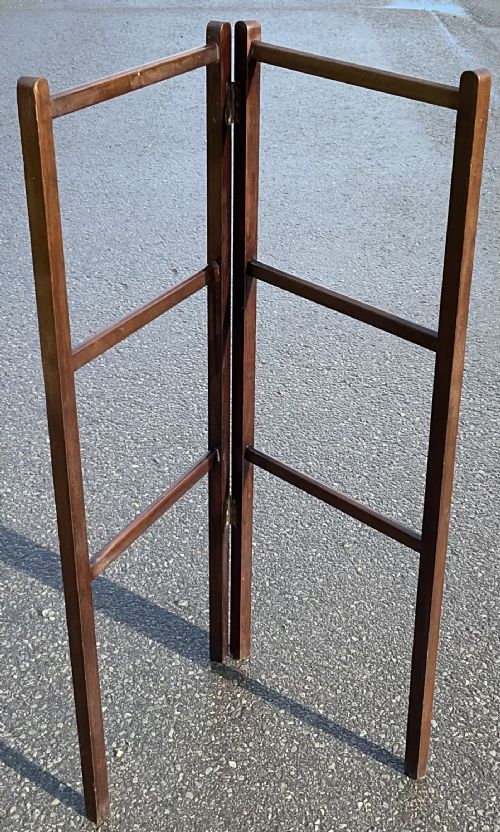
The versions most commonly met on this page span the Victorian and Edwardian periods, alongside Regency and William IV examples. Makers constructed these items primarily as towel rails and clothes airers in various sizes, ranging from small rails to large oversized stands and three-fold designs.
How they were made
Carpenters utilised solid mahogany, often combined with secondary woods such as oak and hardwood, to build sturdy standing frames. Brass fittings provide functional hinges and movement on folding cheval and multi-fold airer designs.
Details include satinwood and boxwood inlay work on Edwardian pieces, adding decorative contrast to the dark mahogany grain. The construction relies on traditional joinery to support the daily weight of wet linen and garments.
Mahogany Clothes Airer Retail Price Guide 2026
Typical asking prices for mahogany clothes airer among the pieces listed under this phrase on Sellingantiques today, from the lower quarter to the upper quarter. They describe what is for sale here now, not the wider market.
Some nineteenth-century laundresses tested clothes airer stability by hanging heavy damp woollens without warning the household.
What varies in quality
The distinction between standard utility items and finer examples rests on timber selection and decorative embellishment. Better pieces incorporate finely figured mahogany, balanced proportions, and careful turnings rather than plain structural timber.
Refinement in quality appears in the presence of contrasting boxwood and satinwood inlay, or substantial proportions as seen in Regency and William IV formats. Simpler Edwardian rails represent straightforward domestic manufacture without decorative stringing.
Gillows
The Mahogany Clothes Airer Glossary
- Cheval towel rail
- A standing rail featuring a pivoting frame supported by upright pillars. This design allows the rails to swing or tilt independently.
- Satinwood inlay
- Decorative woodwork where contrasting light satinwood is inserted into the mahogany surface. It appears frequently on Edwardian pieces to create geometric borders.
- Folding towel rail
- A multi-section airer joined by hinges that collapses flat when not in use. It provides flexible drying space in domestic rooms.
- William IV period
- A British design era spanning the 1830s characterised by robust proportions and classical influence. Pieces from this time often show generous dimensions.
Mahogany Clothes Airer: Frequently Asked Questions
What is a mahogany clothes airer?
A mahogany clothes airer is a wooden laundry stand designed with multiple horizontal rails for hanging and drying garments. These items double as towel rails and were standard household furnishings in the nineteenth and early twentieth centuries.
They appear in various formats, from simple standing rails to multi-fold versions that can be stored against a wall when not in use.
How were these airers used?
Households placed these stands near heat sources or in laundry rooms to dry linens, towels, and clothing before central heating existed. The folding and swinging rail designs allowed wet items to be spread out for maximum air circulation.
Today, buyers utilise them in bathrooms and bedrooms for functional textile storage as well as decorative period display.
How do I tell Edwardian from Victorian rails?
Edwardian rails frequently feature delicate decorative elements such as boxwood and satinwood inlay work along the frame. They tend to reflect lighter, more slender proportions typical of the early twentieth century.
Victorian and earlier 19th-century examples generally rely on heavier timber construction, simpler dark mahogany surfaces, and robust turned uprights without contrasting stringing.
Are folding and standing rails different?
Standing rails consist of fixed frames designed to stay open in a permanent position, offering sturdy support for heavier textiles. Folding rails incorporate hinged sections that allow the wings to adjust angles or fold flat.
Both forms utilise mahogany as the primary timber, though folding mechanisms often incorporate brass hardware to enable smooth movement.