

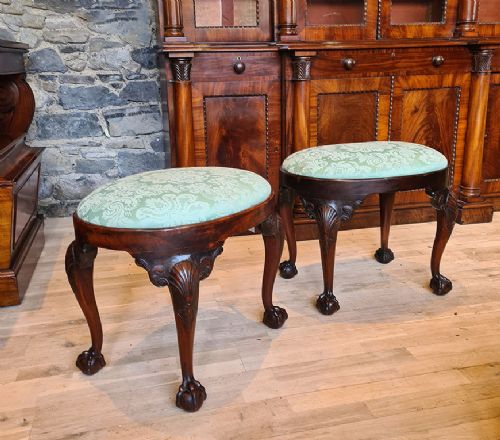


Mahogany Claw Footstool
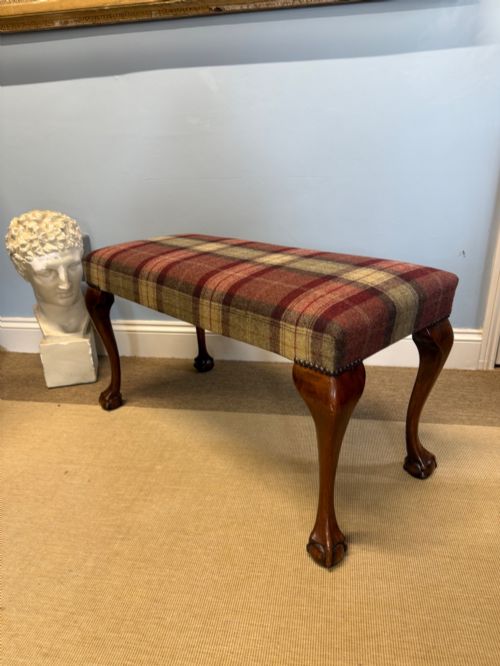
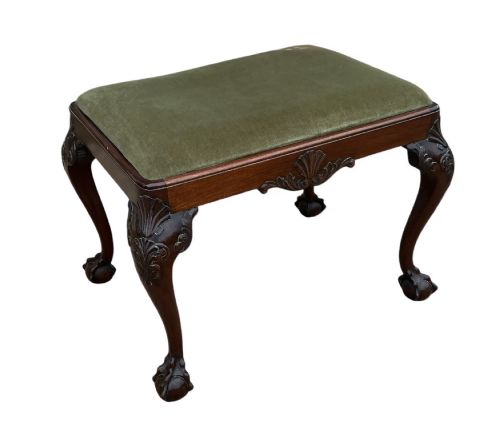
A mahogany claw footstool brings substantial timber and carved detail to a room, offering a sturdy seat built in revival and earlier styles.
Mahogany Claw Footstool
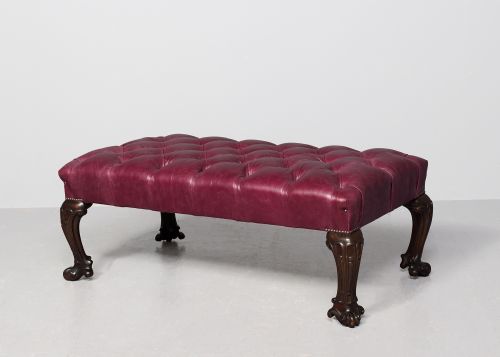
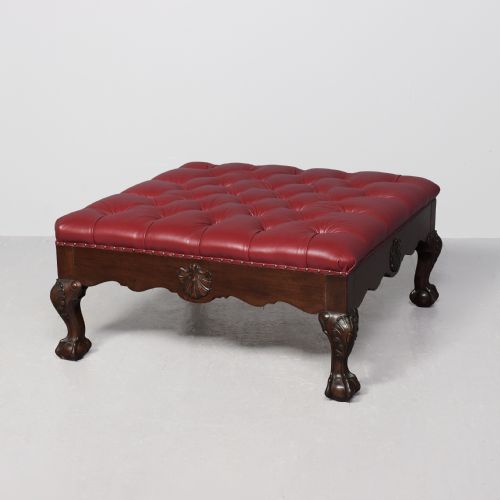
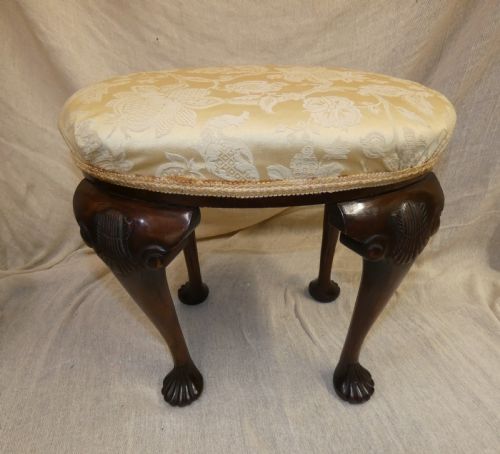
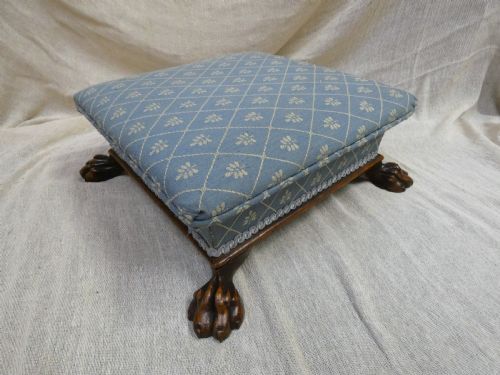
When you search for a mahogany claw footstool, you encounter low seating forms designed with carved feet, spanning the eighteenth century to the early twentieth century. These pieces appear primarily in Chippendale, Georgian, and Victorian styles, incorporating benches, ottomans, and dressing stools alongside standard footstools.
The most common examples on this page date from the nineteenth and early twentieth centuries, heavily influenced by earlier Georgian and Chippendale aesthetics. They serve as functional seats or rests, constructed with timber frames and various upholstered tops.
Makers such as Whytock and Reid and Morris and Co. appear among the listings alongside unbranded pieces from the nineteenth and twentieth centuries. These works reflect both formal parlour seating and domestic utility across various British and Irish stylistic traditions.
How they were made
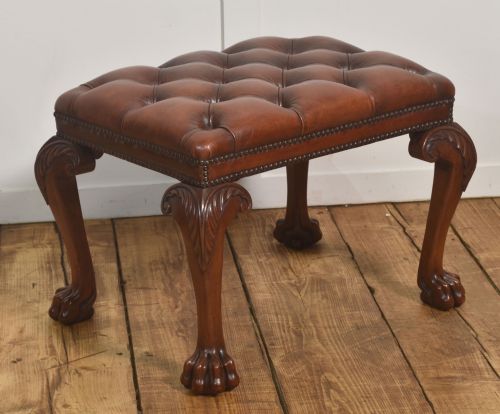
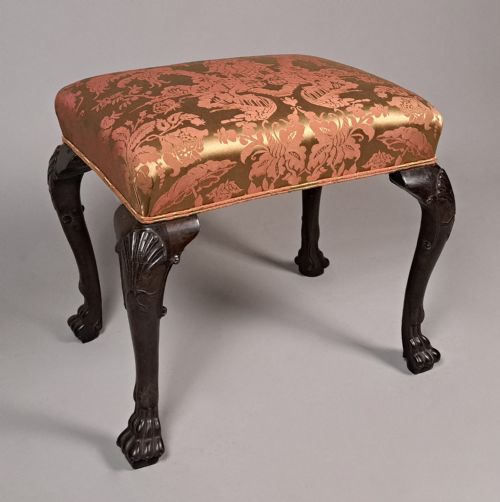
Makers built these frames using solid mahogany, shaping the wood to form cabriole legs and distinct claw or paw feet. Carved details often feature on the knees and frames, particularly in pieces following Chippendale or George II styles.
Upholstery methods vary from buttoned red hide and leather to fabric coverings including wool, velvet, damask, and standard textiles. Interior stuffing sits upon webbing or traditional foundation layers within the timber rails.
Listings feature mahogany frames paired with brass, leather, wool, velvet, and damask fabrics across multiple centuries.
What varies in quality
The crispness of the timber carving dictates much of the visual distinction, separating sharply defined ball and claw details from softer, more rounded execution. Wood selection also plays a role, with dense grain and rich colour marking the better examples.
Upholstery execution and the retention of period hide or fabric influence the character of each piece. Frames constructed with tight joinery and substantial timber scantlings demonstrate superior foundational integrity.
Whytock and Reid·Morris and Co.
The Mahogany Claw Footstool Glossary
- Cabriole leg
- A furniture leg that curves outward at the knee and tapers inward toward the ankle, ending in a foot. This form derives from classical antiquity and defines much eighteenth-century seating.
- Chippendale style
- A design aesthetic based on the pattern books of Thomas Chippendale, featuring carved mahogany, elaborate ornamentation, and ball and claw feet. It experienced several revival periods during the nineteenth and twentieth centuries.
- Hide
- Animal skin prepared for upholstery, appearing on these pieces in red or burgundy leather finishes. It offers a durable surface for frequently used seats.
- Damask
- A reversible figured fabric woven on a jacquard loom, used here to upholster stool and bench seats. It provides a patterned textile finish in various colours.
- Ottoman
- A low upholstered seat or bench without arms or a back, frequently built with substantial proportions for domestic use.
Mahogany Claw Footstool: Frequently Asked Questions
How do I date a mahogany stool?
Dating relies on timber characteristics, tool marks, and stylistic revival markers. Earlier pieces show hand-cut joinery and period wear, while twentieth-century revivals often adopt cleaner machine-cut framing beneath traditional forms.
Upholstery techniques and materials also offer clues, though many pieces have been recovered over time to suit later domestic interiors.
Are these stools comfortable for daily use?
Most pieces function well as occasional seats or foot rests, depending on their height and top design. Leather and upholstered surfaces provide firm support rather than deep cushioning.
Larger benches and ottomans accommodate multiple sitters or extended lounging, while smaller footstools remain suited for resting feet.
What is a ball and claw foot?
A carved foot motif representing a bird's talon clutching a ball, popular in Georgian and Chippendale furniture. This detail appears frequently on the cabriole legs of mahogany stools.
Carvers rendered these elements with varying degrees of anatomical detail, ranging from simple rounded grips to deeply articulated talons.
How should I care for leather upholstery?
Leather surfaces require occasional conditioning to prevent drying and cracking over time. Keeping the hide clean from dust preserves the original tone and finish.
Avoid placing these items in direct sunlight or near heat sources to protect both the leather and the underlying mahogany frame.