


Mahogany Chest Bar
Mahogany chest bar pieces span tall locking drawer units and low drinks coolers designed for serious entertaining.
Mahogany Chest Bar
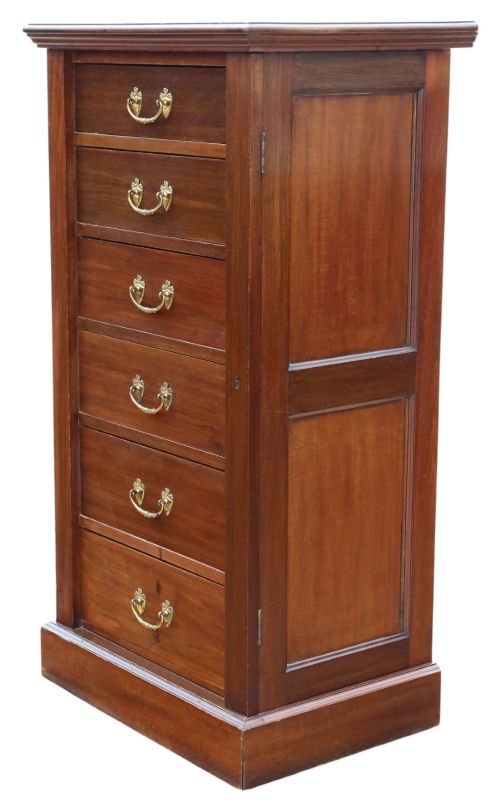
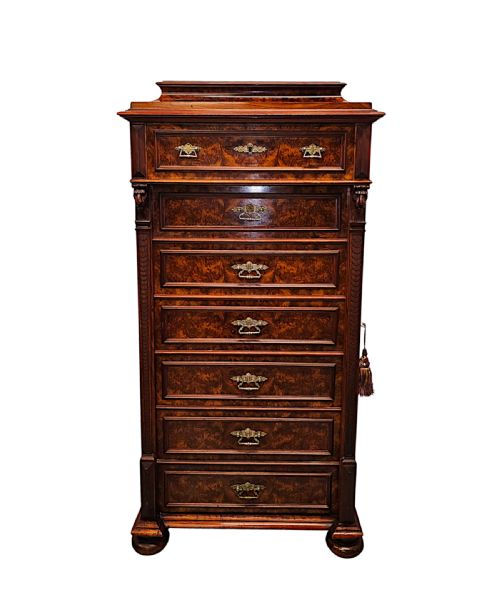
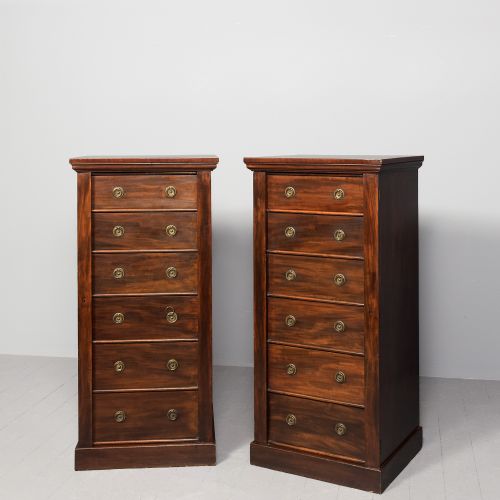
When you search for mahogany chest bar forms, you encounter a distinct cross-section of nineteenth-century furniture built to store wine, spirits, or personal papers securely. The evidence shows these divide broadly into two camps: the tall, narrow Wellington chest of drawers with its hinged locking stile, and the heavy cellarette or wine cooler intended to sit beneath a sideboard or in a dining room corner.
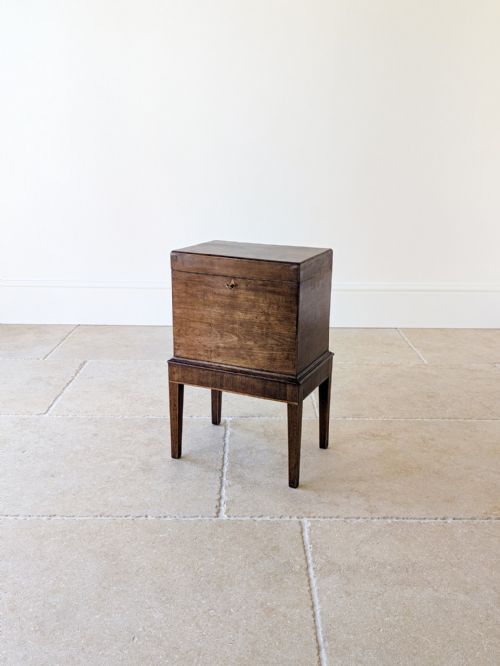
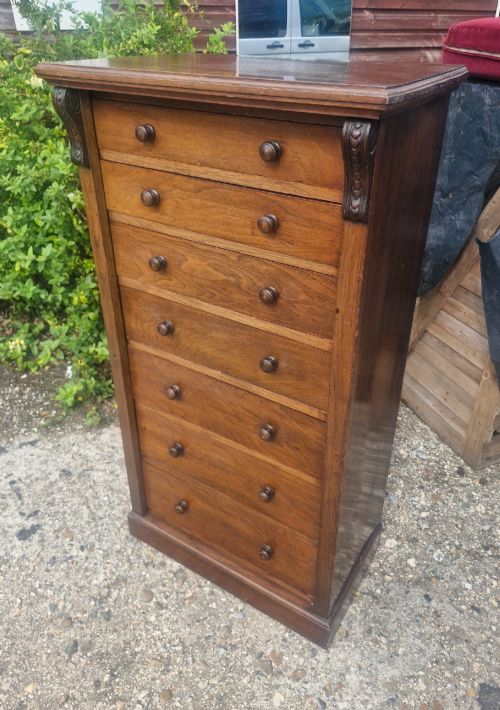
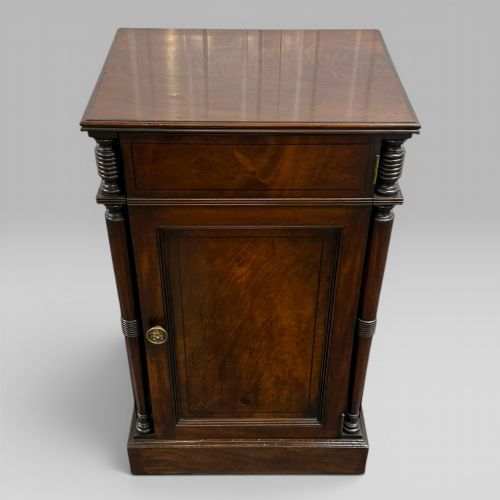
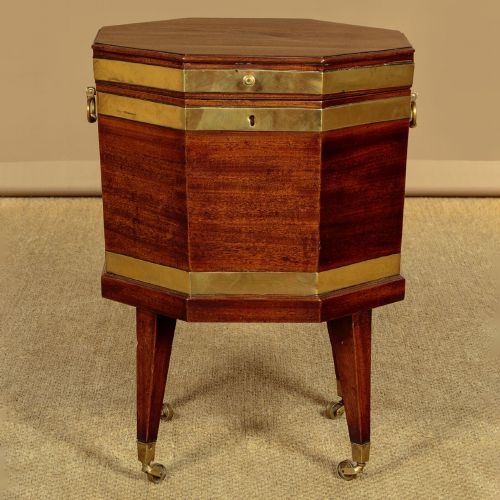
The Wellington chest format dominates the selection here, appearing across Victorian, Edwardian, and earlier nineteenth-century periods with varying numbers of graduated drawers. Alongside these tall columnar units, the inventory incorporates Georgian and Regency cellarettes, often bound in brass or enriched with ormolu mounts to hold bottles safely.
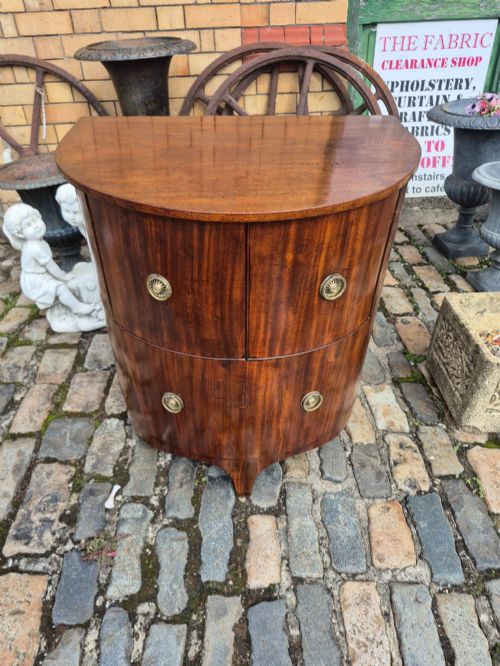
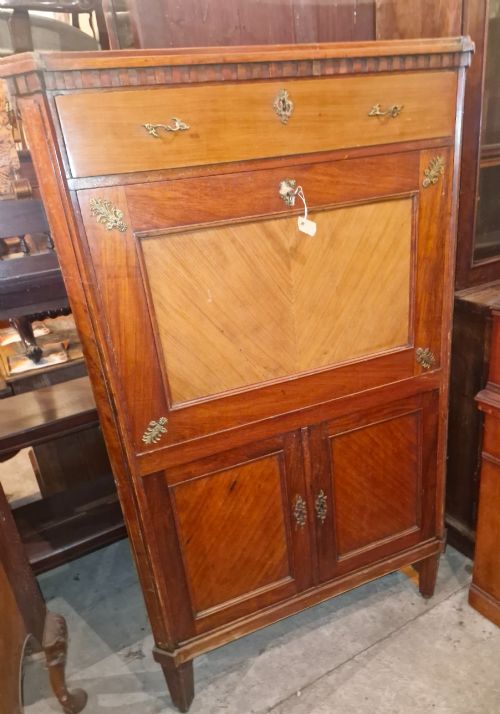
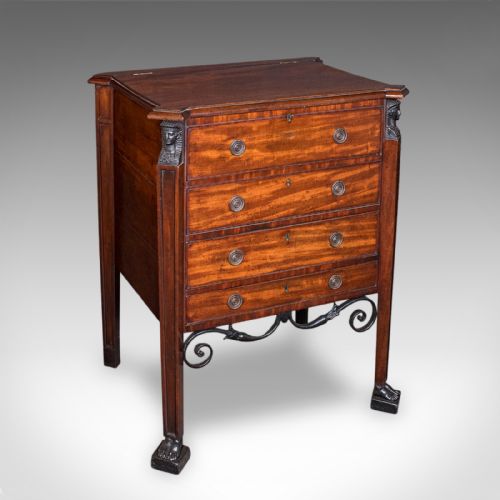
Occasional cocktail cabinets and secretaire variants also appear, merging the traditional chest form with drop-down writing surfaces or specialised bottle storage. Most pieces rely on rich timber grains, predominantly figured mahogany or plain solid stock, rather than heavy carving to create their visual impact.
How they were made
Cabinetmakers relied on solid mahogany and figured veneers applied to stable secondary timbers, ensuring the narrow frames of Wellington chests and the heavy lids of cellarettes resisted warping. Timber selection focused on rich grain patterns, particularly flame and figured mahogany, which received hand-rubbed polish finishes to deepen the natural red-brown tone.
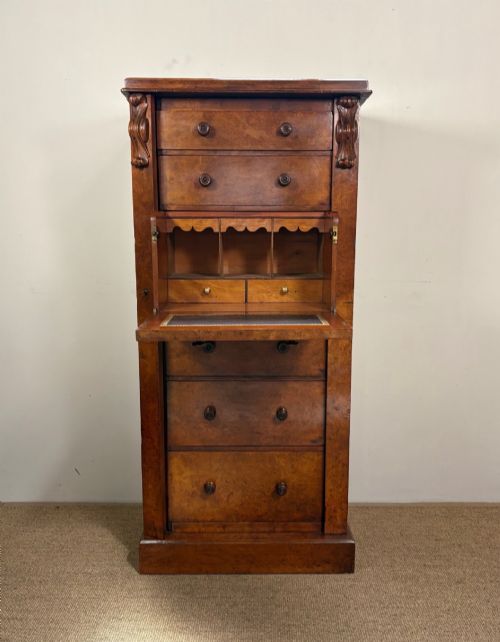
Metalwork played a structural and decorative role, featuring brass binding strips, carrying handles, ormolu mounts, and specialised locking mechanisms that secured an entire stack of drawers via a single hinged side bar. Turned wooden knobs and internal divisions for bottles or stationery were fitted with precise joinery to withstand heavy daily use.
Several diminutive miniature Wellington chests survive, proving that tiny drawers bring out the deepest collector obsession.
What varies in quality
The distinction between standard utility furniture and top-tier workshop production lies in the handling of the timber and the crispness of the internal mechanics. Superior Wellington chests display carefully matched grain running continuously down the drawer fronts, alongside smoothly operating locking stiles and dustboards fitted between each drawer.
Cellarettes and wine coolers show quality through the weight of their brass mounts, the integrity of their internal lead or zinc linings, and the depth of the mahogany stock itself. Finer examples exhibit disciplined carving on pilasters or feet, avoiding excessive ornamentation in favour of well-proportioned mouldings and sound structural joinery.
Gillows·Thomas Agnew Manchester·John Barrow for Gillows·Franks of Manchester·A.Rivolta Chester
The Mahogany Chest Bar Glossary
- Cellarette
- A freestanding box or cabinet designed to hold bottles of wine or spirits, frequently lined with metal and fitted with internal dividers. They appear in Georgian and Regency dining rooms, often reinforced with brass bands.
- Secretaire
- A cabinet or chest incorporating a fitted writing drawer with a drop-down front that conceals small compartments and pigeonholes. It merges desk functionality with the storage capacity of a standard drawer unit.
- Ormolu
- Gilded bronze mounts applied to furniture for decorative effect, most commonly seen on Regency and Empire period pieces. The technique involves applying a gold amalgam to cast bronze before firing.
- Figured mahogany
- Timber cut to reveal distinctive, rippled grain patterns such as flame, feather, or fiddleback. Cabinetmakers reserved these decorative veneers for primary surfaces like drawer fronts and top panels.
Mahogany Chest Bar: Frequently Asked Questions
What is a Wellington chest?
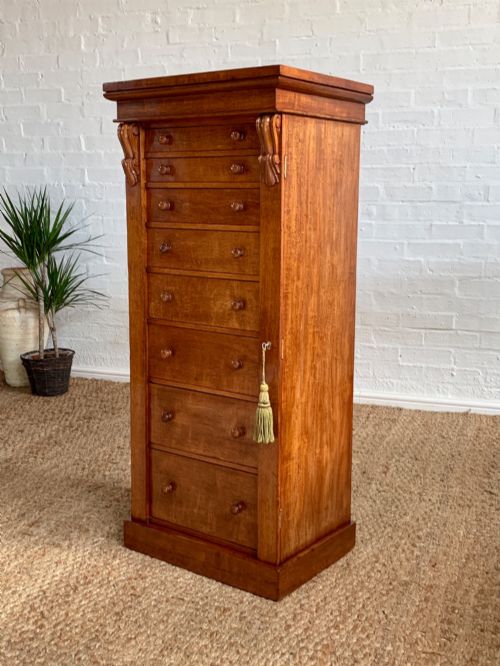
A Wellington chest is a tall, narrow set of drawers featuring a hinged locking stile down one side that secures every drawer when locked. This design allowed owners to keep valuables or private papers secure in a compact footprint.
Most examples stand higher than they are wide, utilising mahogany timber and simple turned wooden knobs. The locking mechanism remains the defining characteristic that separates them from standard chests of drawers.
How were cellarettes used?
Cellarettes served as specialised storage containers for wine and spirits in the dining room, positioned near the table or beneath a sideboard. Their heavy timber construction and internal linings helped keep bottles cool and secure before they were served.
Many Georgian and Regency versions featured lead linings and internal partitions to prevent glass bottles from clinking together. Brass bands and carrying handles allowed servants to move the heavy boxes when needed.
How do I date a mahogany chest?
Dating relies on examining the construction methods, timber choice, and hardware styles across the piece. Georgian and Regency pieces often feature hand-cut dovetails and solid mahogany linings, while later Victorian versions may show machine-sawn elements and different secondary timbers.
Secondary clues include the type of drawer pulls, the presence of dustboards, and the overall proportion of the mouldings. Comparing the piece against documented examples from specific decades helps narrow down the origin.
Where should I place a cellarette?
Cellarettes suit dining rooms, studies, or living spaces where they can function as occasional tables or low display surfaces. Their substantial wooden tops provide a useful flat area for lamps, books, or decorative objects.
Keeping them away from direct heat sources and strong sunlight protects the mahogany polish and prevents the timber from drying out. The internal compartments remain useful for storing contemporary bottles or accessories.