



Carved Mahogany Bar Cabinet
A carved mahogany bar cabinet brings period character to a room, offering fitted storage for bottles and glassware in a rich timber.
Carved Mahogany Bar Cabinet
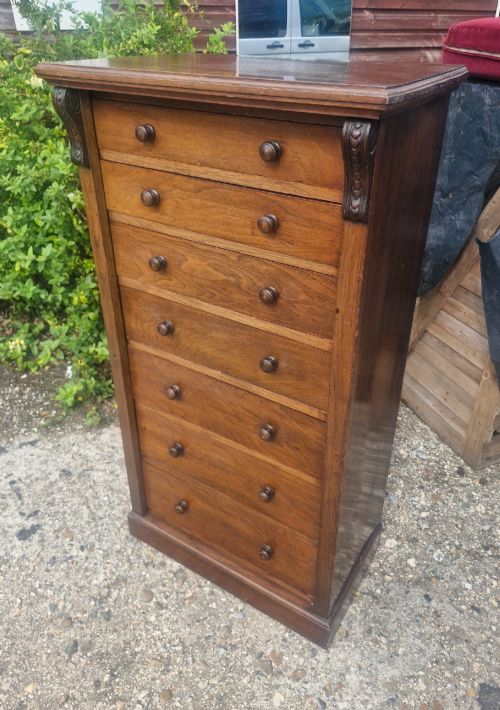
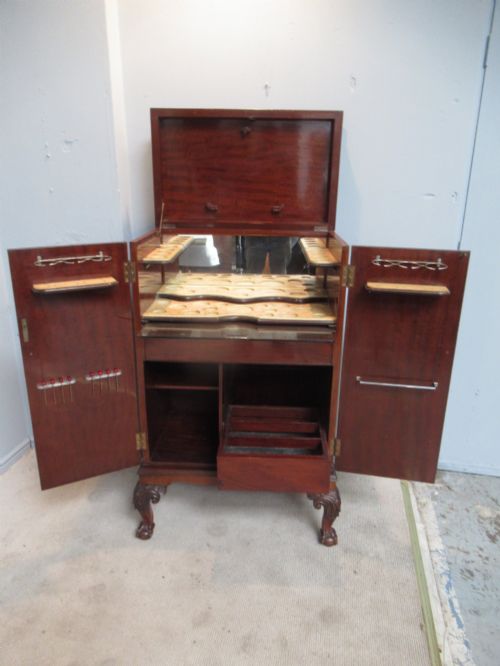
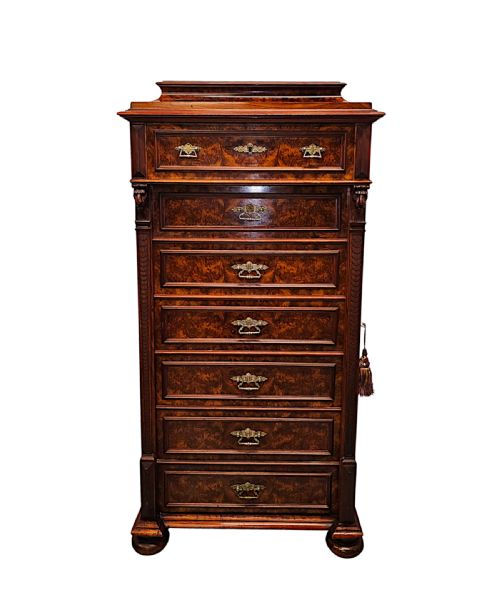
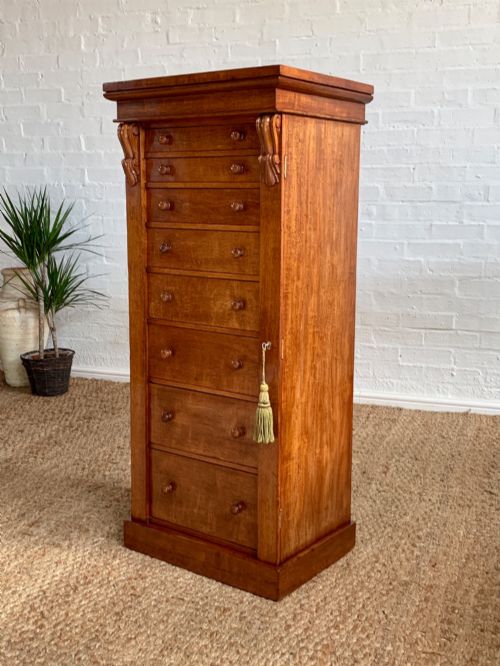
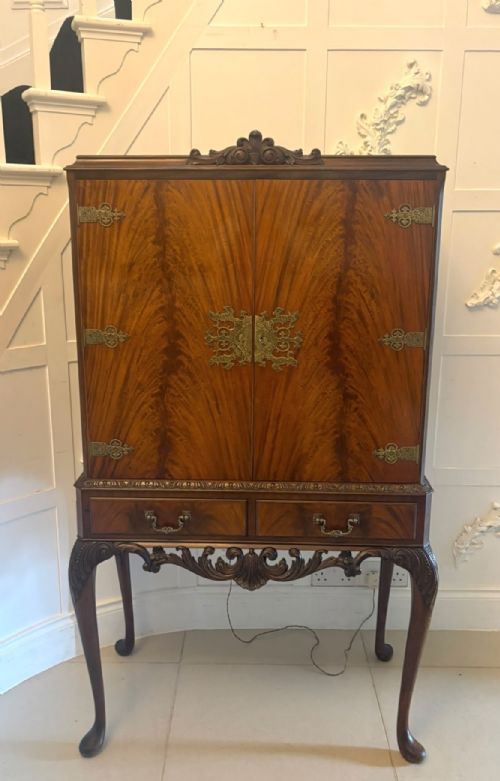
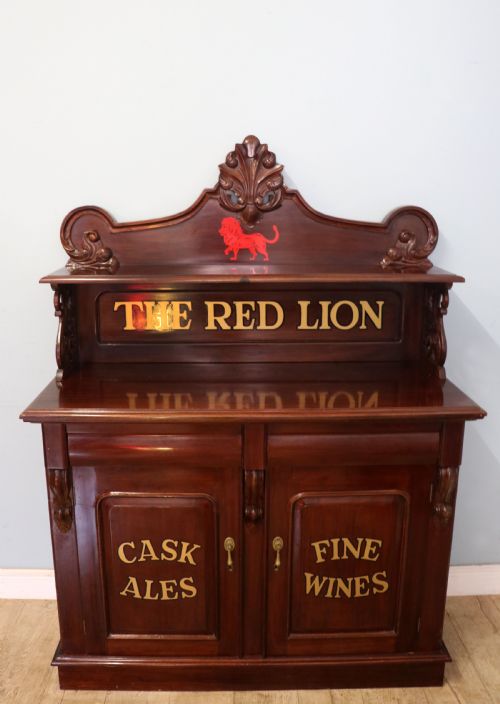
A carved mahogany bar cabinet covers drinks cabinets, cocktail cabinets, home bars, and adapted chiffoniers originating from the Victorian period through to the 1930s. Buyers searching for a carved mahogany bar cabinet will frequently encounter tall Wellington chests, cocktail cabinets on stands, and front and back bar setups.
The selection ranges from mid nineteenth century Victorian examples to later revival pieces from the Edwardian era, 1920, and 1930. Forms vary from traditional chests of drawers adapted for storage to dedicated drinks cabinets and display pieces.
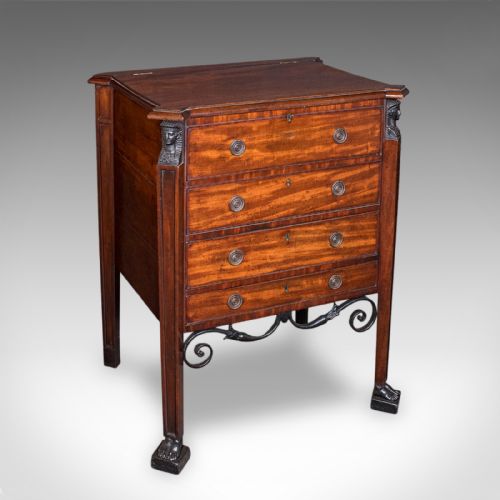
Makers drew on diverse design influences, resulting in pieces spanning Chippendale Revival, Queen Anne style, Egyptian Revival, and Art Nouveau aesthetics. Mahogany serves as the primary timber, often selected in figured, flame, or solid varieties.
How they were made
Construction relies heavily on mahogany, utilised either as solid timber or applied as flame and figured mahogany veneers over secondary woods. Workshops employed traditional joinery techniques to build tall carcases, drop-front cocktail sections, and fitted interiors.
Makers incorporated contrasting materials such as brass for handles and hardware, glass for display doors and panels, and iron for structural reinforcement. Surface finishes highlight the natural grain patterns of the wood, complemented by carved details specific to revival styles.
Object types span cocktail cabinets, display cabinets, home bars, and Wellington chests.
What varies in quality
Quality in a carved mahogany bar cabinet is determined by the selection of the timber, such as figured or flame mahogany veneers, and the crispness of the carved details. Superior examples exhibit balanced proportions, original turned knobs or period brass hardware, and intact internal fittings like removable trays or illumination.
The integrity of the construction, from the smooth operation of drawers in a Wellington style to the stability of stands and bases, separates finer workshop productions from simpler utilitarian items.
The Carved Mahogany Bar Cabinet Glossary
- Wellington chest
- A tall, narrow chest of drawers typically secured by a locking side flap hinged to one stile. It is a distinctive Victorian form frequently found in mahogany.
- Flame mahogany
- A veneer cut from the fork of the mahogany tree where the branch joins the trunk. This produces a dramatic, flamy ripple pattern highly prized by cabinet makers.
- Cocktail cabinet
- A specialised piece designed for storing and serving drinks, usually featuring a drop-front surface for mixing beverages and internal glass shelving. They gained particular popularity during the interwar period.
- Chiffonier
- A low sideboard or cabinet developed in the nineteenth century, often equipped with shelves and drawers. Some examples were later adapted for commercial or domestic drinks storage.
Carved Mahogany Bar Cabinet: Frequently Asked Questions
What is a Wellington chest?
A Wellington chest is a tall, narrow set of drawers characterised by a hinged locking stile on the right side that secures all the drawers at once.
Originally designed in the nineteenth century, these pieces provide deep storage within a compact footprint.
How do I date a mahogany cabinet?
Dating relies on observing construction methods, timber selection, and stylistic details such as Egyptian Revival or Art Nouveau motifs.
Periods represented in these pieces span the Victorian era, Edwardian period, and the 1920s and 1930s revivals.
What is flame mahogany?
Flame mahogany is a decorative veneer sliced from timber where branches meet the main trunk, creating a fiery, undulating grain.
Cabinet makers used this veneer on prominent exterior surfaces to add visual depth and luxury.
How were cocktail cabinets used?
Cocktail cabinets served as dedicated furniture for entertaining guests at home, storing spirits, glassware, and mixing accessories.
They often feature drop-front shelves that create a convenient surface for preparing drinks.
Are these cabinets solid wood?
Construction varies between solid mahogany and cabinets built with mahogany veneers over secondary timbers.
Figured and flame mahogany veneers were chosen for their decorative grain patterns on drawer fronts and doors.