


Mahogany Chaise Lounge
A mahogany chaise lounge combines structural timber with generous upholstery, offering a traditional daybed form suited to reclining.
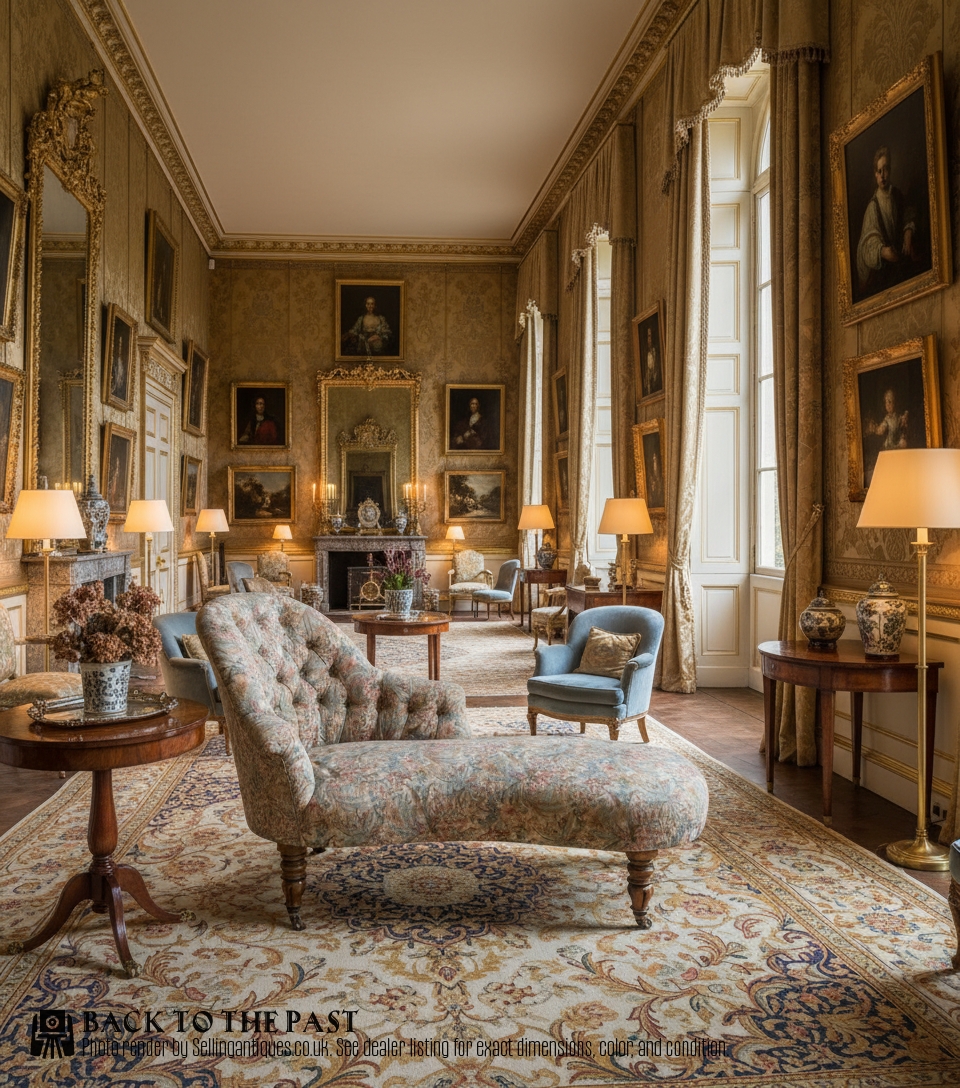
Mahogany Chaise Lounge
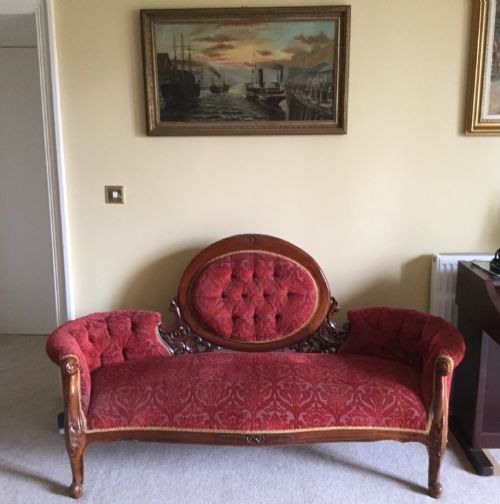
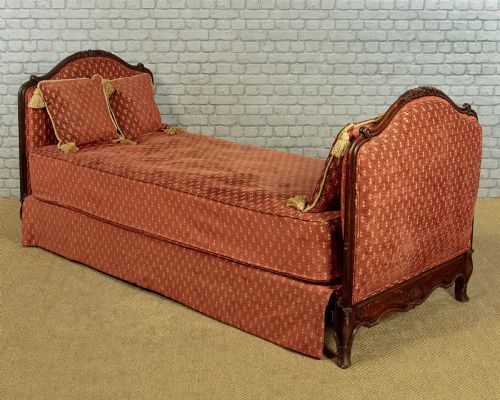
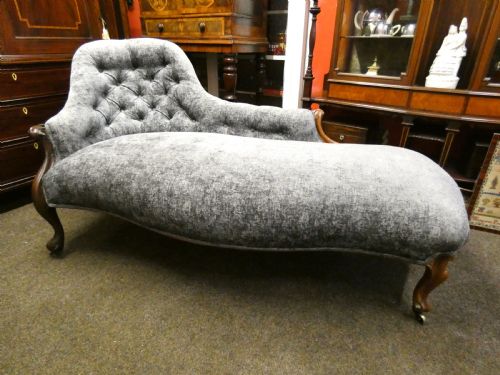
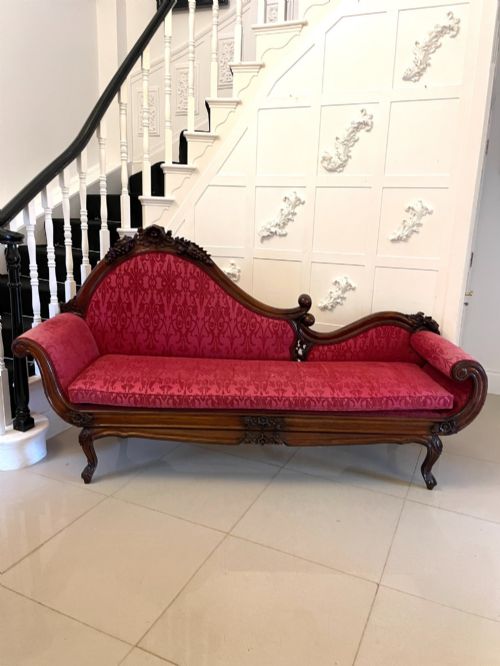
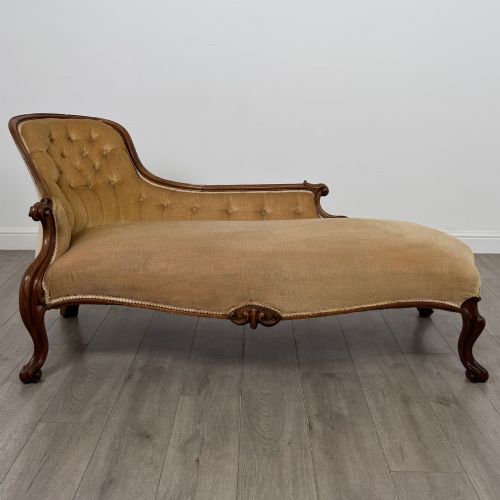
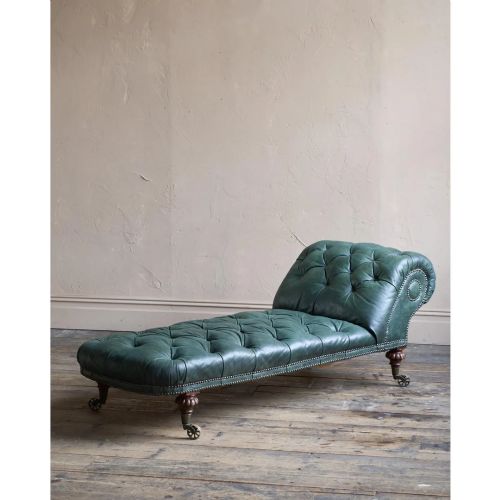
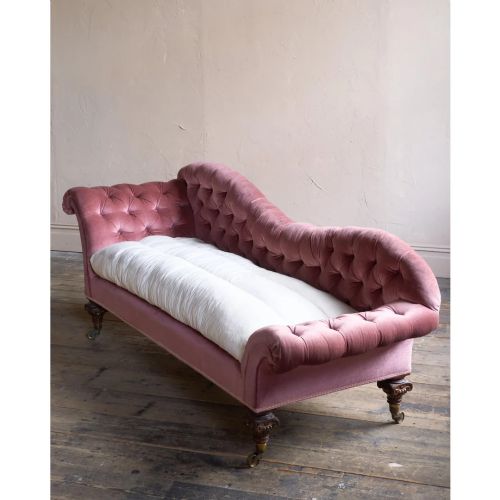
A mahogany chaise lounge sits at the intersection of seating and lounging, taking forms like the single-ended daybed, the double-ended sofa, and the Récamier. Most examples met here span the nineteenth century, moving from Regency lines through William IV proportions to Victorian carved frames.
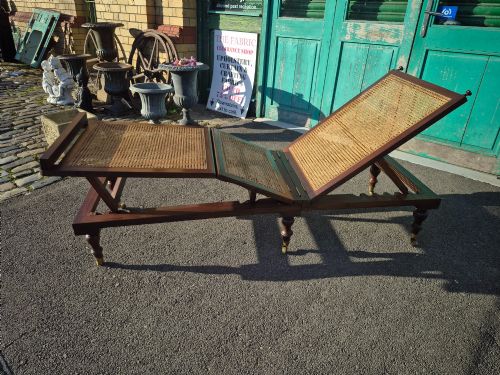
Makers designed these daybeds for reception salons, drawing rooms, and country house interiors, providing a seat with an elevated headrest for daytime resting. Variations include campaign styles, colonial plantation pieces, and kidney shapes, alongside standard upholstered couches.
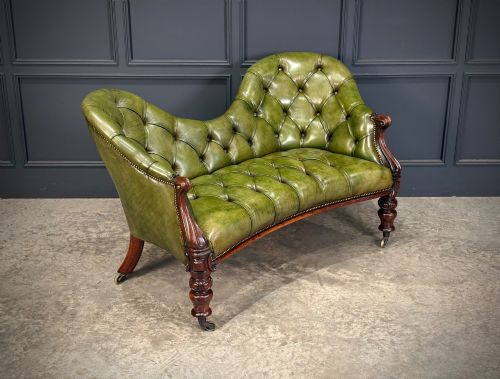
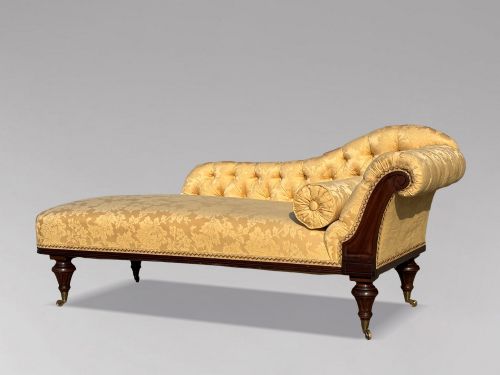
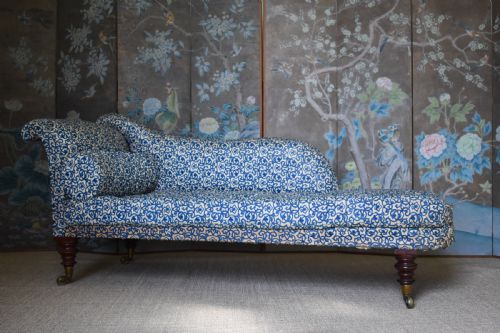
The timber framework typically supports varied seating platforms, from sprung settee bases to buttoned leather upholstery and fabric coverings. Buyers encounter single scroll ends, double spoon-backs, and architectural elements such as ionic column legs.
How they were made
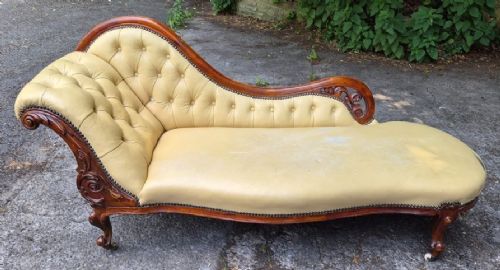
Cabinetmakers shaped solid mahogany and mahogany veneers into curved frames, scroll arms, and structural supports, sometimes incorporating brass mounts or inlay. The dense wood provided both the structural strength needed for long rails and a dark, polished ground for carved details.
Upholstery techniques developed across the periods represented, moving from hair-stuffed pads to deep-sprung bases finished with wool, leather, damask, velvet, or brocade. Workshops secured these coverings using traditional tacks, often adding deep buttoning or pleated trimming to hold the padding in place.
Some nineteenth-century daybeds include secret compartments in the mahogany chassis for storing spare reading spectacles.
What varies in quality
Quality rests upon the crispness of the mahogany carving, the proportion of the scroll ends, and the integrity of the underlying frame construction. Pieces produced by noted cabinetmakers display finer joinery in the chassis and more fluid lines in the show-wood rails.
The treatment of secondary materials also separates standard output from superior items, seen in heavy brass mounts, finely turned ionic column legs, and premium leather or silk damask upholstery. The balance between the timber chassis and the padded backrest dictates the visual weight of the daybed.
Howard And Sons·Holland And Sons·Jas Shoolbred·Hampton And Sons·Gillows
The Mahogany Chaise Lounge Glossary
- Récamier
- A type of daybed with two raised ends of equal or unequal height, often lacking a full backrest along the long side. It is named after the French socialite painted by Jacques-Louis David.
- Double Ended
- A sofa or chaise lounge featuring two raised scroll ends facing opposite directions, allowing a person to recline with the head at either end. This form appears frequently in nineteenth-century drawing rooms.
- Campaign Style
- Portable furniture made for military officers travelling on duty, featuring sturdy mahogany frames and brass fittings designed for dismantling or folding. Surviving daybeds of this type retain utilitarian joints and robust timbers.
- Damask
- A reversible figured fabric woven on a loom, featuring patterns formed by contrasting warp and weft threads. It appears frequently as an upholstery covering on formal nineteenth-century daybeds.
- Spoon-Back
- An upholstered chair or sofa back shaped in a concave oval resembling the bowl of a spoon, designed to fit the human spine. This silhouette is common on Victorian seating.
Mahogany Chaise Lounge: Frequently Asked Questions
Where did they put them?
Nineteenth-century households placed these daybeds in reception rooms, drawing rooms, and private boudoirs where occupants rested during the day. They sat against walls or in bay windows to catch the light.
Larger country house salons accommodated expansive double-ended models, while smaller bedchambers took compact single-scroll versions.
How do I date one?
Dating relies on the transition of styles visible in the woodwork and upholstery foundations, moving from early nineteenth-century Regency curves to mid-century Victorian carving. Brass mounts, turned column legs, and mahogany grain patterns provide further chronological clues.
Maker stamps on the timber frame or webbing offer the most precise attribution when present.
Can I use it daily?
These daybeds function well for daily lounging if the internal frame and webbing have received proper restoration. Modern placement usually treats them as primary reading seats or hallway statement pieces.
Care should be taken with historical upholstery fabrics, though many surviving examples have been re-covered in durable leather or heavy brocade.
What is a daybed?
A daybed combines the functions of a chair and a bed, providing a stretched seating surface for reclining without retiring to a full bedchamber. Nineteenth-century versions typically featured one elevated scroll end for the head.
They served daytime resting needs in formal reception spaces across British homes.