
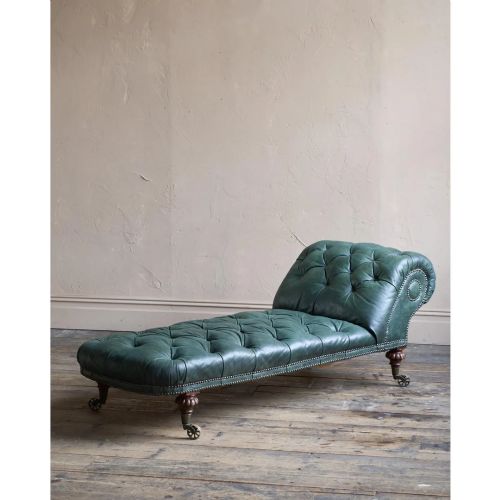
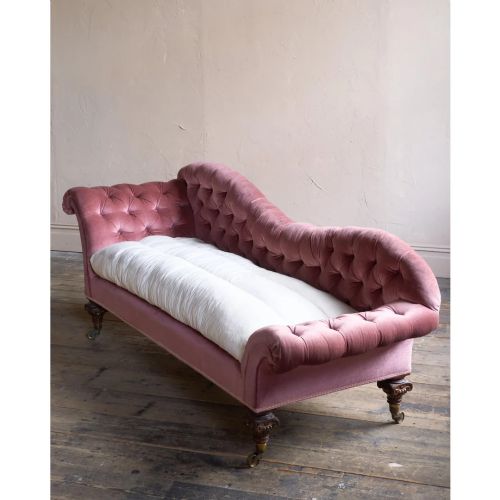
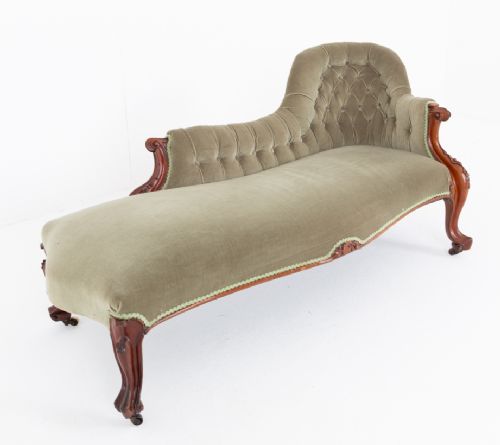


Buttoned Back Chaise Longue
A buttoned back chaise longue is a reclining seat designed for luxurious repose, bringing nineteenth-century elegance and sculptural form into a modern interior.
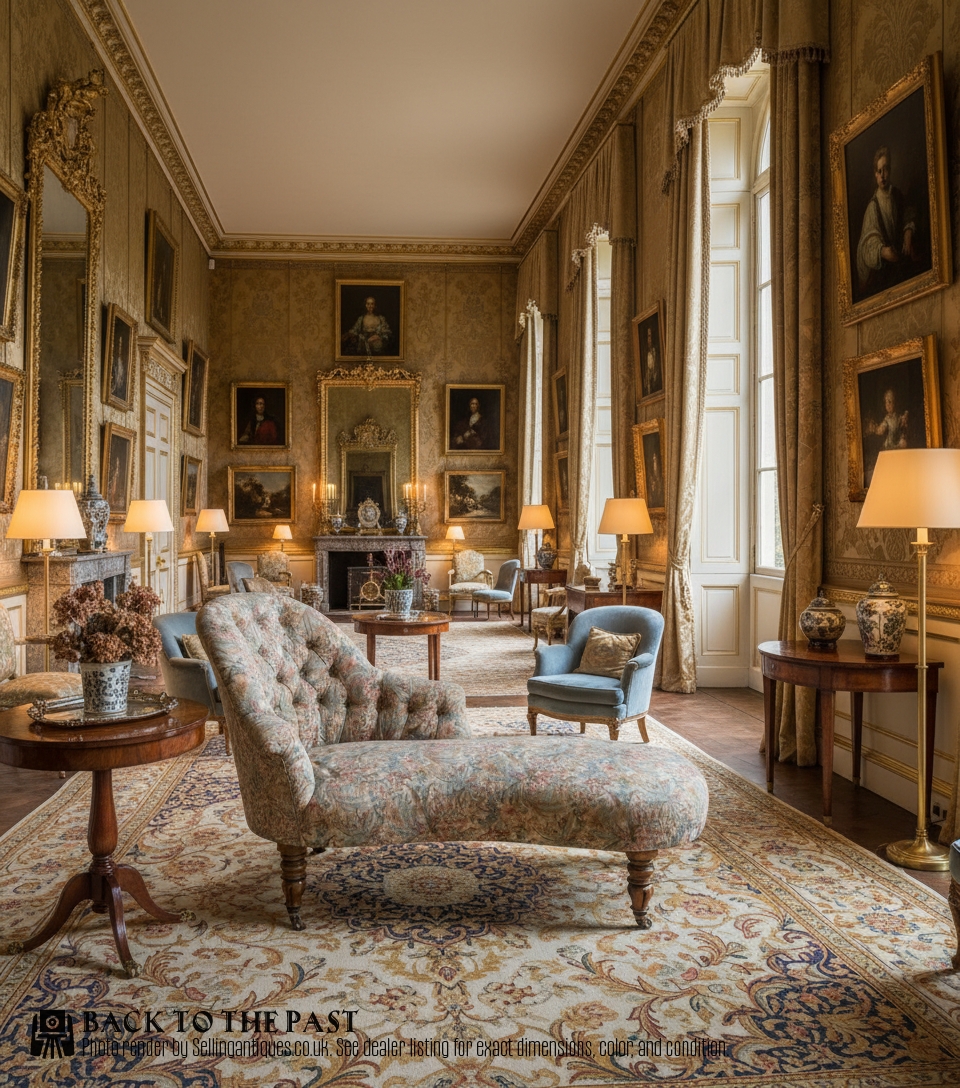
Buttoned Back Chaise Longue
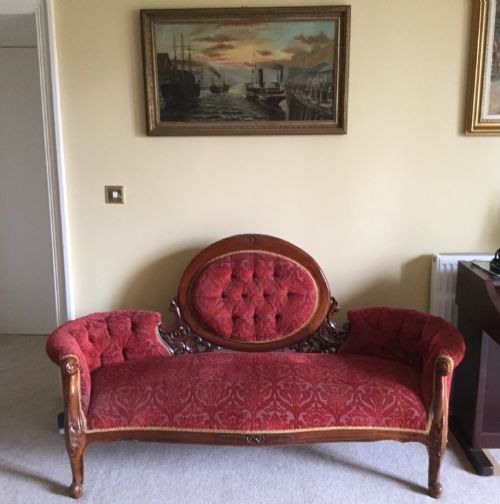
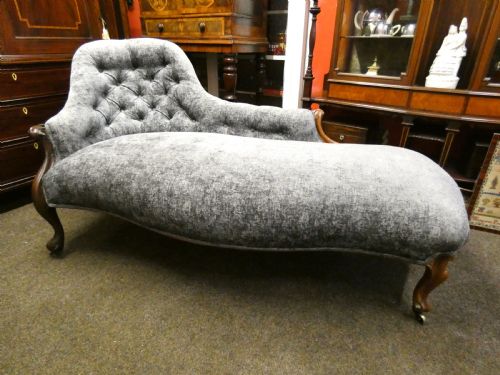
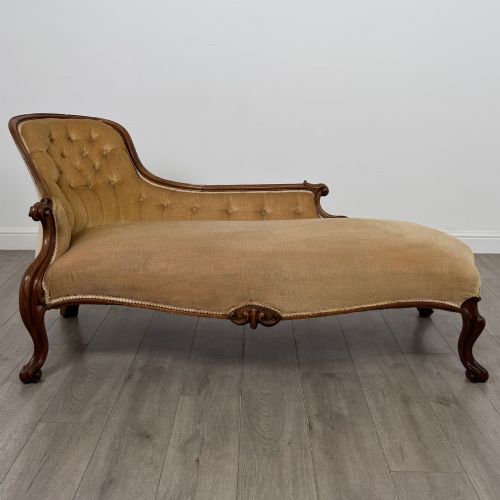
A buttoned back chaise longue combines an upholstered seat with a single raised backrest designed for reclining in a half-sitting position. These pieces span the nineteenth century, with Victorian examples appearing most frequently alongside Regency, William IV and early twentieth-century variations.
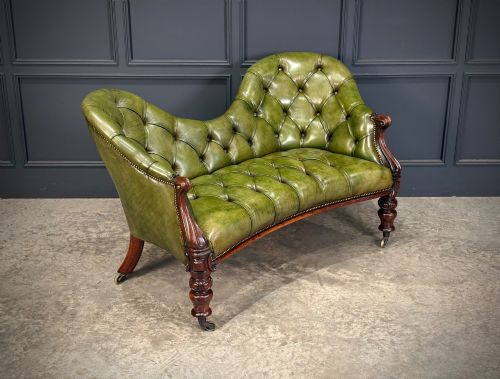
Makers fashioned these daybeds in various configurations, including double-ended sofas, spoon-backs and kidney shapes. Frames frequently emerge in mahogany, walnut and rosewood, often displaying carved details or architectural supports such as ionic column legs.
The selection ranges from compact ebonised miniature daybeds to large carved rosewood frames and conversation seats. Upholstery choices span traditional leather, velvet, fabric and deep-pile brocade.
Materials and Construction
Cabinet makers utilised dense hardwoods including mahogany, walnut, rosewood and occasional ebonised wood to build the structural frames. These timbers provided the strength required for complex scroll ends and carved showwood surrounds.
Upholstery methods relied on traditional sprung bases, horsehair stuffing and deep buttoning techniques to secure the fabric and create firm support. Brass castors frequently appeared on the feet to allow movement of heavy timber frames.
Periods represented across the available seating span from the Regency era through the Victorian period into the early twentieth century.
Craftsmanship and Proportion
Quality rests in the crispness of the timber carving and the balance of the proportions across the scroll back and single armrest. Superior pieces exhibit precise joinery in showwood frames and harmonious integration of turned or carved legs.
The standard of upholstery work dictates the finish, where careful pleating around buttoned sections and appropriate fabric selection maintain the historical integrity of the piece.
Holland and Sons·Miles and Edwards·Howard and Sons
The Buttoned Back Chaise Longue Glossary
- Chaise Longue
- A long chair or daybed designed for reclining, featuring a single raised backrest at one end. Originating in France, it combines the functions of a chair and a sofa.
- Buttoned Back
- An upholstery technique where indentations are formed by pulling stitches through padding and securing them with buttons in a diamond pattern. This method keeps internal stuffing evenly distributed.
- Showwood
- Timber frame components left visible around the upholstered sections of a chair or sofa. It highlights the grain and carved ornamentation of woods like rosewood and mahogany.
- Double Ended
- A sofa or chaise design featuring two raised backrests or scroll ends facing opposite directions. This allows a person to recline against either end.
- Spoon Back
- An upholstered chair or sofa back shaped like the bowl of a spoon, curved to fit the human form. It is characteristic of mid-nineteenth-century seating.
Buttoned Back Chaise Longue: Frequently Asked Questions
How do I place a chaise longue in a room?
Position the piece away from walls where the carved showwood frame and scroll end remain visible from multiple angles. It serves well as a standalone daybed in a living room or study.
Ensure sufficient floor space around the structure so the length of the seat does not obstruct movement routes through the room.
Were these seats used for sleeping?
These daybeds were primarily intended for daytime reclining, reading and resting in a semi-recumbent posture rather than overnight sleeping. The raised backrest supported the upper body while the extended seat supported the legs.
Victorian drawing rooms utilised them for social lounging and quiet repose during daytime hours.
How do I identify a Victorian chaise longue?
Look for characteristic nineteenth-century timber choices such as rosewood, walnut and mahogany combined with deep buttoned upholstery. Common markers include scroll-ended frames, spoon backs and carved rosewood showwood.
Early Victorian pieces often display heavier proportions and rich wood grains, while later nineteenth-century examples introduce varied showwood framing and turned legs.
Can I mix these with modern furniture?
Combining nineteenth-century seating with contemporary interiors creates a focal point through the contrast of dark hardwoods and traditional buttoned upholstery. The sculptural silhouette of a scroll end pairs effectively with minimalist modern surroundings.
Keep surrounding elements simple to let the carved timber frame and fabric texture stand out within the room.