





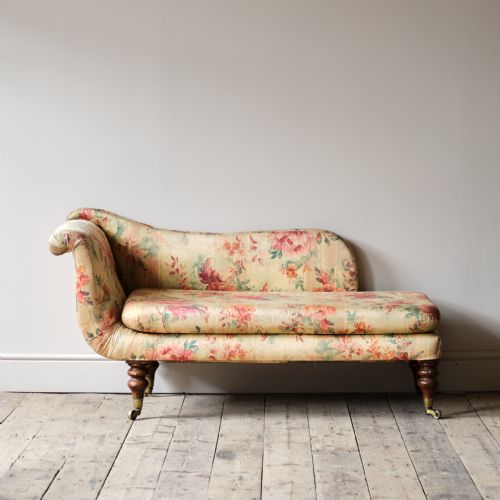


Turned Mahogany Daybed
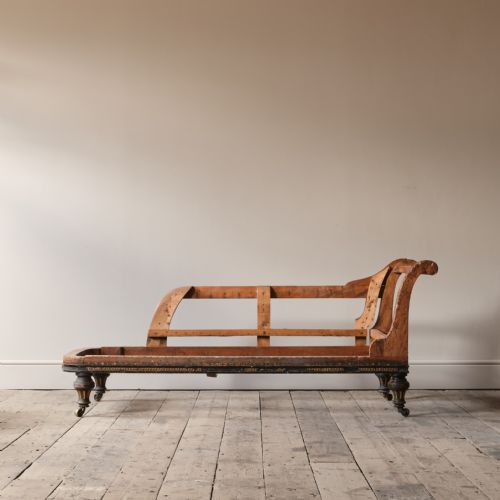
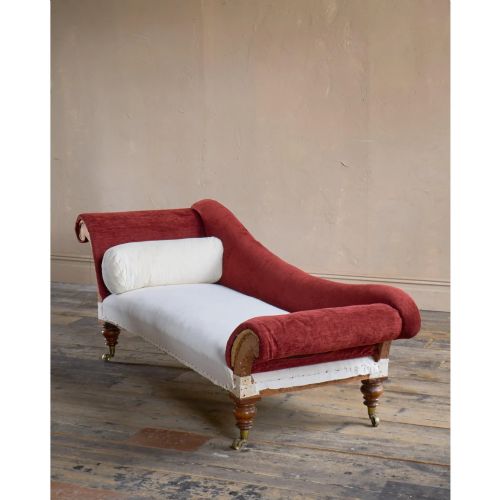
A turned mahogany daybed brings British Regency and Victorian elegance to a room, offering a long seat designed for daytime reclining.
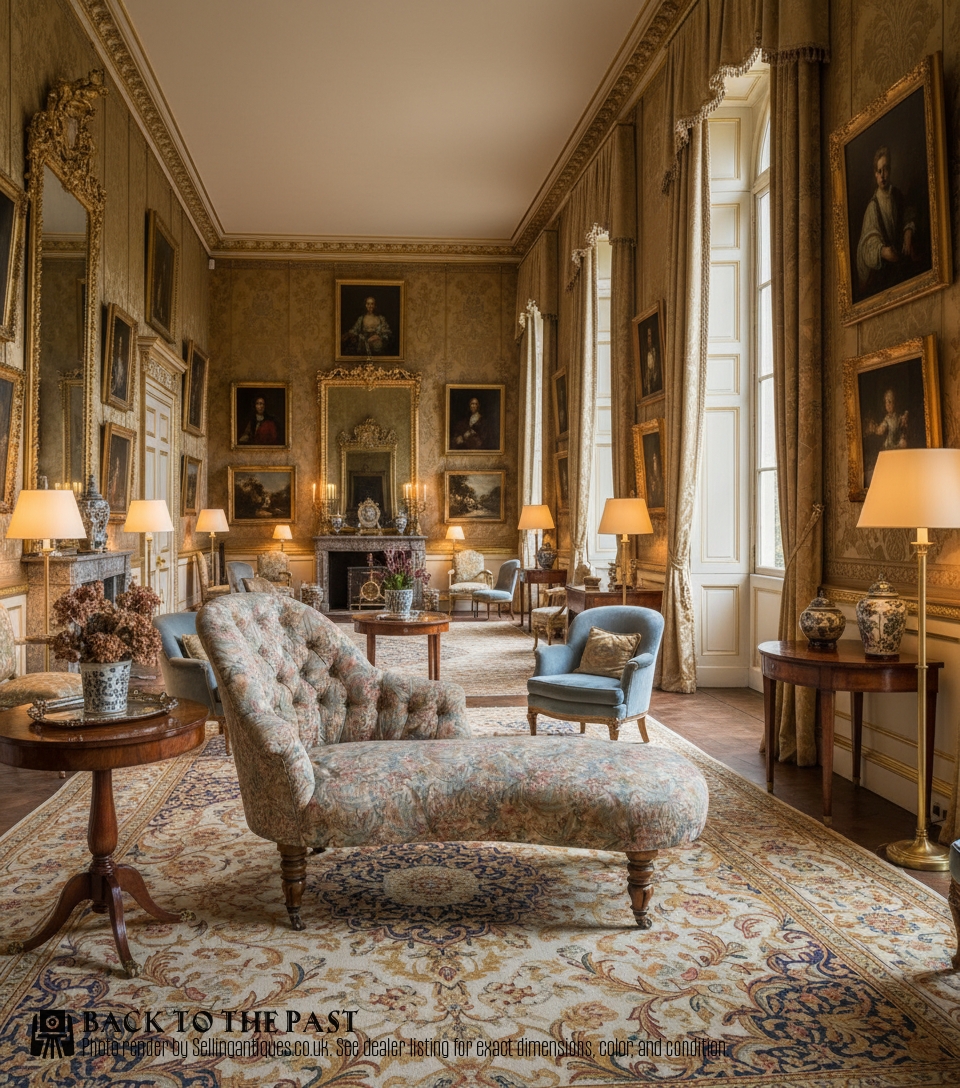
Turned Mahogany Daybed
When you search for a turned mahogany daybed, you are looking at nineteenth-century reclining furniture designed for daytime lounging. The listings here comprise pieces styled across the Regency, William IV, and Victorian periods.
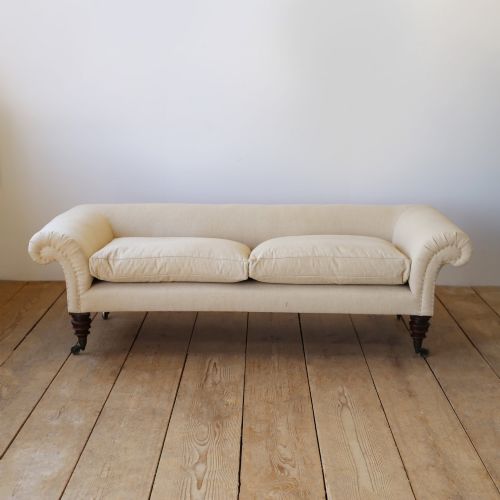
The form appears under several names in the record, including chaise longue, salon sofa, and adjustable campaign bed. Most examples date from the nineteenth century and utilise mahogany as the primary timber.
You are most likely to meet nineteenth-century chaise longues and salon sofas featuring turned wooden components. These range from plain country house models to grand Regency pieces.
How they were made
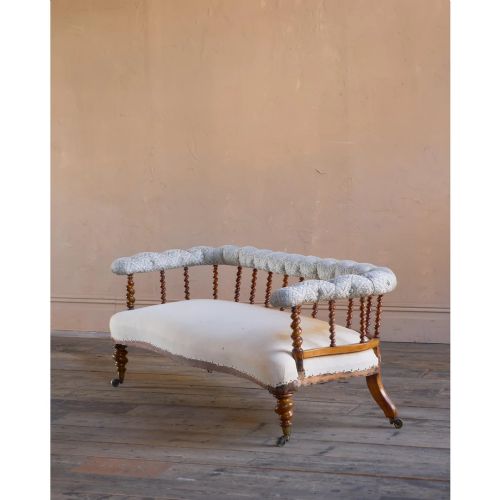
Cabinet makers constructed these daybeds from solid mahogany and hardwood frames, often shaping the timber with turned spindle backs and legs. Brass fittings frequently appear on adjustable mechanisms and castors.
Upholstery techniques involved traditional stuffing covered in fabrics such as velvet, calico, satin, linen, and leather. Ebonised wood details and carved or turned supports completed the decorative structure.
Turned Mahogany Daybed Retail Price Guide 2026
Typical asking prices for turned mahogany daybed among the pieces listed under this phrase on Sellingantiques today, from the lower quarter to the upper quarter. They describe what is for sale here now, not the wider market.
One late Victorian campaign bed arrives equipped with detachable legs, ensuring that even nineteenth-century loungers could pack their bags.
What varies in quality
Quality rests in the precision of the turned woodwork and the integrity of the mahogany frame. Maker attribution significantly shifts the standing of a piece, with firms like Holland & Sons or Howard & Sons commanding attention.
The sophistication of the mechanism distinguishes standard loungers from adjustable campaign beds and reclining day beds. Original upholstery materials and secondary timbers further separate ordinary examples from exceptional ones.
Holland & Sons·C. Hindley & Sons·Howard & Sons·Miles & Edwards
The Turned Mahogany Daybed Glossary
- Mahogany
- A durable tropical hardwood prized for its reddish-brown colour and fine grain. It served as the primary structural timber for high-quality nineteenth-century seating.
- Chaise Longue
- A long upholstered chair for reclining, combining the functions of a chair and a sofa. The form dominates the nineteenth-century seating records.
- Regency
- An English design period spanning the early nineteenth century. Furniture from this era often draws on classical classical antiquity.
- Spindle Back
- A chair or sofa back composed of thin, turned wooden pillars. This decorative feature appears on nineteenth-century salon sofas.
- Campaign Bed
- Portable furniture designed for travel, typically fitted with detachable legs and adjustable frames. These pieces were built for officers on the move.
Turned Mahogany Daybed: Frequently Asked Questions
What is a turned mahogany daybed?
A turned mahogany daybed is a nineteenth-century reclining seat featuring wooden framing with lathe-turned supports. These pieces served for daytime rest in parlours and drawing rooms.
They combine the seating capacity of a sofa with the extended length of a bed, often featuring a raised headrest at one end.
How do I identify a Regency daybed?
Regency daybeds usually date from the early nineteenth century and display classical restraint or bold curves. Look for rich mahogany timbers and precise classical proportions.
Maker attributions and specific foot designs also help distinguish Regency pieces from later Victorian iterations.
Where were daybeds placed in nineteenth-century homes?
In the nineteenth century, these pieces sat in principal reception rooms, salons, and private dressing chambers. They provided a comfortable place for daytime relaxation without retiring to a bedroom.
Country houses and urban townhouses alike utilised them in public spaces where guests could admire the upholstery and timber.
Can I use an antique daybed for daily lounging?
Many nineteenth-century daybeds remain sturdy enough for regular use, provided the frame and webbing are sound. Adjustable models offer versatile positioning for modern reading or resting.
Consider the condition of the internal stuffing and the stability of the turned legs before committing to heavy daily deployment.