

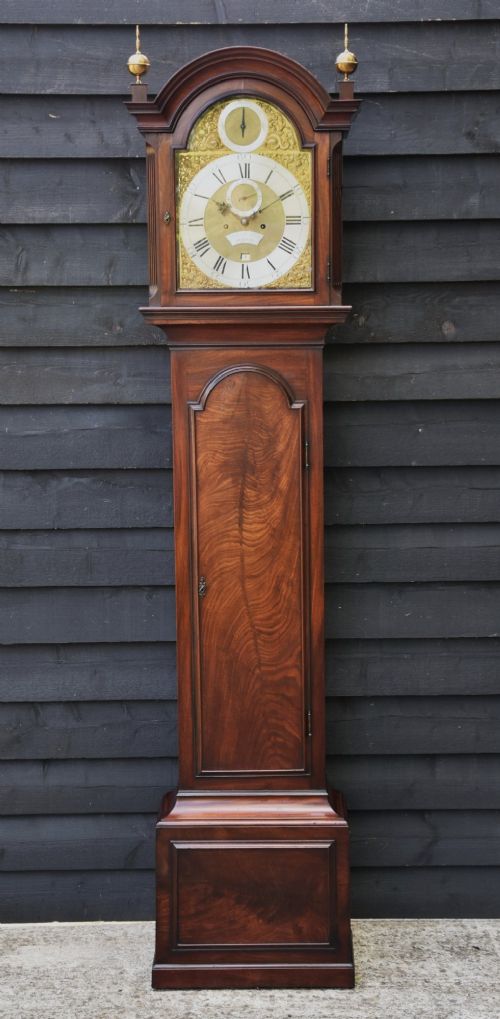
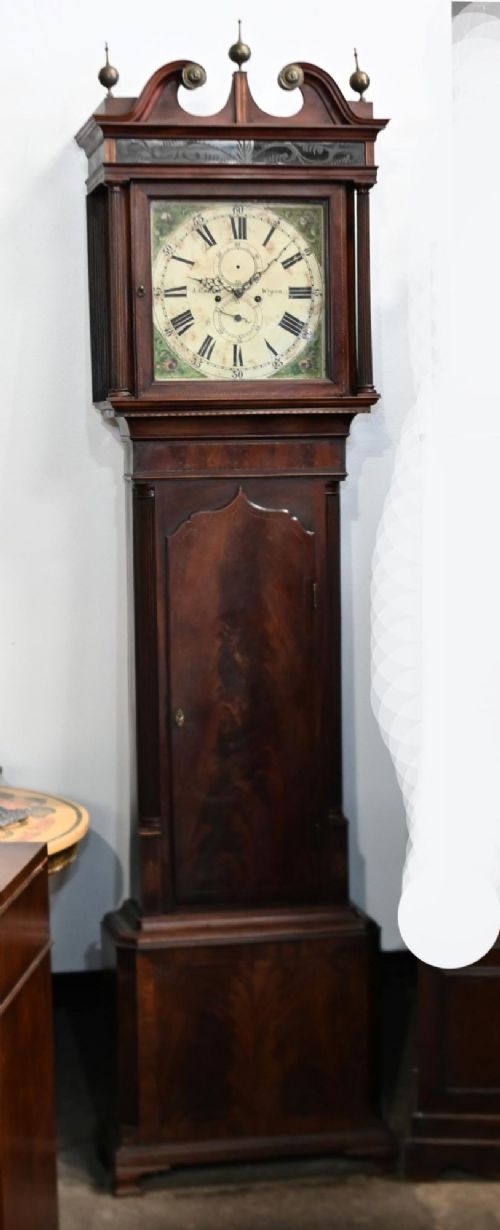
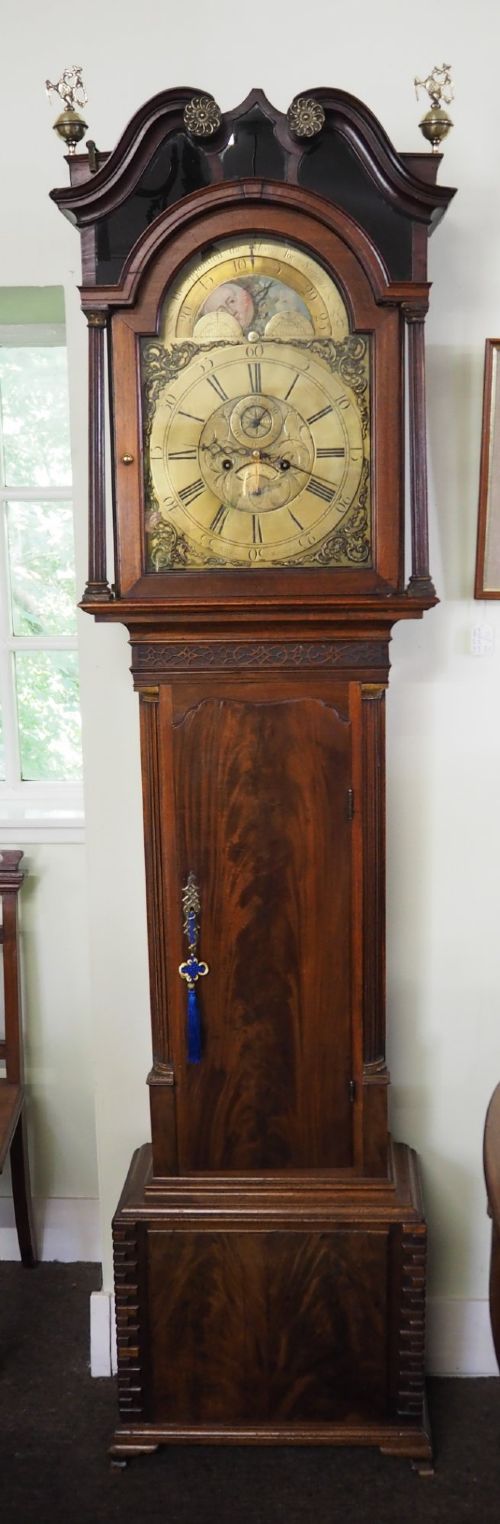
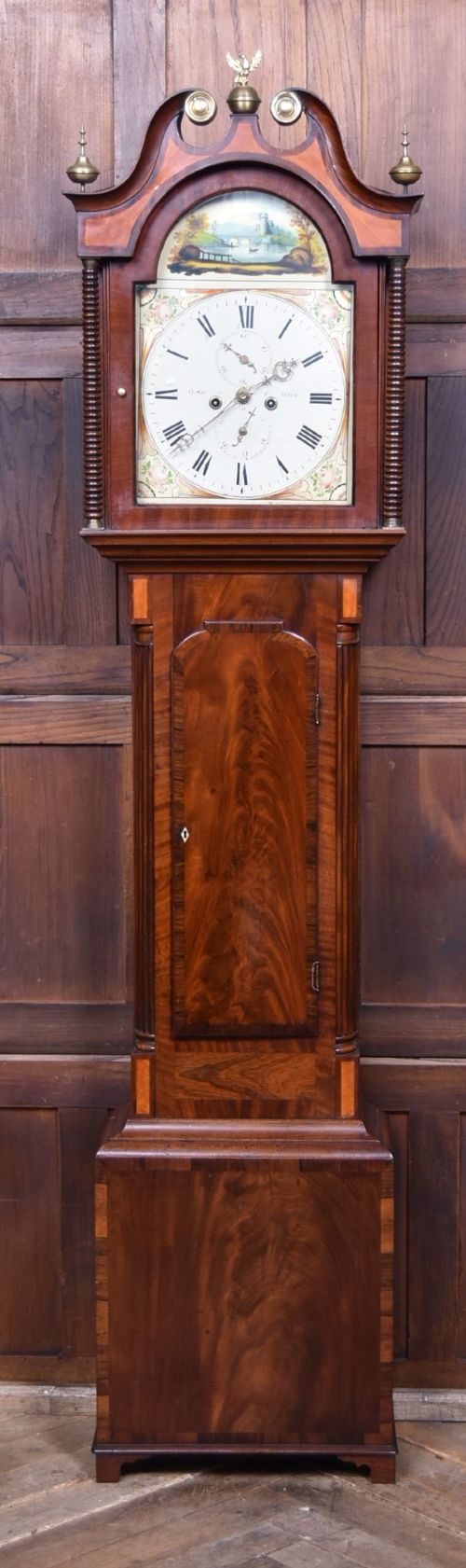
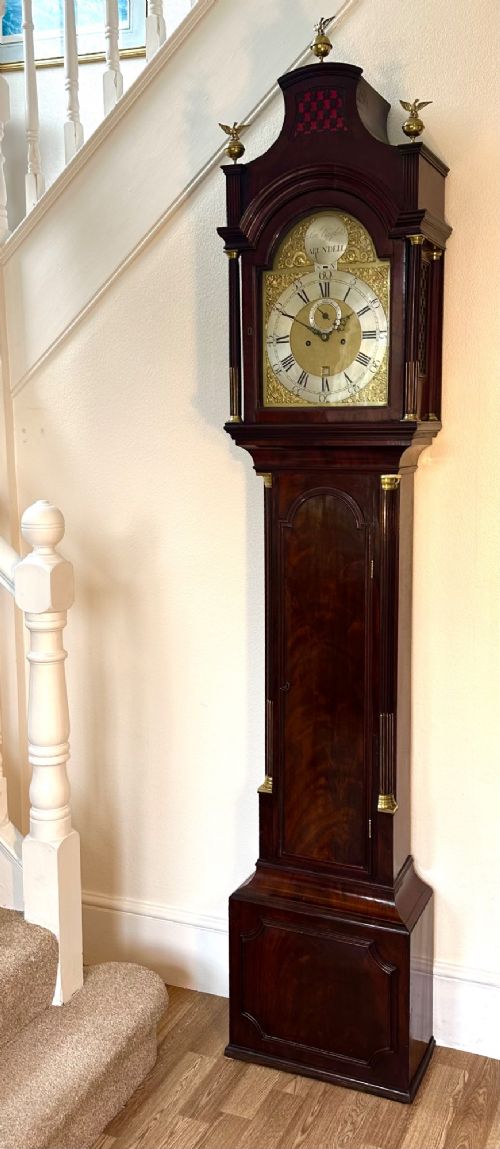
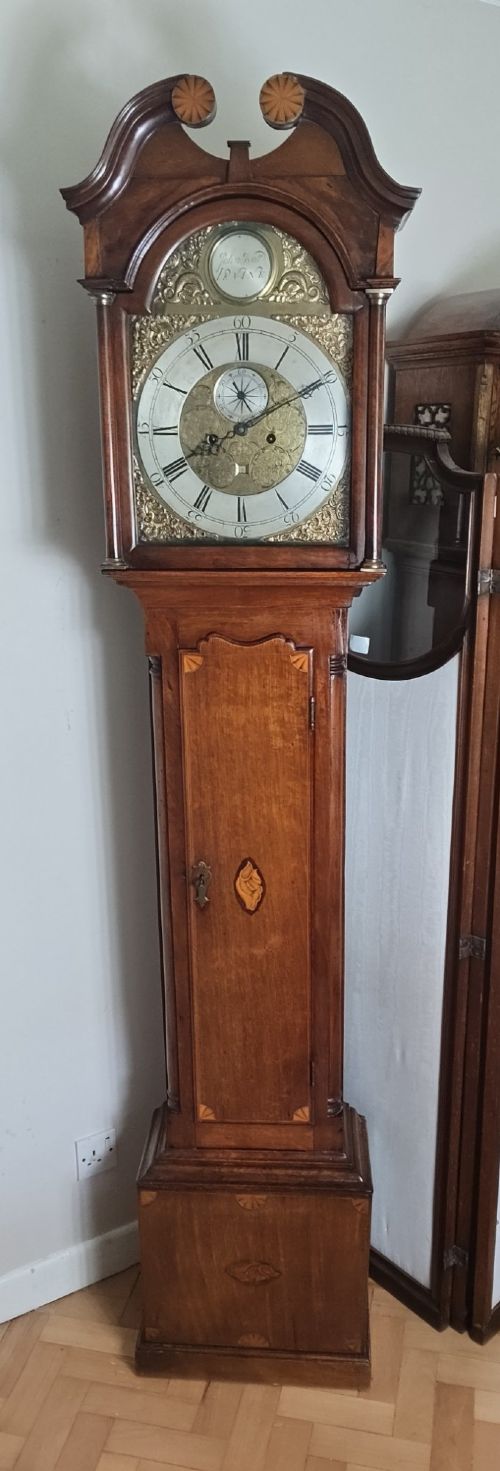
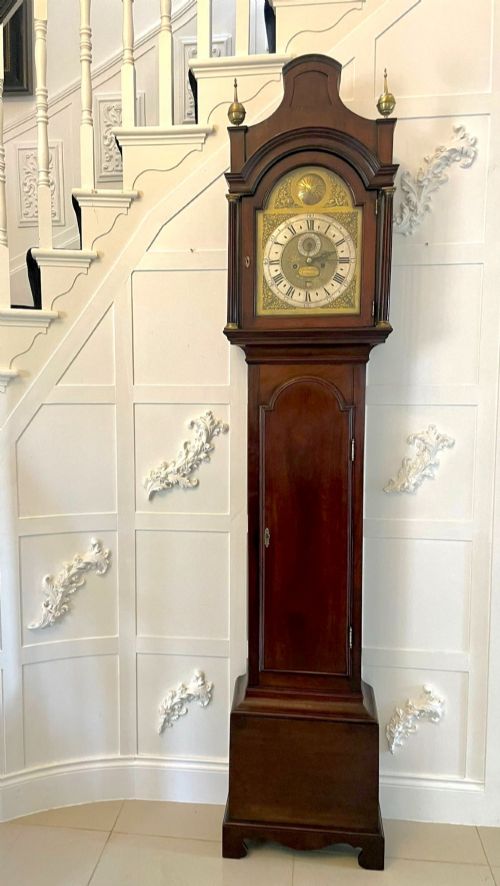
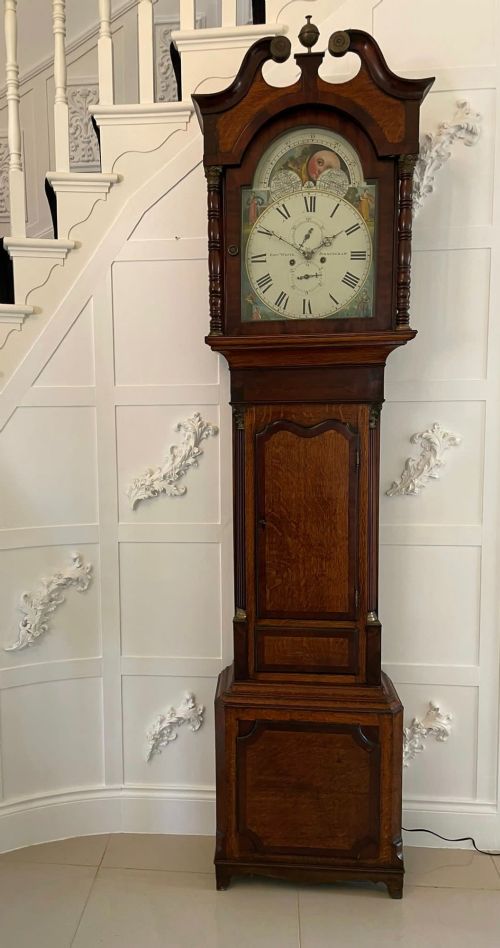
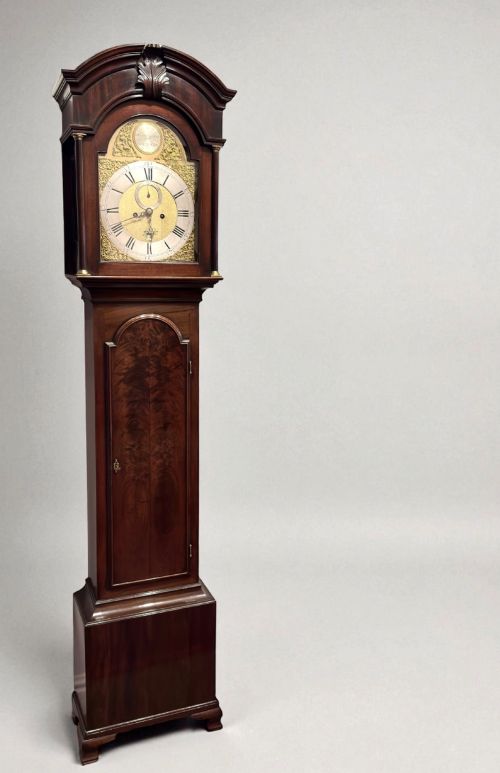
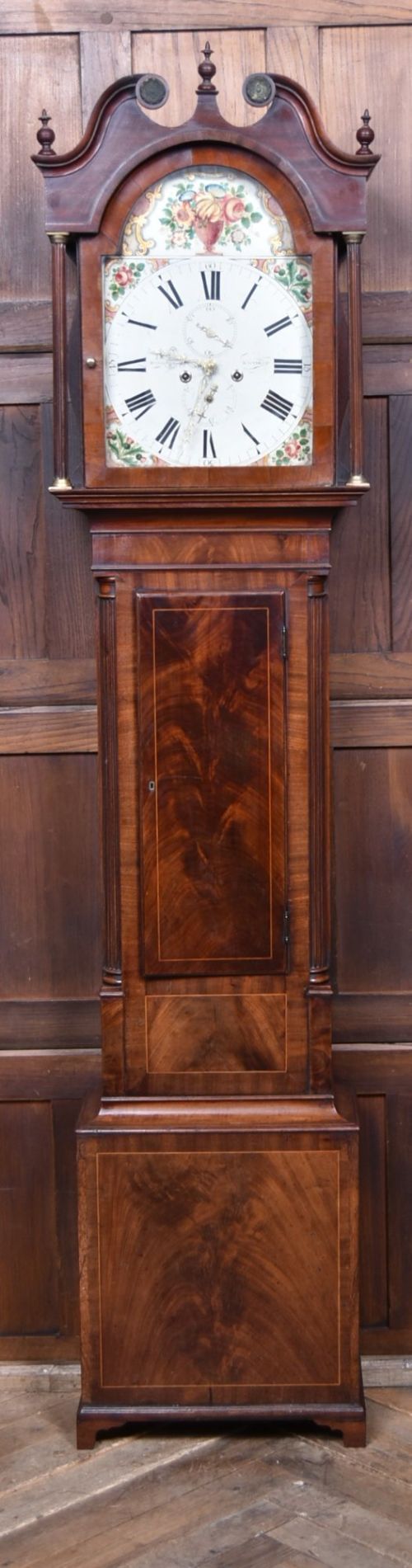
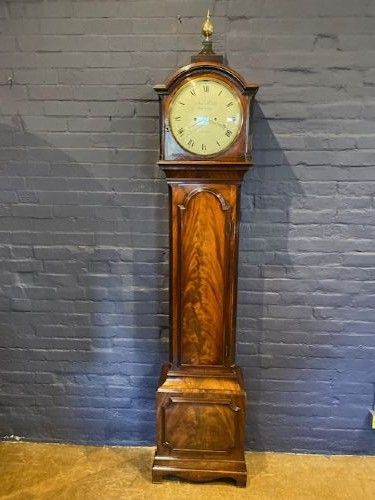
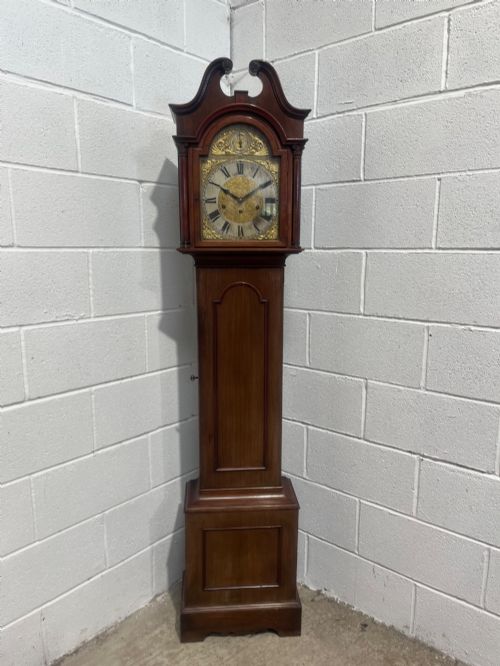
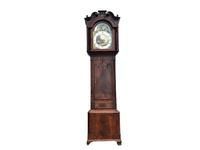
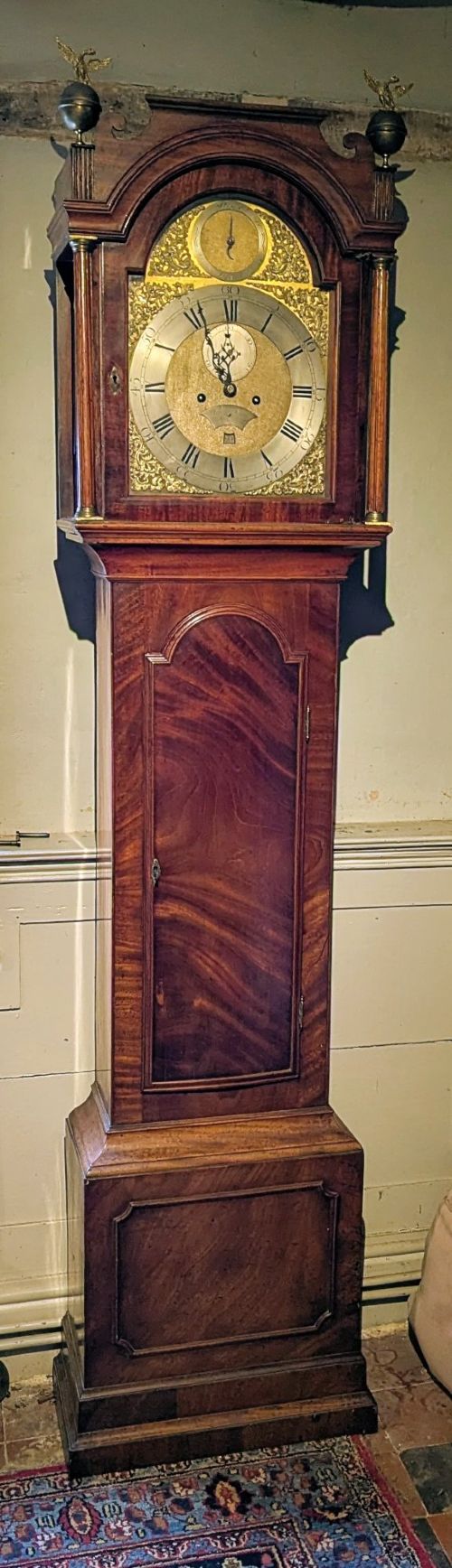
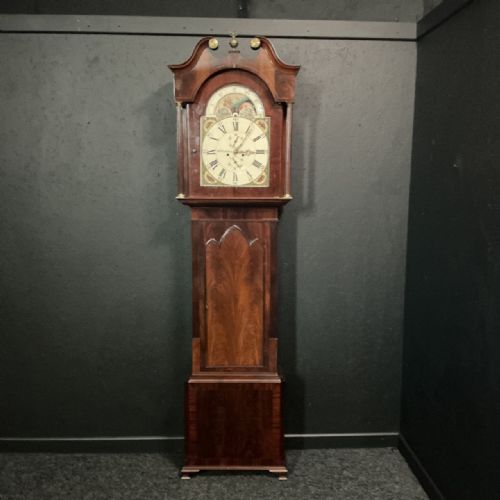
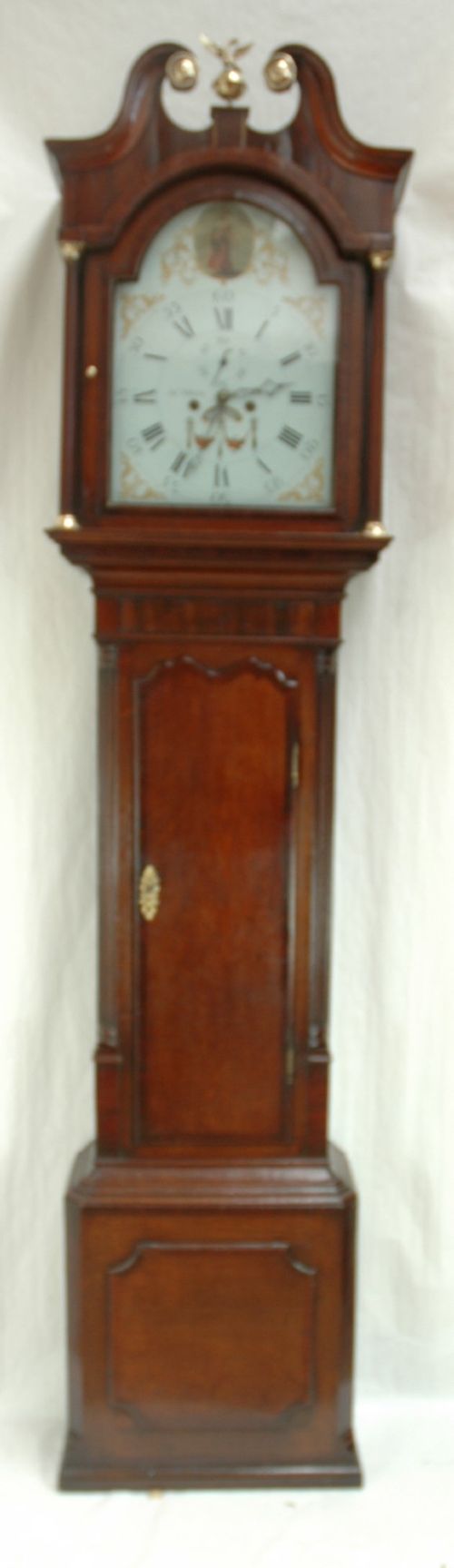
Mahogany Case Standing Clock
A mahogany case standing clock measures time with architectural presence, bringing the rhythmic pulse of a provincial workshop or London master into a hallway.
Mahogany Case Standing Clock
A mahogany case standing clock, often known as a grandfather or longcase clock, stands upright to house a tall weight-driven movement and swinging pendulum. These tall pieces serve as both precise timekeepers and commanding items of furniture in a room.
The examples gathered here span periods from the eighteenth century through the Victorian and Edwardian eras, with Georgian specimens frequently displaying regional craftsmanship from makers across England and Scotland. Forms range from slim, restrained proportions to robust architectural cases fitted with arched dials.
Makers recorded on these pieces include provincial watchmakers alongside London masters, showing how the form spread from capital workshops to towns like Wigan, Birmingham, Aberdeen, and Paisley. Buyers encounter dials painted with moon phases or brass circles signed by the artisans who built them.
Materials and construction
Cabinetmakers constructed the tall housing primarily using solid mahogany and flame mahogany veneers, sometimes incorporating oak secondary woods or contrasting banding to enrich the grain. Brass formed the dial fittings, spandrels, and movement components, while glass protected the painted iron or brass clock faces.
Movements relied on iron and steel wheels driven by hanging weights, housed within timber trunks designed to protect the pendulum from air currents. Dial faces combined hand-painted iron sheets or engraved brass plates with delicate steel hands indicating hours, minutes, and sometimes secondary calendar or moon-phase displays.
Mahogany Case Standing Clock Retail Price Guide 2026
Typical asking prices for mahogany case standing clock among the pieces listed under this phrase on Sellingantiques today, from the lower quarter to the upper quarter. They describe what is for sale here now, not the wider market.
Scottish provincial clockmakers occasionally signed dials with remote town names, quietly turning humble hallways into local timekeeping observatories.
Indicators of distinction
The architectural ambition of the case separates standard regional items from exceptional London or provincial masterworks, visible in the depth of the moulding, the selection of figured flame mahogany, and the crispness of inlay work. Finer cases balance precise proportions that keep the tall trunk elegant rather than heavy.
Movement sophistication further distinguishes individual pieces, with eight-day durations, moon rollers, strike-silent mechanisms, and tubular bell systems requiring greater skill from the clockmaker than simple thirty-hour versions. Signed dials by known regional or metropolitan makers anchor the historical interest of the work.
Edward White Birmingham·Charles Shuckburgh London·Hendrie Ogg Dunfermline·Gordon of Aberdeen·D Straiton Montrose·James McCabe·Henry Weedon London·Edward Shepley Manchester·Matt Wylie Paisley·Joseph Gibson Ecclefechan·Thwaites London·John Denbigh Merton Park·Handley and Moore Of London·D Williams of Crickhowell
The Mahogany Case Standing Clock Glossary
- Longcase clock
- A tall pendulum clock enclosed in a wooden case that stands directly on the floor. This term is synonymous with the grandfather clock.
- Moon phase
- A dial mechanism tracking the lunar cycle through a rotating disc painted with moons. It appeared on better eighteenth and nineteenth-century dials.
- Paterae
- Small circular decorative ornaments carved or inlaid into furniture surfaces. They frequently accent the corners of clock hoods and trunk doors.
- Spandrel
- The ornamental corner piece filling the space between a circular clock dial and the rectangular frame. Early examples are cast brass, while later ones are often painted directly onto iron dials.
Mahogany Case Standing Clock: Frequently Asked Questions
How do I wind an eight-day longcase clock?
Winding involves using a crank key to draw the weights back up via the winding holes on the dial face, taking care not to over-wind the mechanism.
Most eight-day movements require this attention roughly once a week, keeping the pendulum swinging steadily without disturbing the hand positions.
Where should I place a standing clock in my home?
These tall clocks need a stable, level floor against a solid interior wall away from direct sunlight and sudden temperature shifts.
Placing them in a hallway or landing allows the pendulum to swing freely and lets the striking mechanism resonate through the timber case.
How can I tell a Georgian clock from a Victorian one?
Georgian examples often feature hand-painted iron or brass arched dials with delicate engraving and slender, architectural mahogany trunks made by regional makers.
Victorian and Edwardian versions tend to display heavier proportions, sometimes incorporating later dial decorations or alternative striking mechanisms like tubular bells.
Why do some clock faces show moon phases?
The secondary rotating disc tracked the phases of the moon to aid mariners, farmers, and travellers with night-time lighting before streetlamps became common.
Clockmakers included this feature on higher-grade movements to demonstrate their technical skill and to satisfy prosperous clients.