

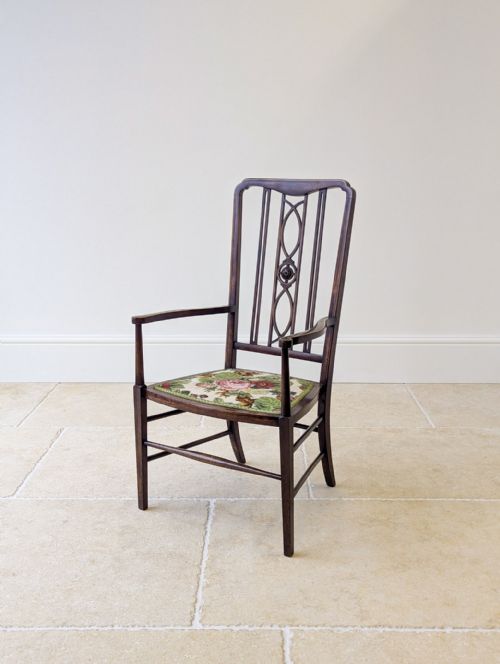
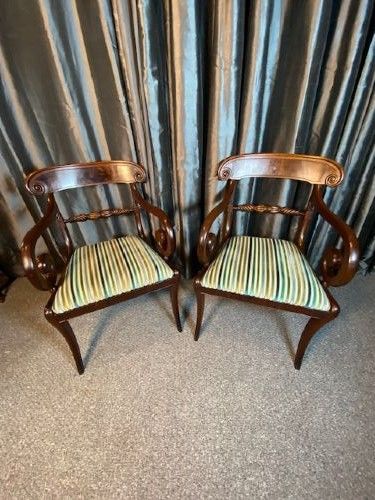
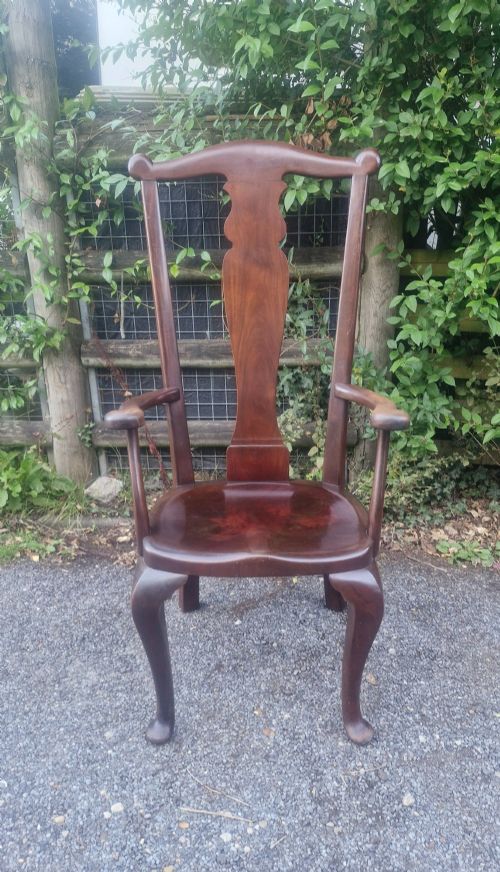
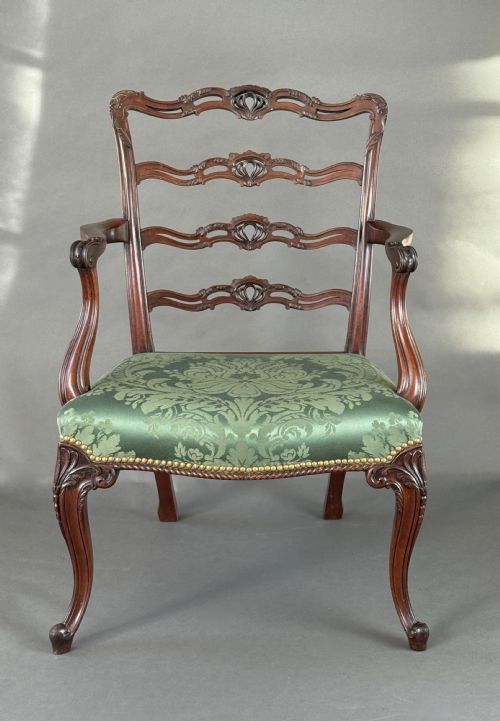
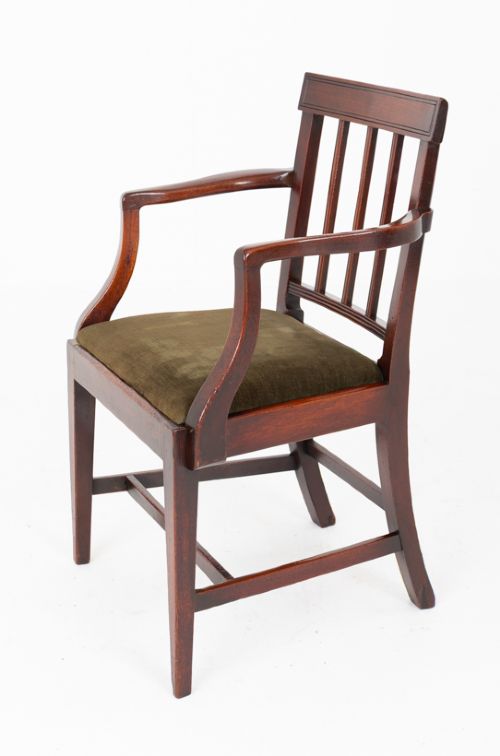

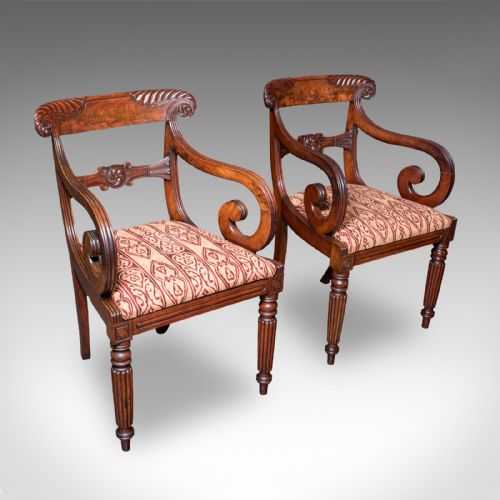
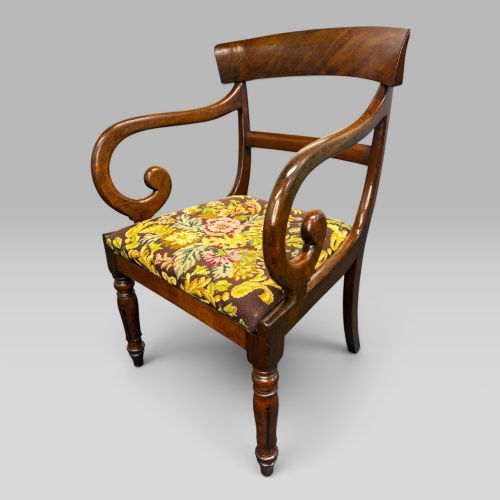
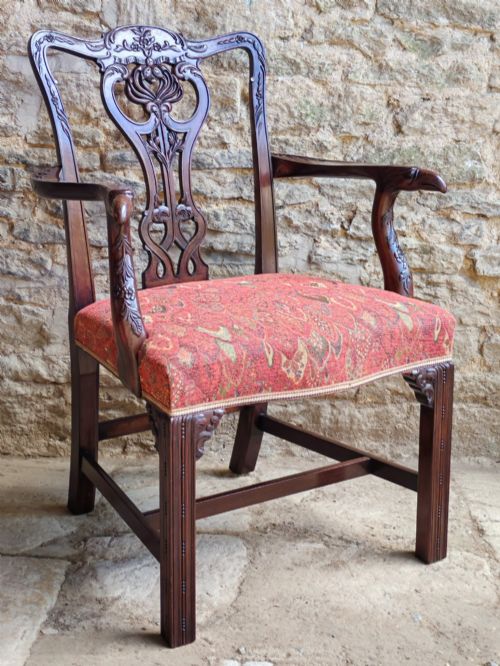
Mahogany Carver Arm Chair
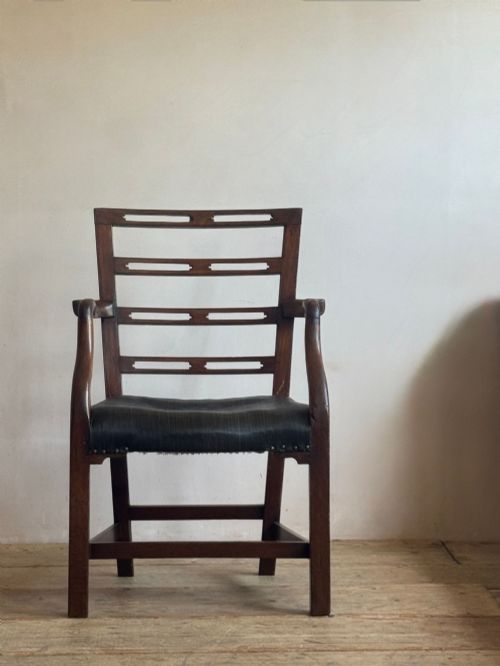
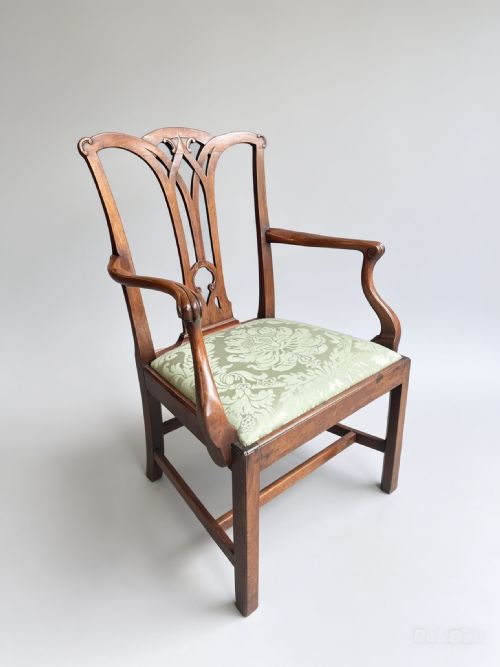
A mahogany carver arm chair offers solid timber framing and supportive armrests, serving equally well at a desk or the head of a dining table.

Mahogany Carver Arm Chair
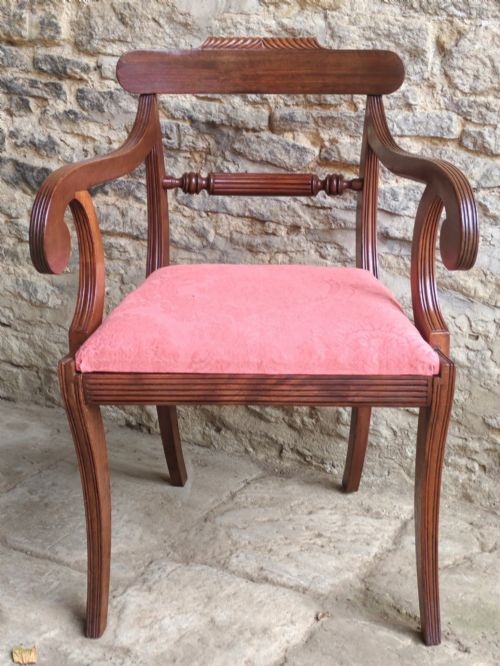
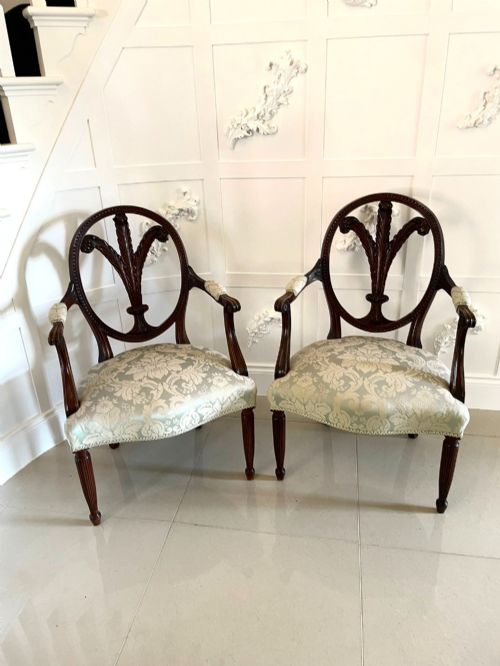
A mahogany carver arm chair is a substantial seat designed with integral armrests, historically placed at the ends of a dining table or utilised as a desk chair. The pieces catalogued here span from the 18th century through the Georgian, Regency, William IV, Victorian, and Edwardian eras, leading up to early 20th-century revivals.
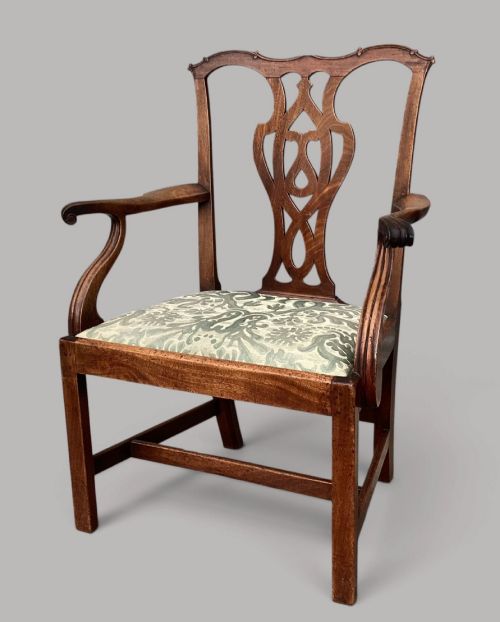
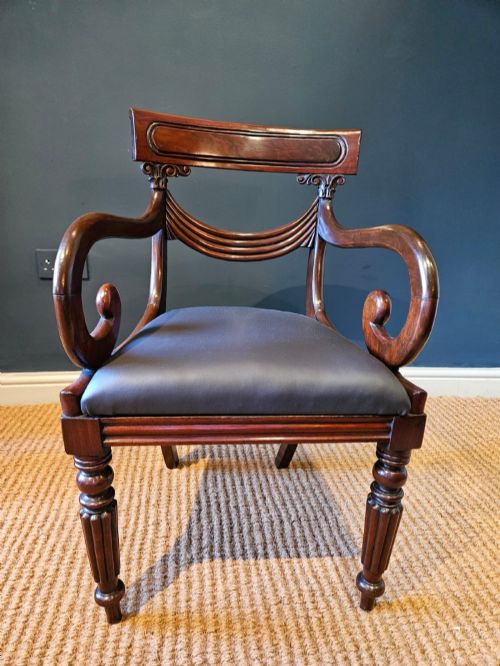
Most examples encountered on this page originate from the Georgian and Regency periods, alongside later 19th-century interpretations of Chippendale and Sheraton designs. Buyers find them in various formats, ranging from single library seats to pairs intended for reception rooms and matching dining sets.
How They Were Made
Cabinetmakers constructed these frames primarily from dense, rich mahogany, occasionally integrating secondary timbers and decorative inlays of satinwood. Joinery relied on mortise and tenon techniques to ensure the structural integrity of the arm supports and backrests.
Upholstery methods varied by period, utilising drop-in pads, horsehair stuffing, and traditional webbing covered in leather, velvet, fabric, or tapestry upholstery. Brass details and sabre legs appeared frequently in Regency workshop productions.
Mahogany Carver Arm Chair Retail Price Guide 2026
Typical asking prices for mahogany carver arm chair among the pieces listed under this phrase on Sellingantiques today, from the lower quarter to the upper quarter. They describe what is for sale here now, not the wider market.
Some sturdy office armchairs bear the invisible scars of ink stains from earnest Georgian letter-writing.
What Varies in Quality
The degree of hand-carving on the splats, arms, and rails dictates much of the distinction between standard utilitarian seating and high-status examples. Crisp detailing in scrollwork, fretwork, and inlay reflects the skill level of the original cabinetmaker.
Timber selection and grain figure also determine overall desirability, with well-figured mahogany commanding greater attention. Structural stability retained through original joinery rather than later reinforcement preserves the integrity of the frame.
Howard and Sons·Waring and Gillow
The Mahogany Carver Arm Chair Glossary
- Carver chair
- An armchair, typically heavier and more ornate than side chairs, traditionally positioned at the head of a dining table.
- Elbow chair
- An alternative term for an armchair, referencing the support provided for the arms.
- Scroll arm
- An armrest shaped into a characteristic curved scroll, commonly seen on Regency and Victorian mahogany seating.
- Drop-in seat
- A removable upholstered frame that fits into the seat rails of the chair without permanent attachment.
- Splat
- The vertical wooden strip down the centre of an open chair back, often carved or pierced in Georgian designs.
Mahogany Carver Arm Chair: Frequently Asked Questions
How do I spot a Regency carver chair?
Regency examples frequently display sabre legs, brass inlays, and sweeping scroll arms reflecting neoclassical influence.
Their proportions tend to be clean and linear compared to the heavier ornamentation found on later Victorian productions.
Were these chairs used at desks?
Many sturdy elbow chairs served dual purposes in libraries and studies as office desk seating.
Their supportive armrests and open backs provided comfort during long periods of writing.
Can I mix different periods around a dining table?
Pairing a single carver with matching side chairs is a traditional method of seating a dining room.
Careful attention to wood tone and timber grain ensures visual harmony even when styles cross eras.
What is the difference between Chippendale and Sheraton styles?
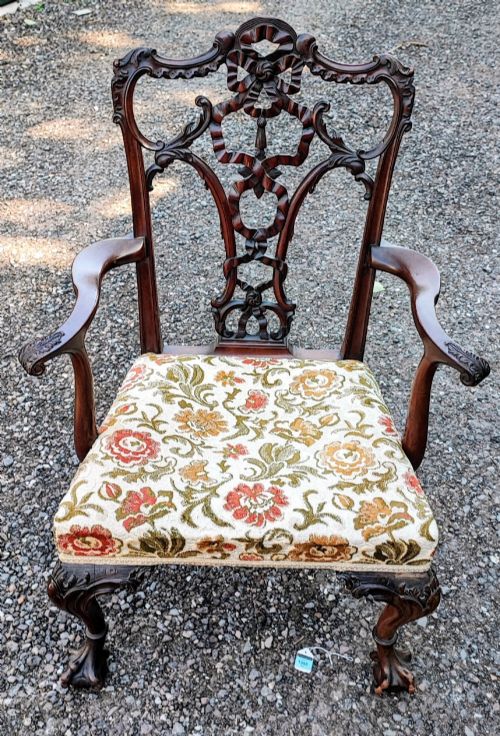
Chippendale designs feature robust carved mahogany, ribbon-backed splats, and cabriole legs ending in claw and foot motifs.
Sheraton aesthetics lean toward lighter geometric lines, straight tapered legs, and decorative satinwood inlay.