

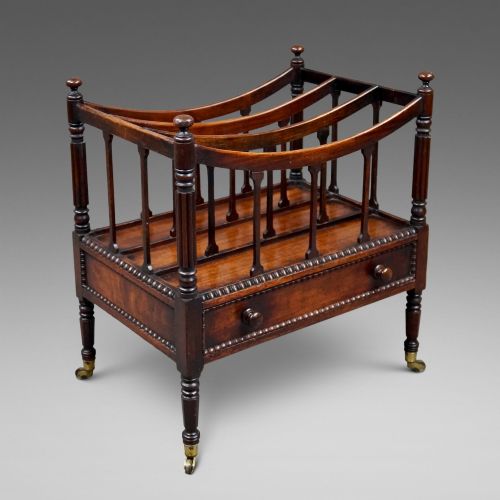
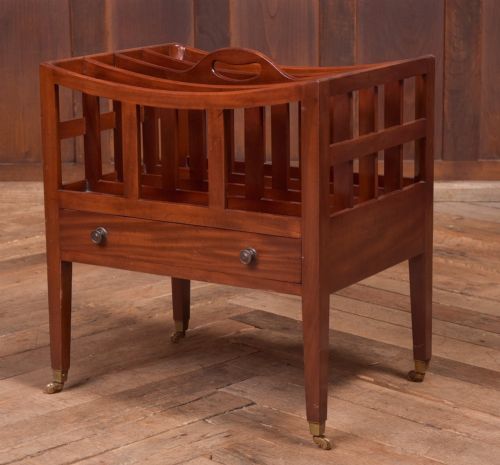
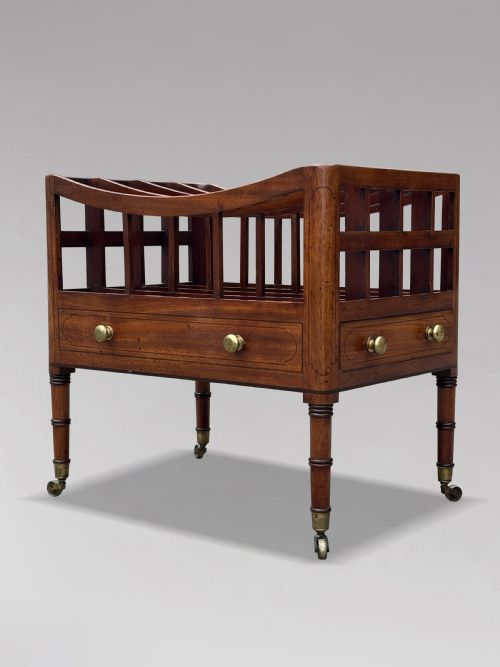
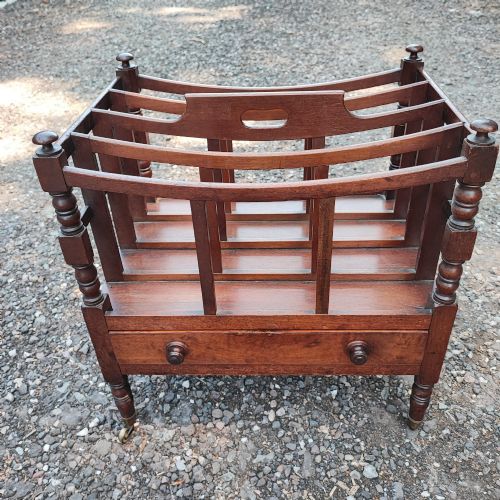
Mahogany Canterbury Magazine Rack
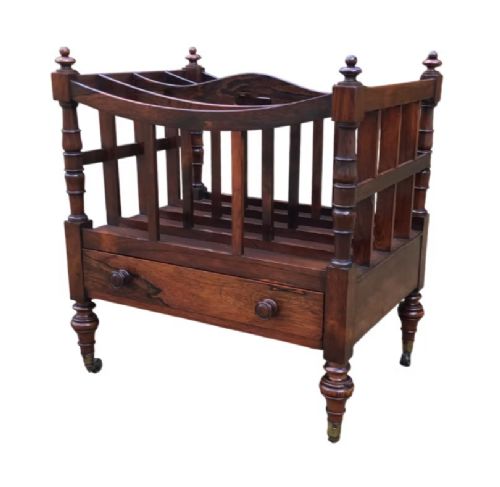
A mahogany canterbury magazine rack holds papers and music with divisions built for orderly living.
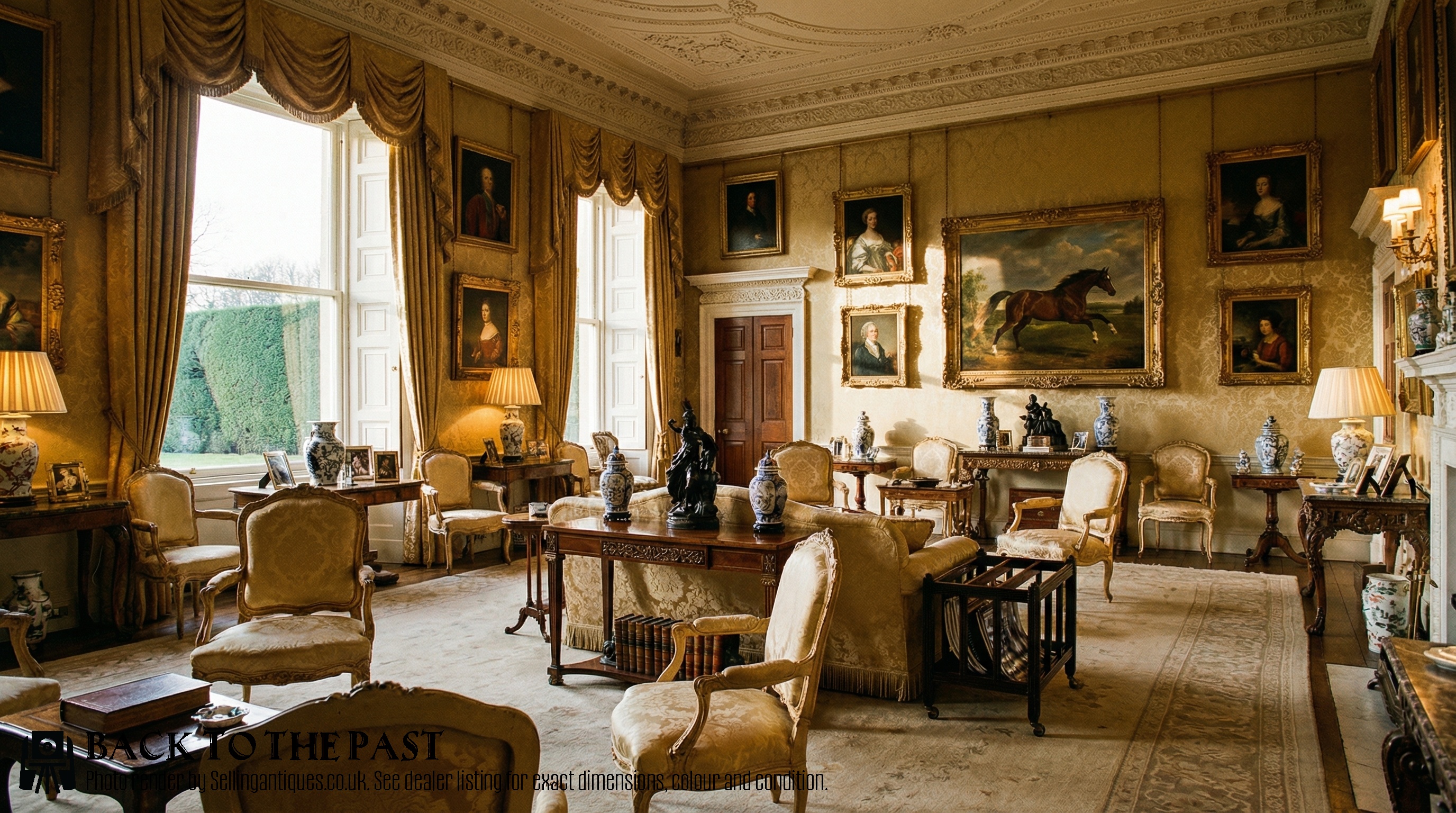
Mahogany Canterbury Magazine Rack
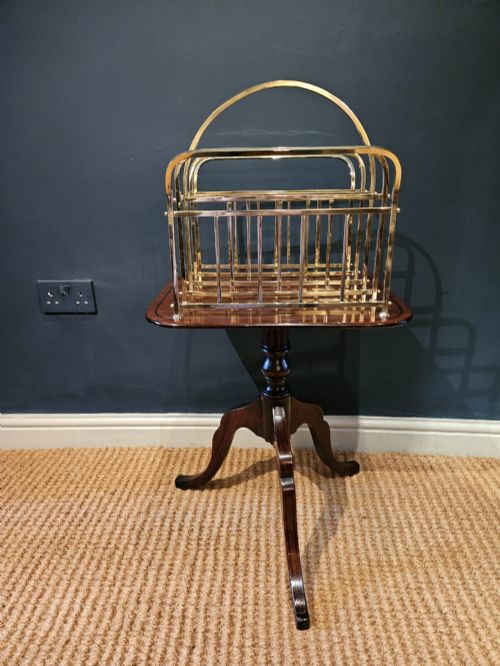
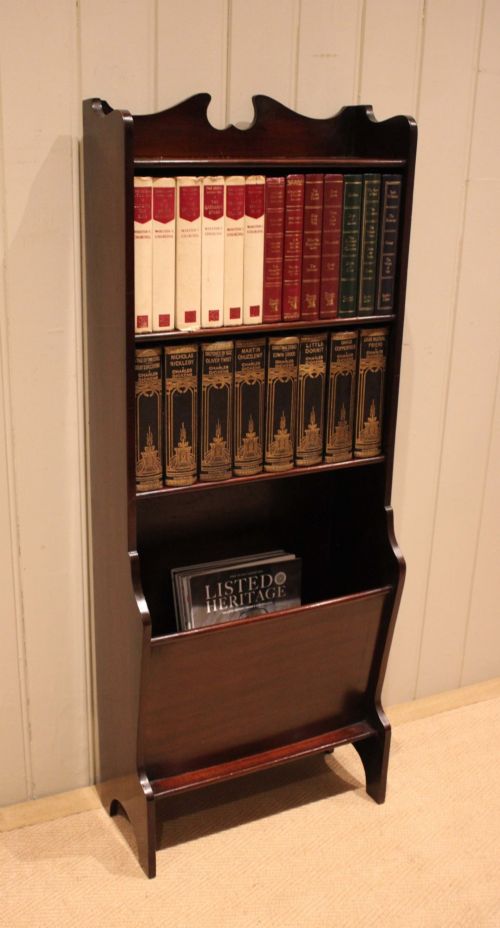
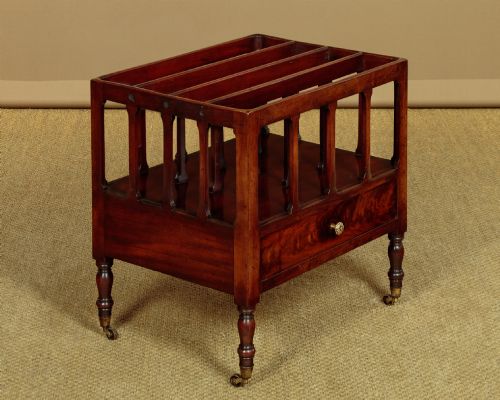
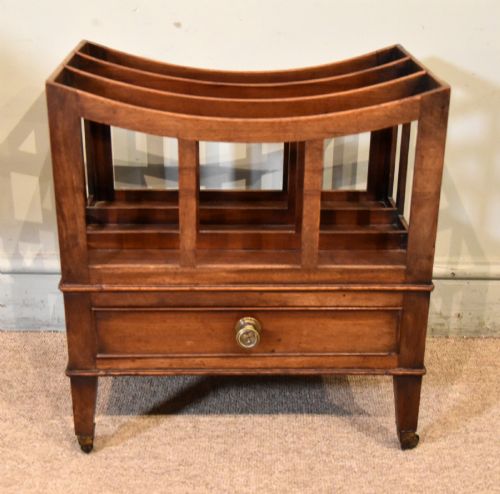
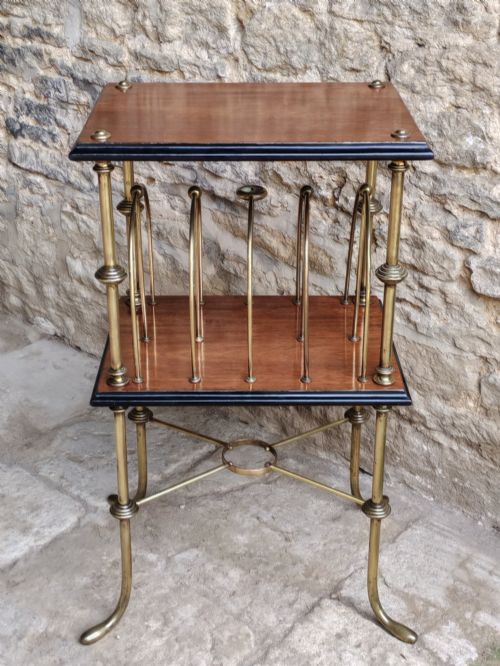
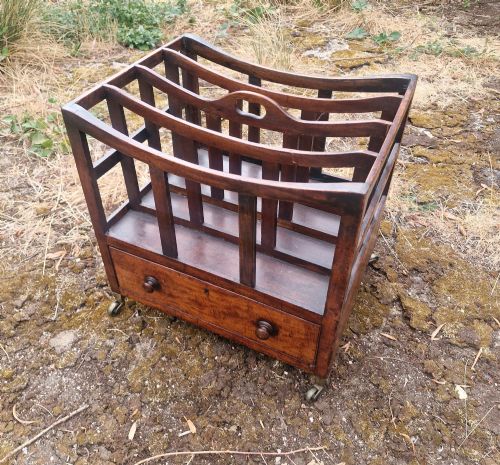
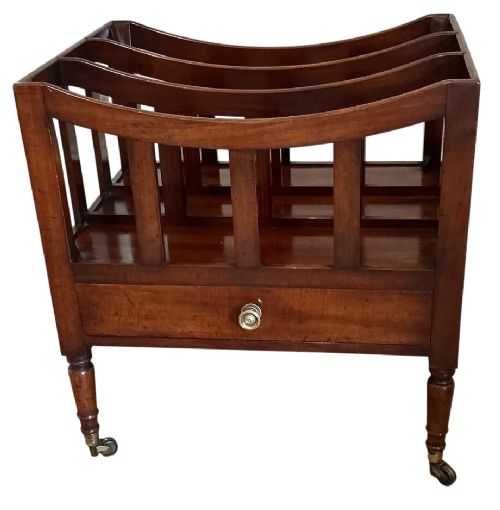
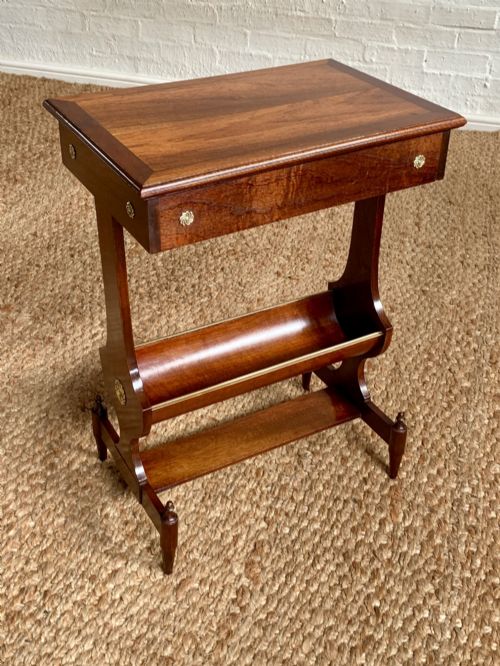
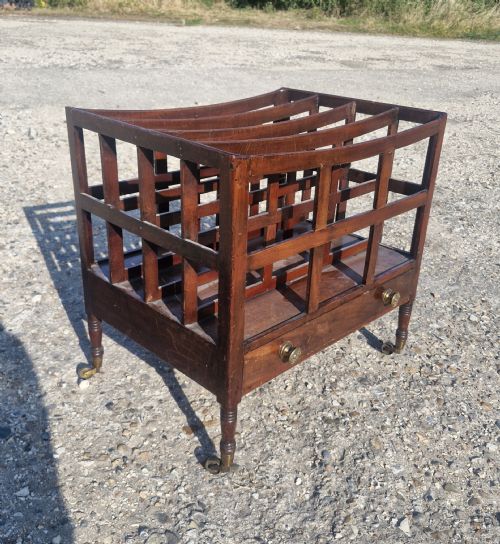
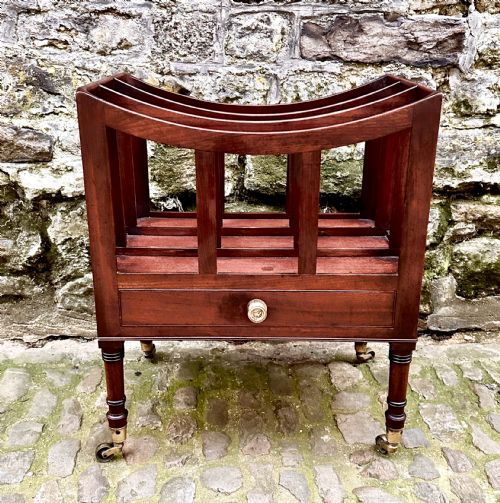
A mahogany canterbury magazine rack combines partitioned divisions for folios with low stands designed for daily reading materials. Buyers seeking a mahogany canterbury magazine rack encounter pieces spanning Georgian, Regency, William IV, Victorian, and Edwardian eras. These stands frequently integrate open slats with a single lower drawer for small accessories.
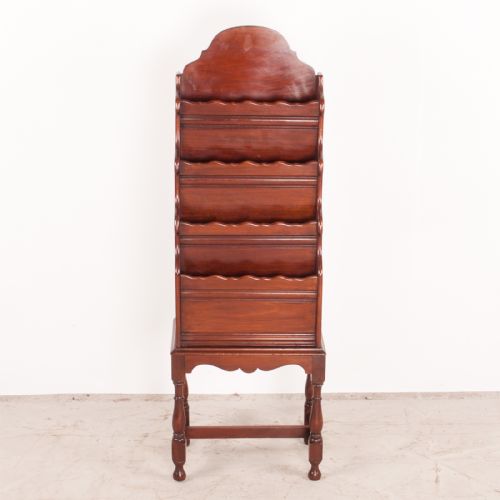
Originating as stands for sheet music, the forms span boat-shaped frames, low tables, and tiered magazine racks. The selection leans heavily towards Regency and Georgian designs alongside later Edwardian variations. Pieces often rest on turned legs fitted with original castors for movement across floors.
Materials and Construction
Cabinet makers utilised solid mahogany and Cuban mahogany timber, sometimes selecting figured grain for visible surfaces. Structural framing often incorporates rosewood or satinwood inlay, along with contrasting ebony banding.
Metal components appear as brass castors or subtle brass handles on drawers. Divisions are constructed with vertical turned spindles or shaped wooden slats secured to low bases.
Mahogany Canterbury Magazine Rack Retail Price Guide 2026
Typical asking prices for mahogany canterbury magazine rack among the pieces listed under this phrase on Sellingantiques today, from the lower quarter to the upper quarter. They describe what is for sale here now, not the wider market.
Some nineteenth century stands rolled quietly on brass castors so servants could clear the morning papers.
Quality and Construction
Superior examples display precise joinery in the slatted divisions and clean timber selection without heavy repairs. The crispness of turning on legs and the integration of brass castors reveal the original maker's hand.
Simpler provincial pieces rely on plain timber and straightforward assembly, whilst grander workshop items utilise dense Cuban mahogany with fine inlay work.
The Mahogany Canterbury Magazine Rack Glossary
- Canterbury
- A low stand with divisions for holding sheet music, newspapers, or magazines. The form dates back to the eighteenth century and often includes a drawer below.
- Boat-shaped
- A curved hull-like profile typical of Regency stands. This contour softens the rectangular geometry of the piece.
- Cuban mahogany
- A dense, dark timber harvested in the Caribbean and prized for its rich grain. Furniture makers utilised it for high-status pieces during the Georgian and Regency periods.
- Inlay
- Contrasting wood or metal set flush into the surface of the primary timber. Satinwood and ebony frequently provide this decorative contrast.
Mahogany Canterbury Magazine Rack: Frequently Asked Questions
What was a canterbury originally used for?
These pieces served as moveable stands for holding sheet music and scores near a piano or music room. Servants also used them to tidy newspapers and writing folios in sitting rooms.
Over time, the domestic role shifted towards holding contemporary magazines and periodicals while retaining the traditional multi-division layout.
How do I tell a Georgian canterbury from a Victorian one?
Georgian and Regency examples tend to feature lighter proportions, crisp spindle turnings, and restrained classical lines. Cuban mahogany and fine brass castors frequently mark these earlier pieces.
Victorian and Edwardian versions often appear heavier in scale with broader proportions and sometimes incorporate sheet music cabinet doors alongside the open rack.
Can I use these stands for modern magazines?
The vertical divisions accommodate standard periodicals, newspapers, and modern art books comfortably. The sturdy timber construction supports daily handling without strain.
Care should be taken with oversized publications that exceed the depth of traditional eighteenth or nineteenth century slats.
Do all models include a drawer?
Many designs incorporate a single drawer beneath the main slatted rack for smaller items like bookmarks and stationery. Others maintain a strictly open frame with low legs and castors.
Both formats appear across the Georgian and Victorian periods depending on the specific workshop design.