

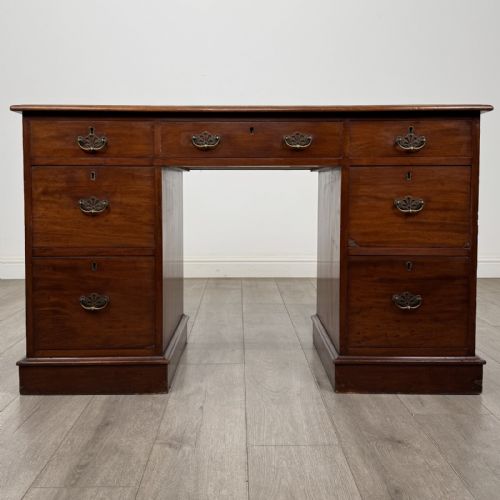
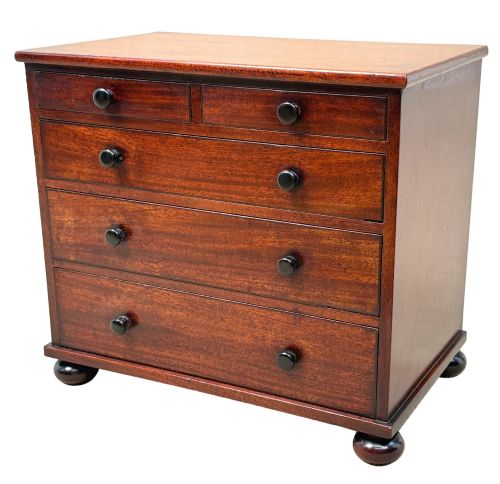
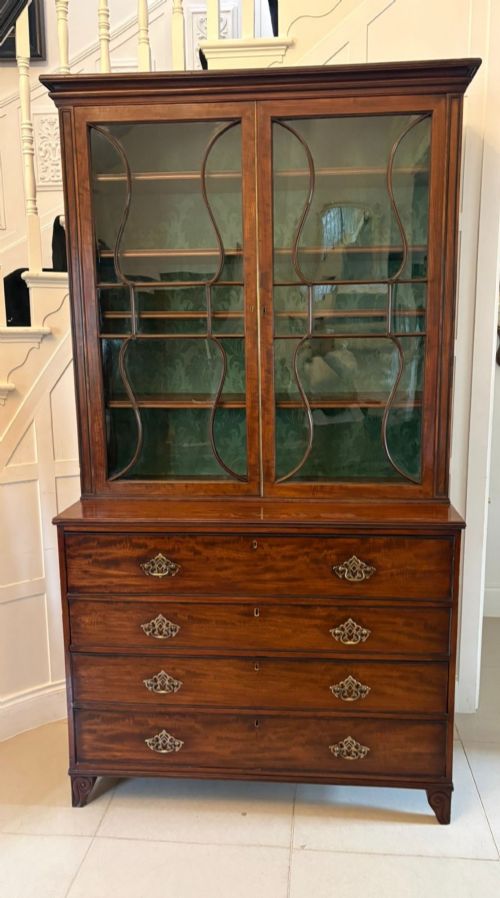
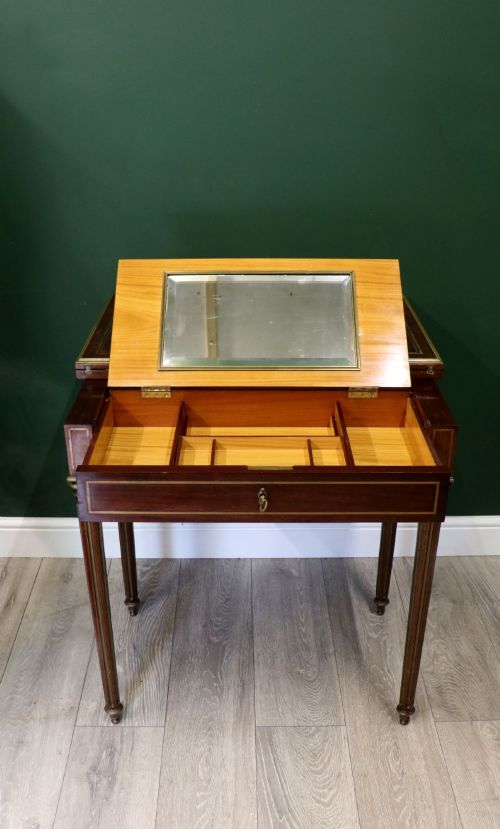
Mahogany Cabinet with Desk
Mahogany cabinet with desk pieces combine tall storage and practical writing surfaces in rich timbers, built for serious correspondence and organised rooms.
Mahogany Cabinet with Desk
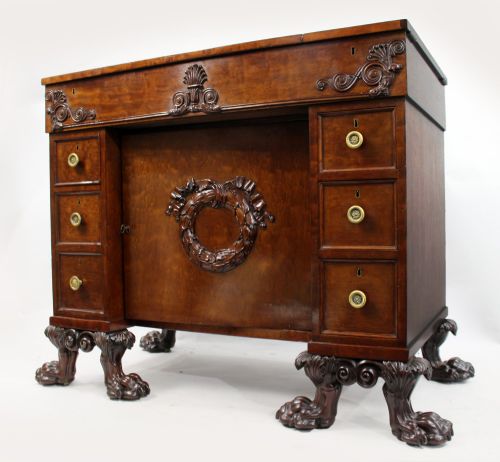
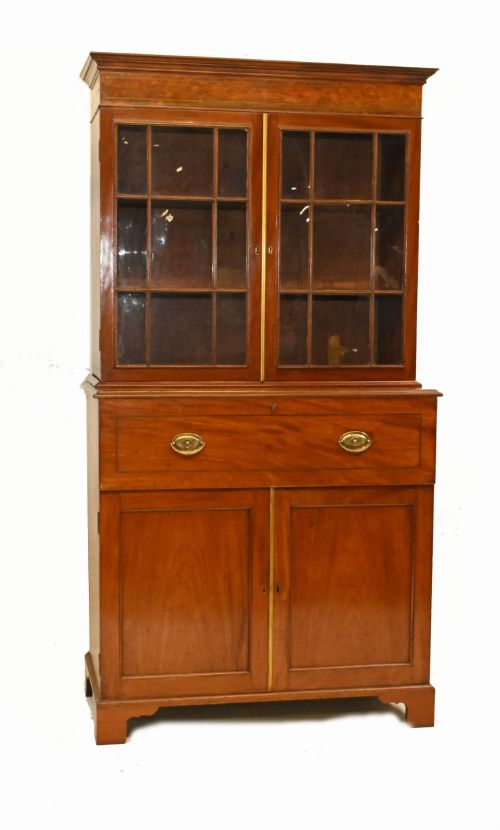
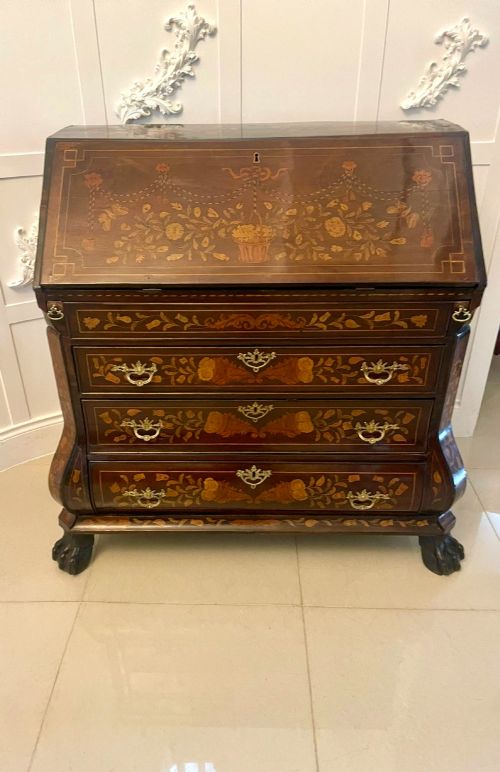
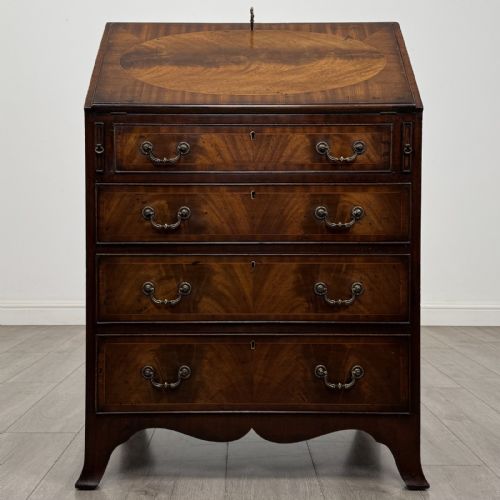
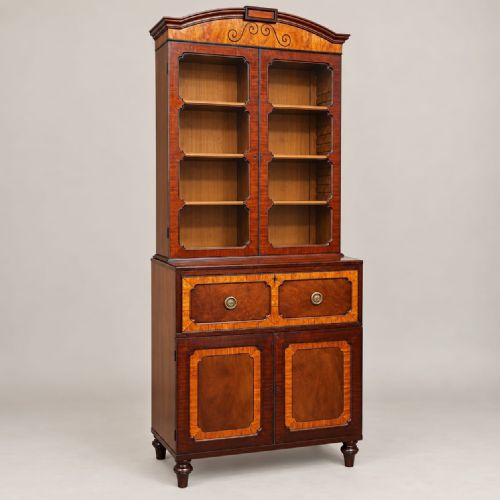
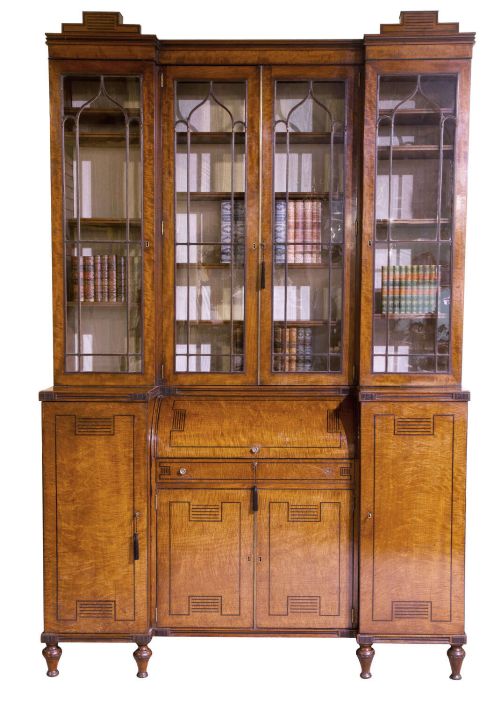
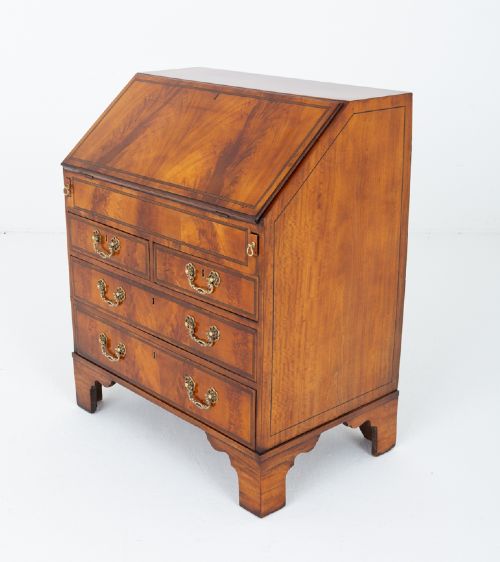
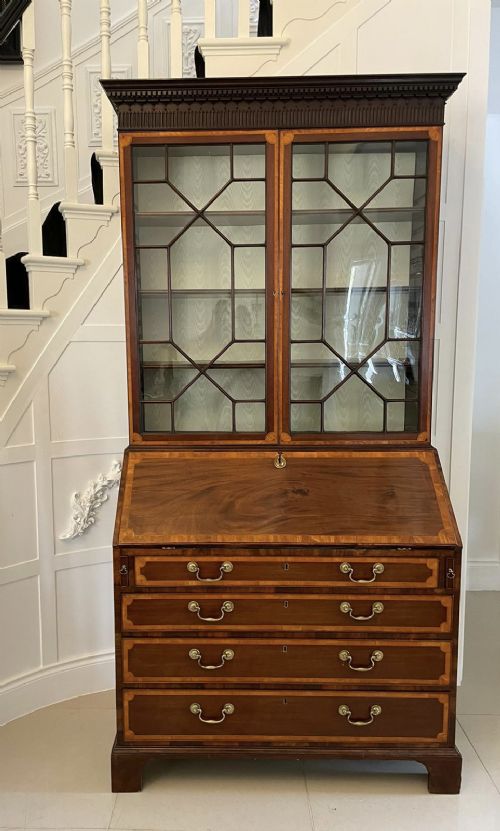
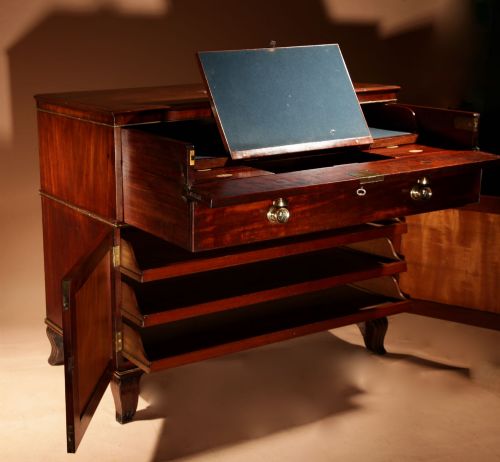
A mahogany cabinet with desk merges a display or book storage unit with a drop-front writing surface or fitted writing drawer. These dual-purpose items range from compact writing tables and Davenport desks to tall bureau bookcases featuring glazed doors.
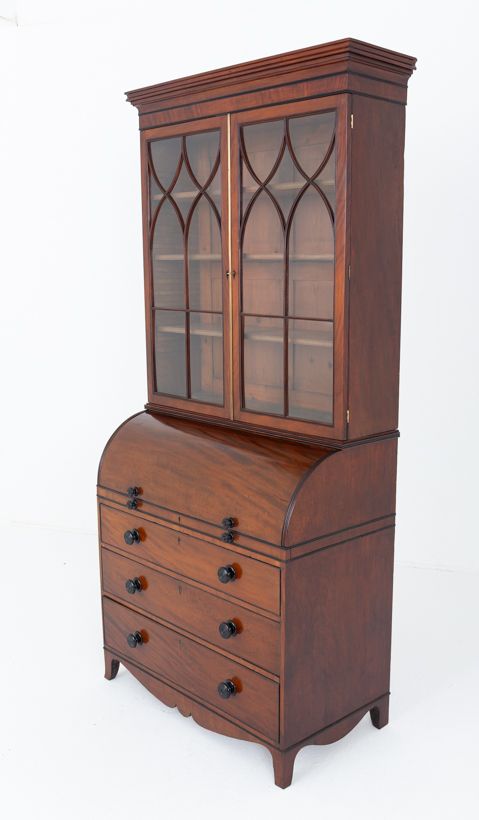
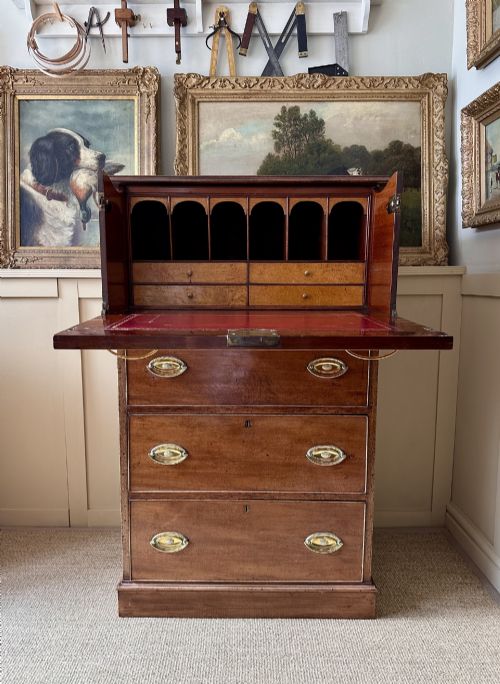
Most examples encountered here date from the Georgian, Regency, and Victorian periods, alongside Edwardian and later reproductions. They span upright bureau bookcases with fitted interior pigeonholes to specialised library secretaires and cylinder desks.
Materials and construction methods
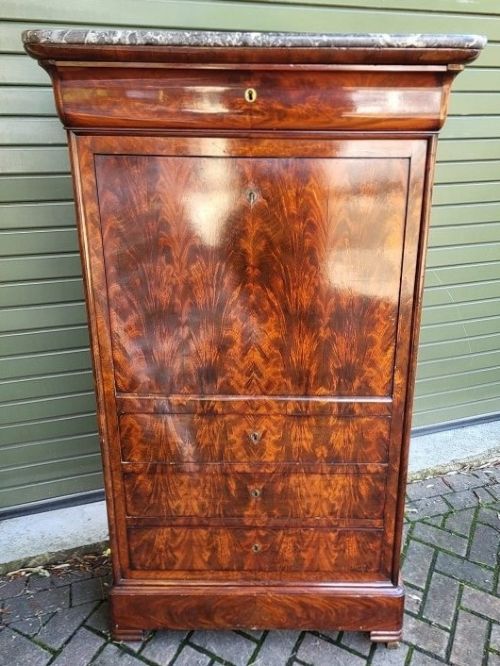
Cabinetmakers relied heavily on solid mahogany and flame mahogany veneers, often enhanced with satinwood inlay and brass hardware such as paw feet or handles. Glass panels feature in the upper bookcase sections, while leather inserts frequently line the pull-down writing surfaces.
Structural joinery relies on traditional dovetailing for drawer construction and sturdy framing to support the weight of books and fitted interior compartments. Inlaid banding and contrasting wood borders define the decorative surface work on Georgian and Edwardian pieces.
Mahogany Cabinet with Desk Retail Price Guide 2026
Typical asking prices for mahogany cabinet with desk among the pieces listed under this phrase on Sellingantiques today, from the lower quarter to the upper quarter. They describe what is for sale here now, not the wider market.
The listings span the 18th, 19th, and 20th centuries, covering Georgian, Regency, Victorian, and Edwardian eras.
Distinctions in quality and execution
Quality rests upon the selection of timber figures, such as highly figured flame mahogany veneer, and the crispness of inlaid wood details. Superior workshops achieved seamless drawer operation and meticulously fitted interior pigeonholes with hidden compartments.
The architectural proportions of the upper bookcase relative to the lower desk section dictate the visual balance of the piece. Well-executed glazing bars, substantial brass fittings, and intact original leather writing inserts separate standard utility pieces from exceptional examples.
Gillows·Tudor and Burrey Shrewsbury·J A Mein Edinburgh Cabinet Maker
The Mahogany Cabinet with Desk Glossary
- Secretaire
- A desk or cabinet with a disguised writing drawer or drop-front panel that conceals a fitted interior of pigeonholes and small drawers.
- Bureau bookcase
- A tall furniture form combining a slant-front writing desk at the base with a shelved cabinet or bookcase section above.
- Flame mahogany
- A distinctive wood veneer grain pattern resembling flickering flames, prized for its dramatic visual movement on cabinet doors and drawer fronts.
- Astragal glazed
- A glass door divided into smaller panes by slender wooden mouldings or bars, commonly found on Georgian bookcase sections.
- Davenport
- A compact pedestal desk featuring a sloping, hinged writing surface and drawers accessed from the side.
Mahogany Cabinet with Desk: Frequently Asked Questions
What is a secretaire bookcase?
A secretaire bookcase is a tall hybrid furniture piece that combines a bookshelf upper section with a pull-down or drop-front writing desk below. The desk portion typically opens to reveal a fitted interior containing small drawers and pigeonholes.
These pieces were designed for studies and libraries where both book storage and a dedicated writing surface were required in a single footprint.
Where should I place a combination cabinet?
These pieces suit home offices, studies, or living rooms where vertical storage and a functional workspace are both beneficial. Ensure the room maintains stable humidity to protect the mahogany timber and any leather writing surfaces.
Allow sufficient clearance in front of the cabinet to comfortably lower the fall-front desk or pull out the secretaire drawer for daily use.
What distinguishes Regency from Victorian desks?
Regency desks often incorporate classical architectural motifs, brass paw feet, and clean geometric lines inspired by ancient Roman design. The mahogany timber is frequently highly figured with dark, rich tones.
Victorian examples tend to be heavier in construction, sometimes featuring cylinder fronts, more elaborate carved mouldings, or varied wood inlay reflecting later revival styles.