




Mahogany Brush Slide Chest
When you search for a mahogany brush slide chest, you are looking at a classic Georgian storage piece designed with a pull-out shelf for writing or grooming.
Mahogany Brush Slide Chest
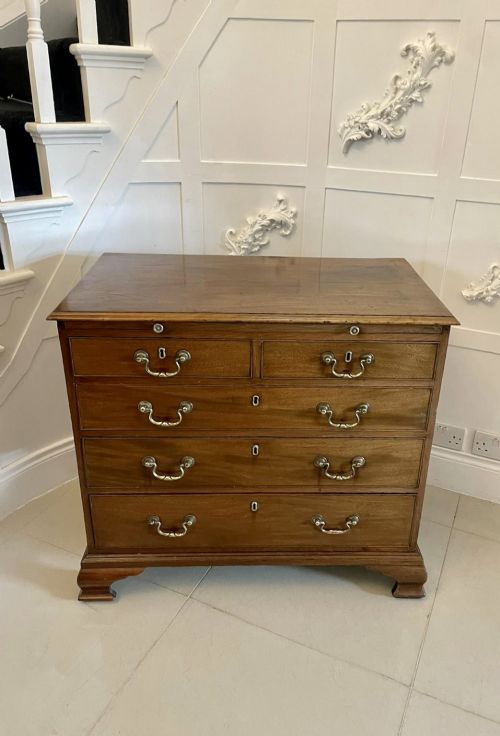
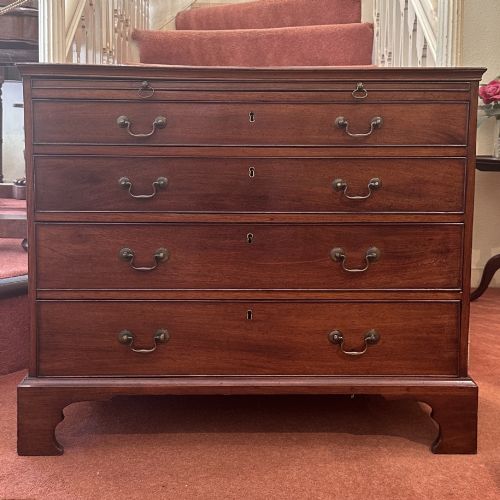
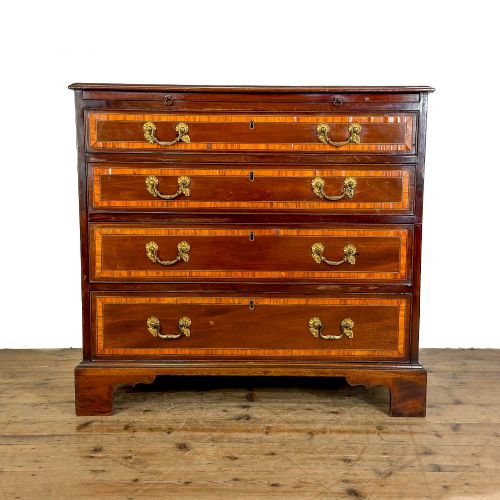
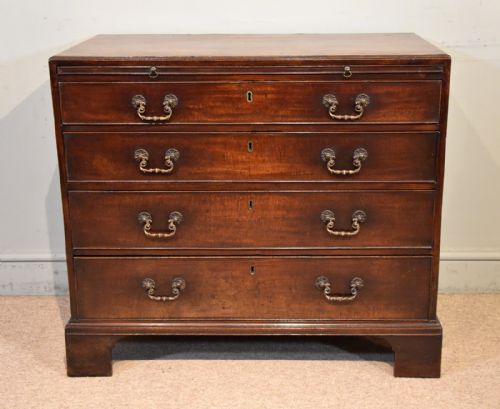
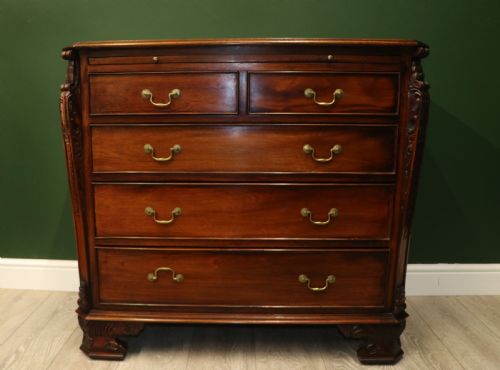
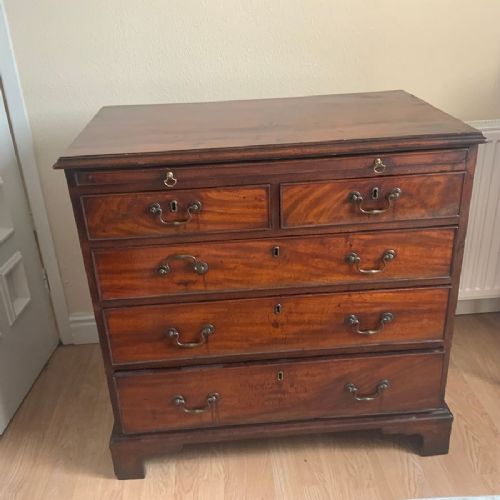
A mahogany brush slide chest is fundamentally a set of drawers incorporating a pull-out wooden board, historically utilised as a writing surface or for brushing clothes.
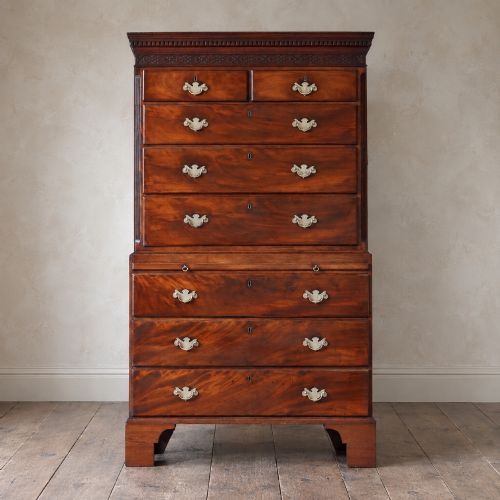
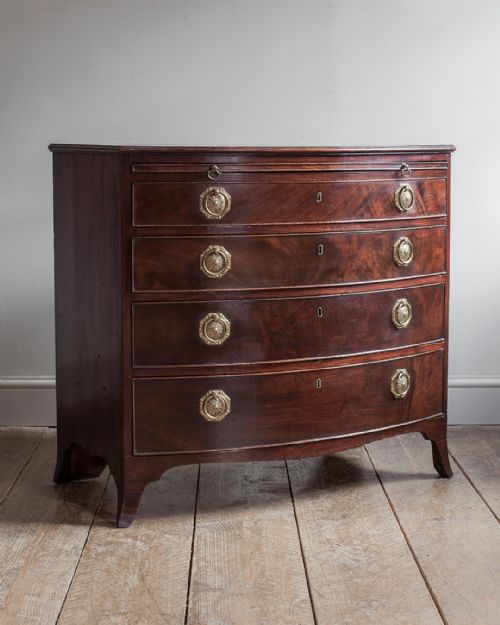
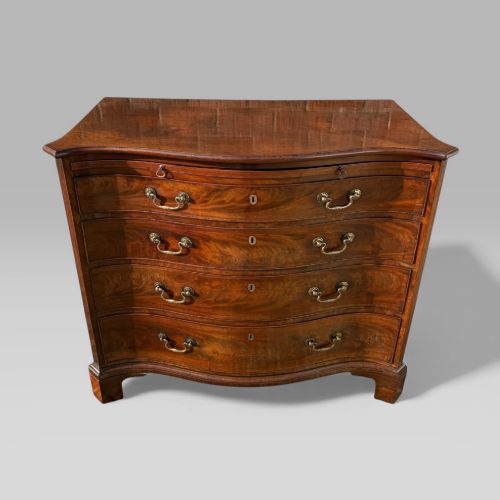
The pieces on this page span the 18th century, the Georgian era, the 19th century, and the Edwardian period, appearing in forms such as standard chests, bowfronts, serpentine shapes, and tall chests on chest.
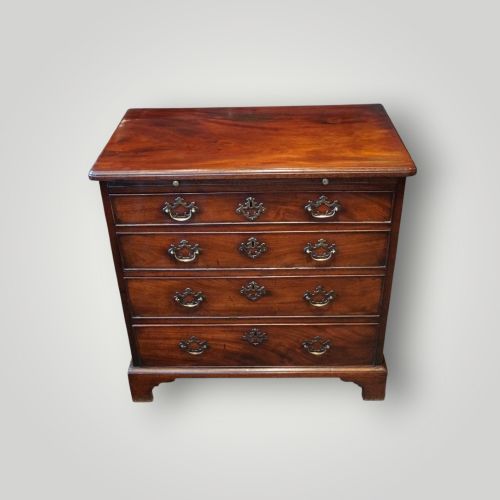
Most examples originate from the George II and George III periods, displaying the compact proportions typical of bachelor chests alongside taller formats.
How They Were Made
Cabinet makers constructed these pieces primarily from solid mahogany and flame mahogany, often incorporating secondary timbers like oak for drawer linings.
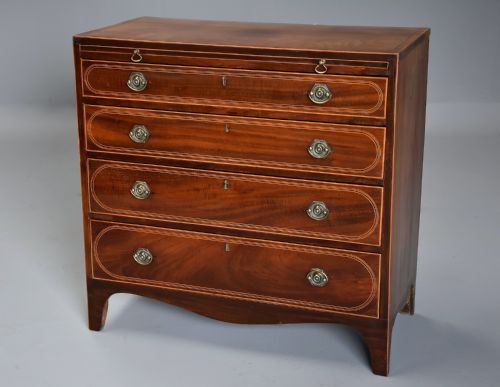
Detailed decoration relied on natural wood grains supplemented by satinwood, boxwood, and ebony inlay, alongside geometric crossbanding.
Hardware typically consisted of cast brass handles and escutcheons, while structural support was provided by bracket feet, ogee feet, or straight legs.
Styles span George II, George III, Regency, Chippendale, and Hepplewhite revival periods, incorporating serpentine and bowfront silhouettes.
What Varies In Quality
Quality rests in the selection of timber, visible in the depth of figure within the flame mahogany and the precision of the cabinet work around the sliding mechanism.
Proportion and scale distinguish finer examples, particularly where smaller dimensions and harmonious drawer arrangements are maintained without losing structural integrity.
The crispness of mouldings, the retention of original brass hardware, and the subtlety of inlay work mark the distinction between standard production and master craftsmanship.
Druce & Co
The Mahogany Brush Slide Chest Glossary
- Brushing slide
- A pull-out shelf integrated into the upper section of a chest, historically used for writing or brushing garments. It sits just above the top drawer.
- Bachelor's chest
- A small, compact chest of drawers, often equipped with a brushing slide. These pieces were designed for smaller domestic spaces.
- Serpentine
- A front profile characterised by a gentle convex curve flanked by two concave curves. This shape requires advanced woodworking skill to execute properly.
- Flame mahogany
- A veneer cut from the branch junction of the mahogany tree, producing a distinctive fire-like ripple pattern. It was favoured for principal drawer fronts.
- Crossbanding
- A strip of veneer applied perpendicularly to the grain of the main surface, creating a contrasting border. It frames drawer fronts and top panels.
Mahogany Brush Slide Chest: Frequently Asked Questions
What is a brush slide used for?
The pull-out slide served multiple daily functions in the bedchamber or parlour. Owners utilised the surface for writing letters or for brushing dust from garments.
Cabinet makers integrated the board above the primary drawers so it could be extended without opening the storage compartments below.
How do I date a mahogany chest?
Dating relies on examining the construction methods, timber choices, and overall design proportions. Georgian pieces frequently display hand-cut dovetails and specific foot forms like ogee or bracket feet.
Later revival pieces from the Edwardian period often incorporate machine-cut elements and different internal secondary woods.
Are these chests suitable for modern bedrooms?
Their compact dimensions make these chests practical for contemporary storage needs. The drawers provide deep storage while occupying a modest floor footprint.
The pull-out slide functions effectively as a small auxiliary surface in a bedroom or hallway setting.