



Mahogany Brass Paper Rack
A mahogany brass paper rack brings orderly elegance to a desk or table, holding your daily post and papers in timber and metal.
Mahogany Brass Paper Rack
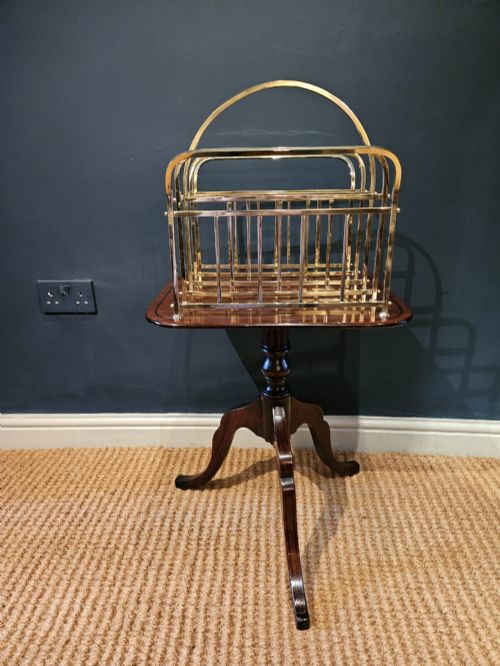
A mahogany brass paper rack combines rich tropical timber with polished metal fittings to keep correspondence and folios tidy. These pieces range from compact desk stands to larger freestanding canterburys and revolving stands designed to hold magazines and music sheets.
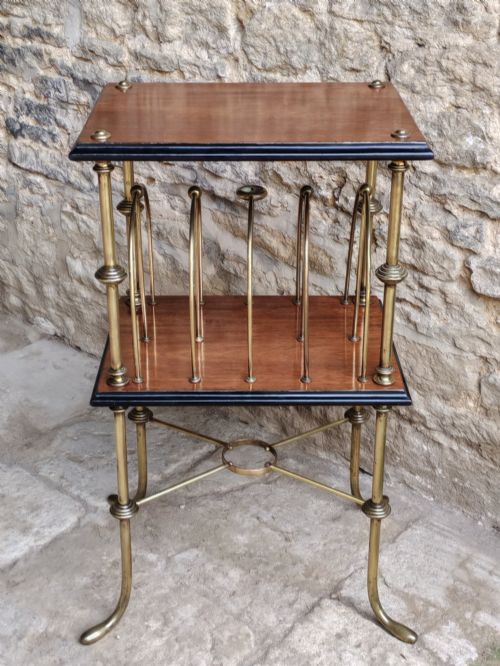
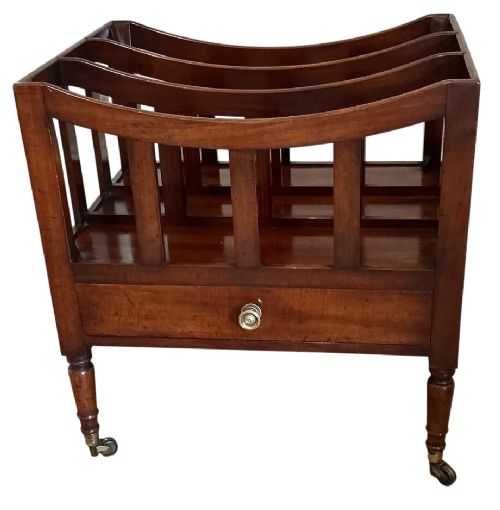
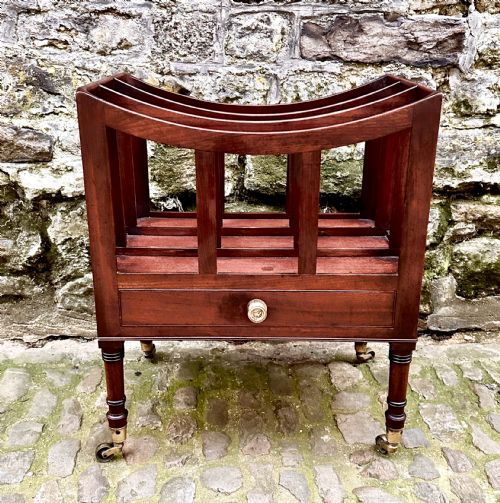
The versions you are most likely to meet on this page span the Regency, Georgian, and Victorian periods, alongside Edwardian examples. They take forms such as boat-shaped canterburys, revolving bookcases, and tiered magazine tables constructed from solid mahogany and brass wire.
Makers of the era utilised figured timber grains and cast metal details to elevate simple desk accessories into striking interior furnishings. Each item reflects the domestic routines of its period, whether for sorting post in a library or storing scores in a music room.
Construction and materials
Cabinetmakers worked primarily with solid mahogany andveneers, selecting timber with deep reddish-brown tones and fine grain patterns. This wood was shaped into partitions, slats, and trays designed to withstand daily handling.
Brass formed the structural wirework, carrying handles, and revolving mechanisms that gave these racks their mobility and contrast. Metal components were cast or drawn into tubular frames, secured with small screws and pins to timber bases.
Mahogany Brass Paper Rack Retail Price Guide 2026
Typical asking prices for mahogany brass paper rack among the pieces listed under this phrase on Sellingantiques today, from the lower quarter to the upper quarter. They describe what is for sale here now, not the wider market.
Materials recorded on this page combine mahogany timber with brass wire, tubular brass, and metal fittings.
Assessing quality and craftsmanship
The distinction between standard domestic items and superior pieces lies in the crispness of the timber carving and the weight of the brass mounts. Finer examples display precise joinery, such as dove-tailed partitions and well-fitted turning on the upright supports.
Attention to secondary details, including heavy cast brass carrying handles and smooth revolving actions on stands, separates utilitarian furniture from pieces commissioned for wealthier households.
Gillows of Lancaster
The Mahogany Brass Paper Rack Glossary
- Regency
- An English design period spanning the early nineteenth century, characterised by classical revival motifs and refined proportions. Pieces from this era often incorporate elegant curved shapes and delicate brass inlays.
- Mahogany
- A durable tropical hardwood prized for its deep colour and resistance to warping. Cabinetmakers favoured it for its ability to take a high polish.
- Revolving
- A description for stands and bookcases built upon a concealed central pivot allowing the upper section to turn. This mechanism provided easy access to books or papers from a seated position.
Mahogany Brass Paper Rack: Frequently Asked Questions
What is a mahogany brass paper rack used for?
These pieces were built to organise correspondence, newspapers, and journals in the study or drawing room. Their partitioned sections kept loose sheets upright and accessible.
Today, they serve the same practical purpose for modern post, pads, and current reading material while adding period character to a room.
How do I distinguish between Georgian and Victorian examples?
Georgian and early Regency pieces tend to show restrained classical lines, fine timber selection, and delicate brass wirework. They often take the form of traditional canterburys with slatted divisions.
Victorian and Edwardian items frequently introduce heavier tubular brass frames, revolving mechanisms, and more robust construction suited to the expansion of printed media.
Are these racks suitable for everyday use?
Solid mahogany and brass construction makes these stands durable enough for daily handling of post and magazines. The materials respond well to normal domestic environments when kept away from direct heat sources.
Careful placement protects the polished timber surface and ensures the moving parts on revolving models remain functional.
What maintenance do these pieces require?
Routine dusting with a soft, dry cloth preserves the polished finish of the mahogany timber. Avoid modern silicone sprays that can build a film on antique surfaces.
Brass wirework and mounts can be cleaned gently with a dry cloth, taking care not to let cleaning agents stain the surrounding wood.