


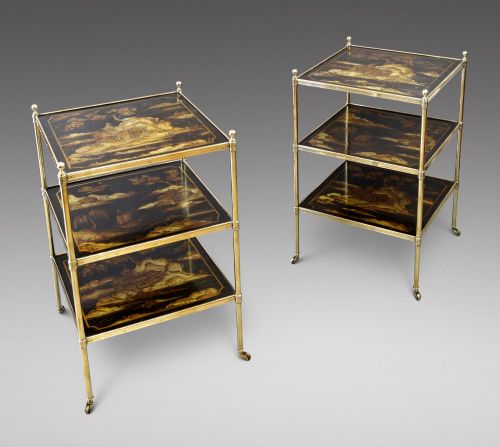
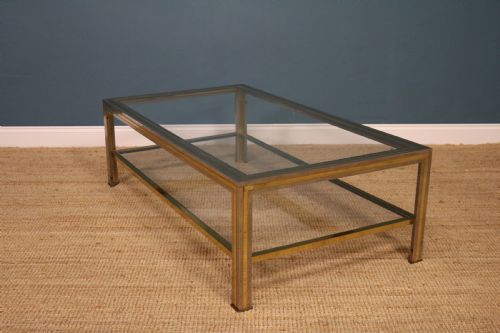
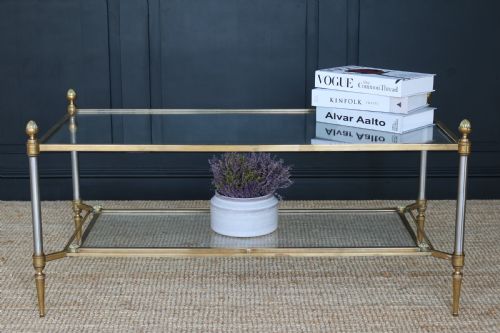
Brass Tier Table
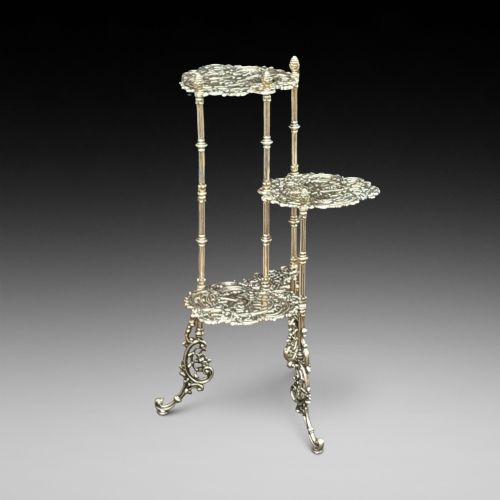
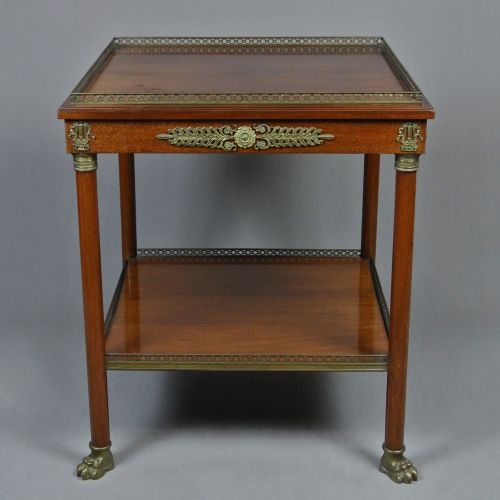
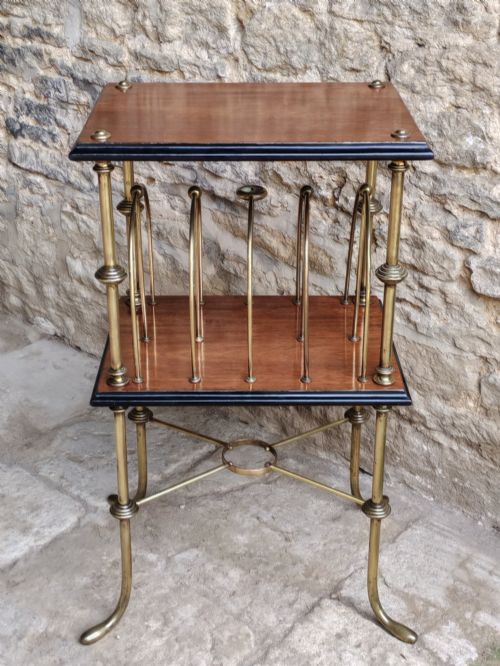
A brass tier table brings tiered display and surface space to a room, combining metallic framing with wood, glass or leather surfaces across various periods.
Brass Tier Table
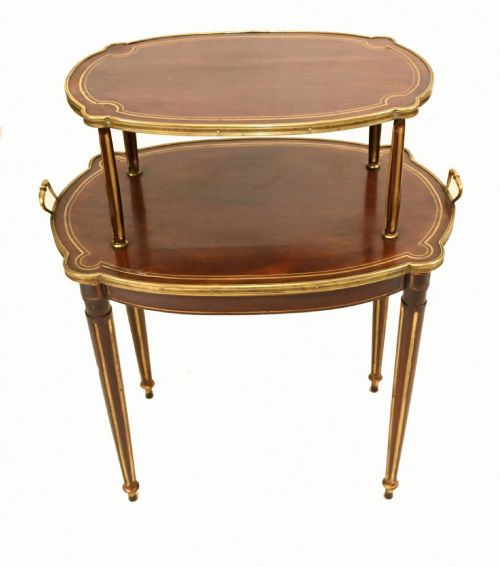
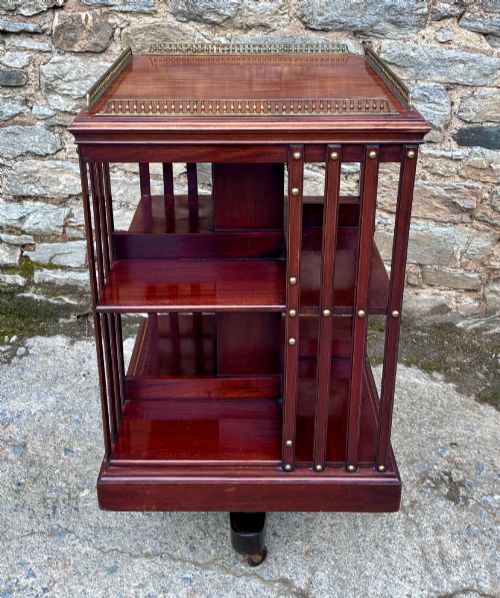
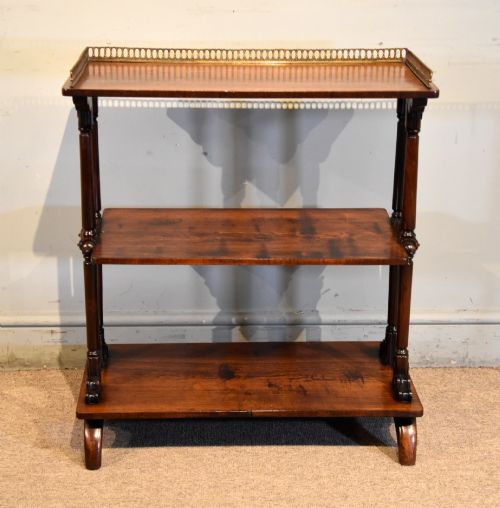
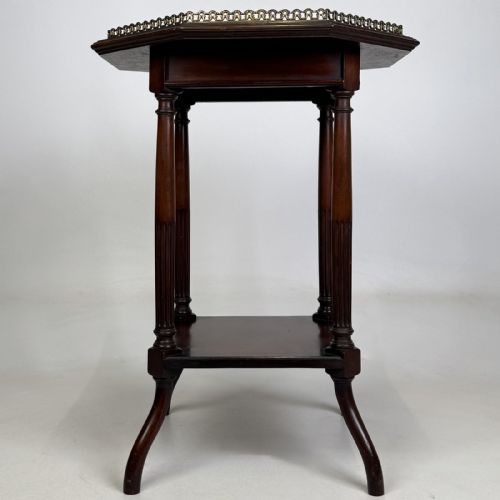
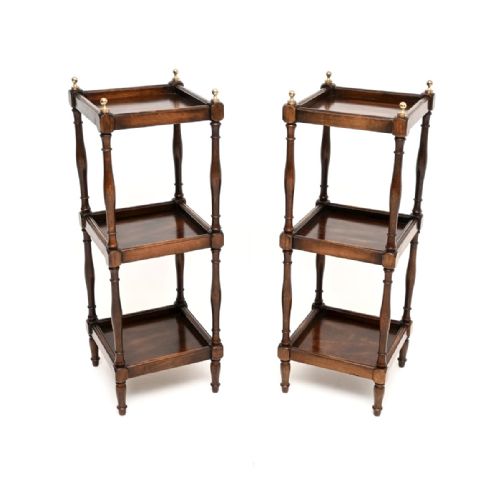
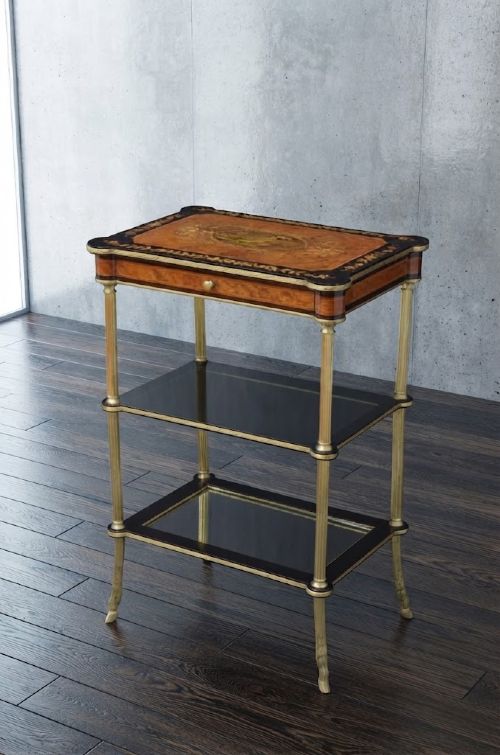
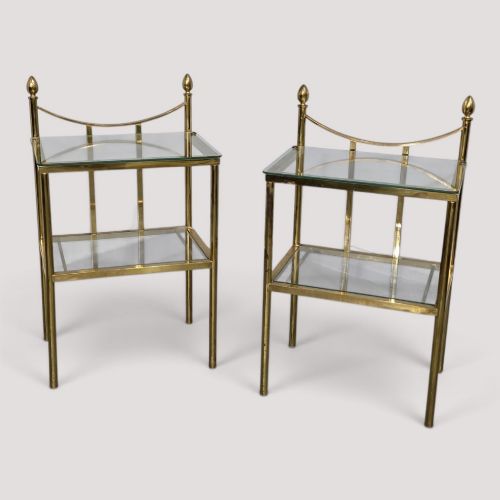
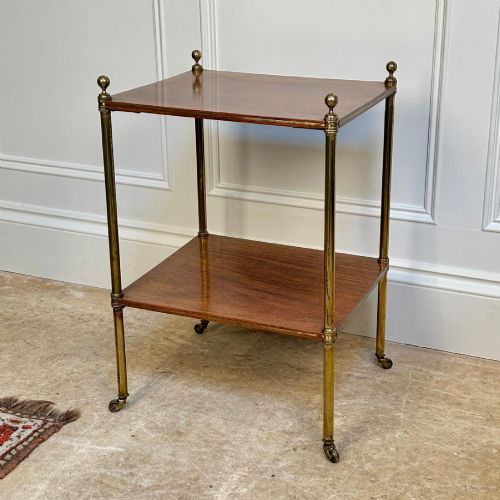
A brass tier table provides stacked surfaces for display and utility, frequently appearing as two-tier or three-tier occasional pieces, side tables, etageres and whatnot stands.
The selections span from nineteenth-century Regency and Victorian designs featuring mahogany and rosewood to twentieth-century incarnations incorporating glass, chrome and leather.
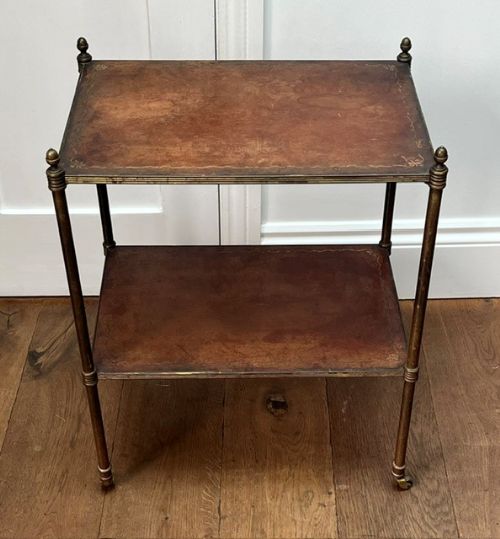
Buyers seeking this phrase encounter multi-level furnishings where structural metal frames support timber shelves, mirrored inserts or inset leather writing surfaces.
How they were made
Frameworks rely heavily on cast and tubular brass, sometimes enhanced by ormolu mounts, bronze detailing or chrome plating depending on the era of production.
Timber shelves and tiers utilise dense hardwoods such as mahogany, rosewood, walnut and satinwood, frequently enriched with marquetry, parquetry or brass stringing.
Secondary materials such as tooled leather inserts, bevelled glass panels and white marble slabs provide durable and decorative working surfaces across the tiers.
Brass Tier Table Retail Price Guide 2026
Typical asking prices for brass tier table among the pieces listed under this phrase on Sellingantiques today, from the lower quarter to the upper quarter. They describe what is for sale here now, not the wider market.
Listings feature brass tier tables spanning the nineteenth and twentieth centuries, utilising mahogany, rosewood, marble, glass and leather.
What varies in quality
Construction standards depend on the weight and rigidity of the brass framework, the crispness of casting in mounts or gallery rails, and the selection of figured timber veneers.
Detailing such as hand-tooled leather surfaces, finely cut marquetry inlay and original castors distinguish finer workshop pieces from standard commercial production.
Mallett of London·George Bullock·François Linke·W. Turner Lord and Co
The Brass Tier Table Glossary
- Etagere
- A piece of furniture with open shelves or tiers for displaying small objects and ornaments. This form gained popularity in France during the eighteenth century and persisted through later revivals.
- Whatnot
- A multi-tiered shelving unit used for holding books, ornaments or general household items. Victorian examples frequently incorporate turned supports and castors.
- Ormolu
- Gilded bronze or brass applied as decorative mounts on furniture. It provides bright metallic contrast against dark hardwoods like mahogany and rosewood.
- Marquetry
- Decorative veneer work arranged in pictorial or geometric patterns using various coloured woods. Master craftsmen utilised this technique on the tiers of French side tables.
- Dumb waiter
- A multi-tiered serving table fitted with shelves for holding food, drinks or tableware. These pieces often feature a central column or upright brass supports.
Brass Tier Table: Frequently Asked Questions
What is a brass tier table used for?
These pieces function primarily as side tables, lamp stands or display surfaces in sitting rooms and bedrooms. The multiple tiers provide elevated space for books, decorative objects and lighting.
Historically, specific versions served specialised roles like tea tables, drinks trolleys or bedside stands. Their compact footprint allows them to fit neatly beside seating while multiplying available surface area.
How do I identify the period of a tier table?
Dating relies on combining timber choices, metal casting techniques and overall decorative style. Regency and early nineteenth-century pieces often feature solid mahogany with delicate brass stringing and turned legs.
Late Victorian and Edwardian examples lean towards rosewood or satinwood with elaborate marquetry. Mid-century and later twentieth-century iterations incorporate lacquered brass, glass and chrome within streamlined frames.
Are these tables sturdy enough for daily use?
Solid construction using hardwood tiers and robust brass frames ensures durability for everyday placement. Quality models maintain stability across multiple levels through secure joints and weighted bases.
Care should be taken with glass-topped or mirrored tiers to prevent heavy impact. Regular cleaning of the brass framework preserves the metal finish.
What is the difference between an etagere and a whatnot?
An etagere generally emphasises display with decorative open tiers, often associated with French influenced designs and refined brass galleries. A whatnot traditionally functions as a multi-shelved storage piece for general household utility.
In practice, nineteenth-century makers and modern cataloguing often overlap the terms when describing multi-tiered wooden furniture supported by brass framing.