
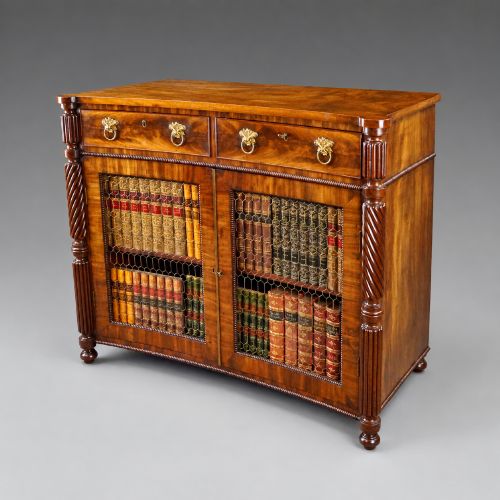
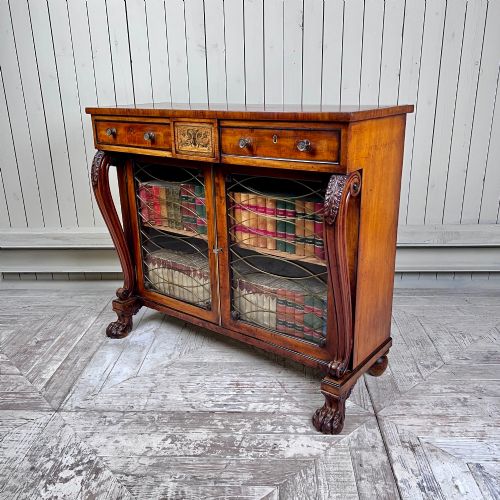
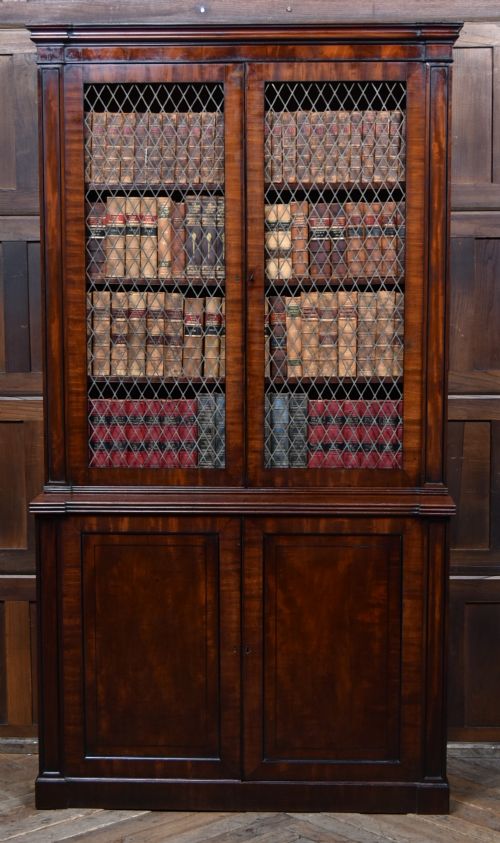
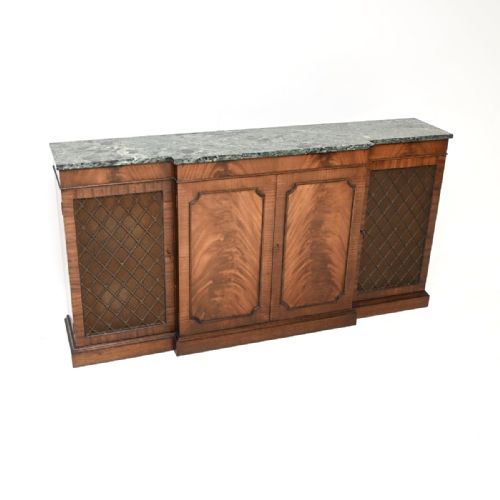


Mahogany Brass Grille Cabinet
A mahogany brass grille cabinet brings together warm timber and woven metalwork to store books or display collections with understated elegance.
Mahogany Brass Grille Cabinet
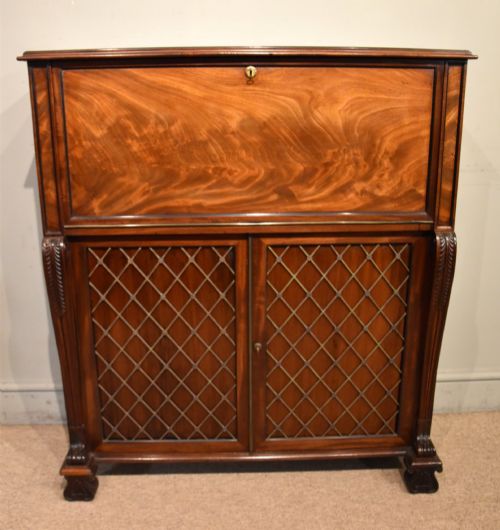
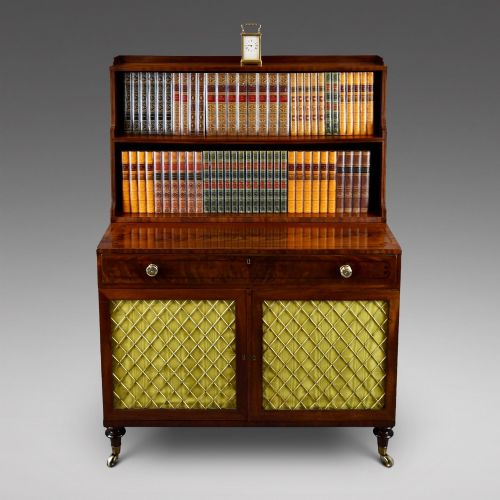
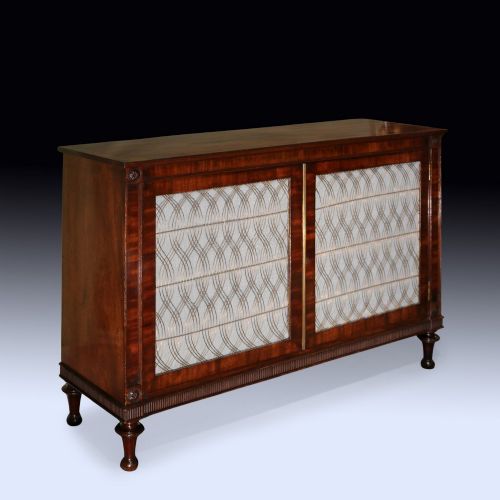
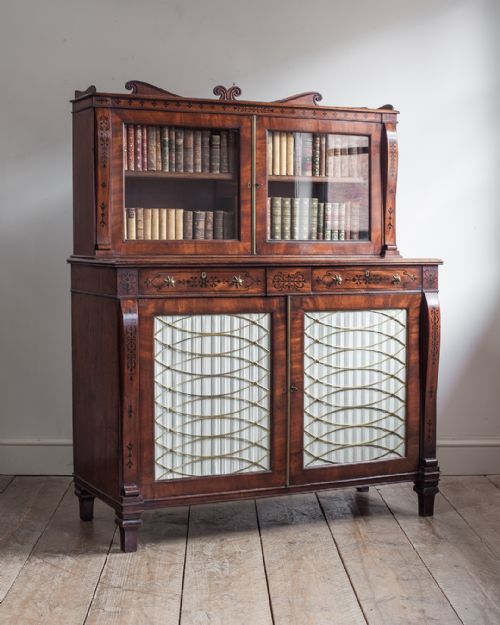
A mahogany brass grille cabinet is a refined piece of furniture designed for display and storage, commonly appearing across Regency, Georgian, and William IV periods. These pieces combine rich timber surfaces with woven wire panels fitted into the door frames to protect contents while maintaining visibility.
Buyers most frequently encounter side cabinets, chiffoniers, and bookcases featuring these distinctive woven doors. The forms range from compact two-door cupboards to grand breakfront bookcase cabinets originating from the eighteenth and nineteenth centuries.
Makers such as Gillows contributed significantly to this form, producing sophisticated sideboards and credenzas with fine timber linings and brass detailing. Pieces span multiple eras, including later revival styles and twentieth-century interpretations.
Materials and construction
Makers utilised solid mahogany and flame mahogany veneers over secondary timbers, often accentuating the grain with contrasting ebony inlays and polished marble tops. The metalwork relies on fine brass wire woven into intricate grilles, secured behind wooden door frames.
Internal elements frequently incorporate glass, fabric backing behind the grilles, and mirrored panels to enhance light reflection within the shelving compartments. Construction techniques involve precise joinery, dovetail drawers, and fitted secretaire compartments designed for writing.
Materials appearing across the inventory include flame mahogany, standard mahogany, brass, glass, mirror, ebony, and marble.
Assessing craftsmanship and condition
Quality rests in the selection of the timber, where rich flame mahogany figures and tight grain structure distinguish superior examples from plain utility pieces. The precision of the brass grille work and the crispness of any inlay or carved mouldings indicate the level of workshop skill involved.
Proportion and scale dictate desirability, with neat-sized chiffoniers and exhibition-quality breakfront bookcases commanding attention for their balanced architectural presence. Original hardware, intact woven wire, and cohesive secondary woods further elevate a piece.
Gillows
The Mahogany Brass Grille Cabinet Glossary
- Grille
- A lattice of woven brass wire fitted into furniture doors to allow ventilation and visibility while keeping contents secure. This feature defines the classic display aesthetic of Regency bookcases.
- Chiffonier
- A low sideboard or cabinet developed in the nineteenth century, often equipped with shelves or enclosed cupboards. These pieces frequently incorporate brass grilles or glass panels in the doors.
- Flame mahogany
- A distinct timber veneer exhibiting a wavy, flame-like grain pattern prized by cabinetmakers. It appears prominently on the front panels of high-status nineteenth-century storage furniture.
- Secretaire
- A cabinet or desk featuring a pull-down writing drawer that conceals small pigeonholes and internal compartments. This multifunctional element often integrates into larger library bookcases.
- Breakfront
- A piece of furniture where the central section projects forward from the flanking outer sections. This architectural arrangement creates depth and visual interest in large bookcases and sideboards.
Mahogany Brass Grille Cabinet: Frequently Asked Questions
What is a mahogany brass grille cabinet?
A mahogany brass grille cabinet is an enclosed storage piece featuring wooden frames fitted with woven wire panels instead of solid timber or clear glass.
These items were historically used to house valuable books, china, or linens while allowing air circulation and subtle visibility of the contents within.
How do I date a Regency cabinet?
Dating relies on examining construction methods, timber selection, and stylistic details such as brass inlay, bracket feet, and proportion.
Regency pieces typically date from the early nineteenth century and display classical architectural influences combined with rich mahogany veneers.
Were brass grilles used for books?
Brass wire grilles served a practical purpose in library furniture by protecting delicate book bindings from dust while preventing warping caused by trapped humidity.
They also offered a secure alternative to clear glass in bustling country house libraries.
How do I clean mahogany furniture?
Maintenance requires gentle dusting with a soft, dry cloth and occasional application of appropriate wax to nourish the polished wood surface.
Harsh chemical cleaners and direct sunlight should be avoided to preserve the rich colour and grain of the antique timber.