




Mahogany Box Stool
A mahogany box stool combines hidden storage with a seat, bringing practical nineteenth-century craftsmanship directly into a modern room.
Mahogany Box Stool
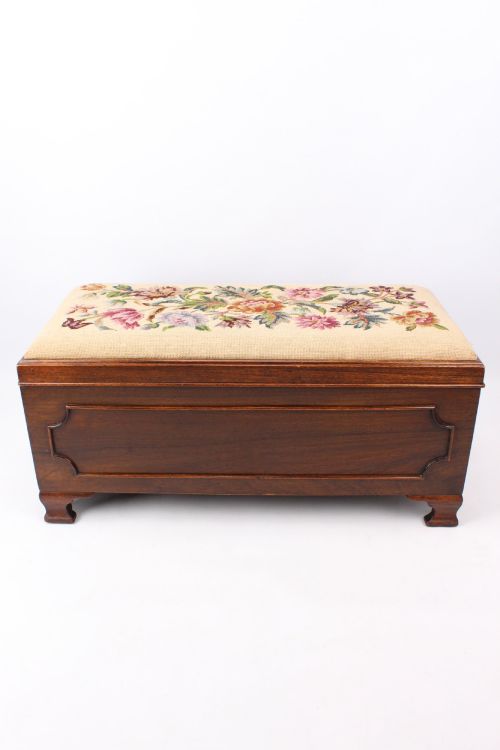
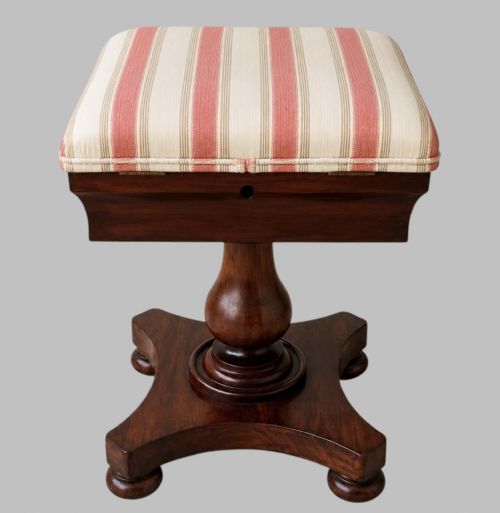
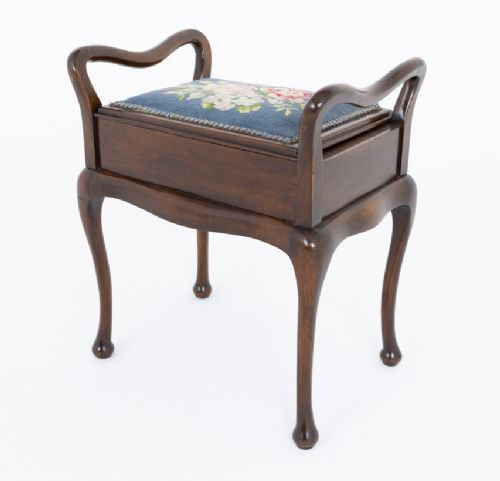
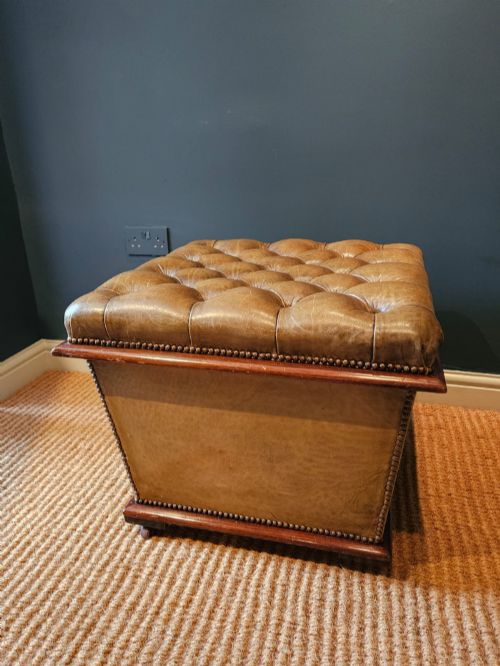
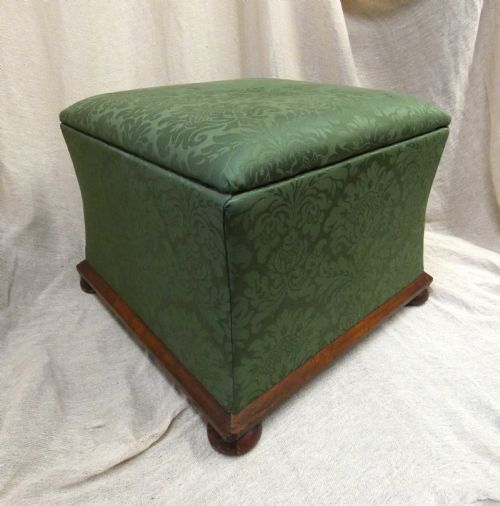
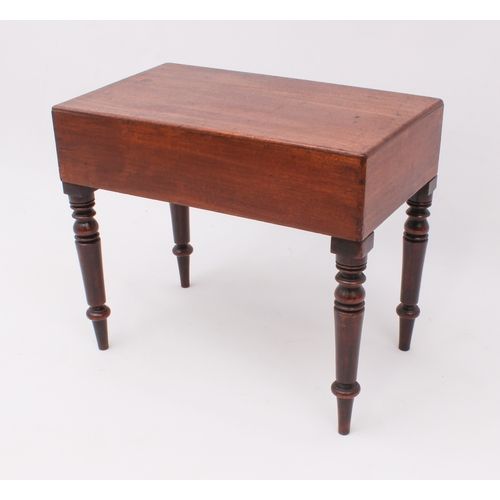
A mahogany box stool serves multiple functions, appearing across the records as piano stools, sewing work boxes, storage ottomans, and occasional commodes or bidets. These pieces emerge predominantly from the Regency, Victorian, and Edwardian eras, spanning the nineteenth and early twentieth centuries.
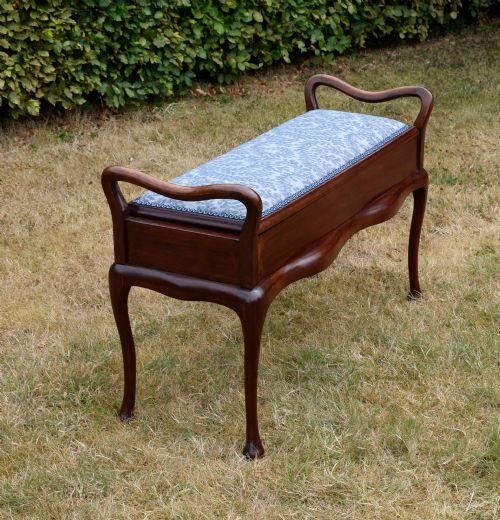
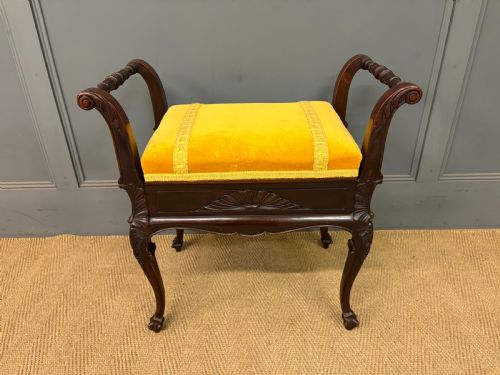
The most common formats on this page are hinged storage ottomans and music seats designed for duet or solo use at a piano. Makers often integrated internal compartments for sheet music, needlework, or household sundries beneath the upholstered lids.
Geographical origins centre on British cabinet-making traditions, utilising dense hardwoods shaped into square, rectangular, or concave forms. Buyers will encounter both modest country house examples and finer urban seating fitted with specialised internal trays or drawers.
Materials and Construction
Cabinet makers built the primary frames from solid mahogany and flame mahogany veneers, sometimes embellishing Edwardian variants with subtle boxwood stringing or inlaid details. The underlying timber provides a stable, heavy carcass designed to withstand regular seating.
Upholstery techniques varied widely according to function, incorporating leather, velvet, wool, and textile covers. Many pieces retain period needlework tops such as gros-point tapestry or crewel work, secured over padded interiors.
Metal components appear primarily as brass castors, hinges, and occasional decorative elements like lions paw feet. These brass fittings support the mobility and opening mechanisms of the lidded boxes and piano cabinets.
Listings feature mahogany box stools spanning the Regency, Victorian, and Edwardian periods, constructed in hardwood with fabric, leather, and needlework seats.
Assessing the Pieces
The sophistication of the timber grain and the precision of the joinery set finer examples apart from standard utility pieces. Flame mahogany and well-figured hardwood frames indicate deliberate selection by the original cabinet maker.
The execution of the upper seat contributes significantly to overall distinction, particularly where original needlework, crewel work, or quality leather remains intact. Substantial proportions, such as large country house dimensions or paired sets, also elevate the standing of a piece.
Internal complexity marks the upper tier of these items, seen in dedicated compartments, base drawers, or dual-purpose designs like music cabinets and sewing work tables. Simpler lidded boxes sit at the accessible end of the scale.
Hallett & Sons
The Mahogany Box Stool Glossary
- Ottoman
- A low, upholstered seat or stool lacking arms or a back, frequently fitted with a hinged lid for interior storage. These pieces were widely adopted in nineteenth-century drawing rooms.
- Gros-point
- A heavy needlepoint stitch worked on canvas, commonly utilised for durable nineteenth-century stool tops. It creates a textured, hard-wearing surface suitable for frequent use.
- Duet piano stool
- An extended seating form built to accommodate two musicians side by side. They frequently incorporate lift-up lids concealing storage space for sheet music.
- Flame mahogany
- A veneer cut from the fork of the mahogany tree where the branches join the trunk. This produces a distinctive, swirling flame-like grain pattern prized in cabinet making.
- Crewel work
- Embroidery executed with wool yarn on a plain fabric ground. It appears frequently on the upholstered lids of Victorian box stools.
Mahogany Box Stool: Frequently Asked Questions
What were mahogany box stools used for?
These versatile pieces served primarily as seats while concealing storage space inside for sheet music, needlework supplies, or personal items. Victorians placed them in drawing rooms, dressing rooms, and music rooms.
Some specialised variants functioned as sewing work tables, bidets, or window seats. The internal compartments kept everyday items out of sight while providing a sturdy perch.
How do I date a mahogany box stool?
Dating relies on observing the timber choice, leg style, and upholstery methods. Regency and William IV pieces often display heavier proportions, concave frames, or carved details like paw feet.
Edwardian examples tend to feature lighter frames, sometimes incorporating boxwood stringing or tapering legs. Victorian variants frequently utilise rich flame mahogany and traditional wool or leather upholstery.
Can I use a piano stool for seating daily?
Piano stools and box stools are built on sturdy hardwood frames designed to bear weight. However, antique upholstery may require careful handling depending on its age and condition.
Most pieces function well for occasional seating in living areas or bedrooms. Buyers should check the height to ensure it suits standard tables or piano keyboards if used actively.
How do I care for antique mahogany and leather?
Mahogany benefits from occasional dusting with a soft cloth and treatment with traditional beeswax to maintain the finish. Avoid placing timber pieces in direct sunlight or near heat sources.
Leather and fabric upholstery require gentle cleaning appropriate to the specific textile. Keeping the interior storage dry preserves both the wood lining and the underlying frame.