
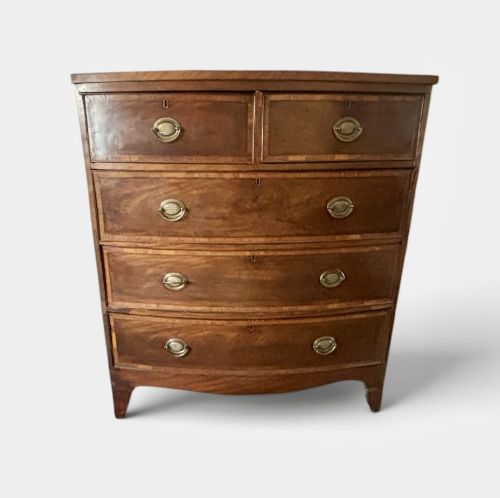
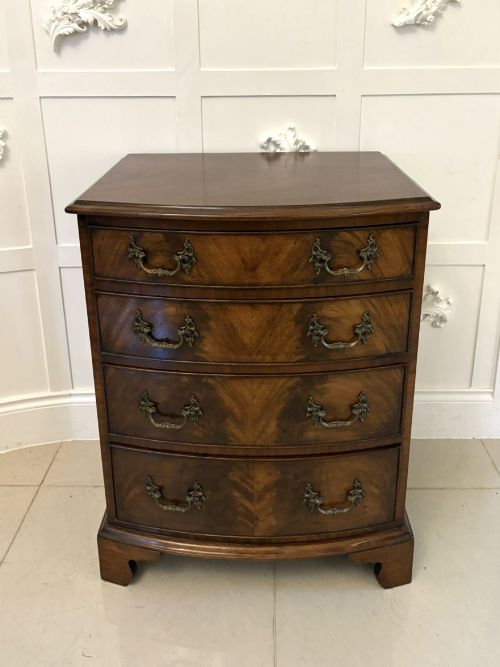
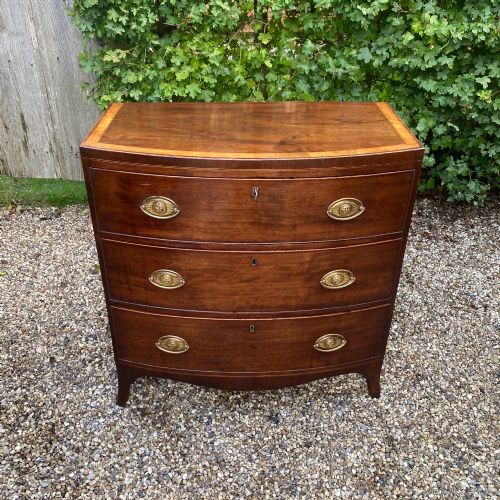
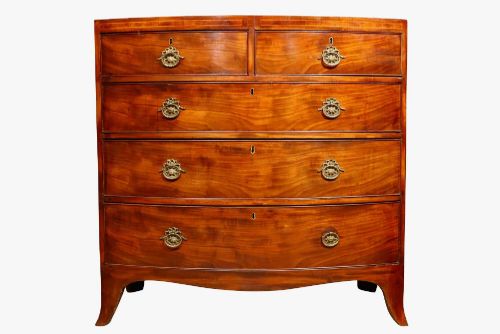
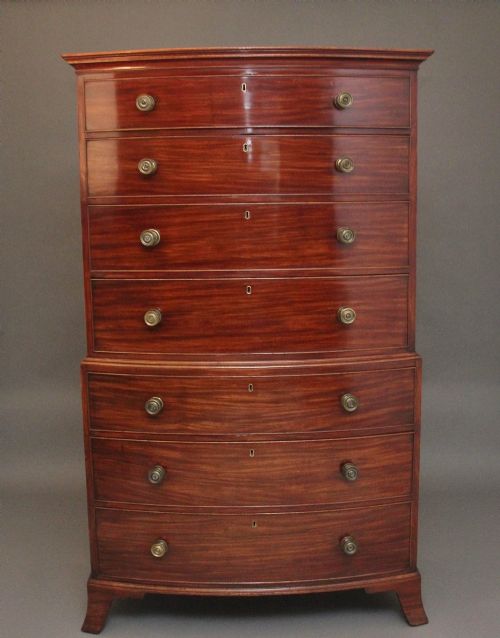
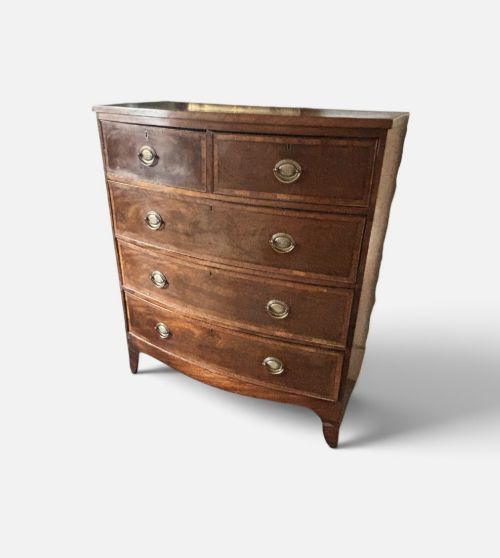
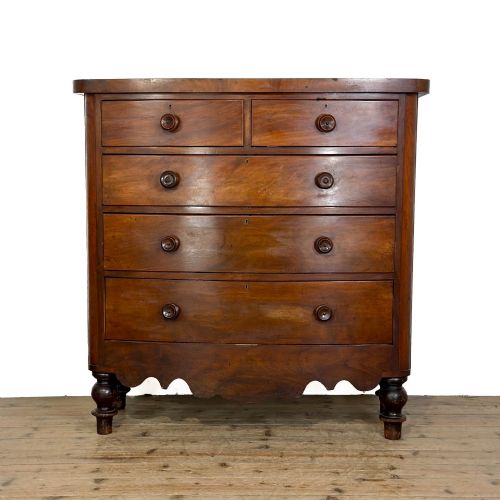
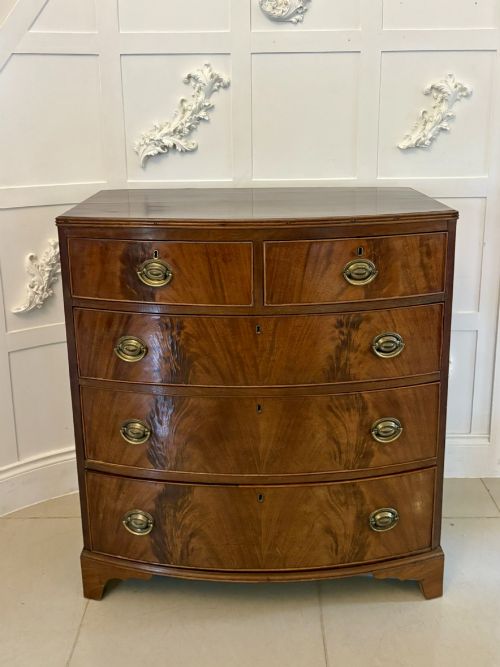
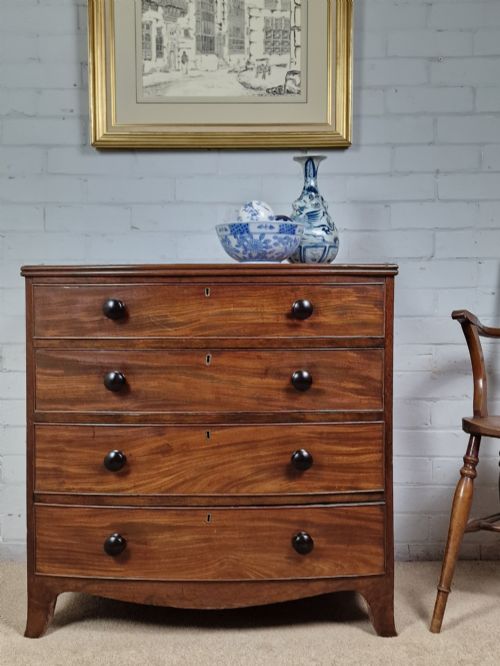
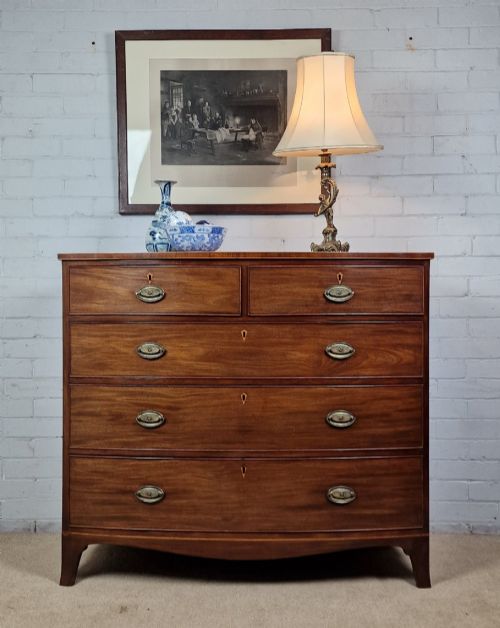
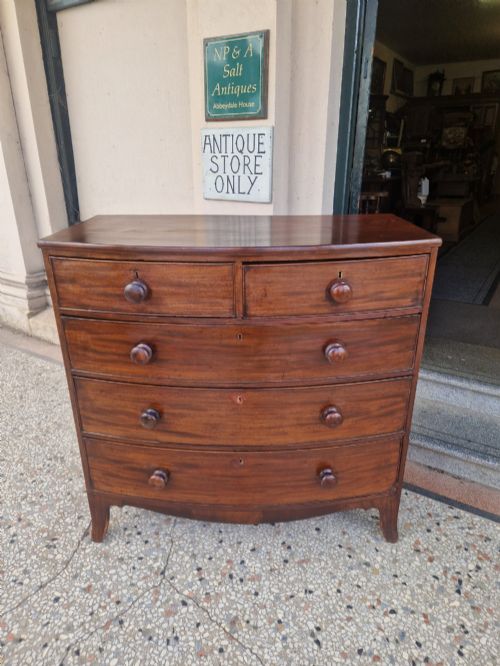
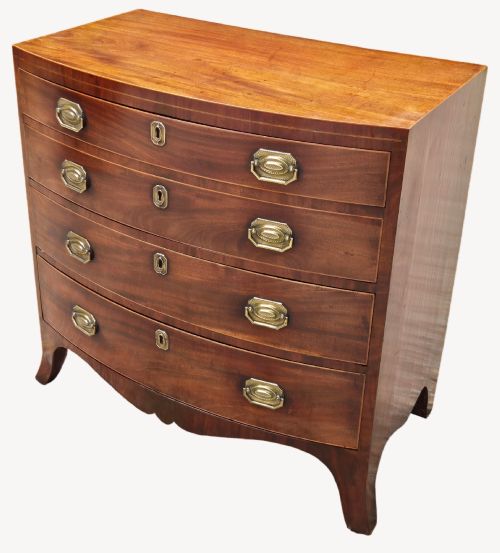
Mahogany Bow Front Tallboy
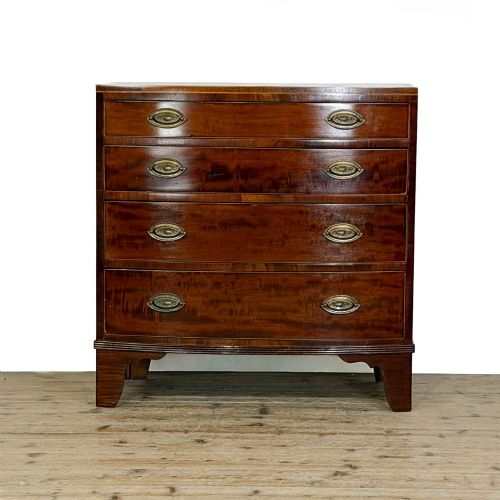
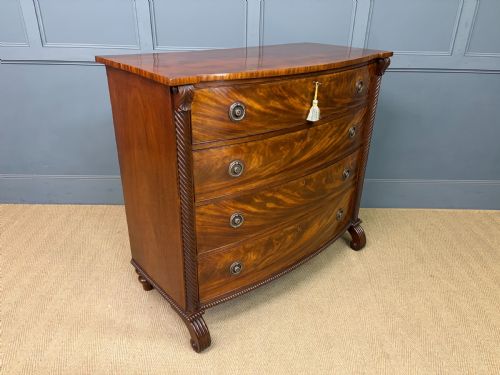
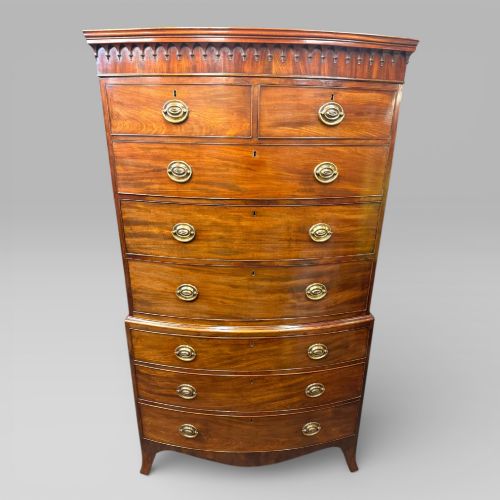
A mahogany bow front tallboy combines the grand vertical scale of a chest on chest with the curved, sweeping silhouette typical of Georgian and Regency cabinet work.
Mahogany Bow Front Tallboy
A mahogany bow front tallboy stands as a commanding piece of case furniture, appearing primarily in Georgian, Regency, and Victorian periods. Buyers encounter variations ranging from traditional chest on chest designs to smaller caddy top configurations and fitted linen presses.
The selection spans from 18th century George III workshops through to Edwardian and early 20th century interpretations. Scottish regional variations also emerge, featuring distinct proportions and drawer arrangements within the curved facade.
Materials and Construction
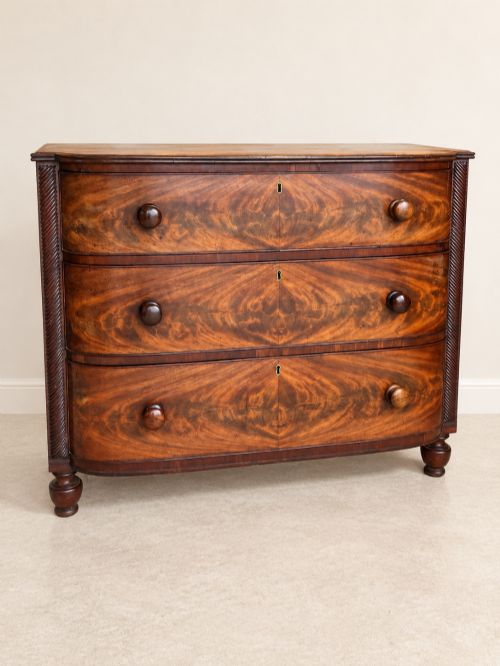
Cabinet makers utilised solid mahogany and pine carcasses overlaid with figured mahogany and flame mahogany veneer to achieve rich grain patterns across the curved drawer fronts. Satinwood banding and crossbanding frequently frame the drawer edges, introducing contrasting pale tones against the deep reddish brown timber.
Construction techniques incorporate graduated drawer depths, dovetailed joints, and turned wooden handles or cast brass hardware. Secondary timbers such as oak support the internal drawer linings and structural frames.
Current pieces span Georgian, Regency, Victorian, and Edwardian periods, constructed in mahogany, flame mahogany veneer, satinwood, oak, and pine.
Evaluating Craftsmanship
Quality rests upon the selection and matching of veneer figures across the sweeping bow front drawers, where symmetry enhances the visual depth of the wood. The crispness of satinwood inlay and crossbanding indicates the precision of the cabinet maker.
Proportion and scale distinguish finer examples, particularly in tallboys where the upper and lower sections must align harmoniously. Integrated architectural details such as caddy tops and well-executed bracket feet elevate the standing of the piece.
The Mahogany Bow Front Tallboy Glossary
- Bow front
- A convex curved cabinet front that projects outward in an arc. This form softens the linear rigidity of standard case furniture.
- Tallboy
- A tall chest of drawers, often constructed as a chest on chest where a smaller upper section sits upon a larger base. It maximises storage while retaining a vertical footprint.
- Flame mahogany
- A veneer cut from the fork of the mahogany tree where the branches meet the trunk. This produces a dramatic, flickering flame-like grain pattern.
- Crossbanding
- A strip of veneer laid perpendicular to the grain of the surrounding surface. It creates a decorative border around drawer fronts and tabletops.
- Caddy top
- A raised, moulded tabletop profile reminiscent of tea caddy lids from the period. It provides a distinct stepped edge to smaller chests.
Mahogany Bow Front Tallboy: Frequently Asked Questions
What is a bow front tallboy?
A bow front tallboy is a tall, vertical storage unit featuring a convex curved front profile. It typically combines multiple graduated drawers within a stacked carcass.
These pieces provide substantial storage capacity while occupying a relatively narrow floor space. The curved facade distinguishes them from standard rectangular chests.
How do I date a mahogany tallboy?
Dating relies on identifying period characteristics such as timber selection, handle styles, and construction methods. Georgian and Regency pieces exhibit different veneer treatments and foot designs compared to Victorian or Edwardian examples.
Examining internal secondary woods like oak or pine alongside drawer dovetailing offers further clues to the exact era of manufacture.
Where were these pieces used?
These tall cabinets served primarily in bedrooms and dressing rooms to store clothing, linens, and personal items. Their vertical arrangement made them practical for rooms with limited wall space.
Today, they function similarly in domestic interiors, offering tall storage solutions that fit well in traditional or period bedrooms.
What is flame mahogany?
Flame mahogany is a highly decorative wood veneer obtained from the junction where branches meet the main tree trunk. The grain swirls in a distinct, fiery pattern.
Cabinet makers reserved this striking timber for prominent surfaces like drawer fronts to create visual contrast against simpler surrounding woods.