


Splayed Feet Mahogany Drawers
Splayed feet mahogany drawers combine practical bedroom storage with elegant proportions rooted in Georgian and Regency cabinet-making.
Splayed Feet Mahogany Drawers
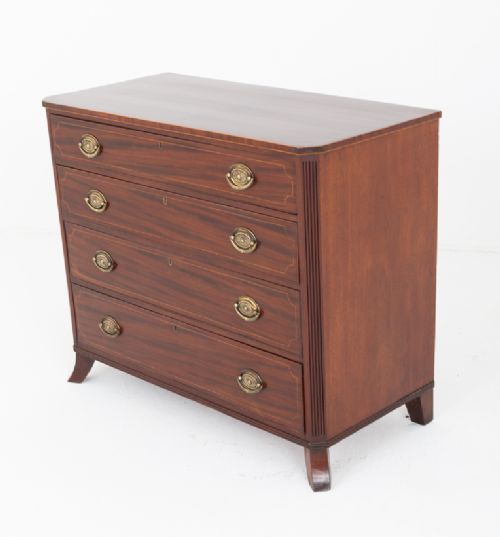
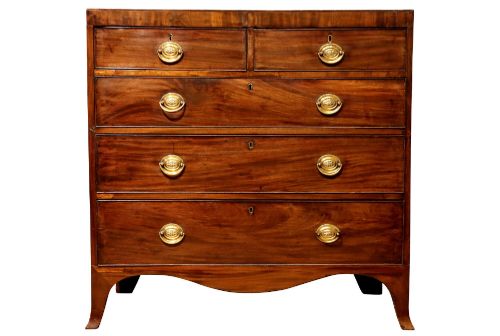
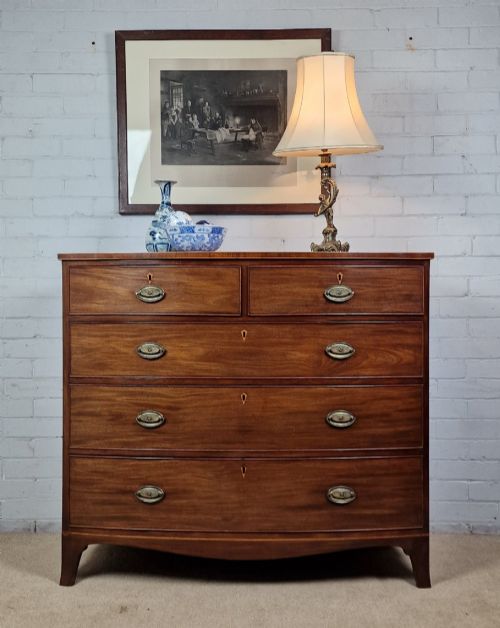
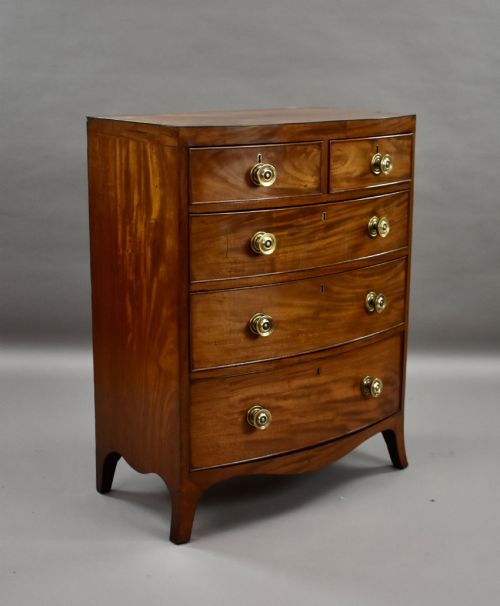
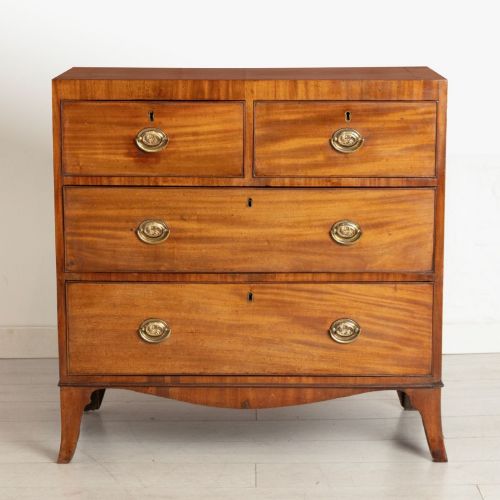
When searching for splayed feet mahogany drawers, a buyer encounters forms ranging from compact bow-front chests to taller chests on chests. These storage pieces appear across the Georgian, Regency, and Edwardian periods, often built with distinct bracket feet that angle outward.
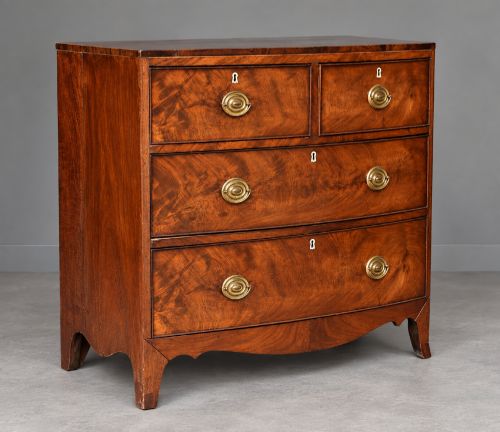
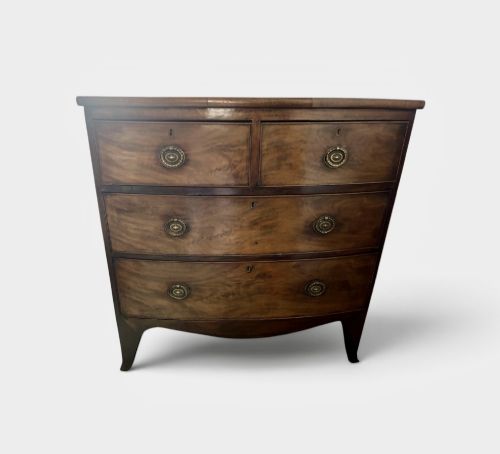
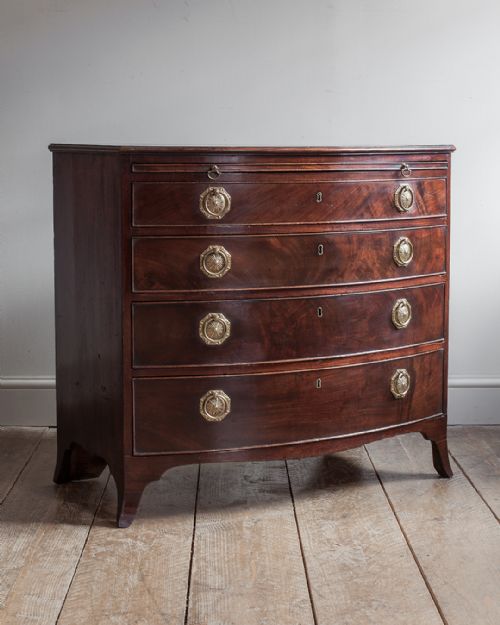
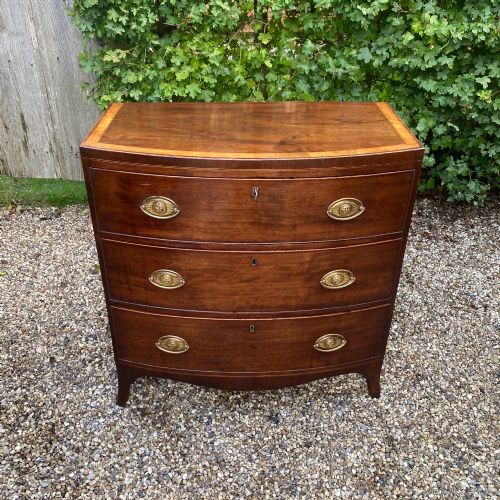
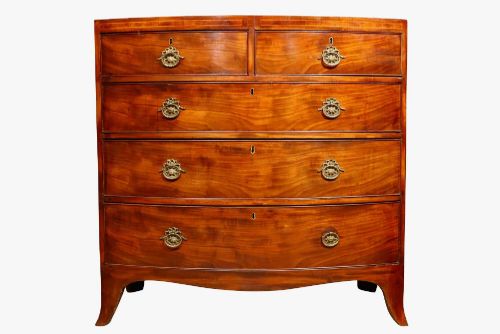
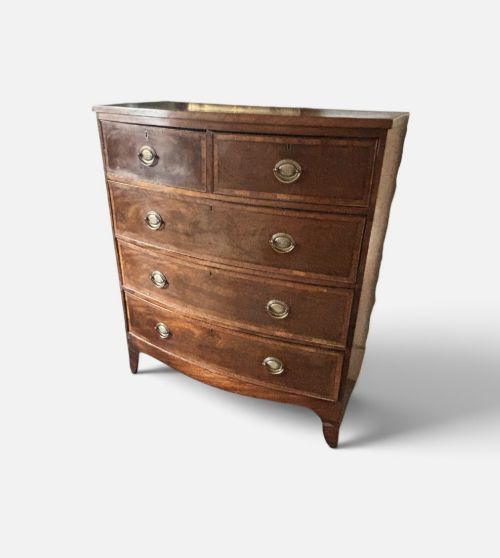
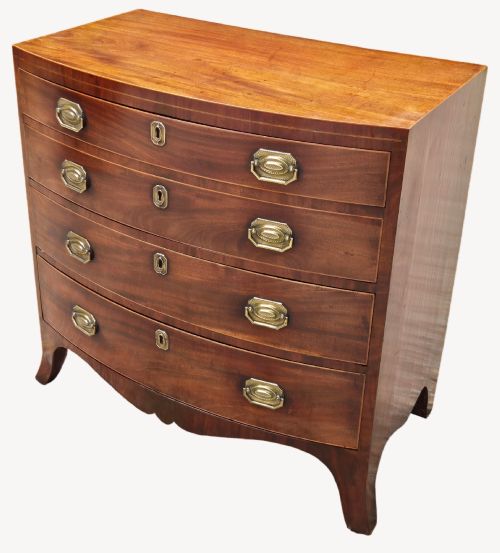
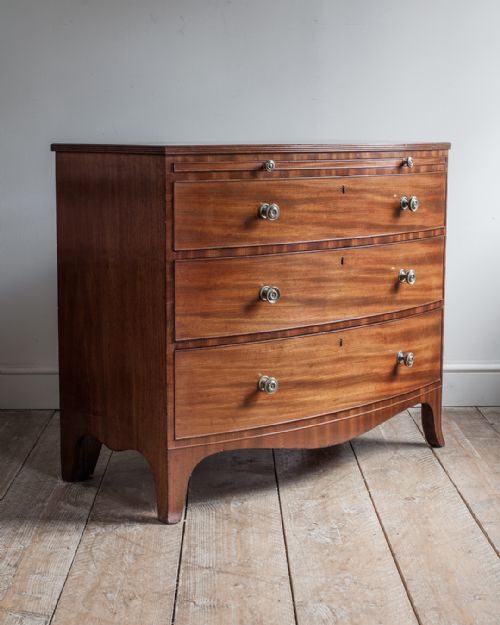
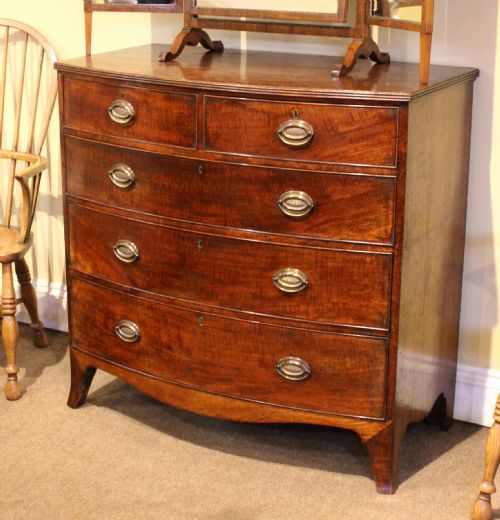
The version most commonly met on this page is the bow-front chest of drawers from the late eighteenth or early nineteenth century. These items offer several tiers of graduated drawers, frequently accompanied by decorative satinwood crossbanding or boxwood inlay.
Makers working within the Georgian and Regency idioms produced these chests of drawers in standard bedroom proportions as well as smaller dimensions. Surviving examples demonstrate the enduring appeal of mahogany carcases raised on simple or shaped splayed feet.
Materials and construction
Cabinet-makers relied on solid mahogany and flame mahogany veneers applied to secondary timbers such as oak. Drawer linings typically used pine or oak, joined with hand-cut dovetails that indicate period craftsmanship.
Surface decoration frequently incorporated contrasting timbers like satinwood and boxwood inlay or crossbanding. Brass handles, sometimes replacements and sometimes original, secured the drawer fronts while splayed bracket feet supported the base of the carcase.
Some chests hide sliding shelves designed for folding linen before drawers were ever pulled.
Evaluating construction and finish
Quality in these chests of drawers rests on the selection of timber figures, such as the rich grain found in flame mahogany. Finely figured veneers matched symmetrically across drawer fronts distinguish higher-grade pieces from plain carcases.
The integrity of the structural joinery, including the crispness of the splayed feet and the precision of the drawer dovetailing, dictates the standard of the piece. Subtle details like delicate boxwood stringing and well-preserved secondary woods separate accomplished workshop production from standard utility furniture.
The Splayed Feet Mahogany Drawers Glossary
- Splayed feet
- Bracket feet that angle outward from the base of a furniture carcase. This configuration lightens the visual weight of heavy drawer units.
- Bow front
- A convex curved front profile popular on chests of drawers during the Georgian and Regency eras. This shape softens the corners of bedroom furniture.
- Crossbanding
- A narrow strip of veneer applied perpendicularly to the grain of the primary surface. It forms a decorative border around drawer fronts or top boards.
- Brushing slide
- A pull-out shelf positioned above the top drawers of a chest. It provided a surface for grooming or sorting items without opening deep drawers.
- Dovetail
- An interlocking joint used in drawer construction. Hand-cut variations help date cabinet-making through their spacing and angle.
Splayed Feet Mahogany Drawers: Frequently Asked Questions
What rooms suit splayed feet mahogany drawers?
These chests of drawers fit comfortably into bedrooms, hallways, or living spaces as storage units. Their compact footprints allow them to sit against walls without dominating smaller interiors.
Their warm timber tones coordinate easily with both traditional and contemporary interior schemes. A flat top surface also provides a convenient display area for mirrors or lamps.
How do I identify a Georgian chest?
Georgian chests of drawers often display disciplined proportions, hand-cut dovetails, and restrained decorative elements like cockbeading around the drawers. Timber choice leans toward dense, rich mahogany with patination accumulated over centuries.
Foot styles on these pieces frequently include bracket supports or angled splayed feet. Secondary woods inside the drawers typically consist of oak or pine rather than modern boards.
Are bow front chests practical?
Bow front chests offer substantial internal storage volume despite their curved exterior profiles. The graduated drawer layout accommodates garments of varying depths efficiently.
Their projecting centres require slightly more clearance space than flat-fronted alternatives. However, their physical footprint remains manageable for most domestic layouts.