
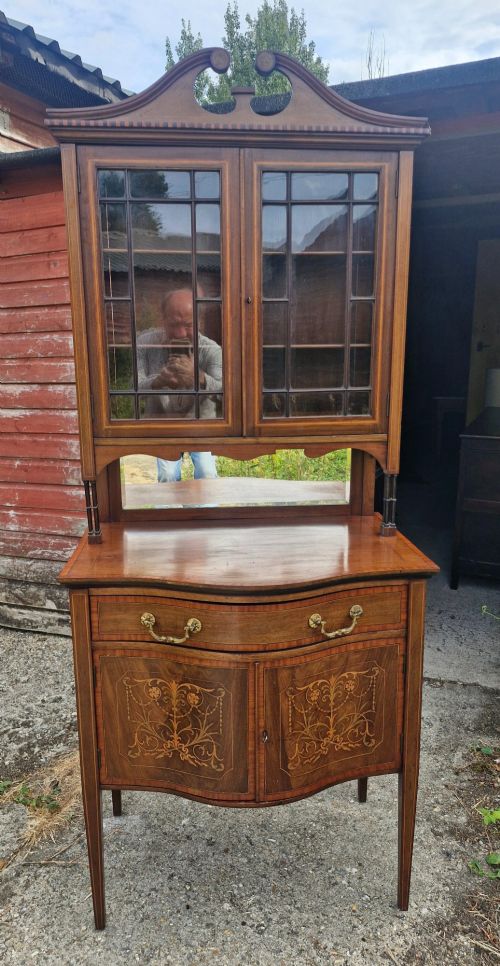
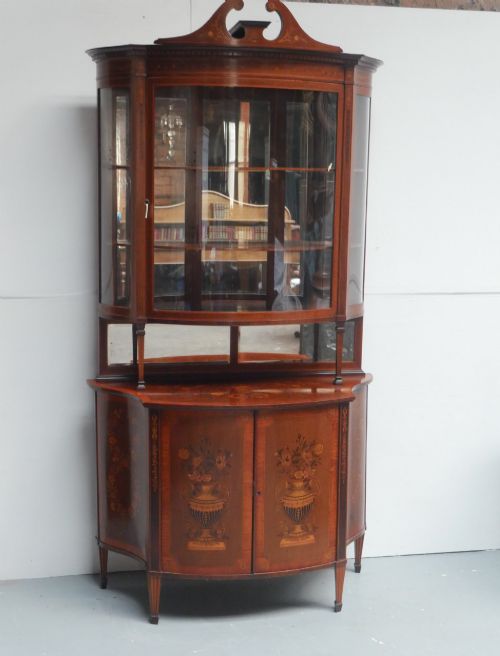
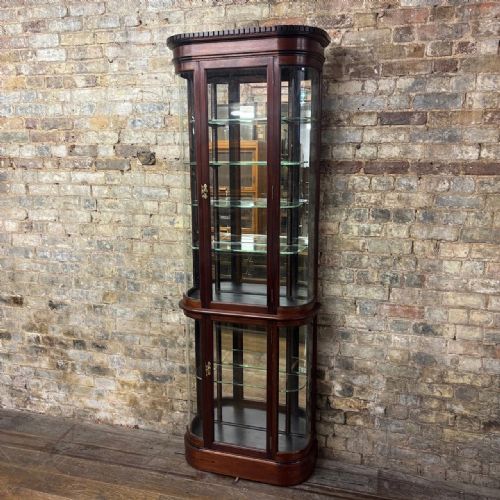
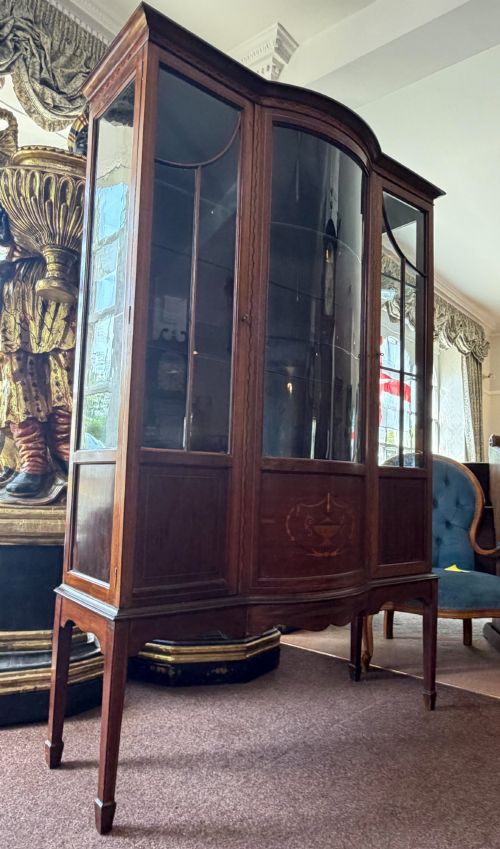

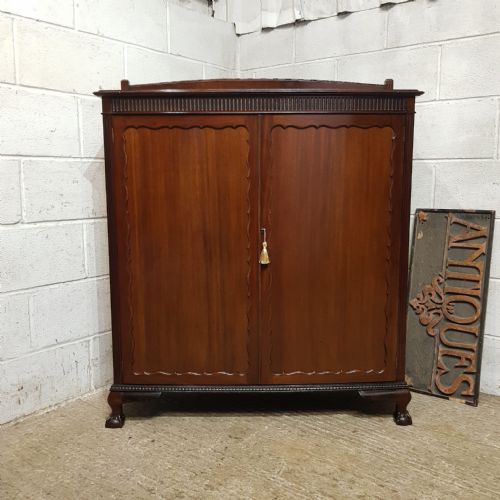
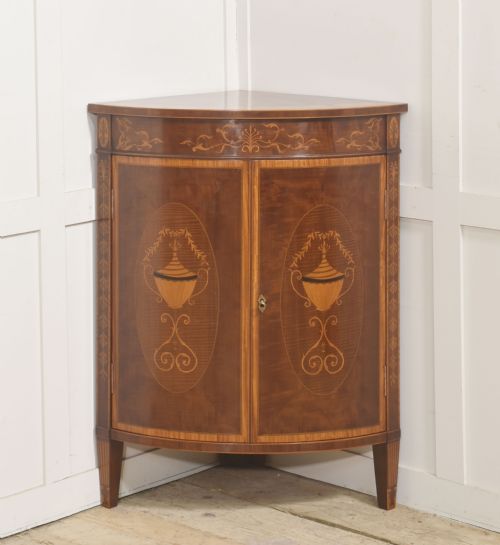
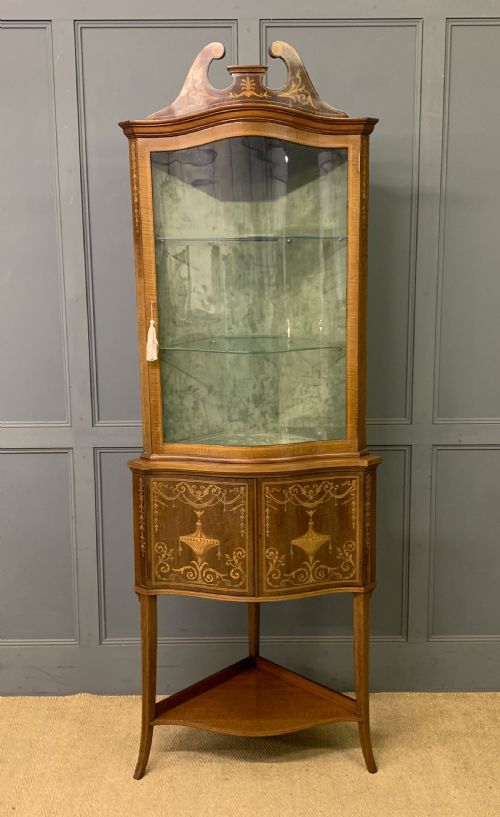
Edwardian Mahogany Bowfront Cabinet
An edwardian mahogany bowfront cabinet brings curved elegance and warm timber tones to a room, offering practical storage with distinct period character.
Edwardian Mahogany Bowfront Cabinet
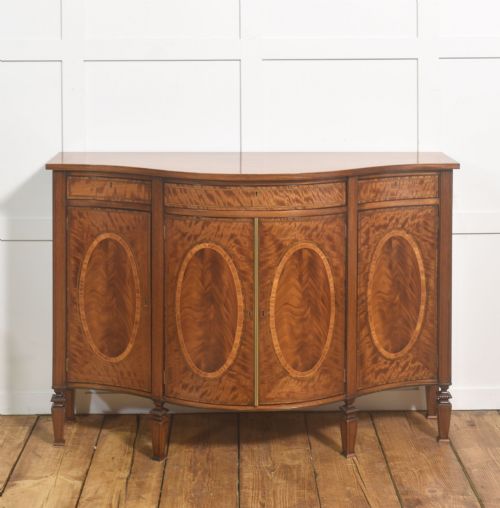
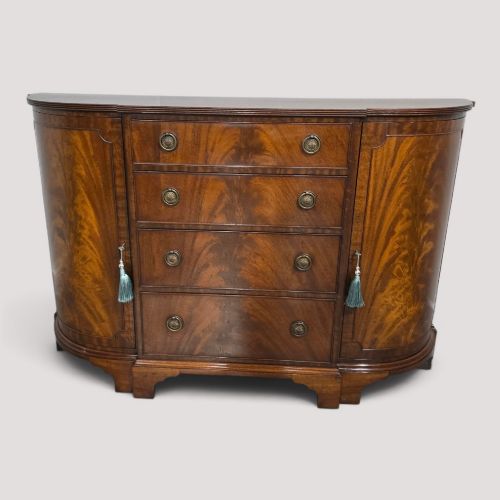
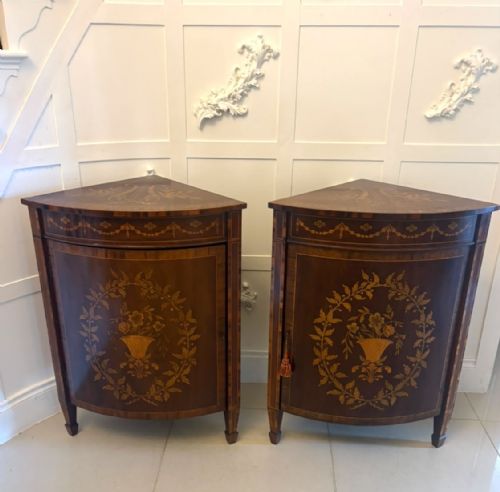
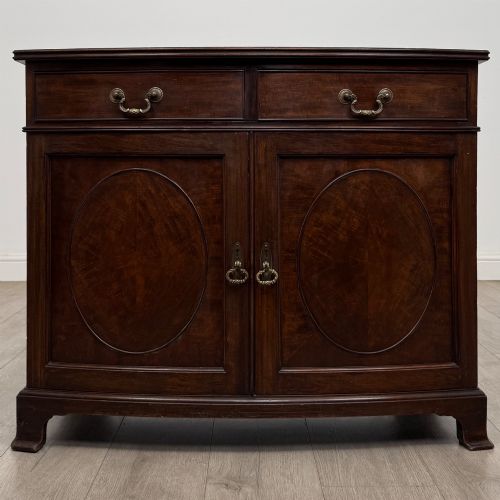
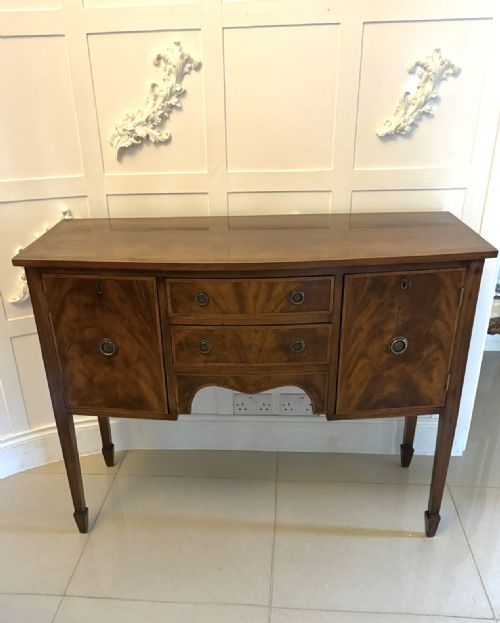
The edwardian mahogany bowfront cabinet gathers together display pieces, sideboards, corner units and cupboards shaped by a distinctive curved front. These items span the Edwardian era, the late nineteenth century and the early decades of the twentieth century, often following Sheraton Revival and Georgian design influences.
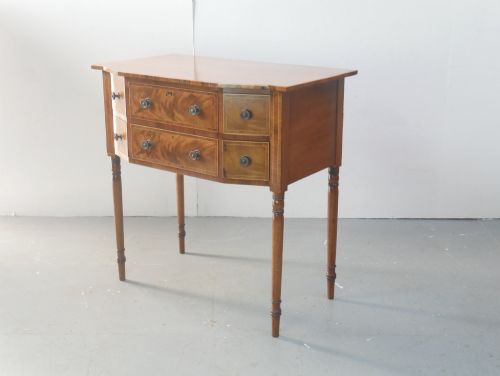
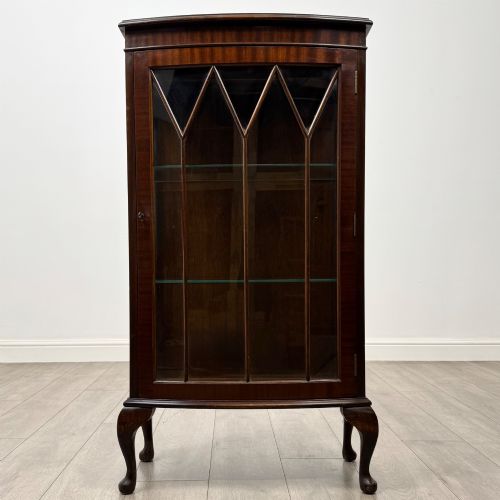
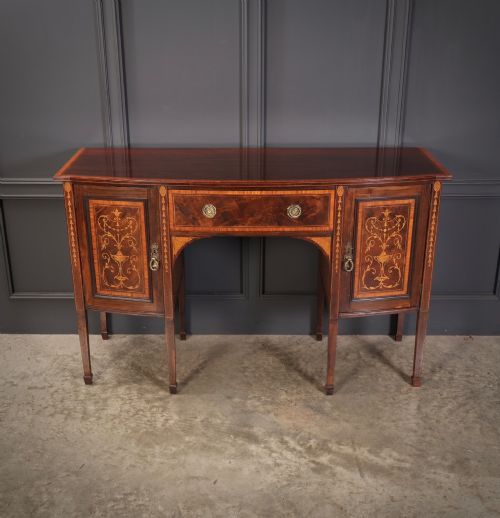
Buyers will encounter tall two-part display cabinets with glazed doors, compact side cabinets, corner cupboards and spacious dining room sideboards. The timber grain and curved silhouette dominate the aesthetic, whether the piece stands on slender tapered legs or acts as a fitted corner unit.
Materials and Construction
Cabinet makers built these pieces using solid mahogany and flame mahogany veneers, frequently enhanced with contrasting boxwood and satinwood inlay. Glass panes fitted into bowed doors protected china and books, while brass hardware completed the structural assembly.
Marquetry decoration and crossbanding added ornamental detail to the curved surfaces, requiring precise woodworking techniques to follow the radius of the bowfront without warping.
Listings combine Edwardian, late Victorian and Regency periods with materials including mahogany, satinwood, brass and glass.
Craftsmanship and Proportion
The distinction between standard utility and superior craftsmanship rests in the selection of timber figures, such as highly figured flame mahogany, and the crispness of the inlaid details. Marquetry executed with sharp definition and varied woods elevates a piece significantly.
Proportion and the handling of the curved front dictate the visual success of the cabinet. Finer examples maintain balanced sightlines across the bowed doors and drawers, showing careful matching of veneers around the radius.
Edwards and Roberts
The Edwardian Mahogany Bowfront Cabinet Glossary
- Bowfront
- A convex curved cabinet or drawer front that projects outward from the corners. This shape softens the profile of case furniture.
- Crossbanding
- A narrow strip of veneer laid around the border of a surface with the grain running at right angles to the centre. It frames the primary timber panel.
- Marquetry
- Decorative patterns formed from different coloured woods and veneers inlaid into the surface. It often depicts floral or classical motifs.
- Sheraton Revival
- A late nineteenth and early twentieth century style inspired by the furniture designs of Thomas Sheraton. It favours satinwood, delicate inlay and classical restraint.
- Flame mahogany
- Mahogany timber cut to reveal a characteristic flamelike grain pattern. This figure is prized for its decorative movement.
Edwardian Mahogany Bowfront Cabinet: Frequently Asked Questions
What rooms suit an edwardian mahogany bowfront cabinet?
These cabinets suit dining rooms, living spaces and hallways where a curved profile softens linear architecture. Their compact footprints allow them to fit into corners or against walls without dominating the floor space.
Display variants house glassware and collections behind glass, while cupboard versions hide tableware or paperwork behind solid wooden doors.
How do I care for mahogany furniture?
Mahogany responds best to a stable indoor climate away from direct sunlight and heat sources, which can dry out the timber and veneer. Regular dusting with a soft, dry cloth preserves the polished finish.
Applying a traditional beeswax polish occasionally helps nourish the wood and maintain its rich colour without building up heavy residue.
How do I tell Edwardian pieces from Georgian ones?
Edwardian items often utilise lighter satinwood inlay, machine-sawn internal secondary woods, and styles heavily influenced by earlier periods like the Sheraton Revival. Construction methods tend to show standardised manufacturing techniques developed by 1900.
Genuine Georgian pieces display hand-cut joinery, heavier internal timbers, and construction methods consistent with the eighteenth century rather than the early twentieth.
Are curved glass doors original?
Bowed glass doors on display cabinets are frequently original if the frame shows matching timber patination and rebate construction consistent with the rest of the piece. Curved glass of the Edwardian period often exhibits minor ripples or bubbles.
Replacement glass usually lacks these subtle irregularities and may fit too loosely within the wooden frame channels.