



Mahogany Book Trough
These mahogany book trough selections bring desk and table surfaces to order, offering a sturdy home for volumes in daily rotation.
Mahogany Book Trough
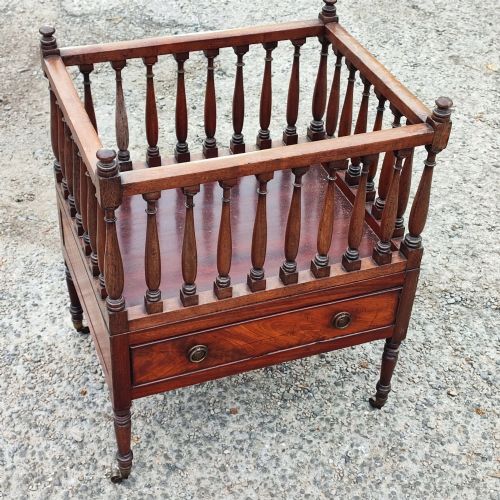
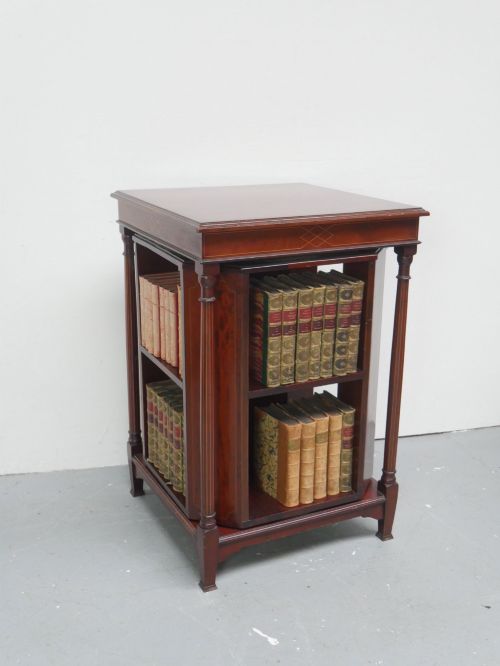
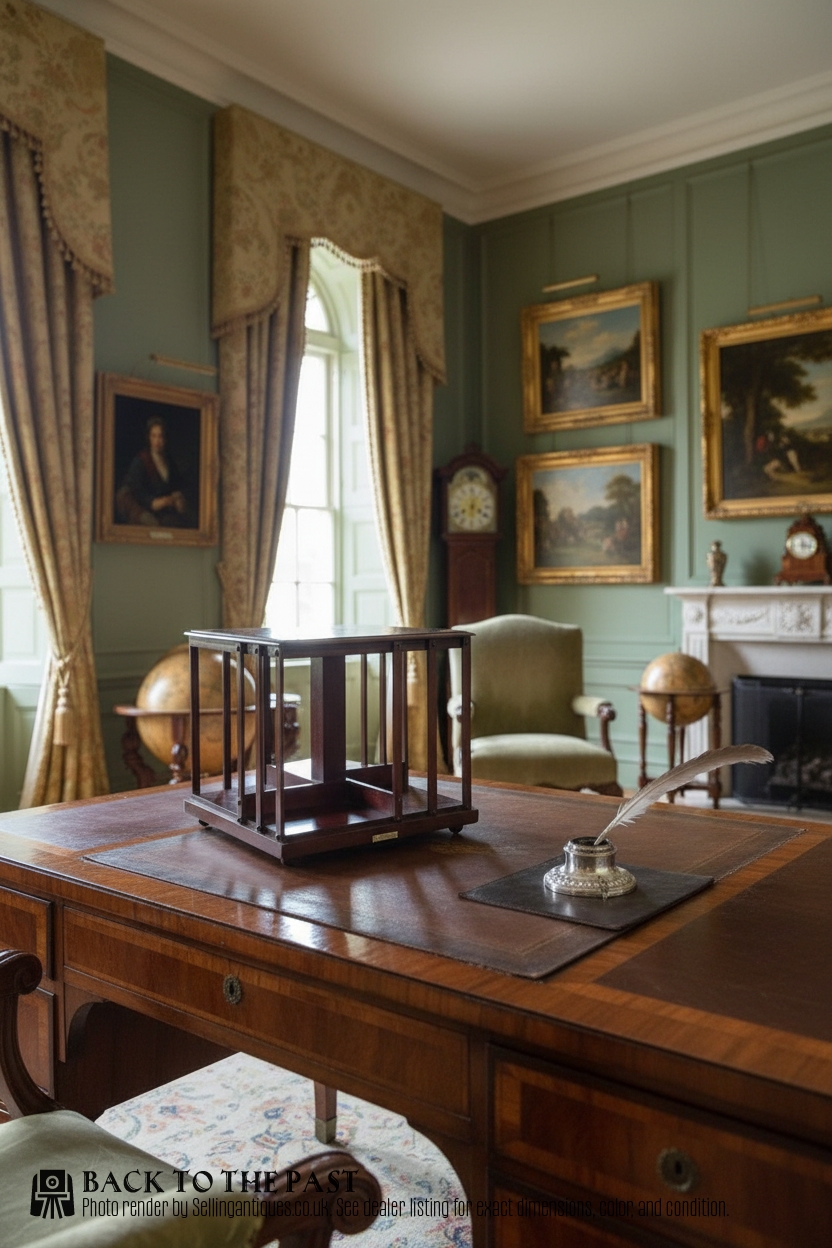
A mahogany book trough is a compact receptacle designed to hold books upright on a desk, table, or library surface, keeping working volumes close at hand. The most common form on this page dates from the Edwardian period and Victorian eras, often constructed as an open trough with sloped sides.
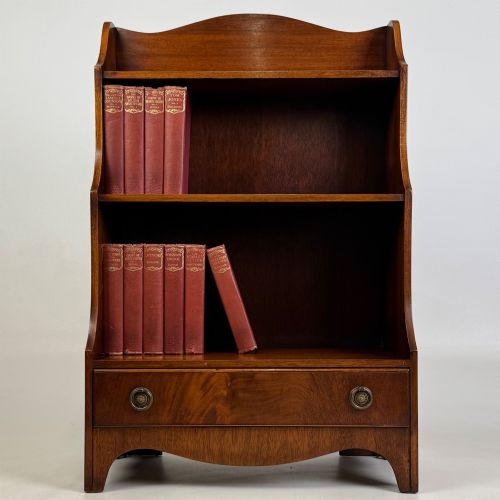
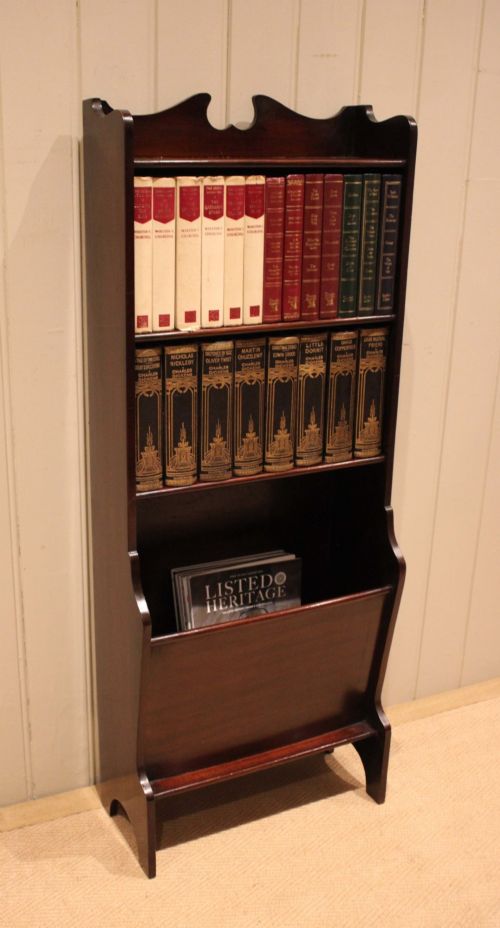
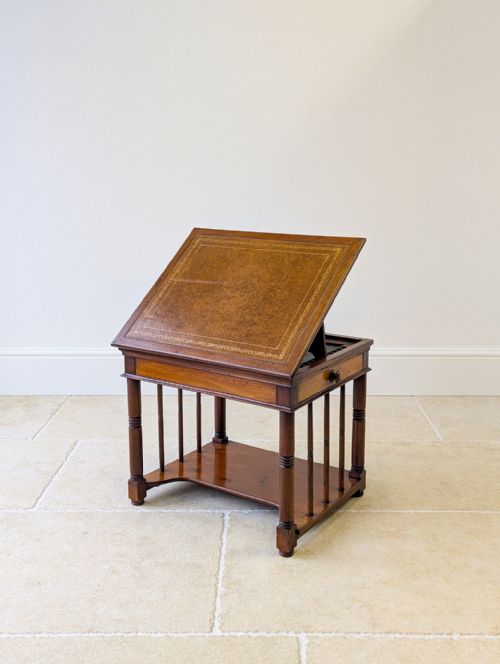
Makers adapted the form through the nineteenth and twentieth centuries to include carrying handles, table legs, or lower tiers for magazines. Pieces range from plain utility items to inlaid examples influenced by George III, Art Nouveau, and Gothic Revival styles.
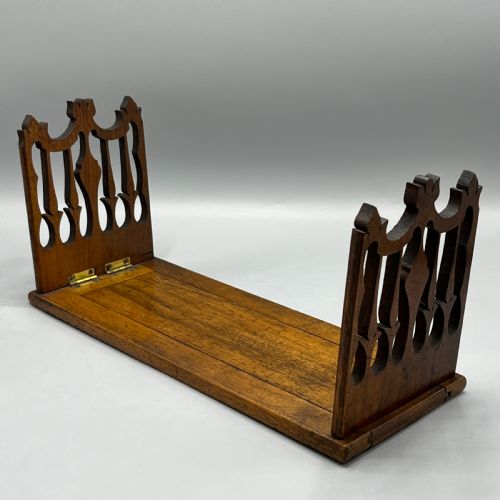
Beyond the standard desk tidy, related iterations include revolving models, extending book rests, and library book carriers. Buyers encounter everything from small table-top troughs to large sectioned lawyer versions built for heavier volumes.
Materials and construction
Makers relied principally upon mahogany, sometimes selected for flame figuring or paired with contrasting satinwood inlay along the side panels. Solid timber construction provided the necessary weight to support heavy rows of octavo and quarto volumes without tipping.
Brass mounts, hinges, and wire elements appear on select pieces, particularly on Victorian extending book rests and desk organisers. Inlays and stringing added surface pattern to otherwise simple Edwardian and Georgian forms.
Mahogany Book Trough Retail Price Guide 2026
Typical asking prices for mahogany book trough among the pieces listed under this phrase on Sellingantiques today, from the lower quarter to the upper quarter. They describe what is for sale here now, not the wider market.
At least one Victorian lawyer needed a large sectioned trough just to keep opinions from sliding into the inkwell.
What separates the tiers of quality
Quality rests upon the selection of timber figure, the crispness of any inlay, and the joinery used at the corners and base. Plain utility troughs meet basic storage needs, whereas figured mahogany veneers and detailed satinwood stringing indicate finer workshop output.
Proportion and stability separate standard pieces from superior examples, such as those with integrated magazine racks, multi-tier shelving, or maker attributions. Solid construction and tidy joints distinguish workshop-built pieces from simpler later alternatives.
Waring and Gillows·Betjemanns·James Shoolbred
The Mahogany Book Trough Glossary
- Book trough
- An open-topped container with V-shaped or vertical sides designed to hold a row of books upright on a flat surface.
- Satinwood inlay
- A contrasting pale timber inserted into the mahogany surface in geometric or floral patterns.
- Book slide
- An extending wooden stand, often fitted with brass mounts, that lengthens to accommodate varying numbers of volumes.
- Flame mahogany
- Timber cut from the fork of the mahogany tree to produce a distinctive, flickering grain pattern.
- Gothic Revival
- A nineteenth-century style drawing on medieval architectural motifs, visible in pointed arches and heavy chamfered edges.
Mahogany Book Trough: Frequently Asked Questions
Where should I place a book trough?
These pieces sit comfortably on library tables, office desks, sideboards, or deep windowsills where working volumes need to stay upright and accessible.
Because they occupy a minimal footprint, they fit easily into small spaces while keeping current reading material organised.
How do I date a mahogany book trough?
Dating relies on timber characteristics, construction methods, and decorative styles like satinwood inlay or Art Nouveau curves. Edwardian and Victorian examples make up the majority of pieces seen here.
Simpler forms often align with nineteenth-century utility pieces, while heavier flame mahogany versions point towards the early twentieth century.
What is the difference between a trough and a bookend?
A book trough encloses volumes within fixed or sloping sides, supporting the entire row from beneath and along both ends.
Bookends rely on weighted bases at either end of a loose stack, whereas a trough acts as a self-contained carrier.
Can these troughs hold heavy books?
Solid mahogany construction provides enough strength for standard hardbacks and reference volumes used in daily study.
Larger sectioned examples and lawyer troughs were specifically built to manage heavier bound volumes without straining the structure.