





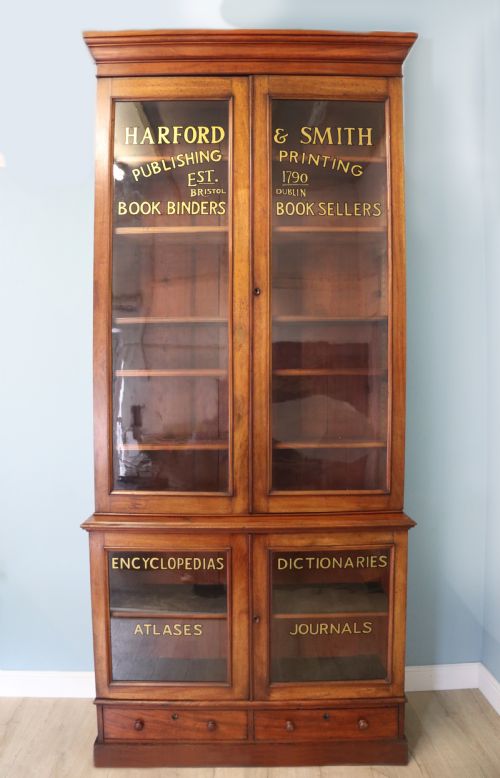


Mahogany Apothecary Case
These mahogany apothecary case pieces are compact and utilitarian containers crafted for medicines and instruments, prized for their handsome timber and clever internal fittings.
Mahogany Apothecary Case
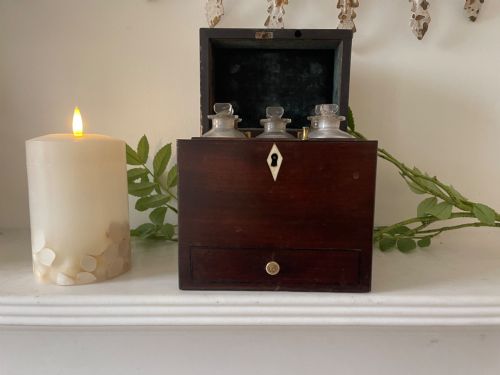
A mahogany apothecary case represents a functional container designed for medical storage, appearing across Georgian, Victorian, and later eras. Buyers searching for a mahogany apothecary case encounter portable travelling chests, countertop shop displays, and hanging wall cabinets.
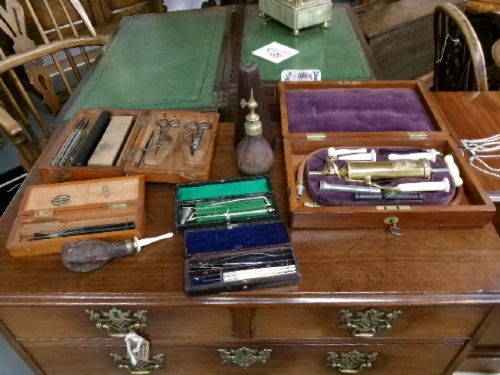
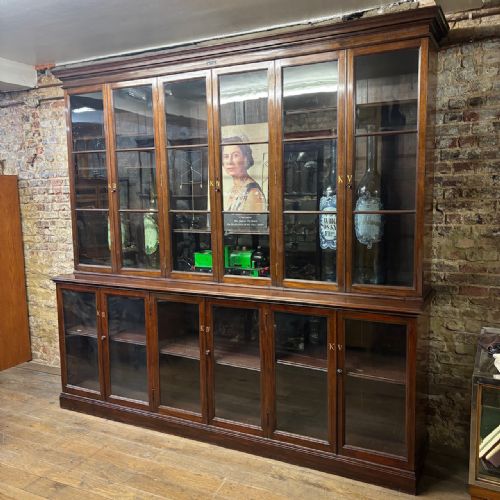
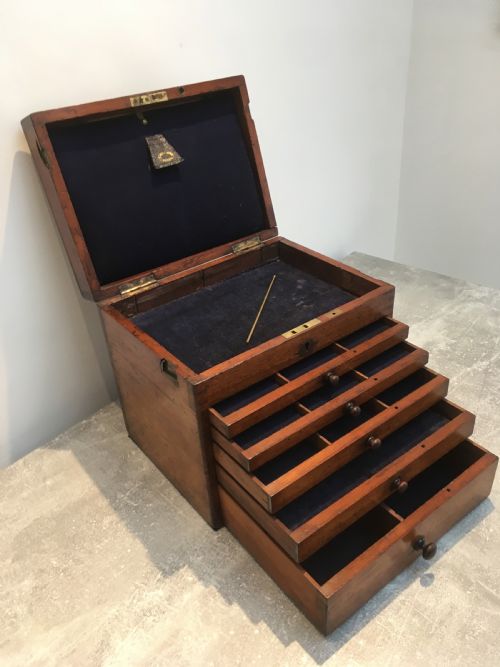
The objects span domestic, clinical, and commercial environments, taking forms such as small medical carrying chests, instrument cases, and large shop counter display cabinets. Many examples retain specific compartments, bottles, and drawers intended for medicines or precision scales.
Origins stretch from the late eighteenth century through to the early twentieth century, taking in Regency styles and commercial Victorian pieces. While some were made for physicians on the move, others served retail chemists and pharmacies.
Materials and construction
Makers utilised solid mahogany and flame mahogany veneers over secondary timbers such as pine and oak, finished with polished wooden surfaces. Brass handles, hinges, and lock plates provide robust structural reinforcement and secure closures for travelling chests.
Mahogany Apothecary Case Retail Price Guide 2026
Typical asking prices for mahogany apothecary case among the pieces listed under this phrase on Sellingantiques today, from the lower quarter to the upper quarter. They describe what is for sale here now, not the wider market.
Listings feature mahogany, brass, glass, pine, and velvet across Georgian, Regency, Victorian, and 1920s periods.
Assessing quality and condition
Superior examples demonstrate thoughtful proportion, precise dovetail joinery, and high-grade mahogany with rich figuring. The integration of original brass hardware, intact glass bottles, and functional internal drawers elevates a piece.
Commercial display pieces and larger shop counters vary according to the complexity of their glazing and the retention of original signage or lettering. Pieces that have undergone sensitive restoration retain their structural integrity better than heavily altered items.
De Grave Short and Co·Oertling
The Mahogany Apothecary Case Glossary
- Flame mahogany
- A timber cut displaying a distinctive flickering wave pattern in the grain. It is often selected for the principal exterior surfaces of high-status cases.
- Dovetail
- An interlocking wood joint formed by interlocking wedge-shaped fingers. This construction method secures the corners of drawers and box structures.
- Campaign case
- A portable chest or box built for travel, featuring recessed brass handles and corner brackets to withstand transit. These pieces were designed to be compact and durable.
- Precision beam scales
- A weighing instrument utilising a central fulcrum and balanced arms for exact measurements. They are frequently encountered alongside apothecary and scientific equipment.
- Countertop display cabinet
- A glazed retail enclosure designed to sit upon a shop counter for merchandise presentation. They often feature wooden frames and back doors for access.
Mahogany Apothecary Case: Frequently Asked Questions
What were apothecary cases used for?
These cases served to store medicinal ingredients, tinctures, pills, and instruments for physicians, travelling gentlemen, and retail chemists. They kept fragile glass bottles organised and protected during transport or on shop shelves.
Larger variations functioned as shop counter display cabinets or wall cupboards in pharmacies, presenting remedies to customers while keeping them secure.
How do I date a mahogany case?
Dating relies on construction methods, timber choice, hardware style, and the overall form of the cabinet. Georgian examples often display fine dovetailing and understated brass fittings, while Victorian and later pieces might feature heavier framing and commercial glazing.
Labels, maker names on scales, and retail lettering provide further chronological clues.
Where should I place these in a home?
Smaller travelling boxes and instrument cases suit tabletops, sideboards, or desks where their fitted interiors and polished timber can be examined up close. Wall cabinets mount securely in kitchens, bathrooms, or studies to display small collections.
Larger countertop display cases function well as standalone statement furniture pieces in living spaces.
Are original bottles usually included?
Some surviving travelling chests and medical boxes retain their original fitted glass bottles and small drawers, though many pieces have lost their contents over time. The presence of original glassware adds historical completeness to an item.
Cabinets designed for retail display generally housed shelves rather than fitted medicine bottles.