


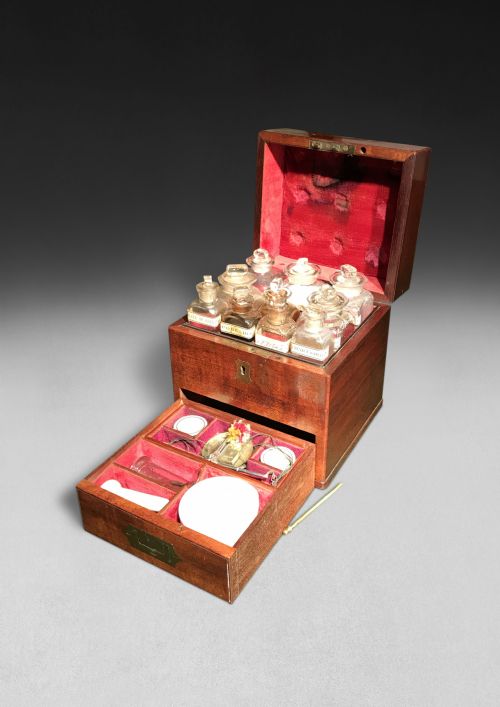


Georgian Medicine Box
A georgian medicine box offers a tangible link to domestic and travel healthcare from an era when remedies relied on careful compounding.
Georgian Medicine Box
A georgian medicine box encompasses compact tabletop cabinets, travelling cases, and wall-hanging cupboards designed to store medical preparations securely. These pieces generally date from the eighteenth and nineteenth centuries, spanning the Georgian, Regency, and early Victorian periods.
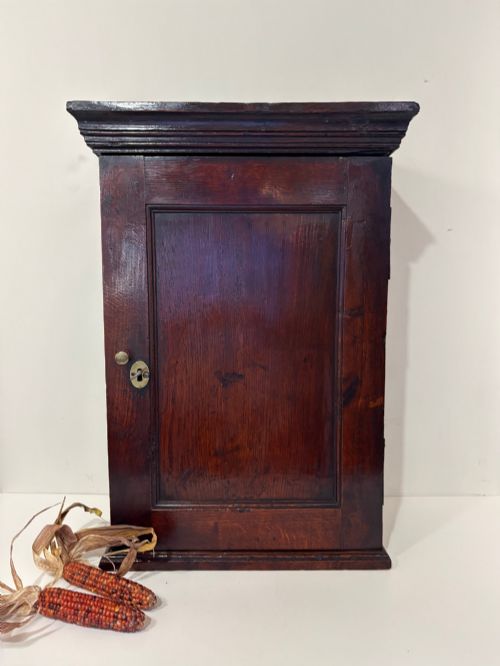
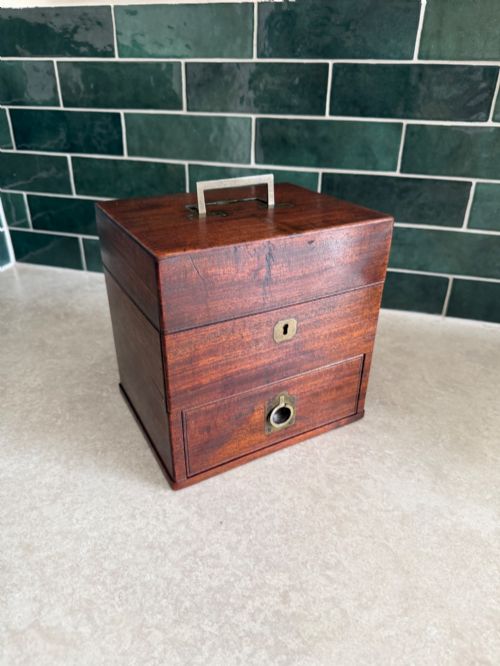
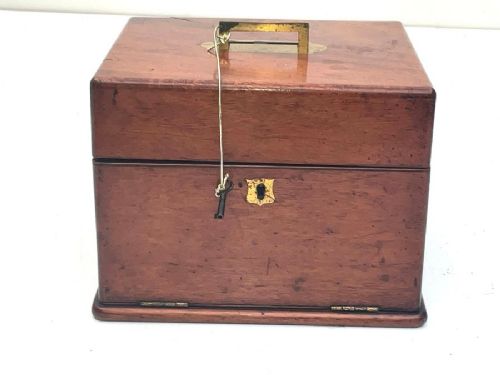
The selections available on this page lean heavily towards mahogany travelling cases and fitted chests, alongside oak wall-hanging spice and medicine cupboards. Form follows function closely, with interior layouts engineered to hold glass bottles, scales, and drawers for powders.
Makers produced these boxes for domestic households, physicians, and travellers on campaign who required portable pharmacies. Their survival rate depends on the robustness of their timber construction and whether their fragile glass contents remained intact over the centuries.
Materials and construction methods
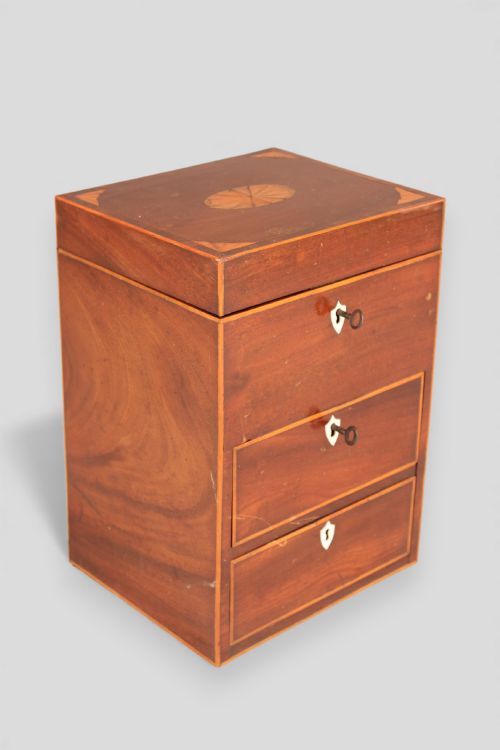
Cabinet makers utilised dense hardwoods such as mahogany and oak to construct the primary carcases, ensuring durability for home use or travel. Boxwood inlay frequently decorates the surfaces of finer mahogany examples, adding subtle geometric contrast.
Brass hardware, including flush carrying handles, corner brackets, and secure locking mechanisms, reinforces the corners and protects the timber during transit. Internal fittings often incorporate velvet linings, bone components, and tailored partitions to keep glass bottles and iron instruments stationary.
Listings for this phrase feature oak, mahogany, and boxwood inlay alongside brass hardware and original glass bottles.
Distinguishing quality and survival
The standard of a georgian medicine box rests upon the integrity of its fitted interior and the completeness of its original contents. Boxes retaining their original blown glass bottles, scales, and undisturbed velvet linings command greater interest than stripped carcases.
Joinery execution and timber selection define the upper tier of pieces, showing precise boxwood inlay and robust brass campaign hardware. Simpler Welsh vernacular wall cupboards rely on solid oak construction and straightforward peg joinery rather than decorative veneer.
The Georgian Medicine Box Glossary
- Apothecary box
- A fitted wooden case designed to hold medicinal bottles, scales, and compounding tools. These boxes often feature concealed compartments and locking drawers for secure storage.
- Campaign case
- A portable chest or box built with flush brass handles and reinforced corners for travel. These items were designed to withstand the rigours of military or long-distance journeys.
- Boxwood inlay
- A decorative technique involving small geometric or linear inserts of pale boxwood into a darker wood surface such as mahogany. This adds subtle contrast to the exterior of the cabinet.
- Wall cabinet
- A hanging storage cupboard mounted securely to a room's wall to keep contents accessible yet off surfaces. Many early examples served domestic kitchen or medical storage roles.
- Vernacular
- Regional furniture made by local craftsmen using traditional methods and native timbers rather than following high London fashions. Welsh oak pieces frequently reflect this local tradition.
Georgian Medicine Box: Frequently Asked Questions
What did these boxes contain originally?
Original contents typically included blown glass bottles for liquid medicines, small jars for ointments, and scales for weighing powders.
Many examples also retained mortar and pestle sets, mixing tiles, and small drawers holding dry ingredients.
How do I care for the wood and interior velvet?
Keep the timber away from direct sunlight and sudden temperature changes to prevent the mahogany or oak from splitting.
Dust the velvet and interior partitions gently with a soft brush, avoiding any liquid cleaners that might damage old fabrics.
Are all apothecary boxes portable?
Not all pieces were made for travel; while many are compact campaign cases with brass carrying handles, others are wall-hanging cupboards.
Tabletop cabinets and larger chests stayed stationary in homes, country houses, or apothecary shops.
How can I tell a Georgian box from a later one?
Examine the timber species, construction joints, and the style of the brass hardware for period indicators.
Georgian and Regency pieces often feature hand-cut dovetails, dense old-growth mahogany or oak, and characteristic brass flush handles.