

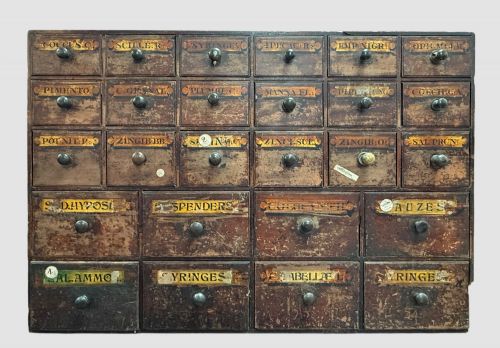
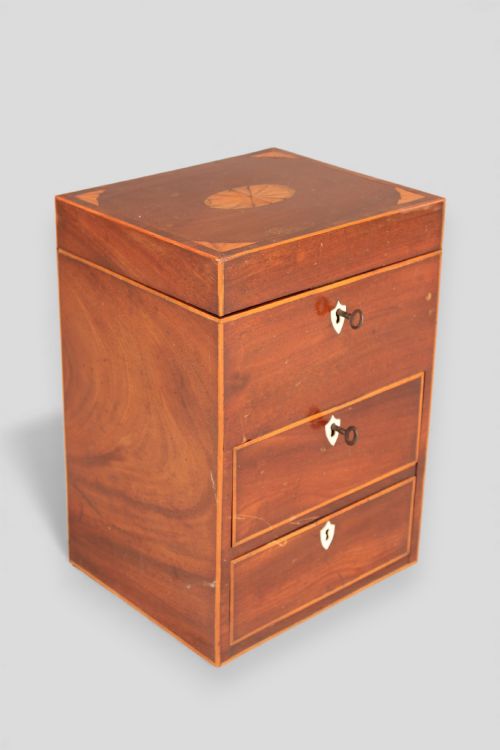

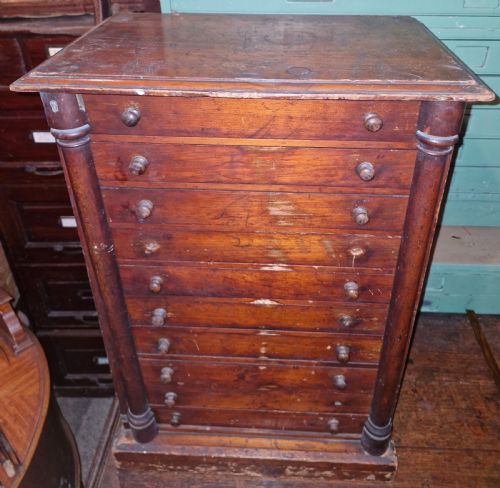


Mahogany Apothecary Cabinet
A mahogany apothecary cabinet offers sturdy housing for medical ingredients, prized by collectors for its compact drawers and historic utility.
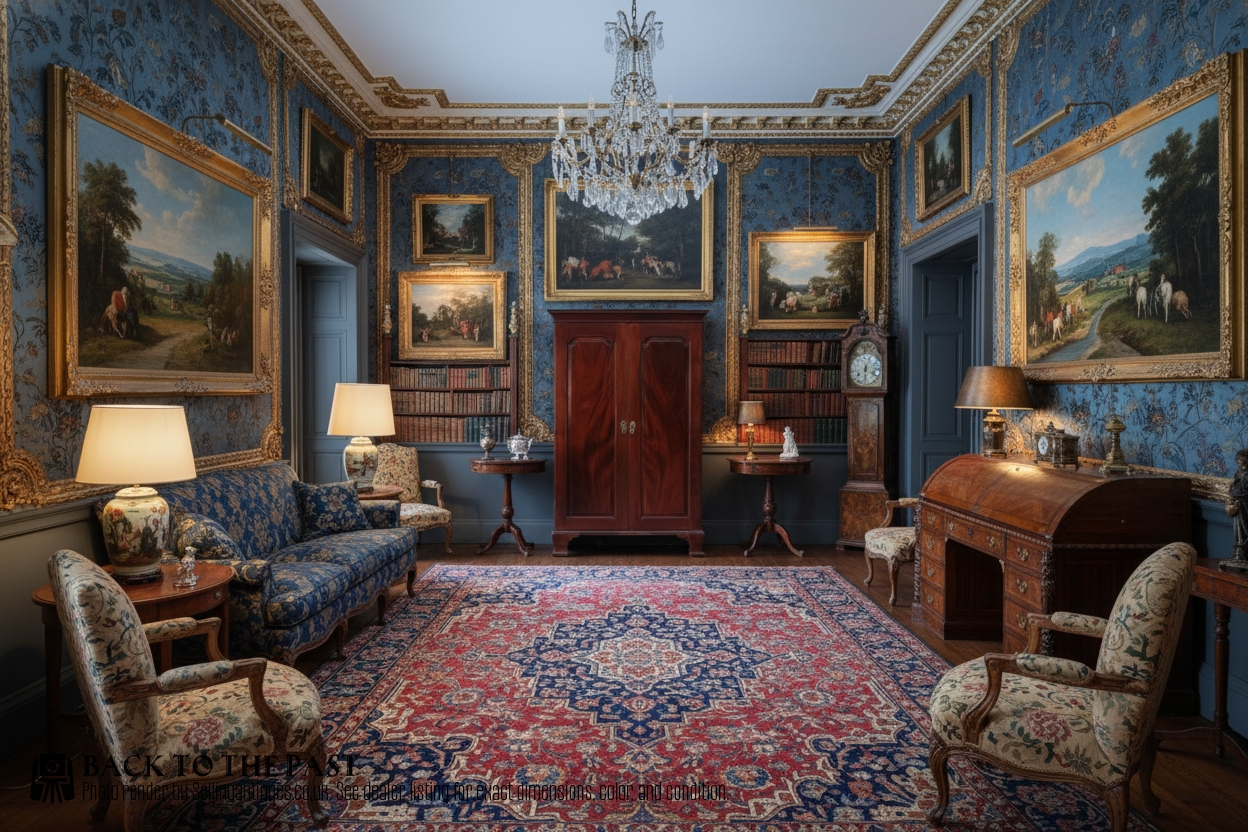
Mahogany Apothecary Cabinet
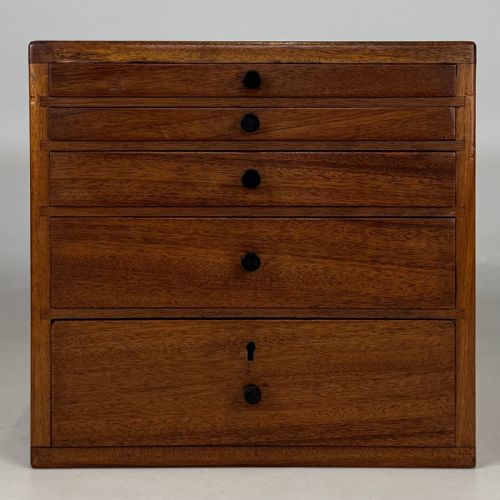
A mahogany apothecary cabinet is a specialised storage chest designed to hold medicinal bottles, powders, and scales. These pieces serve as tangible links to domestic and commercial medicine from past centuries.
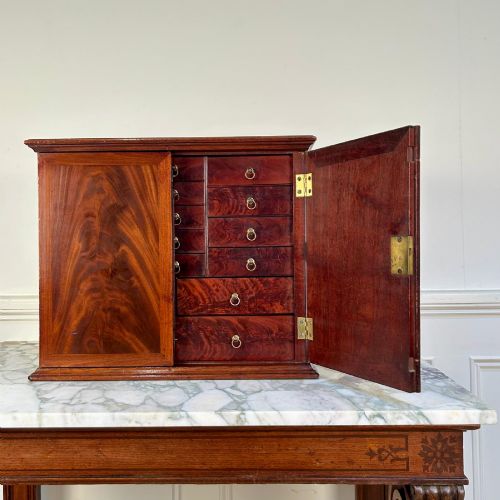
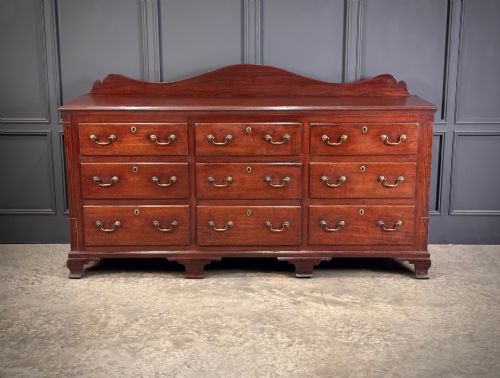
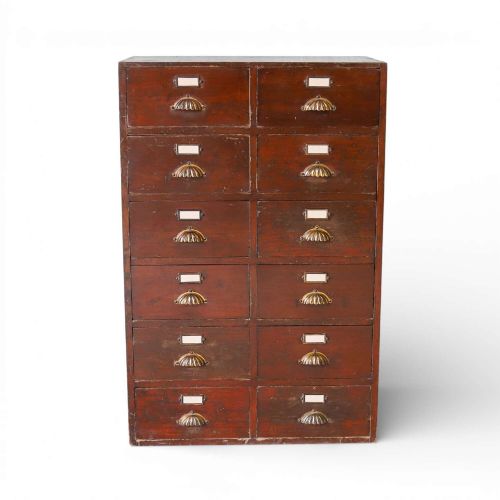
The selections range from compact Georgian spice chests to substantial Victorian banks of drawers and fitted estate cabinets. Many examples retain multi-drawer layouts intended to organise diverse remedies securely.
Buyers most frequently encounter nineteenth-century items alongside earlier Georgian and Regency variants. These structures appear as tabletop units, hanging displays, or low banks of chemist drawers.
How they were made
Cabinet makers utilised dense timber, constructing primary exteriors from mahogany while incorporating secondary woods like pine for internal partitions and drawer linings.
Brass hardware figures prominently, providing robust handles, carrying brackets, hinges, and secure locking mechanisms for valuable contents. Subtle detailing often includes boxwood stringing and delicate wood inlay across drawer fronts and panel doors.
Mahogany Apothecary Cabinet Retail Price Guide 2026
Typical asking prices for mahogany apothecary cabinet among the pieces listed under this phrase on Sellingantiques today, from the lower quarter to the upper quarter. They describe what is for sale here now, not the wider market.
Several survival stories depend on tiny brass keys that still turn the original locks after two hundred years.
What varies in quality
The distinction between standard utility storage and exceptional work lies in the refinement of internal fittings and the choice of cabinet timber. Superior examples retain original glass bottles, working locks with keys, and fitted compartments that slide smoothly.
Construction methods also separate the tiers, where dovetail joints executed with fine precision indicate superior workshop output. Subtle touches like matched mahogany grains and delicate boxwood stringing elevate the decorative merit of the piece.
The Mahogany Apothecary Cabinet Glossary
- Mahogany
- A durable tropical hardwood selected for its rich reddish-brown tone and strong grain structure. It resists warping well, making it ideal for cabinet construction.
- Boxwood
- A pale, dense wood utilised for fine inlay and stringing lines on cabinet fronts. It creates sharp visual contrast against dark mahogany surfaces.
- Dovetail joint
- An interlocking wood joint formed by interlocking wedges that provides exceptional tensile strength. It holds drawer corners together securely over centuries of use.
- Stringing
- Thin inlaid lines of contrasting timber set flush into the surface of a cabinet. This technique outlines drawers and panels to add decorative depth.
- Fitted interior
- An internal arrangement featuring dedicated slots, shelves, and compartments designed for specific items. In these cabinets, it kept fragile glass bottles upright during transit or daily use.
Mahogany Apothecary Cabinet: Frequently Asked Questions
What is a mahogany apothecary cabinet?
A mahogany apothecary cabinet is a wooden chest built to store medicines, powders, and medical instruments. They were used in domestic households, shops, and travelling kits.
These cabinets feature multiple small drawers or fitted internal compartments. Their design reflects the precise organisational needs of historical medical practice.
How were apothecary cabinets used?
Apothecary cabinets held remedies, scales, and mixing tools required by doctors, chemists, and household managers. Many included lockable doors to secure dangerous or valuable ingredients.
Some portable versions travelled with physicians on house calls. Larger stationary units remained in shops or estate houses for daily dispensing.
How do I date a mahogany cabinet?
Dating relies on observing construction methods, timber choices, and stylistic details. Georgian and Regency pieces often display finer inlay work and hand-cut dovetails.
Victorian examples tend toward heavier proportions and display configurations suited for shop use. Hardware styles and secondary woods also offer clues to the period of manufacture.
Where should I place one at home?
These cabinets suit tabletops, sideboards, or dedicated display shelves where their drawer arrangements remain visible. Their compact footprints make them versatile additions to studies or living spaces.
Keeping them away from direct heat sources protects the mahogany surface and prevents the wood from drying out. Allowing space around the cabinet highlights its historical hardware and construction.