

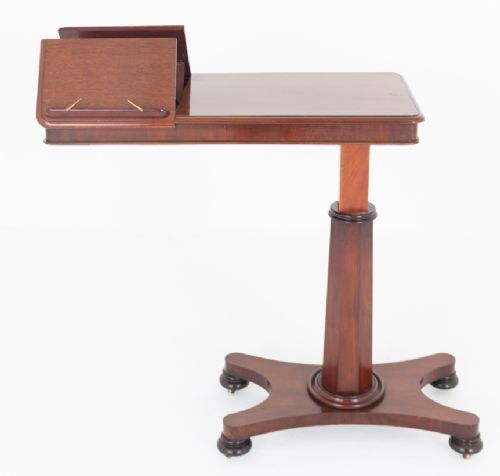


Mahogany Adjustable Desk
Mahogany adjustable desk pieces combine timber and brass mechanisms to serve readers, writers, and draughtsmen across Georgian, Regency, and Victorian periods.
Mahogany Adjustable Desk
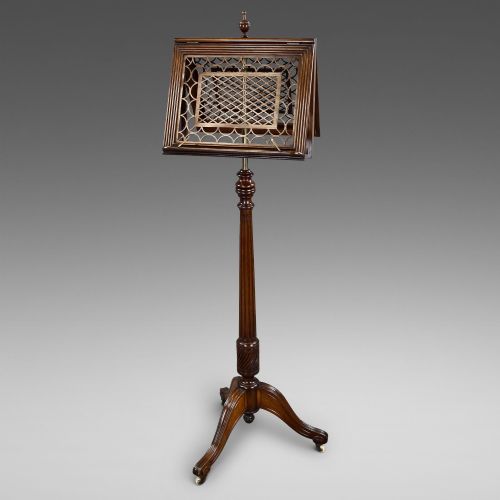
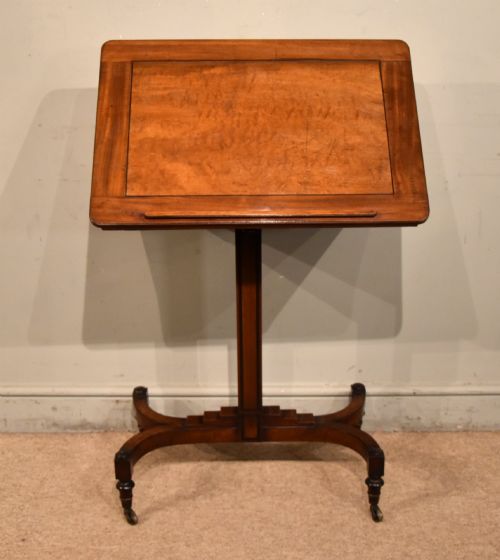
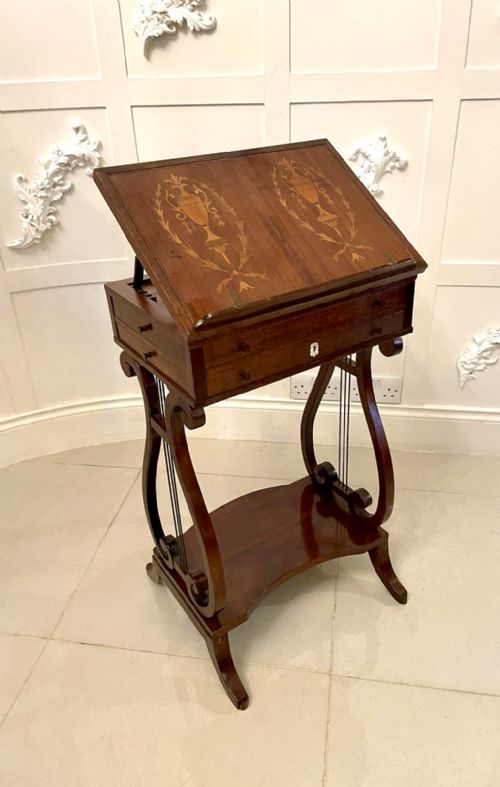
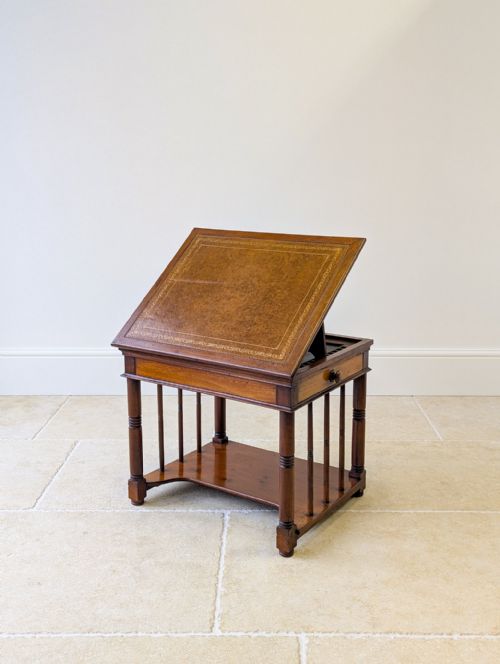
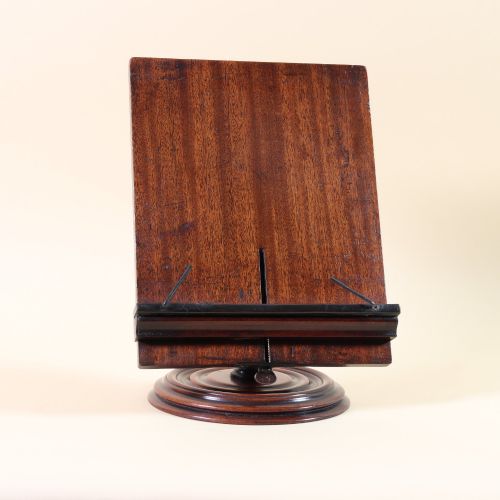
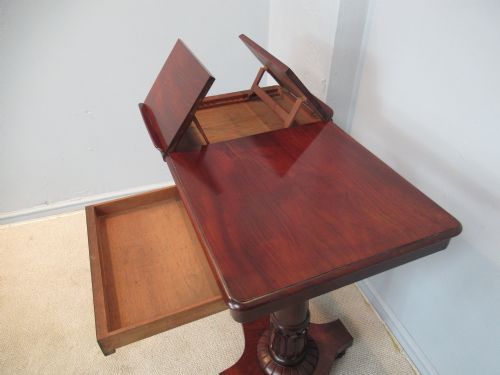
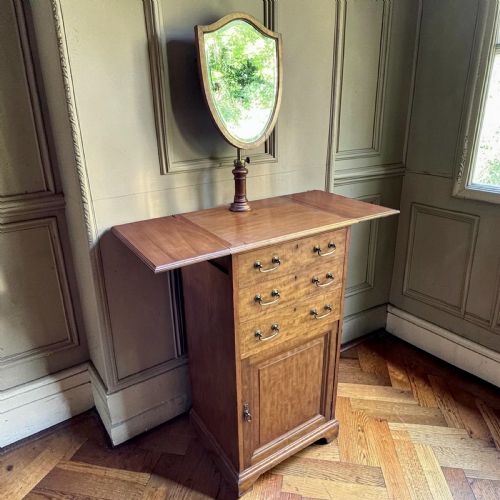
A mahogany adjustable desk spans several functional forms designed for reading, writing, and drawing, most frequently appearing as reading tables, music stands, and architect's desks. These pieces incorporate mechanical elements such as ratchets, risers, and tilting surfaces that alter the height or angle of the top to suit the user. Examples range from compact chairside reading stands to large library tables and metamorphic campaign pieces.
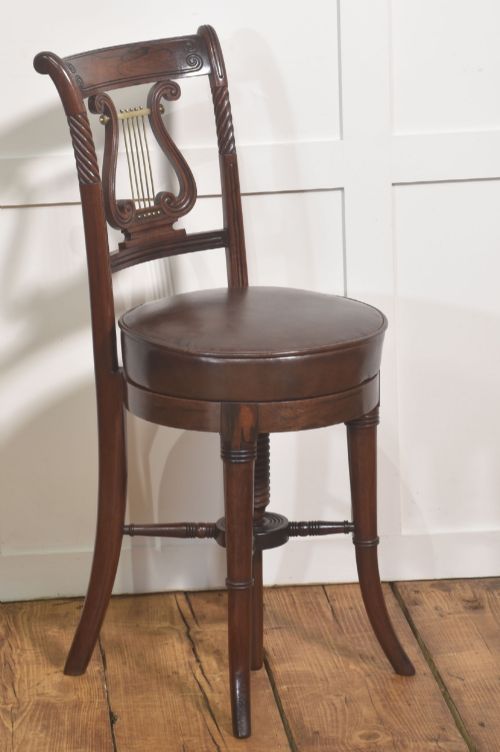
The selection on this page relies heavily on nineteenth-century craftsmanship, with substantial representation from the Regency and Victorian eras alongside Georgian and Edwardian examples. Alongside dedicated desks, buyers encounter related items such as duet stands, book rests, and swivel armchairs equipped with adjustable mechanisms. Mahogany serves as the primary timber across these diverse forms, often paired with secondary woods and operational hardware.
Materials and construction methods
Makers utilised solid and veneered mahogany for the main bodies of these desks, frequently selecting dense timber that took a fine polish. Brass fittings, including ratchets, hinges, adjustable pillars, and castors, provide the mechanical action necessary for movement. Secondary materials such as leather inserts, satinwood inlay, and glass appear on specific writing surfaces and reading slopes.
Joinery techniques matched the functional demands of pieces subjected to frequent adjustment and movement. Rise and fall mechanisms, cantilever supports, and tilting book ledges were engineered with metal ratchets and screw threads fixed securely into the mahogany framework. These moving parts required precise fitting to ensure stability at various heights and angles.
Several pieces include patent reading stands designed to hold heavy folios while the reader remained comfortably seated in an armchair.
Distinctions in execution and design
The sophistication of the mechanical action separates standard pieces from finer examples. Superior items utilise robust, neatly integrated brass ratchets and smooth sliding pillars that lock securely without wobble. The precision of the engineering dictates how reliably the desk or reading stand maintains its adjusted position.
Material selection and decorative detailing further define the grade of a piece. Finer examples feature well-figured mahogany timber, crisp satinwood inlay, and carefully tooled leather writing surfaces. The integration of patented mechanisms, such as those by known makers, adds a layer of mechanical complexity that influences the standing of the object.
Gillows·Carter
The Mahogany Adjustable Desk Glossary
- Metamorphic
- Describing furniture designed to transform from one form or function into another, such as a table converting into a reading stand.
- Rachet
- A mechanism consisting of a cog and pawl that allows a reading slope or desk top to lock securely at various angles.
- Satinwood inlay
- Decorative contrasting light wood veneer set into the mahogany surface in geometric or floral patterns.
- Campaign
- Portable furniture designed for travel, typically featuring recessed brass handles and folding or dismantling components.
- Duet stand
- A music or reading stand large enough to hold two books or scores simultaneously, often adjustable for height.
Mahogany Adjustable Desk: Frequently Asked Questions
What is an adjustable architect's desk?
An architect's desk is a specialised table featuring a rising drawing board or reading slope supported by a mechanical ratchet or pillar. These pieces allowed draughtsmen and writers to work standing up or seated at varying angles.
They date primarily from the Georgian and Regency periods, constructed in mahogany with brass adjustment hardware.
How do reading tables adjust?
Reading tables use internal wooden pillars, metal ratchets, or screw mechanisms to alter the height of the top. Some incorporate tilting book rests held by adjustable struts.
Users can raise, lower, or angle the surface to accommodate books, music scores, or writing materials.
Are these desks suitable for daily use?
These pieces were built for practical service in libraries, studies, and drawing rooms. Their adjustable mechanisms remain functional for modern reading and writing tasks.
Placing them in a room requires consideration of their specific height ranges and mechanical footprints.