
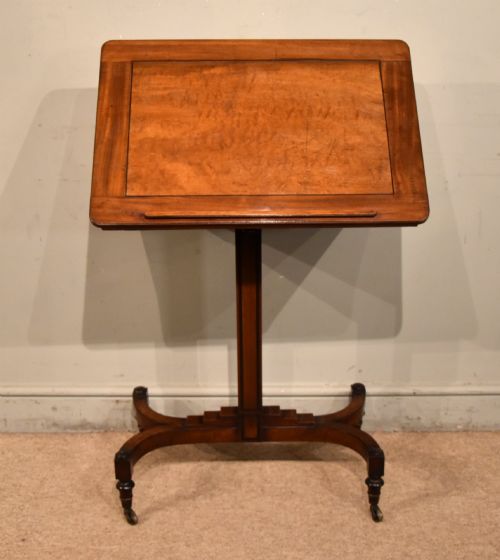
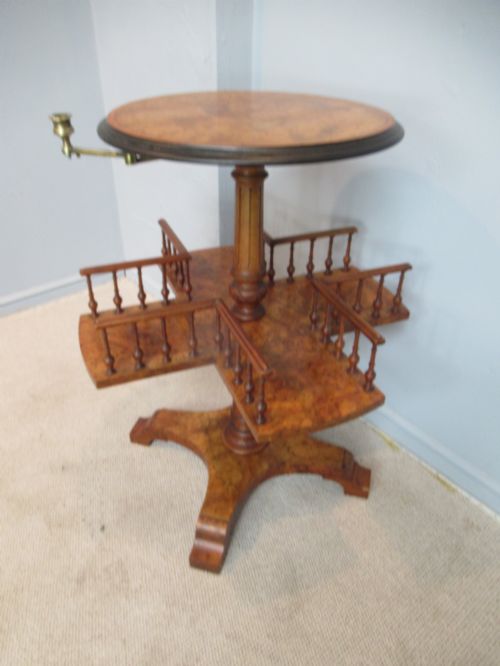
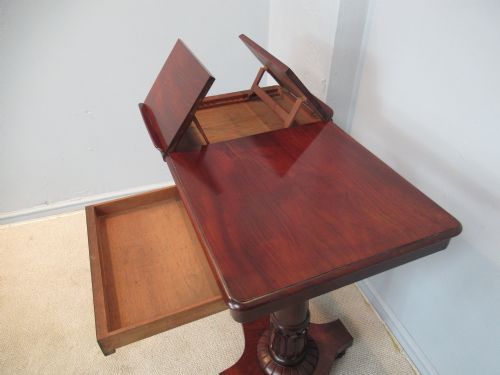
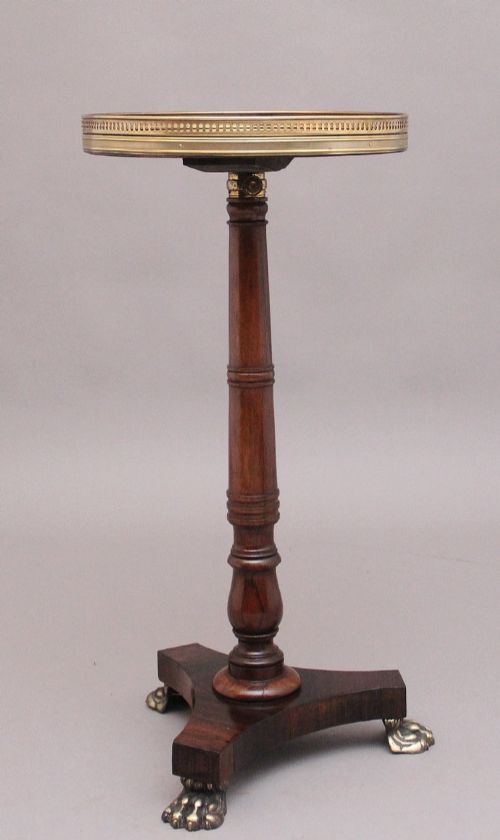




Pedestal Reading Stand
A pedestal reading stand offers a steady surface for books and music, bringing height-adjustable function and period character to any study or library.
Pedestal Reading Stand
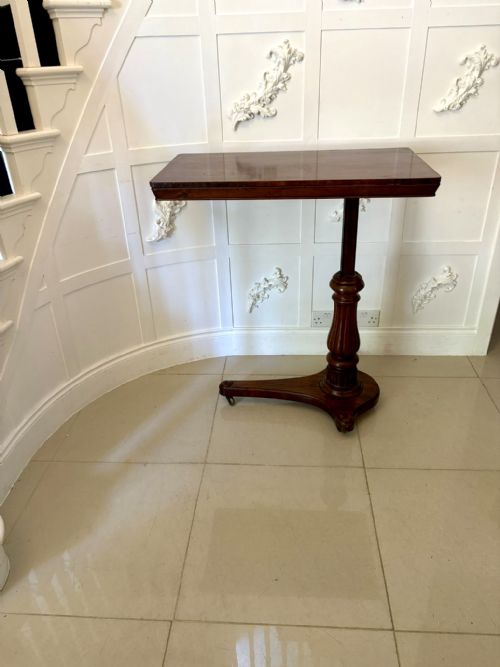
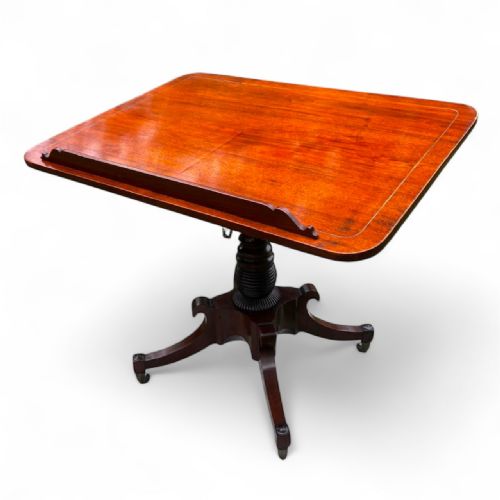
A pedestal reading stand supports books, sheet music or writing materials upon a central column, freeing the hands and holding texts at a comfortable angle. These pieces serve scholars, musicians and readers who require a dedicated, adjustable surface for study or performance.
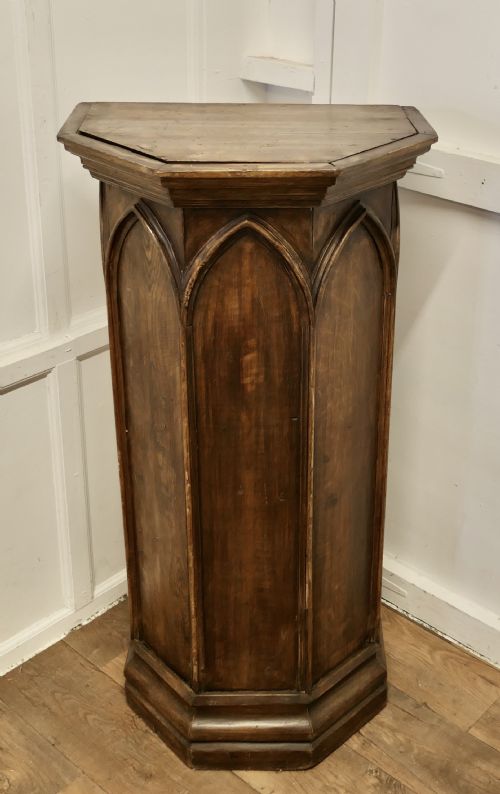
The selections span eras from George III and Regency through the Victorian period and into the nineteen thirties, encompassing formats such as music stands, lecterns, revolving bookstands and adjustable tables. Mahogany and rosewood predominate among the timbers, whilst brass and cast iron appear frequently in floor lamps and standard lamps functioning as reading aids.
Buyers encounter folding book pedestals, double-sided reading tables, and metamorphic occasional pieces that adapt from standard tables into tilted reading surfaces. Styles range from simple utilitarian designs to ornate Gothic Revival, Swedish Neoclassical and Victorian Anglo-Indian interpretations.
Materials and construction
Cabinetmakers utilised dense hardwoods such as mahogany, rosewood, oak, walnut and burr walnut for stability and rich grain figures. Telescopic brass actions, brass inlay and cast iron mechanisms allowed for height adjustment and tilting reading surfaces.
Secondary structural elements incorporate pine and ebonised finishes, alongside fabric components found in specialised reading and music furniture. Joinery techniques and turned or carved central pedestals provided the necessary weight to support heavy folio volumes without tipping.
A carved oak eagle lectern waits to hold your morning post with stern, unblinking authority.
Markers of quality
Superior examples demonstrate smooth, reliable adjustment mechanisms in brass or integrated ratchets that hold heavy books securely at various angles. The choice of timber grain, particularly figured mahogany, rosewood or burr walnut, elevates the visual presence of the central column and reading rest.
Fine craftsmanship reveals itself in crisp carving, tight joinery, and stable pedestal bases that distribute weight effectively across three or four feet. Secondary details like brass inlay, marine themes, or specialised revolving actions distinguish high-tier library pieces from standard utilitarian stands.
The Pedestal Reading Stand Glossary
- Lectern
- A slanted stand designed to hold a book or speech at a reading height for a standing user. These often feature decorative carving or adjustable pedestals.
- Revolving bookstand
- A rotating bookcase mounted on a central pedestal for easy access to multiple volumes. Scottish burr walnut and mahogany variants appear frequently in nineteenth-century rooms.
- Telescopic
- An adjustable mechanism allowing a central rod to slide upward and lock into place. This allows the user to alter the height of a reading rest or floor lamp.
- Metamorphic
- Furniture designed to transform from one form into another, such as an occasional table converting into a tilted reading stand. These pieces highlight clever nineteenth-century mechanical innovation.
- Ebonised
- Timber treated with a dark finish to imitate ebony. This technique creates a stark, formal appearance on nineteenth-century stands.
Pedestal Reading Stand: Frequently Asked Questions
How do I adjust the reading height?
Most stands utilise a sliding telescopic brass rod or a screw-key mechanism concealed within the central pedestal.
Loosening the collar or thumb screw permits the reading rest to rise or fall before securing it at the desired level.
Can these stands hold heavy books?
Sturdy mahogany, oak and rosewood examples with solid pedestal bases are engineered to support large folios and heavy volumes.
Ratchet supports and book ledges prevent texts from sliding off when tilted at steep angles.
Where should I place a reading stand?
These pieces suit studies, libraries, music rooms or corners of a living space beside an armchair.
Their compact footprint allows them to function as occasional tables when not actively holding open books.
How do I identify the period?
Dating relies on timber selection, hardware construction, and stylistic clues such as Regency brass inlay or Victorian Gothic carving.
Telescopic brass mechanisms and patent stamps often provide further chronological markers.