
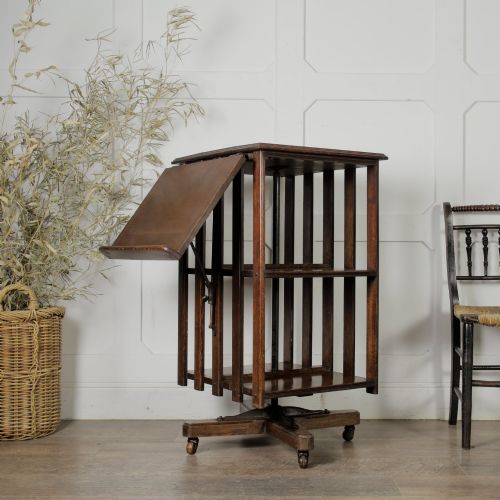
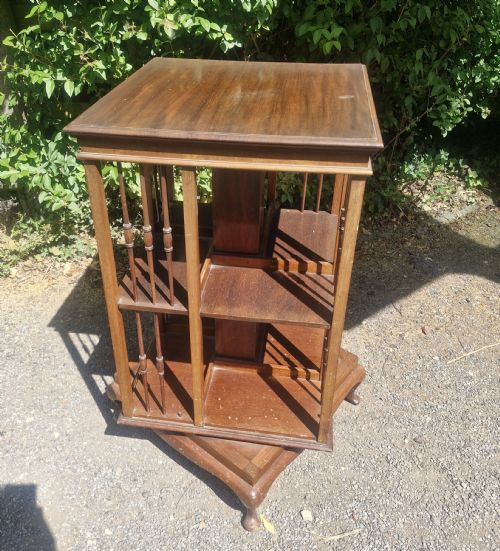
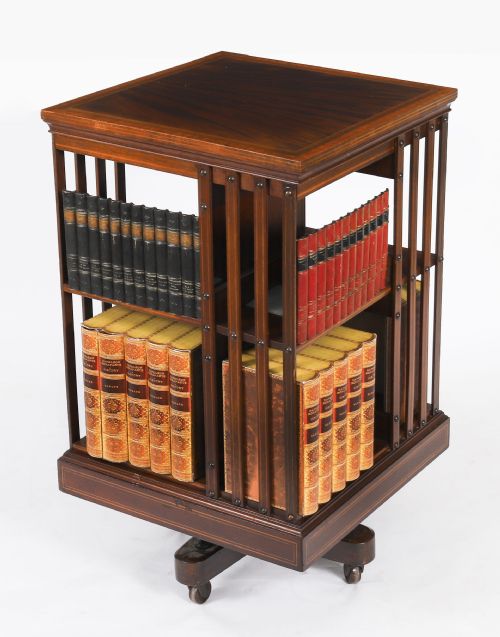
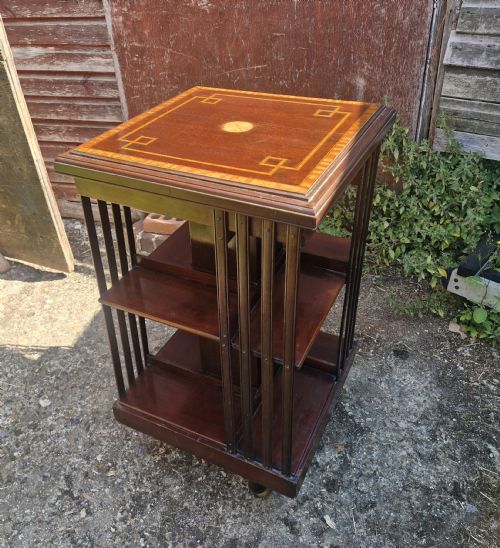





Revolving Book Carousel
A revolving book carousel brings books to hand with a simple spin, offering an elegant solution for organising volumes in a study or library.

Revolving Book Carousel
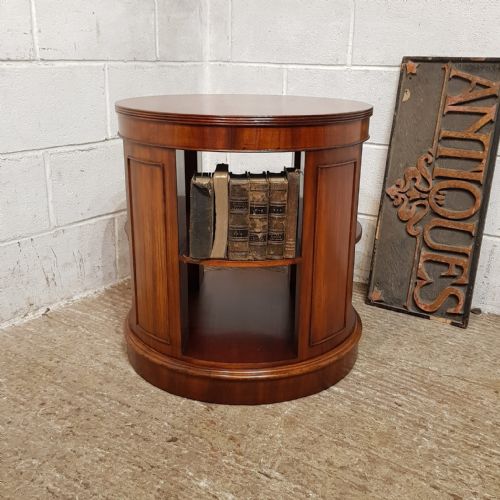
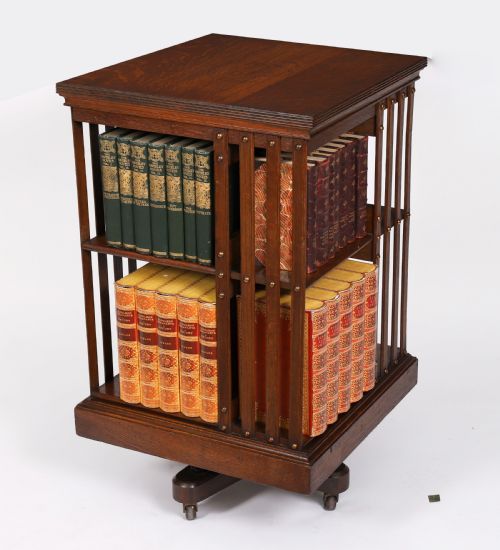
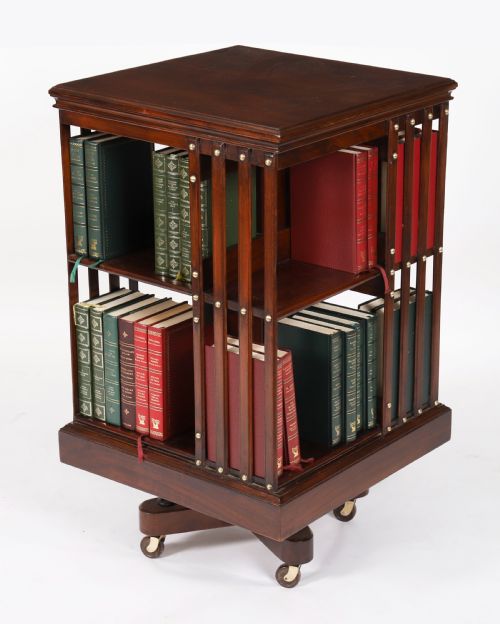
A revolving book carousel provides accessible shelving that turns smoothly on a central pivot, keeping a collection close at hand. These pieces appear in forms ranging from compact table top models to tall, multi-tiered floor-standing bookcases.
The selections span the Victorian, late Victorian, and Edwardian periods, alongside nineteenth-century examples. Oak and mahogany dominate the offerings, occasionally supplemented by walnut, satinwood, kingwood, and ormolu mounts.
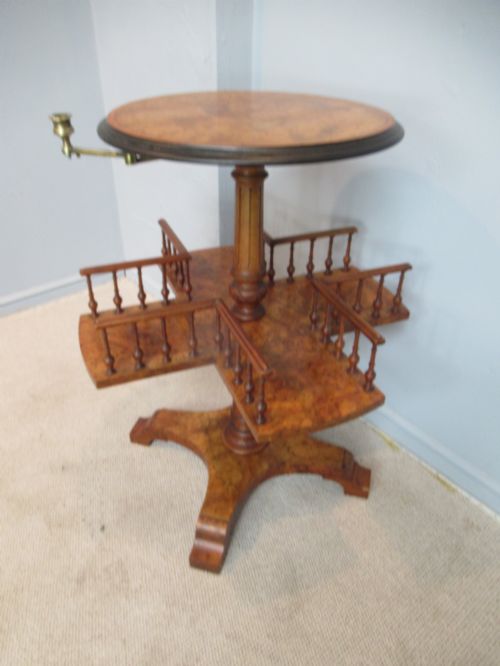
Designs stretch from plain, solid timber constructions to ornate variations featuring marquetry inlay, brass accents, and Arts & Crafts simplicity. Buyers frequently encounter round configurations alongside four-shelf formats and large, sturdy cabinets.
Distinctions in quality
Quality rests in the selection of timber figures, such as flame mahogany or burr walnut, and the precision of decorative inlay work. Finer examples display meticulous attention to detail in their brass mounts and overall proportions.
The internal revolving mechanism dictates daily performance, where superior engineering ensures a balanced, silent rotation without wobble. Maker attribution, such as pieces associated with Maple & Co or Heals, further elevates a piece within the range.
Some books turn with the grace of a sleepy carousel, letting you browse an entire library without moving an inch from your chair.
Maple & Co·Heals
The Revolving Book Carousel Glossary
- Flame mahogany
- A timber veneer displaying a distinct flame-like grain pattern. Cabinet makers used this decorative cut on prominent exterior panels to catch the light.
- Inlay
- A technique where contrasting materials are inserted into depressions within a solid wood base. This method created geometric or floral patterns across the surface.
- Ormolu
- Gilded bronze ornamentation applied to furniture. This finish added metallic contrast to rich wood surfaces.
- Pivot
- The central vertical axis upon which the shelving structure turns. It bore the weight of the entire bookcase during rotation.
- Arts & Crafts
- A design movement emphasising simple forms and honest construction. Pieces from this style avoided excessive ornamentation in favour of exposed grain and functional honesty.
Revolving Book Carousel: Frequently Asked Questions
How do I care for a revolving book carousel?
Keep the timber clean with a soft cloth and apply quality wax periodically to nourish the grain and protect the finish. Avoid placing the piece in direct sunlight or near heat sources to prevent the wood from drying out.
Periodically check the central mechanism underneath to ensure the rotation remains smooth. A light application of lubricant on the metal components can maintain effortless spinning.
Where should I place a revolving book carousel?
These pieces suit studies, libraries, and sitting rooms where books need to remain accessible from an armchair or desk. Floor-standing versions anchor a corner or sit beside a reading chair.
Table top models fit neatly on desks, side tables, or deep windowsills. Ensure adequate clearance around the entire circumference so the piece can rotate fully without obstruction.
How do I identify an Edwardian revolving bookcase?
Edwardian examples typically date from the early twentieth century and frequently feature lighter mahogany timbers, sometimes accented with satinwood inlay or crossbanding. The lines tend to be refined and less heavy than their Victorian predecessors.
Many incorporate classic Edwardian decorative motifs while retaining practical tiered shelving. Makers from this era, such as Heals, produced notable variations within these stylistic boundaries.
What is the difference between Victorian and Edwardian models?
Victorian models generally utilise heavier timbers like solid oak or dark mahogany with robust proportions and robust cast iron turning mechanisms. They often project a sturdier, more substantial presence in a room.
Edwardian versions lean towards lighter aesthetics, incorporating flame mahogany veneers, delicate stringing, and occasional Arts & Crafts simplicity. Both eras prioritize functional storage but express different prevailing design tastes.