


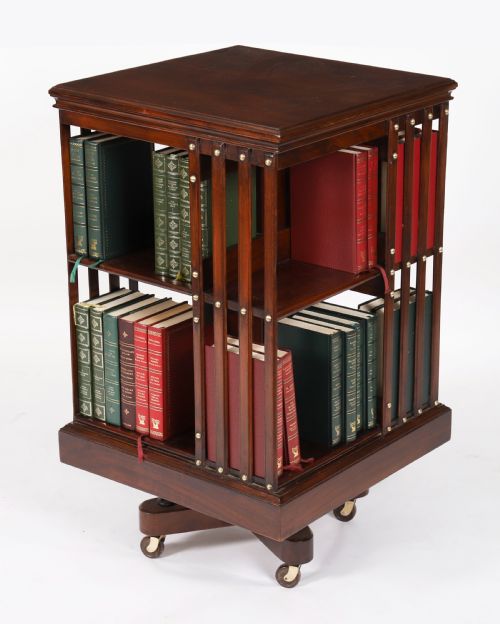


Antique Book Carousel Table
These revolving pieces of furniture bring accessible order to a collection of volumes.
Antique Book Carousel Table
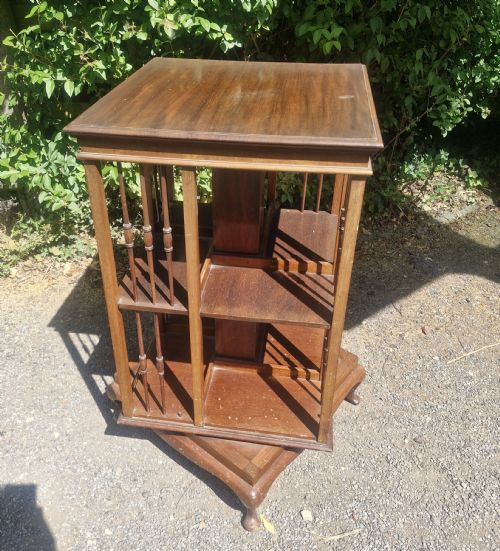
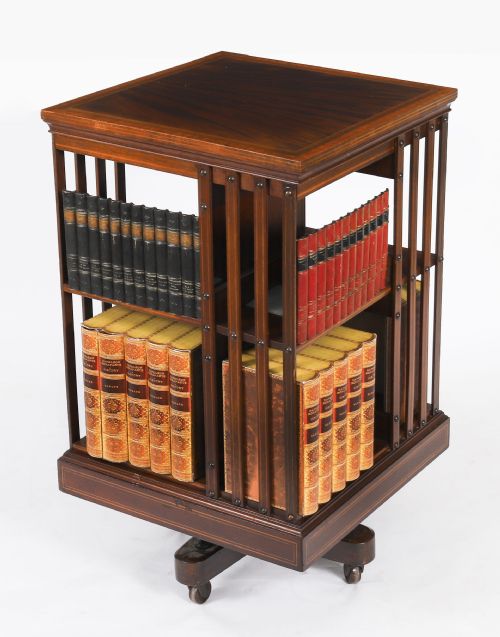
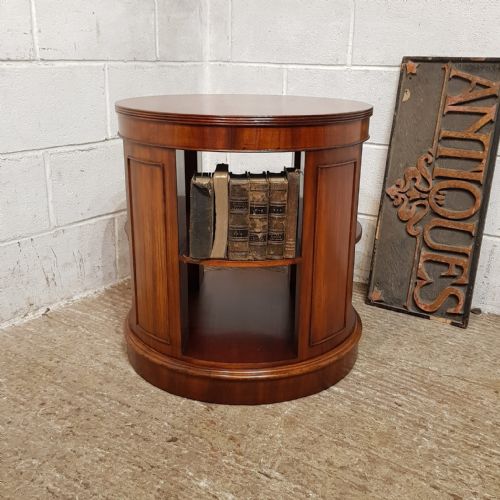
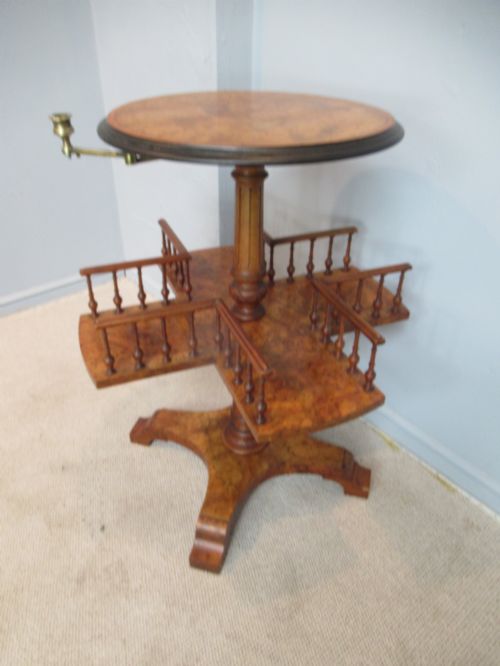
An antique book carousel table is a rotating stand designed to hold and display volumes within easy reach. These rotating pieces take the form of bookcases, bookcases, and book stands that sit upon a floor or a table.
Buyers meet examples shaped from periods spanning the Victorian era through the Edwardian years. The selection includes standard floor-standing models alongside smaller table top versions intended for compact spaces.
Origins represented in the current inventory point towards British craftsmanship, with particular regional examples such as Scottish pieces appearing among English workshops. Woods such as mahogany, oak, and walnut dominate the structural forms.
How they were made
Cabinet makers utilised dense hardwoods including mahogany, walnut, and oak to construct the main tiers and vertical partitions. These timbers were often selected for specific grain patterns, such as flame mahogany or burr walnut.
Decoration relied on contrasting veneers and inlays using satinwood, alongside structural elements formed from brass, iron, and ormolu mounts. Mechanisms beneath the tiers incorporated metal and brass components to ensure smooth rotation.
Some models feature clever little slats designed to stop your favourite novels from sliding off mid-spin.
What varies in quality
The sophistication of the timber selection dictates the visual weight of the piece, moving from plain surfaces to finely figured flame mahogany and burr walnut veneers. Subtle decorative details such as satinwood inlay and cast ormolu mounts elevate the finish.
Engineering of the internal revolving mechanism determines the physical operation, separating basic movement from frictionless rotation. Proportional harmony between table top variants and larger floor-standing editions also governs overall design success.
Maple & Co
The Antique Book Carousel Table Glossary
- Revolving bookcase
- A rotating tiered furniture piece designed to hold books vertically on multiple sides. It allows a user to access a library from a seated position without moving the furniture.
- Flame mahogany
- A veneer cut from the fork of a mahogany tree where the branch joins the trunk. This timber exhibits a distinctive, undulating pattern resembling flickering flames.
- Burr walnut
- Wood taken from a walnut tree growth featuring tightly clustered knot formations. It creates a highly decorative, mottled surface prized by cabinet makers.
- Satinwood
- A durable, yellowish wood utilised for contrasting stringing and geometric inlay work. It provides a bright visual accent against darker primary timbers.
- Ormolu
- Gilded bronze ornamentation applied to furniture for decorative effect. This technique was frequently employed on French-influenced pieces.
Antique Book Carousel Table: Frequently Asked Questions
Where were these placed?
These revolving stands sat beside reading chairs, beside desks, or upon library tables where immediate access to reference volumes was required.
Larger variations stood directly upon the floor in studies and libraries, while smaller versions rested upon existing surfaces to save floor space.
How do they turn?
An internal mechanism of wood and metal concealed beneath the tiers allows the upper structure to rotate smoothly on a central pivot.
This concealed engineering lets a reader access books on all four sides with a gentle push of the hand.
How do I date a piece?
Dating relies upon observing the combination of primary timber, secondary woods, construction methods, and decorative styles present in the piece.
Earlier Victorian examples often display heavier proportions and simpler joinery, whereas Edwardian pieces frequently incorporate delicate inlay work and lighter satinwood accents.
Are all models floor standing?
The inventory includes both substantial floor-standing bookcases and compact table top variations designed for smaller surfaces.
Both types serve the same revolving function but cater to different spatial requirements within a room.