



Lozenge Carved Coffer
These lozenge carved coffer examples are solid timber storage chests defined by geometric panel decoration, offering robust utility and centuries of domestic history.
Lozenge Carved Coffer
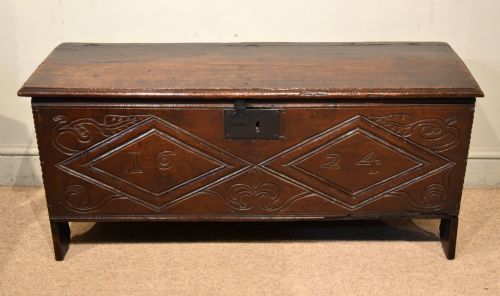
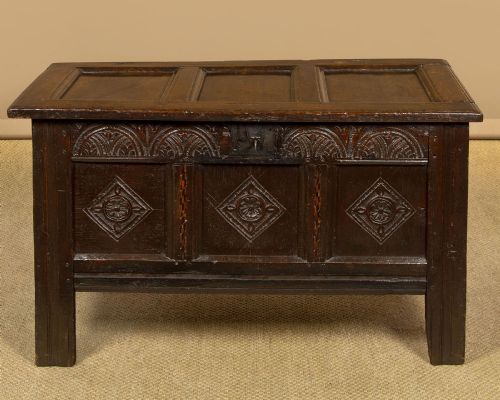
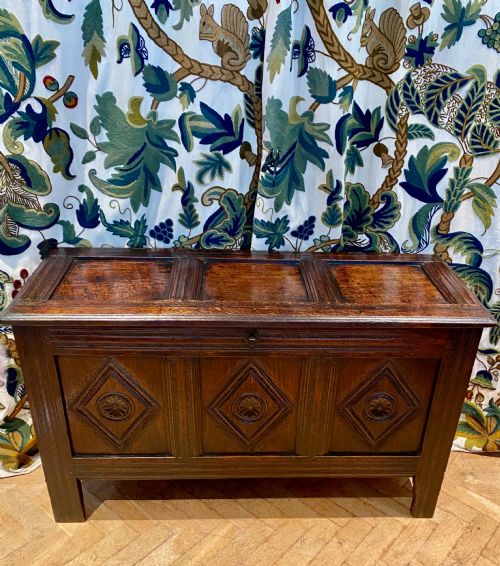
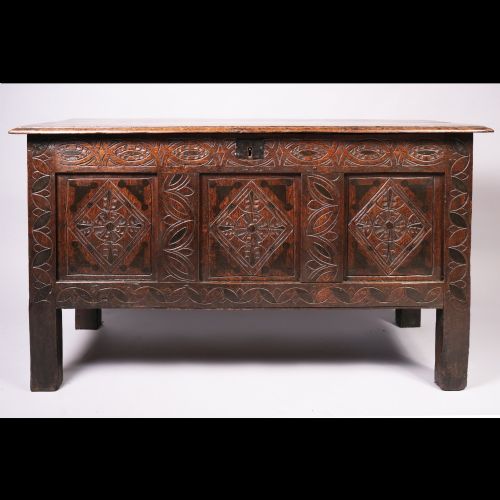
When you search for a lozenge carved coffer, you encounter heavy wooden storage chests predominantly originating from the seventeenth century, alongside nineteenth century revival interpretations. These pieces function as blanket chests and storage trunks, characterised by distinct geometric diamond motifs carved directly into the timber panels.
The pieces appearing on this page span several centuries, reaching from sixteenth century walnut examples through to eighteenth century pieces. Most frequently, buyers meet seventeenth century English oak variations, which display regional traits from areas such as Dorset, Yorkshire, and Wales.
Forms range from simple five plank constructions to sophisticated panelled chests featuring inlaid details, ebonised wood elements, and original carving. Alongside authentic period pieces, the selection includes nineteenth century revival items built in the earlier style.
Materials and construction methods
Makers relied primarily on native oak, supplemented by walnut, ebonised wood, and occasional iron or brass hardware for hinges and locks. Timber was worked using traditional hand tools, resulting in boarded five plank formats or frame and panel assemblies.
Carving and inlay techniques brought texture to the front panels, utilising gouges and chisels to cut geometric lozenges, leaf patterns, and strapwork directly into the dense grain. Iron fittings and hinges secured the lids, while pegged mortise and tenon joints held the structural frames together.
Lozenge Carved Coffer Retail Price Guide 2026
Typical asking prices for lozenge carved coffer among the pieces listed under this phrase on Sellingantiques today, from the lower quarter to the upper quarter. They describe what is for sale here now, not the wider market.
Some seventeenth century chests doubled as seating when the hall benches were full, meaning your blanket box spent centuries acting as a dining seat.
Assessing quality and authenticity
Distinction across these chests lies in the integrity of the timber, the crispness of the hand carving, and the survival of original components like hinges, boards, and feet. Pieces retaining their early surface patination and untouched construction details sit at the upper end of the scale.
The distinction between genuine seventeenth century examples and nineteenth century revival pieces influences the character of the chest. Original period carving displays the natural tool marks and wear patterns accumulated through centuries of domestic use.
The Lozenge Carved Coffer Glossary
- Lozenge
- A diamond shaped geometric figure frequently utilised in period wood carving. This motif forms the central decorative focus on the front panels of these chests.
- Cofer
- An alternative historical spelling for a large storage chest or trunk. These robust boxes served primarily for transporting and storing valuables, textiles, and household goods.
- Five plank coffer
- A simple early construction method utilising single planks of timber for the front, back, ends, and lid, joined directly at the corners. This format represents one of the earliest forms of box construction.
- Panelled coffer
- A chest built with a structural frame enclosing thinner wooden panels, allowing the timber to expand and contract with humidity changes. This technique prevented the splitting common in solid boarded construction.
- Jacobean
- The stylistic period spanning the reigns of James I and Charles I, corresponding to the early seventeenth century. Furniture from this era often exhibits dark oak surfaces and geometric ornamentation.
Lozenge Carved Coffer: Frequently Asked Questions
What is a lozenge carved coffer?
A lozenge carved coffer is a heavy wooden storage chest decorated with geometric diamond motifs across its front panels. These pieces served historically for keeping household textiles, valuables, and documents secure.
Makers constructed them predominantly in oak during the sixteenth and seventeenth centuries, though later revival periods also produced similar designs. They remain practical storage items that double as low tables or bench seating.
How old is my coffer?
Dating a chest involves examining the wood species, construction methods, tool marks, and hardware. Seventeenth century examples typically utilise pegged joinery and native oak, displaying natural wear and patination.
Revival pieces made in the nineteenth century often mimic earlier styles but reveal machine sawn timber, different fastening methods, or sharper, less weathered carving. Regional traits can also point toward specific decades or manufacturing origins.
Where were these chests made?
Surviving examples originate primarily from English workshops, with specific regional styles documented in areas such as Dorset, Yorkshire, and Wales. Local joiners utilised accessible regional timbers like oak and walnut.
Trade and migration spread similar construction techniques across Britain, leading to shared design characteristics while retaining distinct local carving patterns.
How do I care for antique oak?
Maintaining these wooden chests requires placing them away from direct heat sources and strong sunlight, which can dry out and split the ancient timber. Stable indoor humidity prevents the wood from warping.
Applying a traditional beeswax polish occasionally helps nourish the surface and preserve the historic patination without damaging the grain.