



Low Walnut Sideboard
When you want a low walnut sideboard, you are looking for a grounded cabinet that brings figured timber and practical storage into a room.
Low Walnut Sideboard
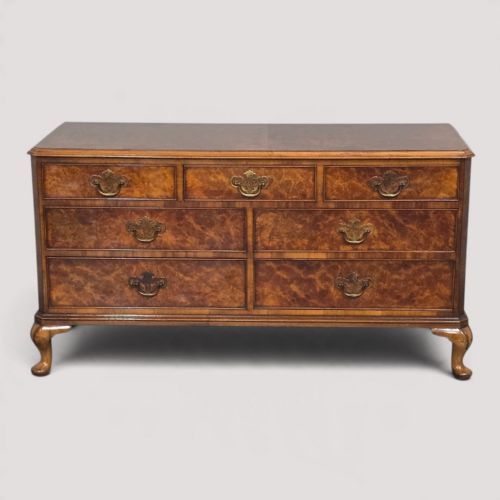
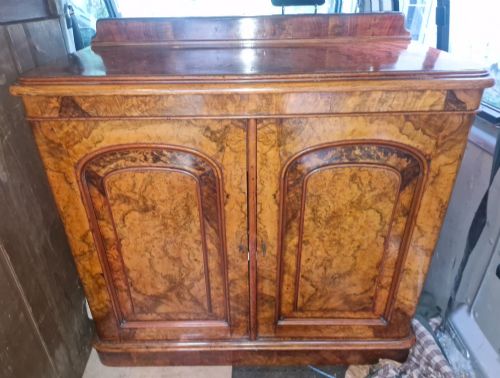
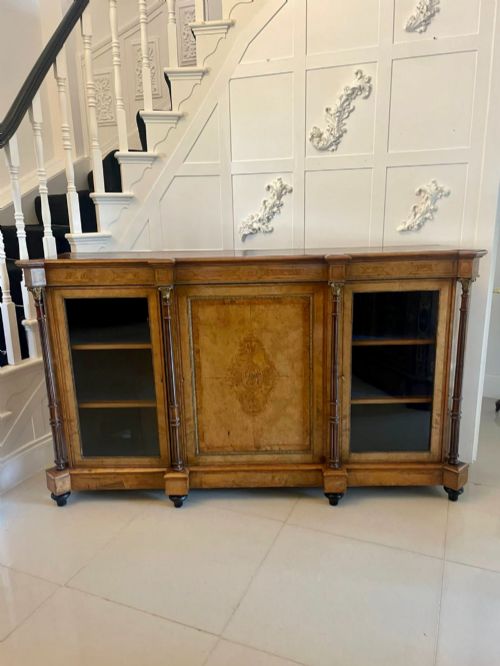
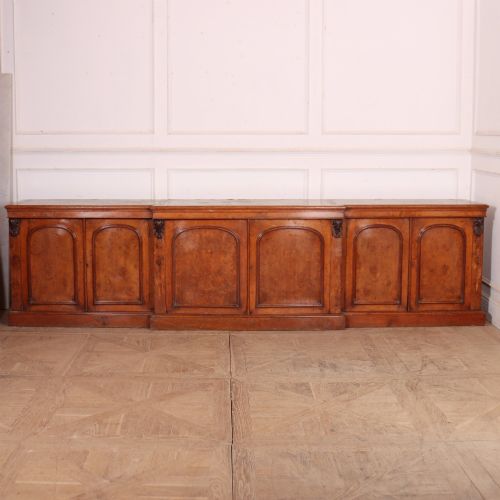
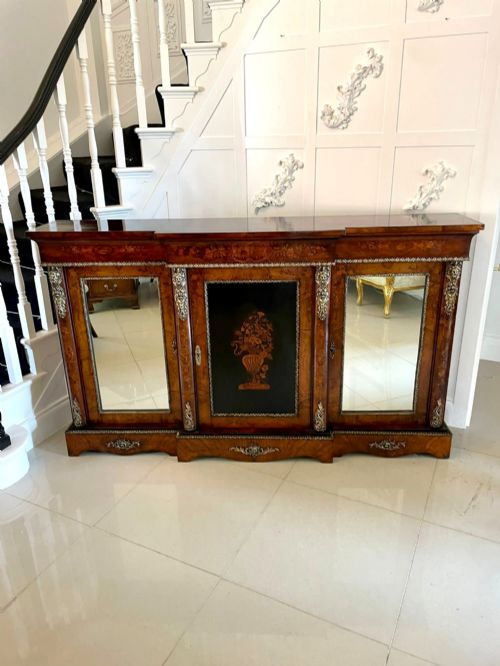
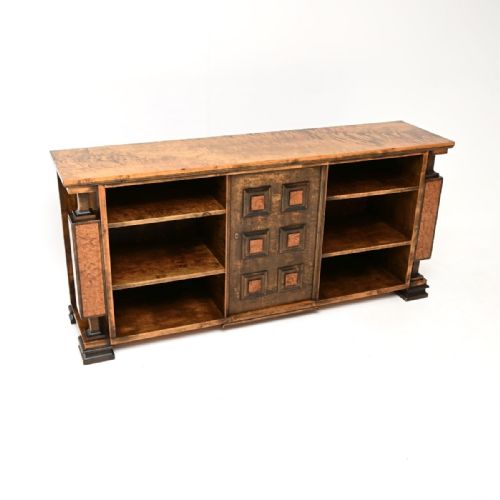
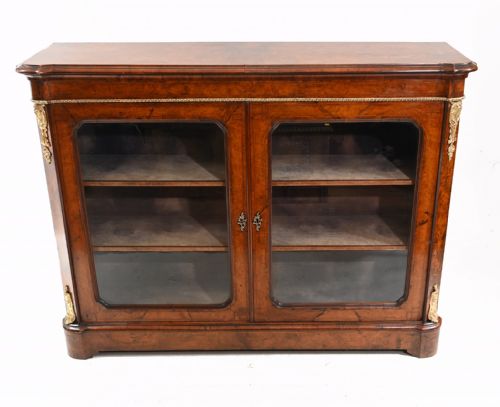
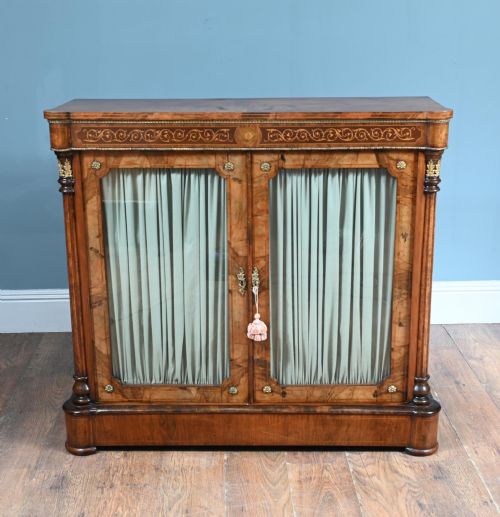
A low walnut sideboard brings together low-slung timber storage forms, ranging from Victorian credenzas and side cabinets to 1920s Queen Anne style cupboards and Art Deco cabinets. These pieces often combine walnut or burr walnut with brass, glass, and wood inlay, offering surface display alongside enclosed shelving.
You will encounter various interpretations under this heading, including breakfront bookcases, pier cabinets, and dresser bases from the nineteenth and twentieth centuries. The common thread is a reduced height combined with the rich grain of walnut.
Materials and construction methods
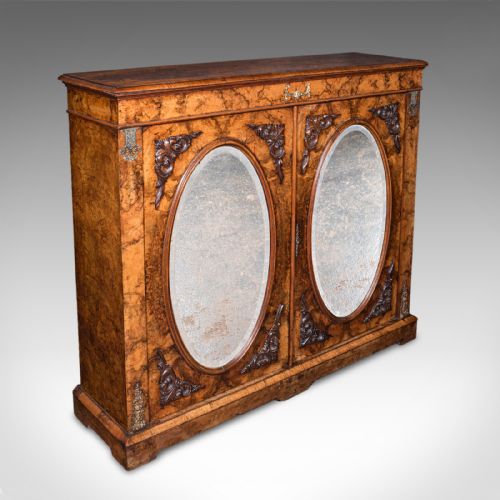
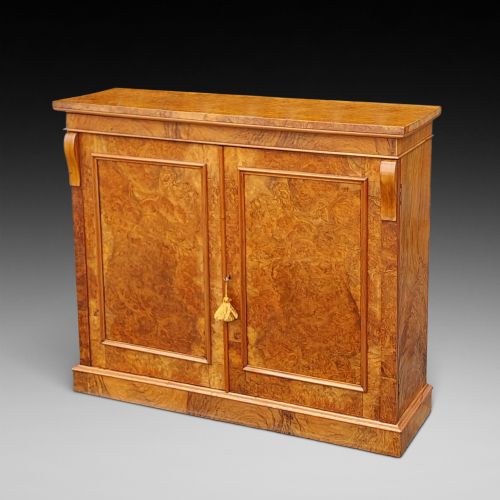
Cabinet makers utilised solid walnut and decorative burr walnut veneers over secondary timbers such as oak, often applying intricate wood inlay and marquetry to the surfaces. Metal mounts in brass and ormolu add detail to doors and uprights, while glass panels appear in bookcases and display cabinets.
Construction relies on traditional joinery paired with decorative techniques like veneer matching to highlight the natural figuration of the wood. Marble tops also feature on select side cabinets from the mid nineteenth century.
Low Walnut Sideboard Retail Price Guide 2026
Typical asking prices for low walnut sideboard among the pieces listed under this phrase on Sellingantiques today, from the lower quarter to the upper quarter. They describe what is for sale here now, not the wider market.
Some nineteenth-century cabinets hide their contents behind mirrored fronts designed to bounce morning light across the room.
What distinguishes finer pieces
The distinction between standard examples and finer pieces lies in the selection of the burr walnut veneer and the precision of the marquetry work. Elaborate brass or ormolu mounts and carefully fitted interiors indicate a higher level of workshop execution.
Proportion and the integration of secondary timbers like amboyna or satin birch further separate ambitious cabinet work from simpler utility pieces.
Whytock and Reid of Edinburgh·The Bowman Brothers
The Low Walnut Sideboard Glossary
- Burr walnut
- A veneer taken from the gnarled growth of a walnut tree, prized for its swirling, highly figured grain patterns. It forms the primary decorative surface on many Victorian and twentieth-century cabinets.
- Credenza
- A low dining or salon cabinet, frequently fitted with glass doors and inlaid panels. In nineteenth-century examples, it serves both display and storage functions.
- Marquetry
- The art of applying pieces of veneer to a structure to form decorative patterns and pictures. Craftsmen utilise different coloured woods to achieve tonal contrast.
- Pier cabinet
- A narrow display cabinet designed to sit against the wall space between windows. These pieces often feature glass doors and internal shelving.
- Breakfront
- A cabinet design where the central section projects forward from the flanking outer sections. This architectural arrangement creates depth and shadow across the front elevation.
Low Walnut Sideboard: Frequently Asked Questions
What is a low walnut sideboard?
A low walnut sideboard is a compact storage cabinet featuring walnut timber, designed to hold dining items, books, or display pieces without dominating the room's vertical space.
These pieces span various eras, from nineteenth-century Victorian credenzas to twentieth-century Art Deco cabinets, all sharing a subdued height and figured wood grain.
How do I style a low walnut sideboard?
You can place a low walnut sideboard against a living room or dining room wall to anchor lamps, mirrors, or ceramics on the surface above.
The low profile keeps sightlines open while the interior cupboards provide concealed storage for everyday objects.
How do I tell Victorian from Art Deco walnut pieces?
Victorian walnut cabinets often display rich marquetry, burr veneers, and ornamental brass or ormolu mounts reflecting historic revival styles.
Art Deco pieces favour cleaner geometric lines, streamlined surfaces, and contrasting woods like satin birch without heavy historical ornamentation.
What is burr walnut veneer?
Burr walnut veneer is a thin slice of wood cut from the deformed growth or burl on a walnut tree, producing complex, swirling patterns.
Cabinet makers apply these figured sheets to the main doors and drawer fronts to create a striking visual texture.