
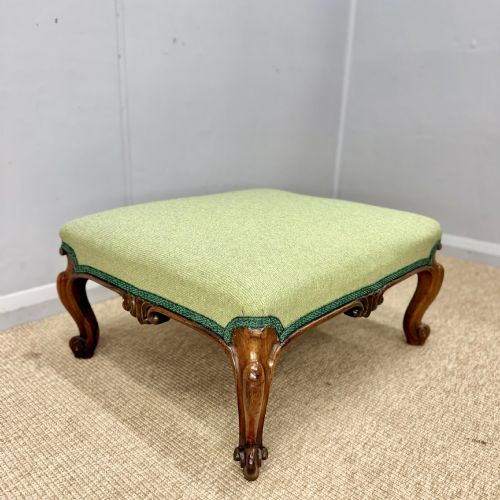


Low Upholstered Pouffe
A low upholstered pouffe provides a comfortable resting place for tired feet, combining practical support with period craftsmanship.
Low Upholstered Pouffe
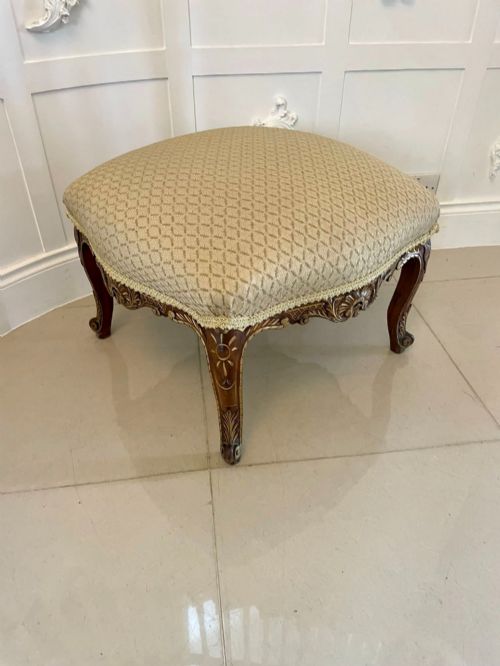
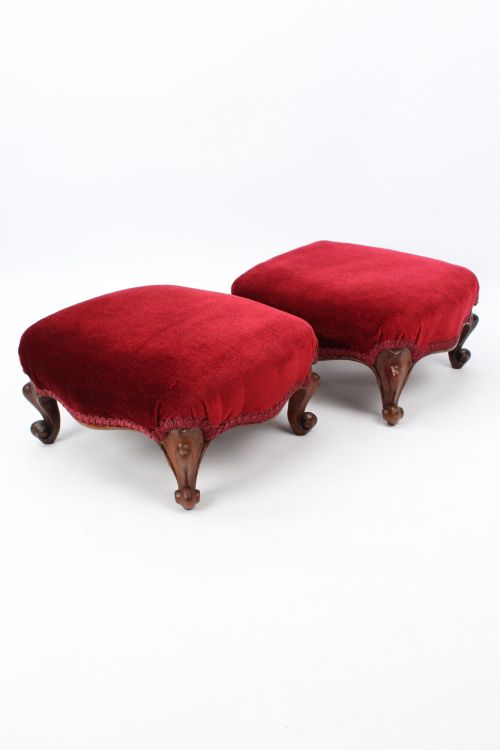
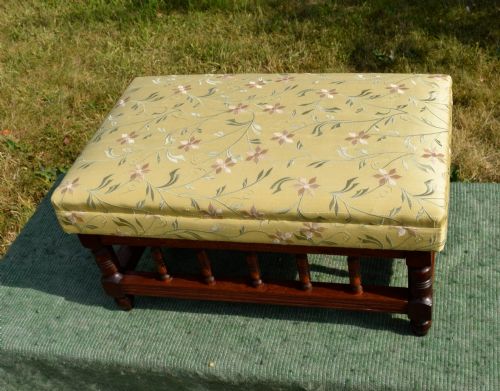
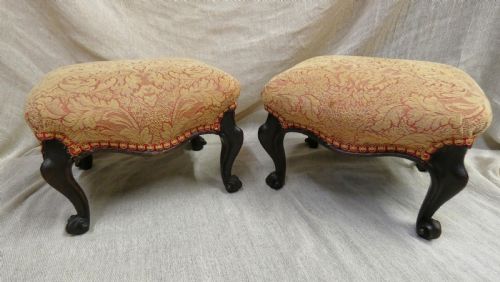
A low upholstered pouffe takes the form of a small footstool, ottoman, or fireside seat designed for domestic comfort. These pieces appear frequently in Victorian, Georgian, and early twentieth-century designs.
The selection here encompasses various regional and stylistic influences, ranging from French nineteenth-century models to carved Anglo-Indian examples. Buyers encounter square, oval, and rectangular silhouettes suited to traditional sitting rooms.
Materials and construction
Frames rely on dense timbers such as mahogany, walnut, rosewood, oak, and hardwood, providing a sturdy architectural foundation. Master joiners often applied intricate carving to the exposed wooden elements, including cabriole legs and gilded details.
Upholstery techniques involved durable textiles, fabric, leather, and traditional stuffing methods secured over sturdy wooden bases. Many pieces feature newly applied fabric or retain older textile layers that reflect the period of manufacture.
Listings feature periods spanning from the Georgian era through Victorian times up to nineteen twenty.
Assessing craftsmanship and condition
Quality reveals itself in the rigidity of the timber frame and the depth of hand-carved detailing on the wood. Superior examples demonstrate tight joinery and carefully selected hardwoods like figured rosewood or walnut.
The standard of the upholstery work and the choice of textile also determine the overall merit of the piece. Well-executed revival styles and robust structural integrity distinguish the finer items from simpler utilitarian stools.
Whytock and Reid
The Low Upholstered Pouffe Glossary
- Cabriole leg
- A furniture leg that curves outward and then tapers inward, mimicking an animal's limb. This design appeared frequently on nineteenth-century seating.
- Ottoman
- A low cushioned seat or footstool without arms or a back. These forms provide ample surface area for resting feet.
- Revival
- A stylistic movement where furniture makers copied earlier historical periods, such as Jacobean or Queen Anne. These pieces combine past aesthetics with contemporary manufacturing dates.
- Anglo-Indian
- A descriptive term for furniture made in India during the British colonial period, often featuring dense carving on exotic hardwoods like rosewood.
Low Upholstered Pouffe: Frequently Asked Questions
What is a low upholstered pouffe used for?
These low seats function primarily as footstools or fireside ottomans to support the legs while relaxing in an armchair. They also serve as flexible auxiliary seating in compact spaces.
Their modest height ensures they tuck easily beneath tables or sit neatly beside hearths without obstructing movement through a room.
How do I identify a Victorian footstool?
Victorian examples frequently utilise dark dense timbers such as rosewood, walnut, or mahogany paired with elaborate carvings. Look for characteristic stylistic flourishes like cabriole legs or gilt accents.
Many of these pieces bear the hallmarks of nineteenth-century upholstery techniques, though subsequent re-covering is common.
Can I use these stools daily?
Most antique footstools and ottomans feature robust hardwood frames built for regular domestic use. Checking the stability of the joints ensures the piece handles everyday seating demands.
Modern placement requires consideration of the textile durability, especially if homes include pets or high foot traffic.
What distinguishes Anglo-Indian footstools?
Anglo-Indian pieces stand out through intricate, dense hand-carving applied across tropical timbers like rosewood and hardwood. These items reflect colonial craftsmanship from the nineteenth century.
Their distinctive decorative motifs separate them clearly from standard English cabinetmaker production of the same era.