
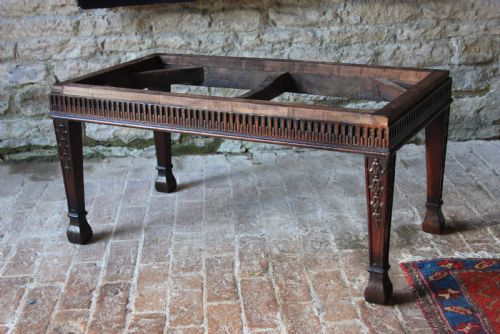


Dark Wood Foot Stool
These dark wood foot stool pieces combine sturdy timbers and soft upholstery to anchor a room.
Dark Wood Foot Stool
A dark wood foot stool brings traditional seating forms into modern spaces through low frames designed to support feet or serve as auxiliary seats. The selection spans periods from the mid eighteenth century through to the early twentieth century, taking shapes such as piano stools, dressing stools, swivel models and revolving grotto forms.
Buyers meet examples shaped by distinct regional and historical hands, including Georgian and Regency pieces alongside Victorian designs, Edwardian creations, and Anglo Indian items. Frames take square, X framed and long configurations, resting low to the floor in timber such as mahogany, rosewood, oak and hardwood.
Origin details reveal work from Irish, French and Canadian workshops alongside standard British domestic output. The range includes simple upholstered dressing variants and elaborate swivel top adjustable pieces with carved woodwork.
How they were made
Maker construction relies on dense dark timbers like mahogany, rosewood, oak and hardwood, shaped into frames through turning, carving and joinery. Solid wood provides the structural integrity for legs, sabre forms, X frames and revolving mechanisms.
Upholstery completes the top surfaces using fabric, wool, velvet and antique tapestry. These soft materials are secured over padding to offer cushioned support for feet and seats.
Turn your hand to a revolving grotto stool when standard seating lacks the theatrical flair of nineteenth century carving.
What varies in quality
Differentiation in quality stems from the ambition of the carving and the complexity of the frame construction, such as the precision found in revolving mechanisms and adjustable swivel tops. Simple turned legs contrast with deep hand carved detail seen on grotto stools and Anglo Indian imports.
The choice of primary timber shifts the character of the piece, with dense rosewood and figured mahogany sitting above basic hardwood. The integrity of the original upholstery and the crispness of the timber joinery dictate the standing of each example.
The Dark Wood Foot Stool Glossary
- X framed stool
- A seating form featuring intersecting diagonal members that cross beneath the seat to form an X shape. This structural arrangement adds stability and visual weight.
- Swivel top
- A mechanical arrangement allowing the upper seat portion to rotate independently of the base. This feature appears on adjustable piano stools.
- Anglo Indian
- A designation for items made in the Indian subcontinent under British colonial influence, typically featuring dense hardwoods and intricate carved decoration.
- Regency
- A stylistic period spanning the early nineteenth century defined by classical restraint, sabre legs and refined proportions derived from Greek and Roman precedents.
Dark Wood Foot Stool: Frequently Asked Questions
What is a dark wood foot stool used for?
These low timber pieces serve primarily to support feet while sitting in armchairs or by firesides. Many variants double as piano stools or dressing stools.
Their compact size permits placement beneath desks or beside seating groups when not actively supporting legs.
How do I identify a Georgian dark wood foot stool?
Georgian pieces display the proportion and timber choices typical of the eighteenth century, often utilising mahogany with restrained carving. They avoid the heavier ornamentation found in later Victorian iterations.
Legs often terminate in simple pad or claw feet that reflect the furniture conventions of the period.
What timber is used in these stools?
Makers relied heavily on dense dark woods such as mahogany and rosewood for their strength and rich grain. Oak and general hardwood also appear across the selection.
These timbers provide the necessary structural rigidity to support weight while accepting fine hand carving.
How do I care for antique upholstery?
Protect antique fabric, wool and velvet surfaces from direct sunlight to prevent fading of the textile colours. Gentle brushing removes surface dust without harming the pile or weave.
Avoid liquid cleaners on vintage textiles to preserve the original fibres and padding beneath.