




Late Victorian Footstool
These late victorian footstool pieces bring genuine period character to a room, offering sturdy low seating and footrests crafted in various historic revival styles.
Late Victorian Footstool
A late victorian footstool brings solid timber construction and traditional upholstery into the home, drawing on design influences from earlier centuries. When searching for a late victorian footstool, buyers encounter diverse forms ranging from simple occasional stools to elaborately carved examples with specific regional or stylistic traits.
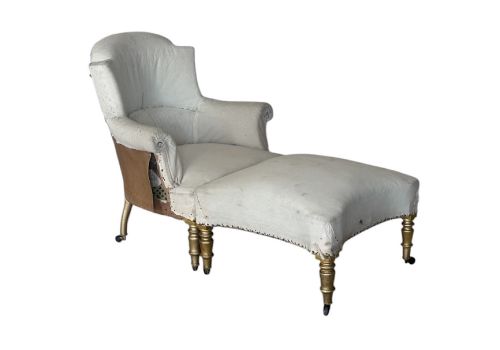
The pieces listed here span the nineteenth century, utilising woods like walnut, mahogany, teak, burr yew, and hardwood alongside brass accents and various textiles. Forms include rectangular stools, rocking gout stools, and matching pieces associated with larger seating arrangements.
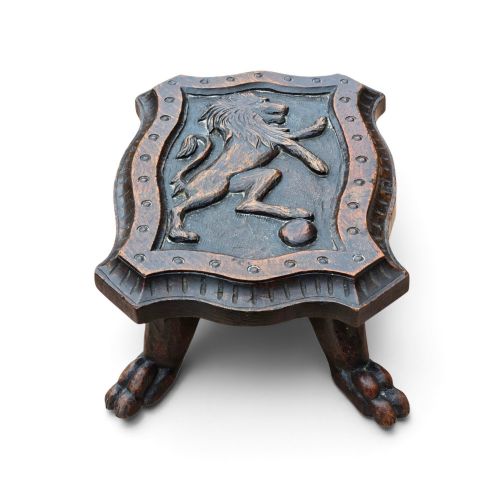
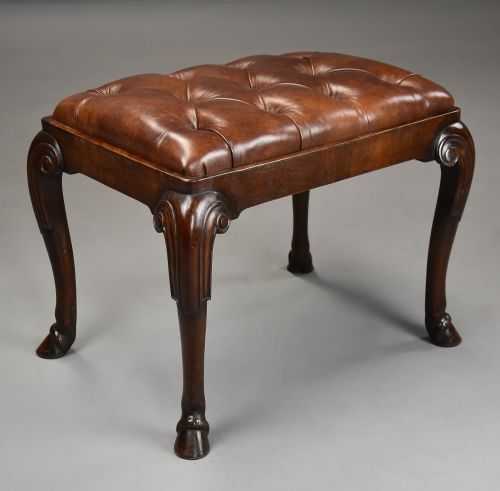
Stylistic influences vary widely across the selection, encompassing Anglo-Indian carving, Gothic Revival designs, and revivals of Queen Anne and George II periods. Buyers find both compact occasional items and substantial carved pieces bearing detailed motifs such as heraldic lions and claw-and-ball feet.
How they were made
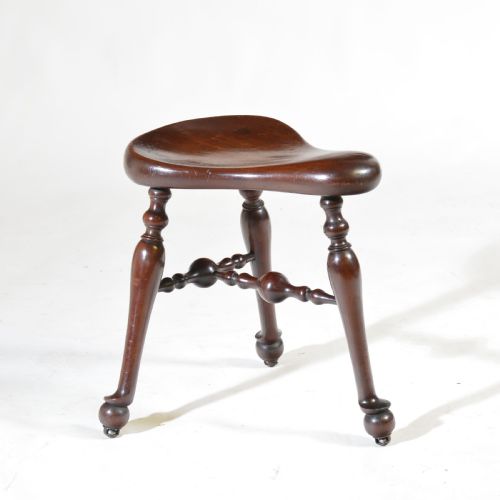
Construction relies upon traditional timbers such as mahogany, walnut, and teak, shaped into cabriole or straight legs and sturdy frames. Skilled joinery secures the joints, while specific pieces incorporate carved details executed directly into the hardwood.
Upholstery utilises durable fabrics, leather, woven rattan, and damask to cover the seating surfaces. Brass components and giltwood finishes provide structural or decorative highlights on select frames.
Listings feature woods including walnut, mahogany, teak, burr yew, and hardwood alongside brass, leather, and woven rattan.
What varies in quality
The distinction between standard examples and finer pieces lies in the depth and crispness of the wood carving. Elaborate detailing, such as heraldic motifs or well-defined cabriole legs with claw-and-ball feet, elevates a piece above simpler forms.
The choice of materials and the execution of the upholstery also separate grade levels, with select timbers like burr yew and fine damask covers marking out superior examples.
James Shoolbred
The Late Victorian Footstool Glossary
- Cabriole leg
- A furniture leg that curves out and then in, resembling an animal's leg. This form appears frequently on pieces influenced by earlier eighteenth-century styles.
- Claw-and-ball foot
- A furniture foot carved to represent a bird's talon gripping a ball. It is commonly found on quality revival pieces from this era.
- Damask
- A reversible figured fabric woven on a jacquard loom. It provides a formal, patterned upholstery finish for traditional seating.
- Giltwood
- Wood that has been treated with gold leaf or gilt powder. It adds decorative brightness to the frames of specific footstools.
- Gout stool
- A specialised low stool designed to support the feet of someone suffering from gout. These items often feature rocking mechanisms for added comfort.
Late Victorian Footstool: Frequently Asked Questions
What is a gout stool?
A gout stool is a specialised low rest designed to elevate and support the feet. Many versions incorporate a rocking mechanism to ease discomfort.
These pieces reflect practical nineteenth-century health requirements while maintaining the decorative woodwork of the period.
How do I identify revival styles?
Revival styles borrow specific decorative vocabulary from earlier periods like the reign of Queen Anne or George II. Look at the leg shape, carving motifs, and overall silhouette for clues.
Late nineteenth-century makers frequently reinterpreted these historic designs using contemporary timbers and construction methods.
Are these stools comfortable?
Comfort depends largely on the upholstery materials and the original padding used within the seat structure. Fabric, leather, and damask covers provide differing tactile qualities.
Most pieces are designed primarily for resting feet or for brief, occasional seating rather than prolonged lounging.