
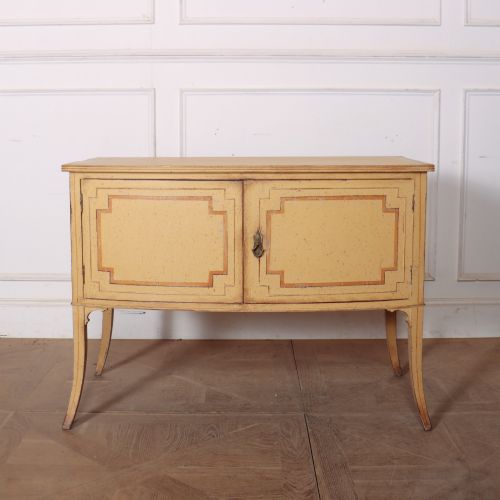
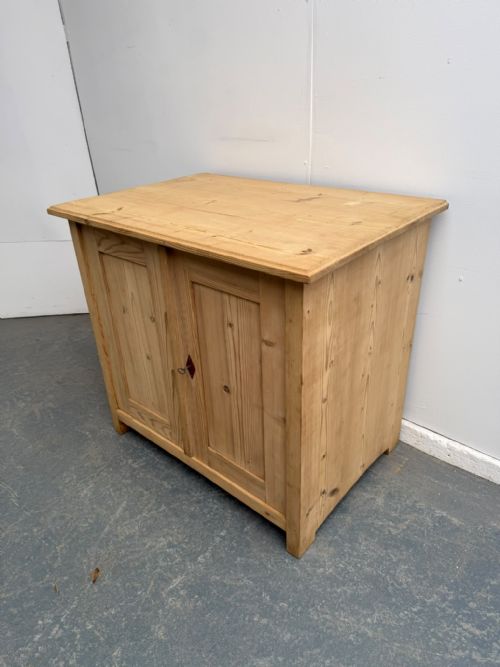
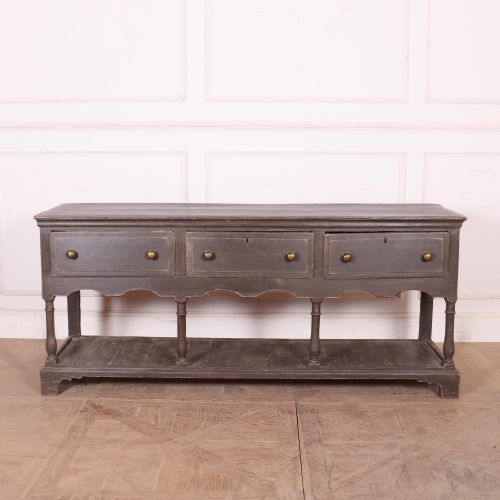
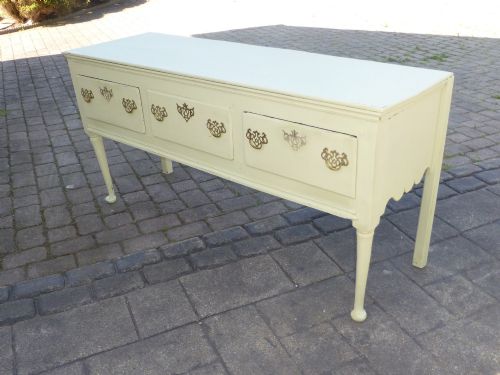
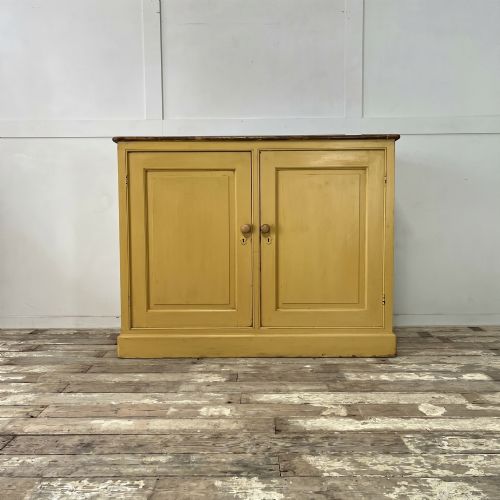
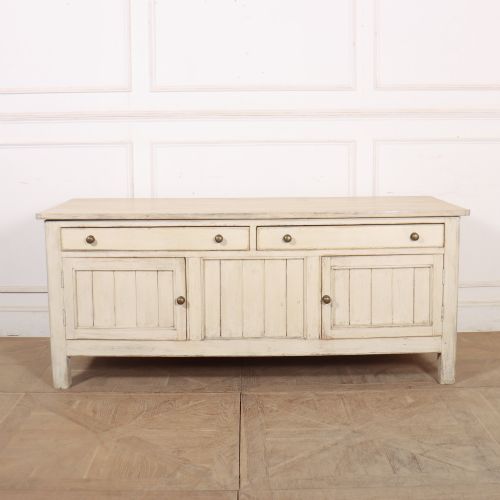


Low Painted Sideboard
A low painted sideboard gives a room grounded, practical storage with the honest charm of vernacular woodwork.
Low Painted Sideboard
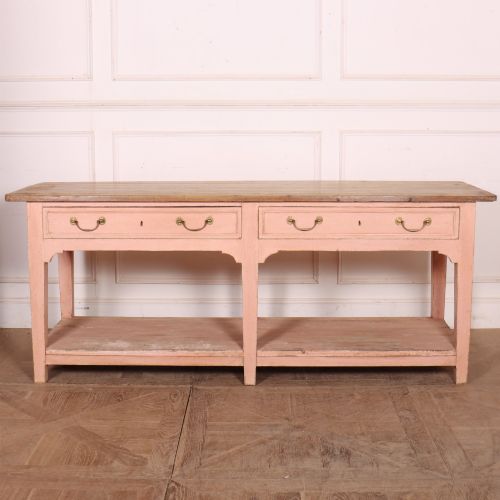
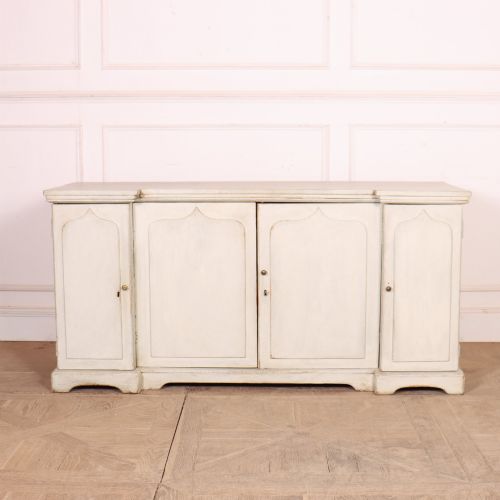
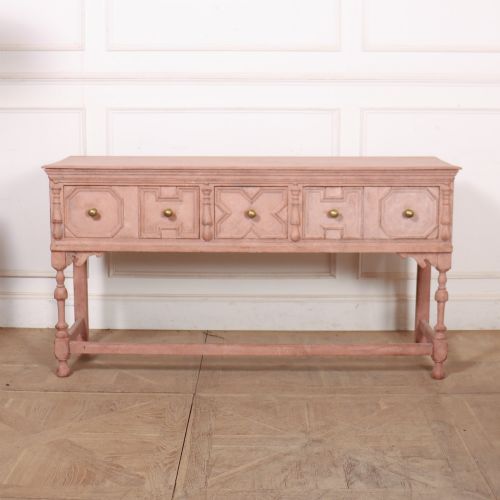
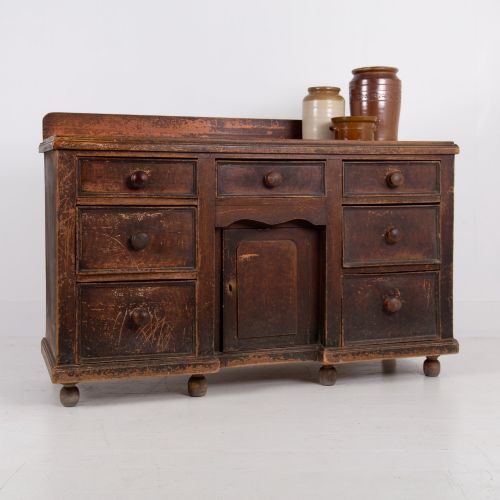
A low painted sideboard is a functional storage piece originating from country houses and domestic kitchens, designed to hold daily wares while keeping a low profile against a wall. The pieces answering this description on this page span the eighteenth and nineteenth centuries, taking forms such as dresser bases, potboards, and kitchen cupboards.
Most examples you encounter here are constructed from timber such as pine and oak, bearing layers of historic or original paint that reflect English, Scottish, and Swedish country traditions. These sturdy items served working domestic roles long before entering modern homes as decorative furniture.
How they were made
Makers built these pieces using solid timbers like pine and oak, relying on traditional joinery suited to heavy daily use in kitchens and dairies. Structural elements often incorporated iron or brass fixings for hinges and handles.
Surfaces were finished with paint applied directly to wood or timber, sometimes left in original layers or stripped and rewaxed by later generations.
Regional styles represented include English country, Scottish dairy, and Swedish vernacular traditions.
What varies in quality
Quality rests in the integrity of the timber and the survival of original surface finishes, where untouched historic paint elevates a piece above later decorative coats. Proportion and scale also dictate worth, as lower, wider storage cupboards command particular attention for domestic placement.
The sophistication of the joinery and the restraint of regional styling distinguish simple utilitarian items from finer country house examples, though both share an inherent robustness.
The Low Painted Sideboard Glossary
- Dresser base
- The lower section of a kitchen dresser, featuring cupboards or drawers without the upper plate racks. These low units function independently as sideboards.
- Potboard
- An open slatted lower shelf beneath a dresser base or sideboard, traditionally used for storing heavy pots and pans. This feature is common in country vernacular furniture.
- Breakfront
- A cabinet design where the central section projects forward from the flanking outer sections. This architectural form adds depth to side cabinets and bookcases.
Low Painted Sideboard: Frequently Asked Questions
Where were low painted sideboards used?
These pieces primarily served in country kitchens, dairies, and dining rooms to store tableware, dry goods, and culinary equipment.
Their sturdy construction suited busy domestic environments where surfaces endured daily preparation tasks.
How do I care for painted wood?
Protect historic painted surfaces from direct sunlight and excessive moisture to prevent flaking or fading over time.
Dust gently with a dry cloth and avoid harsh chemical cleaners that might strip the original pigment.
What is a potboard base?
A potboard base includes an open lower shelf built close to the floor for storing heavy kitchen utensils.
This open tier distinguishes traditional country dresser bases from enclosed sideboards.
Are these pieces from the eighteenth century?
The selection includes items dating from the eighteenth century through to the early twentieth century, spanning Georgian and Victorian periods.
Construction details and regional styles help identify the specific era of each cabinet.