


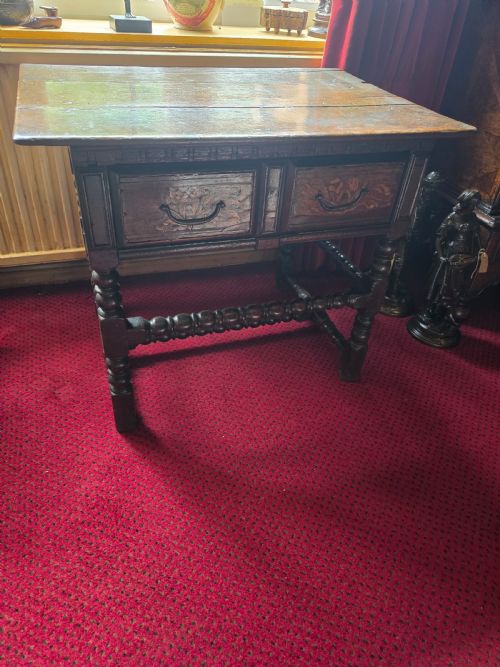

Low Oak Dresser Table
A low oak dresser table provides sturdy kitchen and dining storage across centuries of English and Welsh craftsmanship.
Low Oak Dresser Table
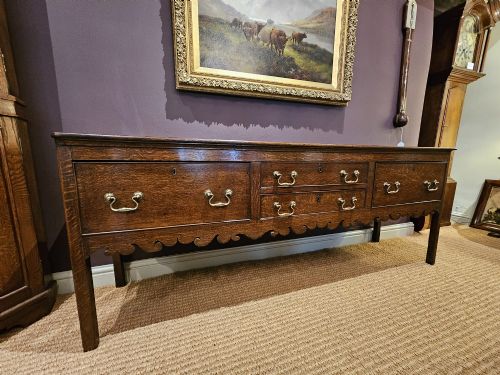
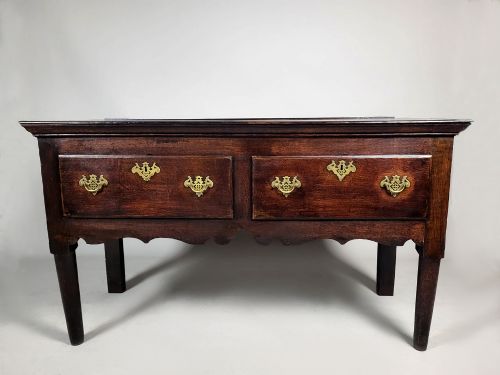
A low oak dresser table is a heavy serving or storage surface typically fitted with drawers along the front. When buyers search for a low oak dresser table, they encounter items originating from the seventeenth, eighteenth and nineteenth centuries.
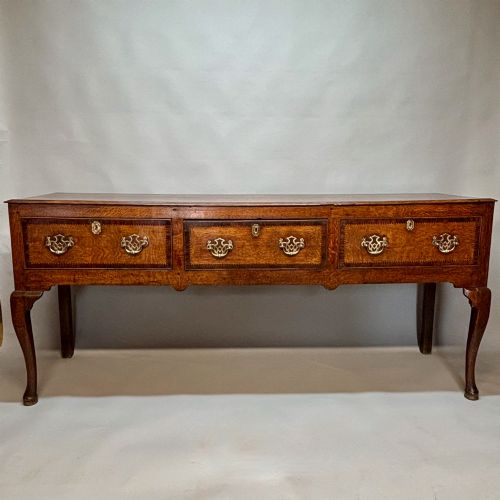
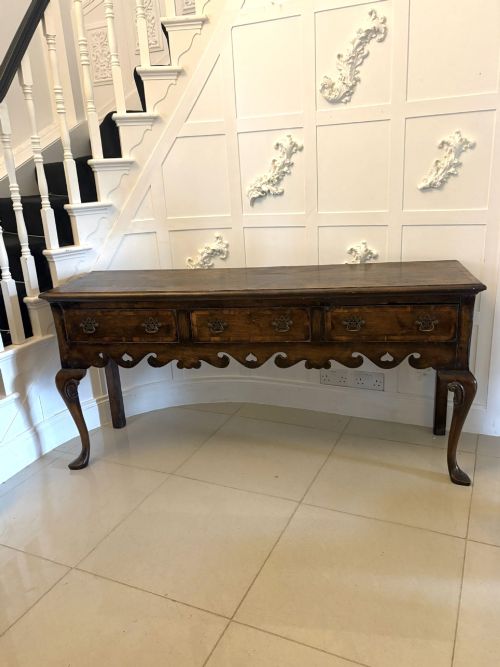
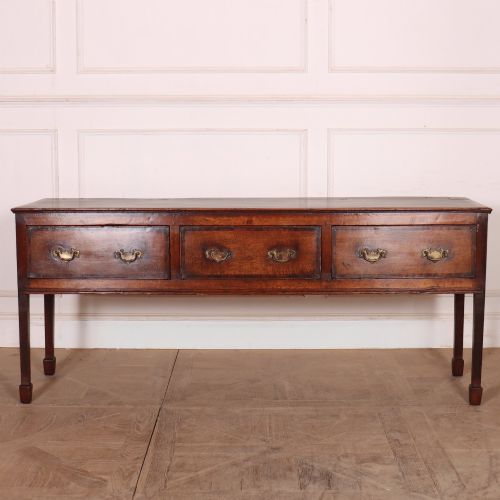
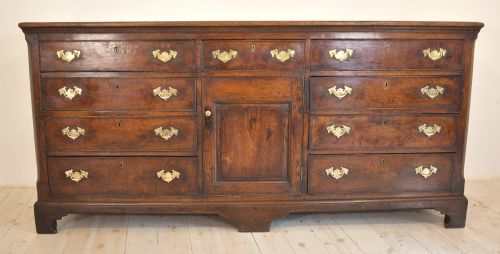
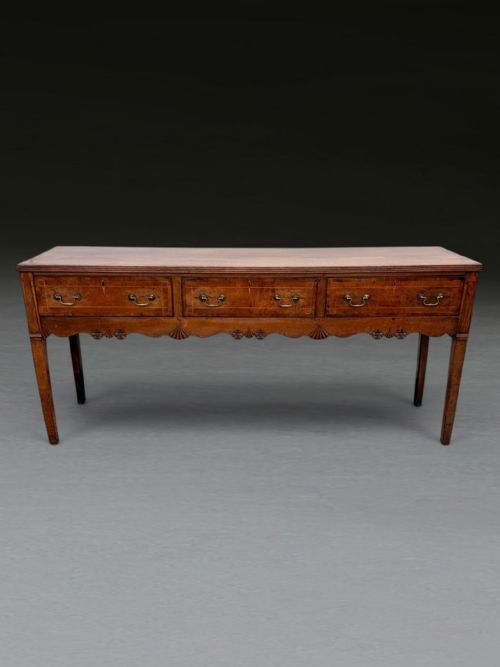
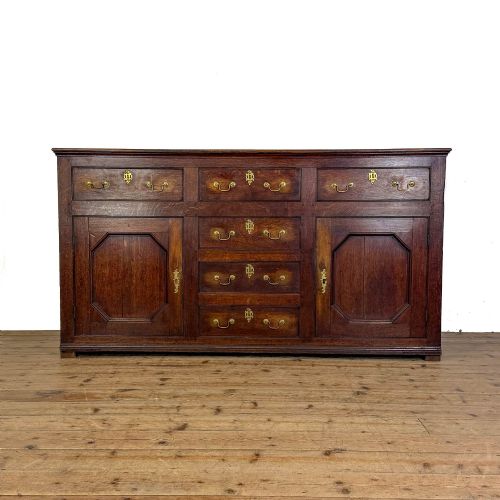
Most examples found here take the form of dresser bases, sideboards, potboard dressers, or side tables. The majority date to the Georgian period or the eighteenth century, with additional examples spanning the seventeenth and nineteenth centuries.
Regional variations appear frequently in the listings, including Welsh and Lancashire forms. These tables often combine solid timber construction with functional drawer arrangements and lower potboards for display.
What varies in quality
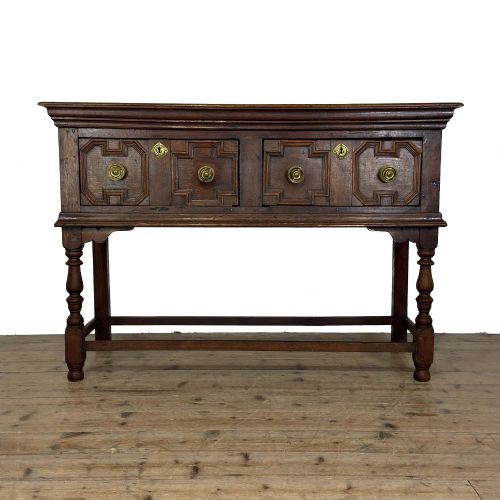
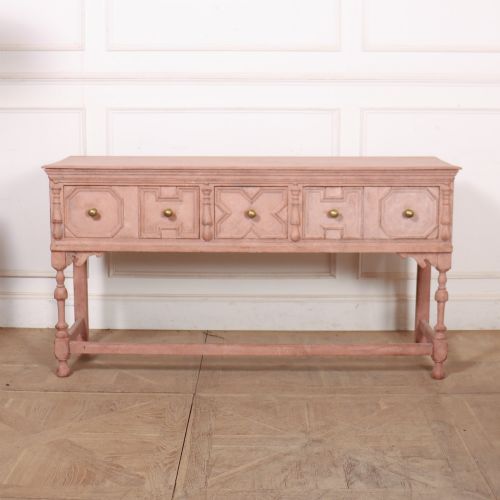
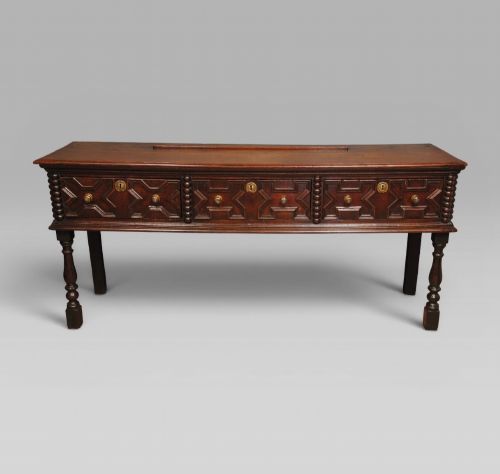
The standard of a low oak dresser table depends on the integrity of its timber and the preservation of original elements such as brasses and moulded drawer fronts. Early seventeenth-century pieces with geometric mouldings or block fronts demonstrate distinct cabinet-making ambitions compared to simpler utilitarian variants.
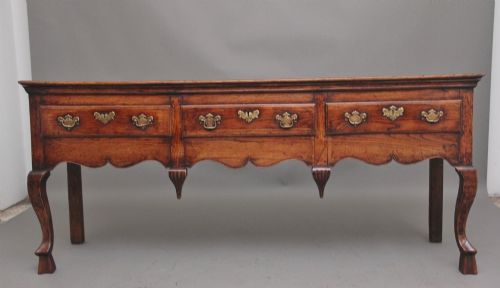
Proportion and leg design dictate aesthetic refinement, shifting from sturdy turned supports to sophisticated cabriole legs on Georgian country examples. The presence of an open potboard base adds substantial architectural presence to the piece.
Several seventeenth-century examples retain heavy geometric drawer fronts designed to mesmerize anyone washing up after a heavy feast.
The Low Oak Dresser Table Glossary
- Potboard dresser base
- A low table featuring a low open shelf beneath the drawers, originally intended for storing pots and serving dishes. This open platform sits just above the floor.
- Block front
- A drawer front configuration divided vertically into three sections, where the central section recedes and the outer sections project forward. This treatment appears on seventeenth-century pieces.
- Cabriole leg
- A furniture leg that curves outward at the knee and tapers inward toward the foot, often terminating in a pad or hoof. This style gained popularity during the Georgian era.
- Geometric moulded
- Drawer fronts decorated with applied mouldings arranged in geometric patterns such as rectangles or octagons. This technique characterises late seventeenth-century joinery.
- Side table
- A rectangular furniture form designed to stand against a wall, sharing similar proportions and framing methods with low dresser bases.
Low Oak Dresser Table: Frequently Asked Questions
What is a low oak dresser table used for?
These tables function as surface storage and display units in dining rooms, kitchens, and hallways. Their drawers provide enclosed space for tableware and household items.
The wide top surface accommodates serving food or displaying decorative objects. Lower potboards offer additional room for stacking platters or baskets.
How do I identify a Georgian low oak dresser?
Georgian examples often feature cleaner structural lines, bracket feet, or cabriole legs. Drawer configurations typically reflect symmetrical proportions characteristic of eighteenth-century design.
Matching the timber patination and construction methods helps verify the period. Original brass pulls or key escutcheons further support the dating.
Are seventeenth-century dressers different from later ones?
Seventeenth-century pieces display heavier framing, pegged joinery, and ornate geometric mouldings on the drawer fronts. They often utilise thick oak boards with darker natural patination.
Later eighteenth and nineteenth-century versions tend toward lighter scaling and alternative leg forms like turned supports or cabriole legs.
How should I care for an antique oak table?
Maintain the timber by applying a quality beeswax polish occasionally to nourish the dry wood. Avoid placing the table in direct sunlight or near heat sources to prevent splitting.
Keep the surface free of excess moisture by using coasters and protective mats during daily use.